By Rachel Groves | Development Director
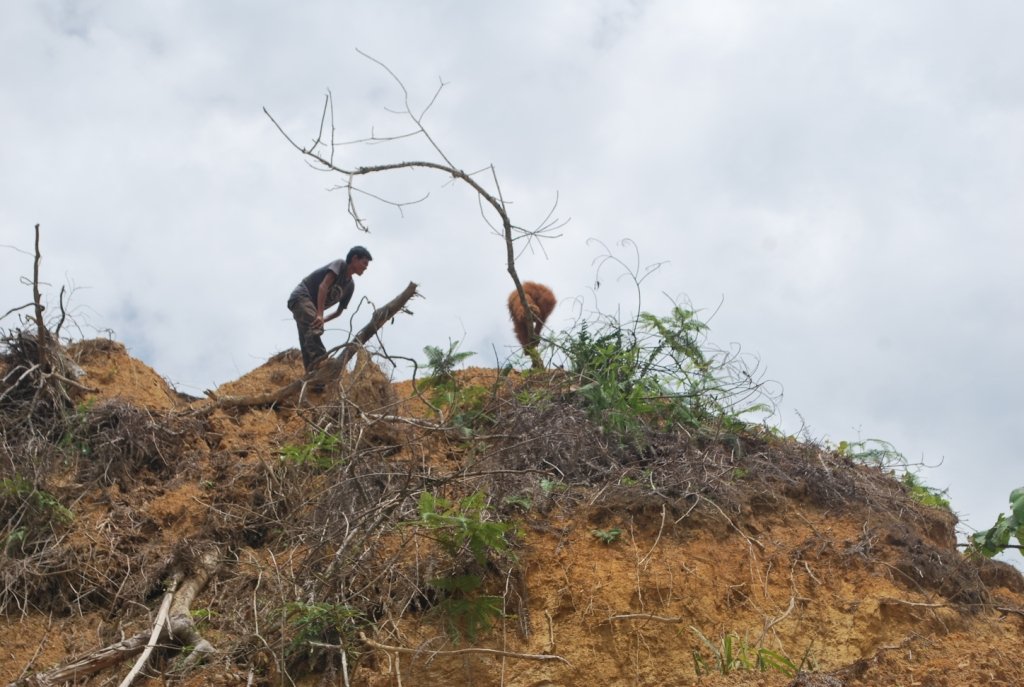
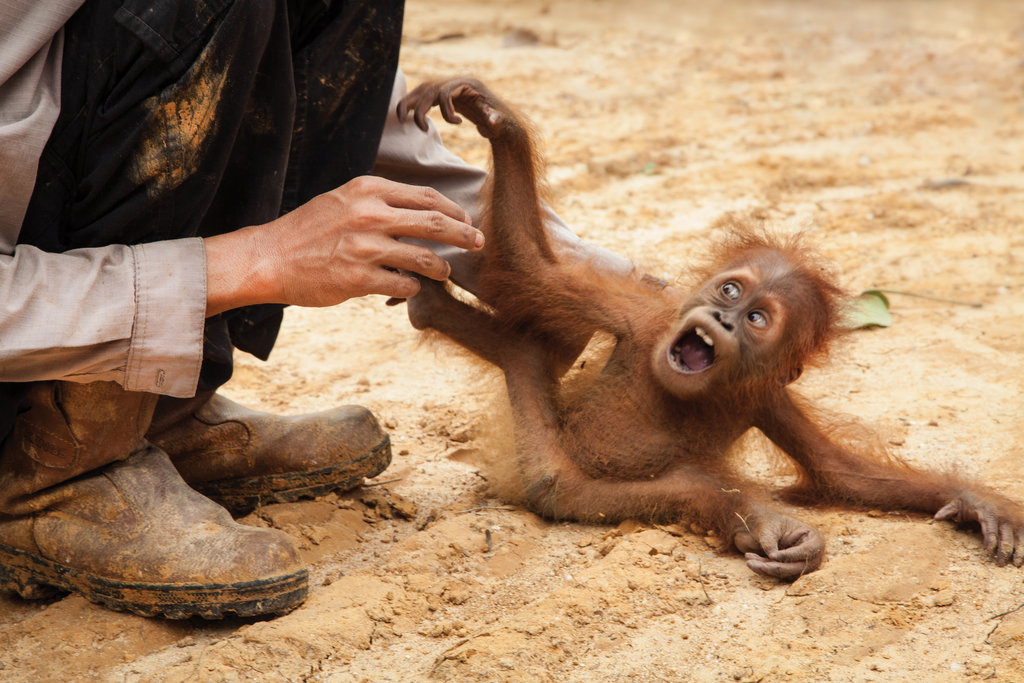
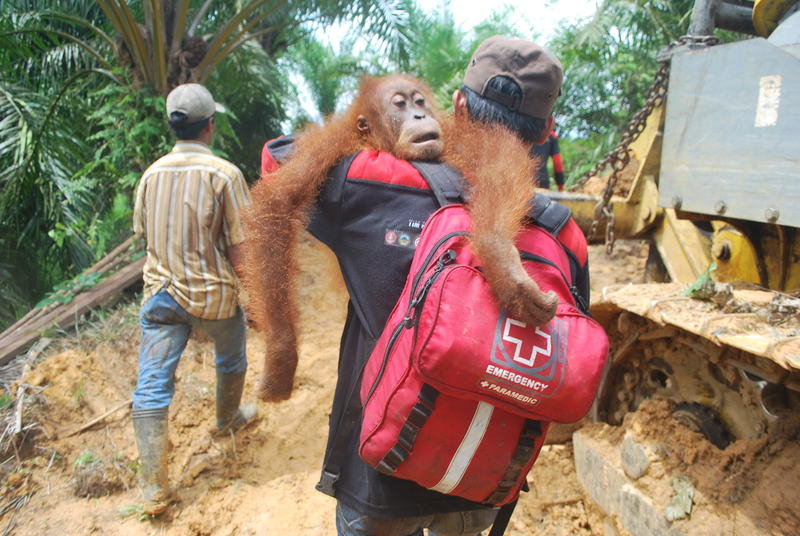
We are still having to rescue Sumatran orangutans from danger at an alarming rate. In fact, if anything, demand for the services of our rescue team are growing., But although on the surface this sounds like bad news, we actually see it as evidence that calling our rescue team has become a first port of call, instead of someone shooting an orangutan.
Unfortunately the destruction of their habitat is still ongoing and the more orangutans come into contact with humans, the more likely they are to suffer. If you depend on your small field to provide enough food to feed your family, it’s not surprising you get cross when an orangutans comes and eats half your crop. For this reason, as well as rescuing the orangutans in question and releasing them again further from human populations, we also work with the villagers to teach them techniques for scaring the orangutans away, rather than harming them.
There has been significant coverage in the media of the impact of large-scale palm oil plantations on orangutan habitat. We are delighted to be able to report that more than four years after we made an official complaint against one of its members, the Roundtable on Sustainable Palm Oil (RSPO) has this month confirmed the expulsion of PT Ibris Palm, whose subsidiary company PT Sisirau is responsible for the destruction of orangutan habitat in Sumatra. The RSPO is a body which regulates certified sustainable palm oil, aiming to limit the negative environmental and social impacts of the industry.
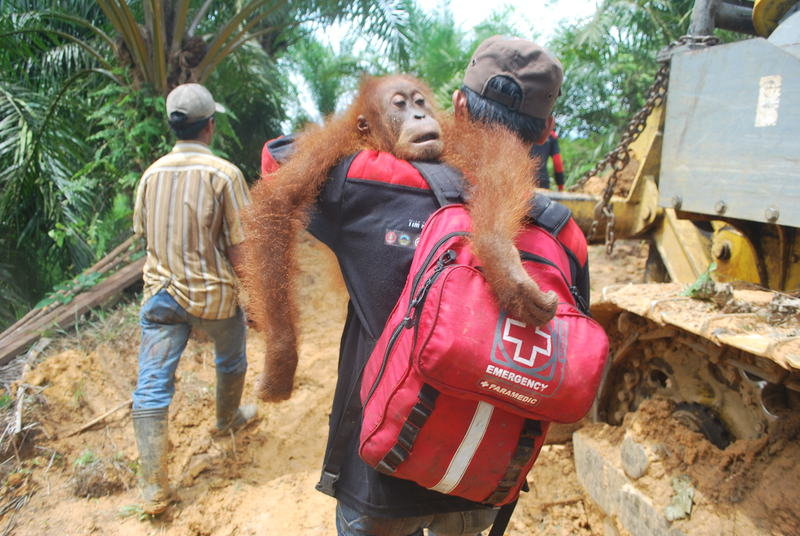
In 2012, seven orangutans were evacuated from an oil palm plantation managed by PT Sisirau in Aceh province, Sumatra. SOS filed a complaint with the RSPO, submitting evidence that the company had continued to bulldoze patches of forest even after being alerted to the presence of orangutans within the plantation.
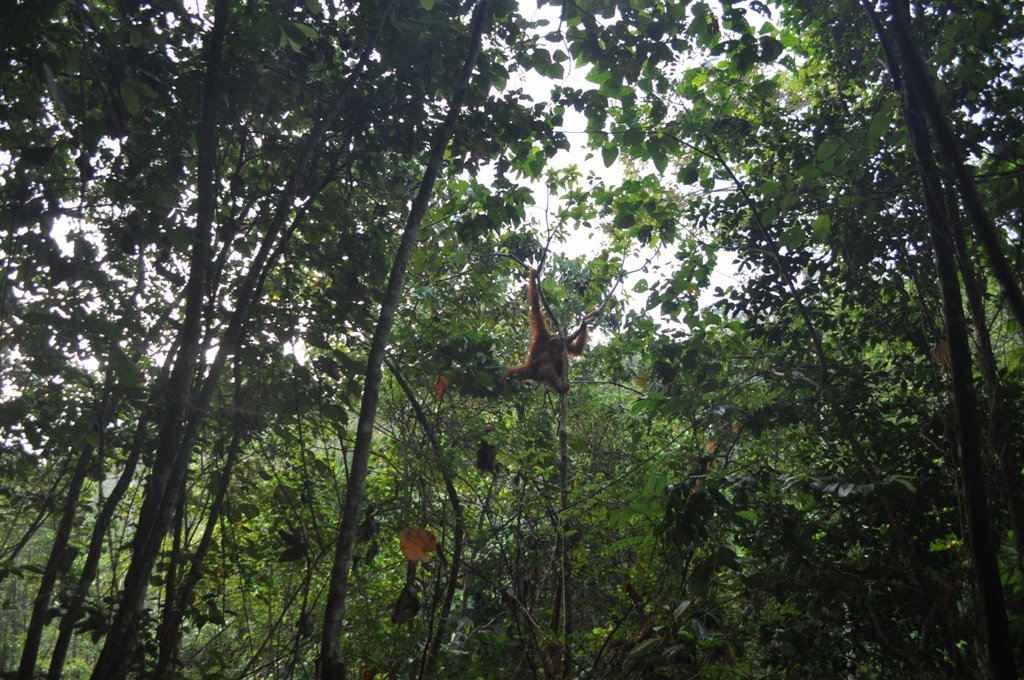
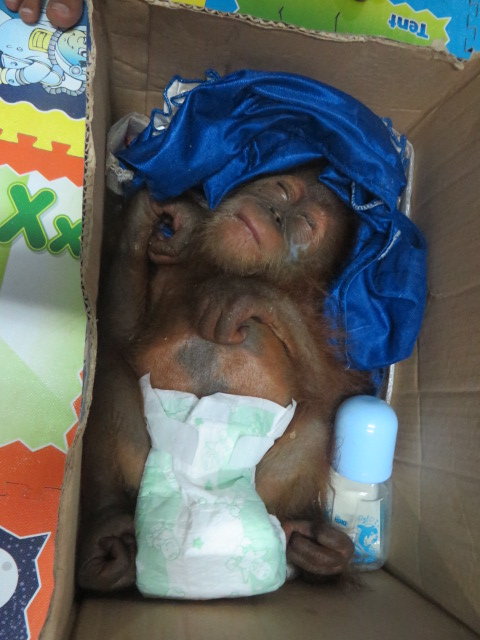
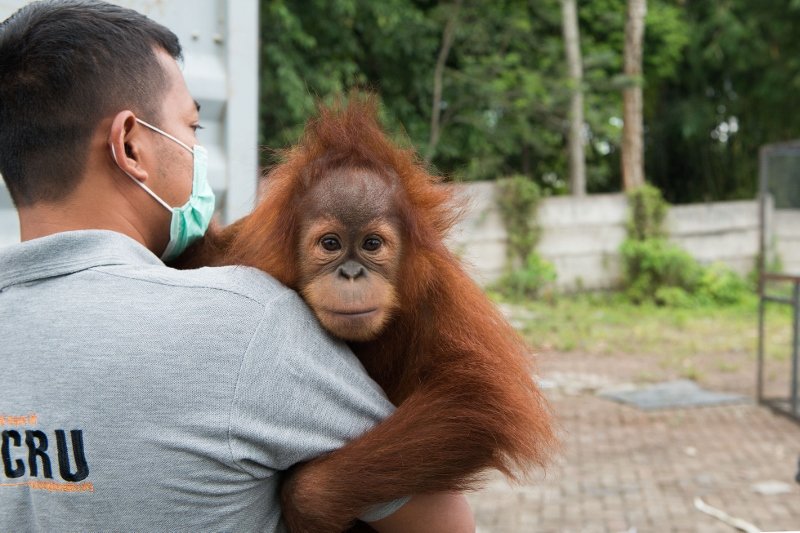
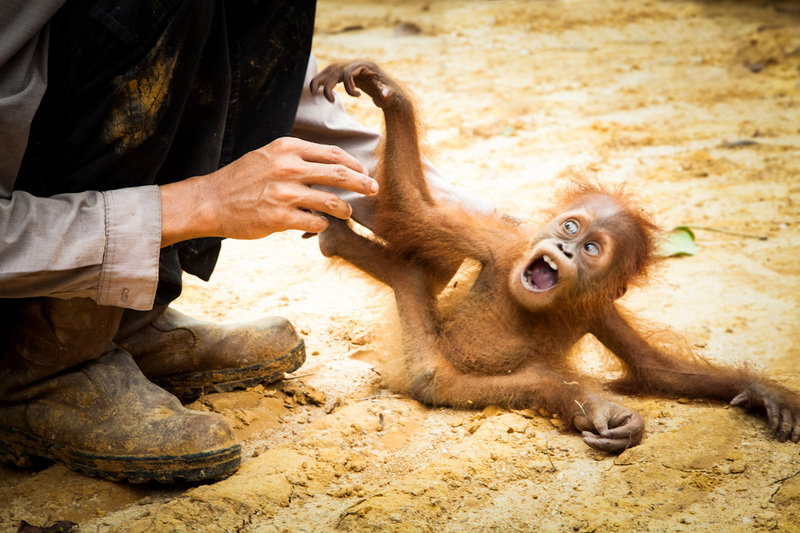
To date the rescue team have rescued 110 orangutans from isolated forests and the illegal pet trade. Orangutan rescues and translocations carry extreme risks for the animals and people involved, and are only carried out as a last resort if orangutans are considered to be in danger of starvation, injury or death.
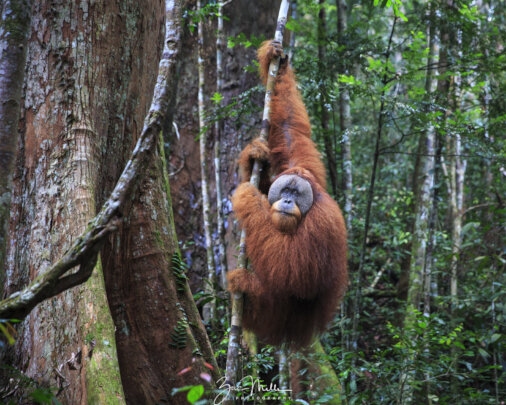
All seven orangutans that were evacuated from PT Sisirau's plantation in 2012 were safely released into the Leuser Ecosystem, a protected area and the last stronghold for the species. Thank you for making this vital work possible. It’s important though, that we try to prevent the problems occurring in the first place, which is why we also devote our resources to lobbying the law-enforcement agencies to enforce the laws. For this reason, the HOCRU team increased their visits to local communities and schools. They monitor orangutan habitat and population growth in villages adjacent to the Leuser Ecosystem, including educating local people about the vital part the orangutans play in maintaining the health of the forest.
You may be aware that Nov 29 is #GivingTuesday. On this day, any donations you make to our project via GlobalGiving will be matched by the Bill & Melinda Gates Foundation. Please give if you can and help us to provide a safe future for these increadible creatures.
Links:
Project reports on GlobalGiving are posted directly to globalgiving.org by Project Leaders as they are completed, generally every 3-4 months. To protect the integrity of these documents, GlobalGiving does not alter them; therefore you may find some language or formatting issues.
If you donate to this project or have donated to this project, you can receive an email when this project posts a report. You can also subscribe for reports without donating.