By Dr. Marisa Tellez | Executive Director, Founder
The Maya rain gods showered upon Belize these last few months, making it very difficult to get out into the field. We had quite a few cold spells come through, which would make the crocs go deep into the mangrove to stay cozy and warm (we don’t blame them!).
Three habitat assessments were carried out within the Placencia Lagoon system. Survey efforts were prioritized in this area because the government and the communities want to move forward in the protection of the Placencia Lagoon as a wildlife sanctuary. Thus our information is pertinent in providing the necessary scientific data needed to illustrate the plethora of biodiversity in this area, and how protection is also ensuring the protection of livelihoods dependent on the health of the lagoon.
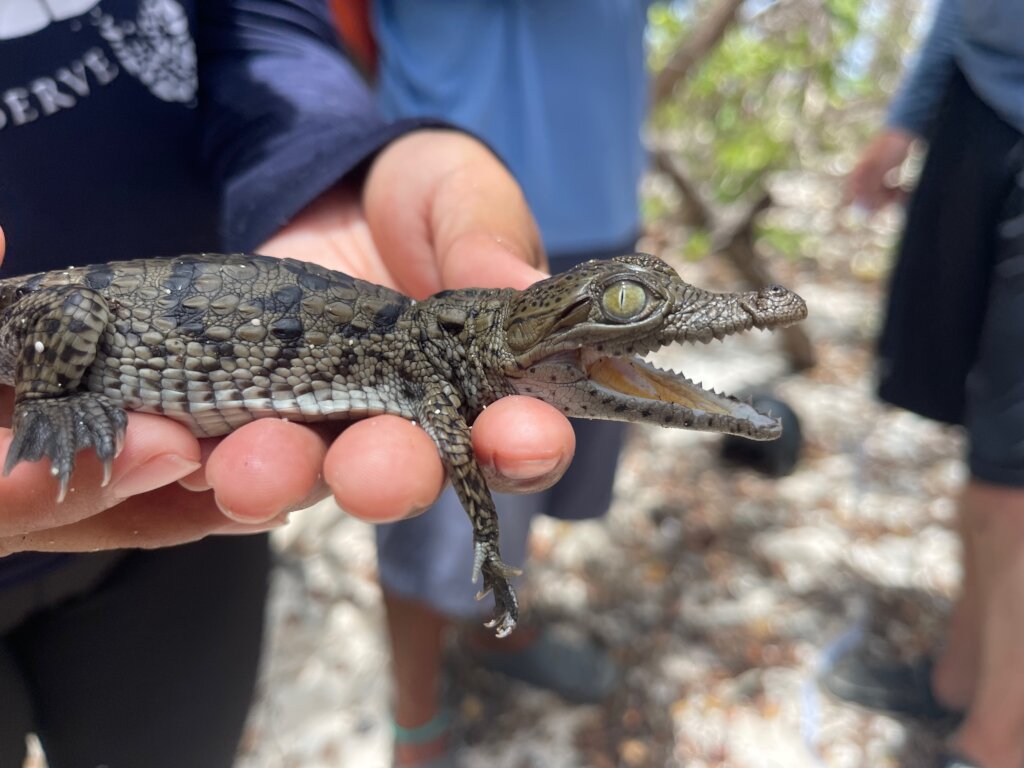
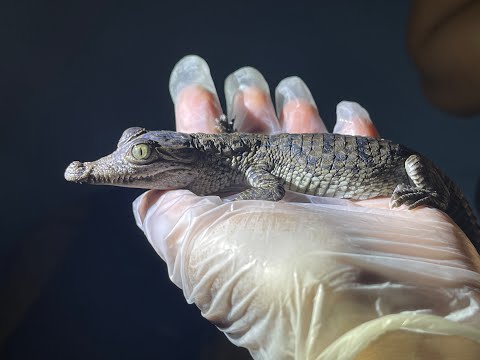
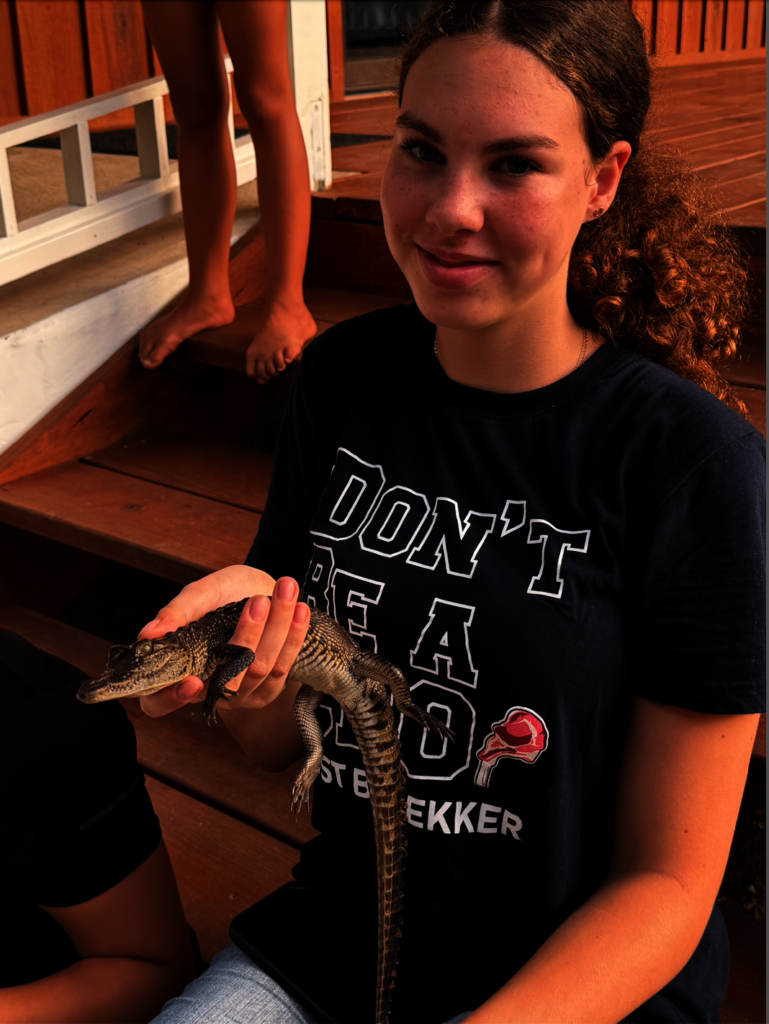
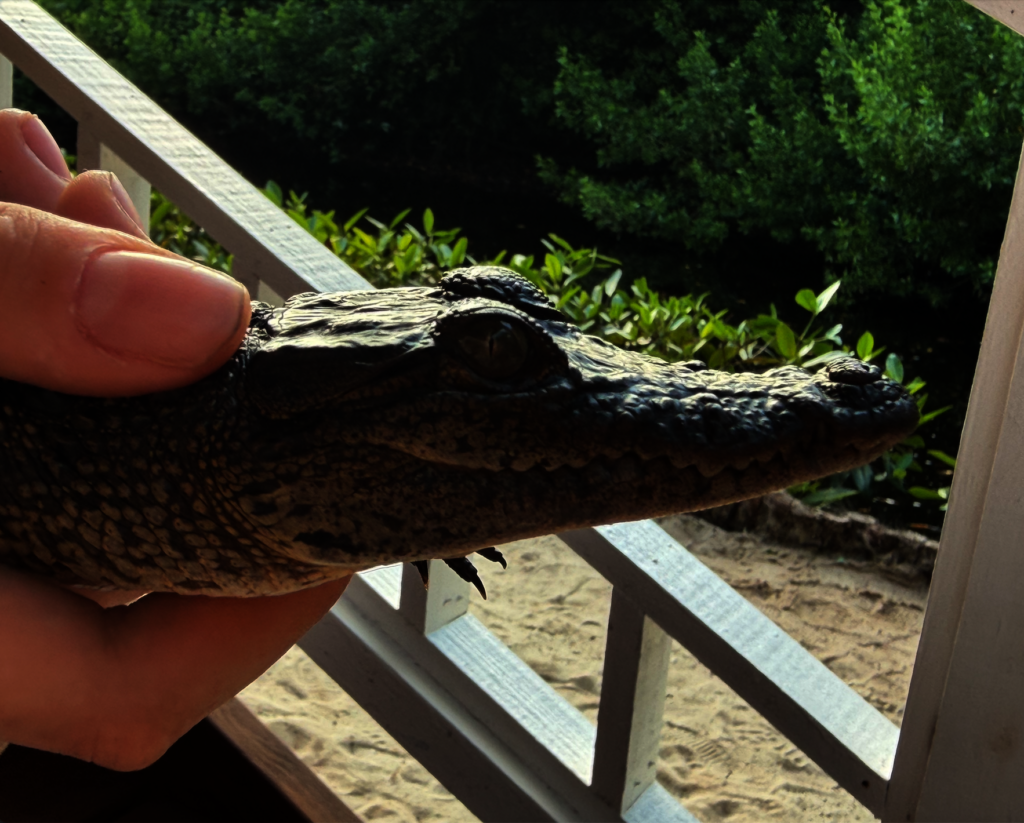
Given it seemed like the evening is when the rains would come, we decided to try to catch crocs in the day… which is practically impossible, unless they are babies. We knew of an area around Placencia Lagoon in which some crocs from last year’s hatch were hanging around. We brought out our Next Gen Croc kids to come out along with one of our volunteers to assist in the catching. Although these babies were quite fast, we were able to get some capture data that will help us in understanding the health of the lagoon.
In March, we did get a small break amongst the rain and conducted population surveys of Morelet’s crocodiles in Orange Walk. Orange Walk Town a few years ago suffered from a catastrophic pollution event, in which pollutants in the water led to fish kills, and many crocodiles dying. Although through our nocturnal eyeshine surveys we observed a stable number of crocodiles, capture surveys illustrate animals that are in chronic stress given pollutants in the water (i.e., lethargy, low body mass, etc). As we can imagine, what impacts the crocs negatively, should also be a public health concern for communities as well.
Thank you to all who have donated towards our project through GlobalGiving. This has been a long and VERY rainy season, therefore the weather prevents us from doing much research. We are very grateful to all of those that have donated and are willing to help us maintain healthy aquatic ecosystems in Belize for wildlife and communities. Our work is currently considered a model project by various wildlife researchers and ecotoxicologists given our results from previous years.
Dr. Marisa Tellez and the CRC team
Project reports on GlobalGiving are posted directly to globalgiving.org by Project Leaders as they are completed, generally every 3-4 months. To protect the integrity of these documents, GlobalGiving does not alter them; therefore you may find some language or formatting issues.
If you donate to this project or have donated to this project, you can receive an email when this project posts a report. You can also subscribe for reports without donating.



Support this important cause by creating a personalized fundraising page.
Start a Fundraiser