By Jim McCarthy | Communications Director
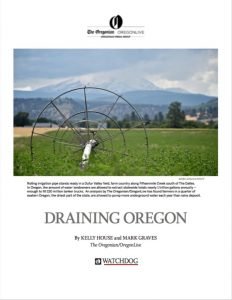
"Oregon is helping farmers drain the state's undergound reservoirs to grow cash crops in the desert, throwing sensitive ecosystems out of balance and fueling an agricultural boom that cannot be sustained..."
So begins "Draining Oregon," The Oregonian's landmark special report exposing the state's often maddeningly shortsighted management of our crucial groundwater supplies and the widespread problems created by Oregon's outdated, spottily applied, or underfunded groundwater protections. The series of stories highlights WaterWatch's work to reign in unsustainable groundwater development in the Malheur Lakes Basin.
It's extremely rare that these important groundwater issues receive this level of journalistic scrutiny and analysis. This series has drawn intense public attention, and for those who care about Oregon's rivers, lakes and streams -- and their own wellwater -- it presents a once-in-a-decade opportunity to demand concrete action. Thanks to your support, WaterWatch will be working hard to seize this chance to protect Oregon's threatened groundwater supplies -- along with the waterways, fish, wildlife, and people dependent on healthy aquifers! Below are some key solutions we are proposing:
Stop Digging the Hole Deeper.
Oregon's groundwater may be in crisis, but you wouldn't know it from the speed at which regulators say "yes" to new groundwater pumping applications. Instead of defaulting to "yes" when the sate isn't certain that there is enough groundwater to support the new pumping, regulators should default to "no" when the information on groundwater in a specific area is absent or inadequate. At a minimum, the Department should stop issuing new permits unless they can determine additional pumping won't harm fish, wildlife, and other water users.
Take Stock of Additional Groundwater Resources.
In the past, the state has passed up matching federal funds to help pay for needed groundwater studies. We cannot afford to let this happen again. The Oregon Water Resources Department -- with the full backing of Governor Brown -- should ask legislators for increased funding on studies to rapidly improve our understanding of the current condition and future resiliency of our state's groundwater resources. The state should be required to have comprehensive studies completed for key watersheds by a set date.
Get Serious About Funding Groundwater Management.
There's no way around it -- protecting vast and incredibly valuable public resources such as groundwater costs money. Despite this, the state has always relied on a shoestring budgeting approach to goundwater management, with predictable results. In 2017, legistators should ask groundwater users to pay a nominal annual fee to help pay for the ongoing management and enforcement necessary to protect this vital public resource -- and prevent the kind of underfunding and neglect that results in lawful groundwater permit holders seeing their rights being drained away from under them.
To Manage Water, We Must Measure Water.
The state must require and fund actions to achieve measurement and reporting of all waters in the state, including pumping at existing wells. Again, having a better handle on water use will not only protect water supplies, waterways, and wildlife, it will also protect existing users, communities, and economic activity dependent upon reliable water supplies.
Zero Tolerance for Unlawful Groundwater Use.
The Oregonian series exposed the practice of water users digging new wells first, then asking the state for permission later. This practice has become common in some parts of Oregon because it's an open secret that regulators will reward such scofflaws with permits after the fact. This practice must end if we are to stop Oregon's growing groundwater crisis and secure our water supplies.
Links:
By Communications Staff | WaterWatch of Oregon
By Communications Staff | WaterWatch of Oregon
Project reports on GlobalGiving are posted directly to globalgiving.org by Project Leaders as they are completed, generally every 3-4 months. To protect the integrity of these documents, GlobalGiving does not alter them; therefore you may find some language or formatting issues.
If you donate to this project or have donated to this project, you can receive an email when this project posts a report. You can also subscribe for reports without donating.



Support this important cause by creating a personalized fundraising page.
Start a Fundraiser