By Slavica Vasic Mitrovic | Project Leader
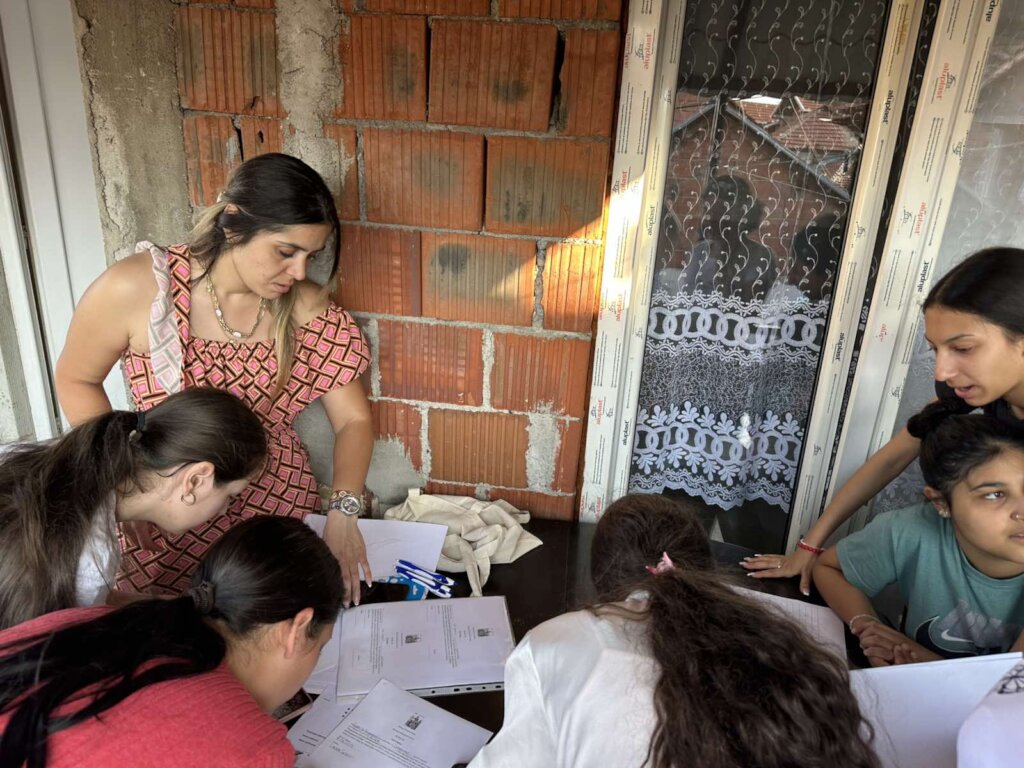
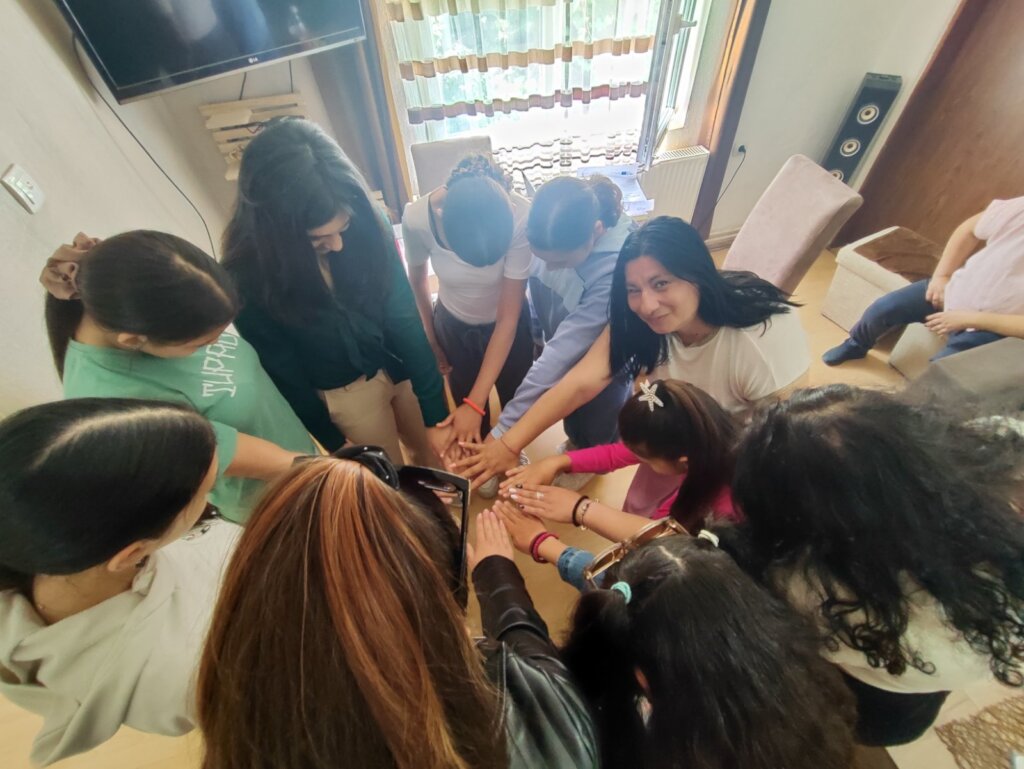
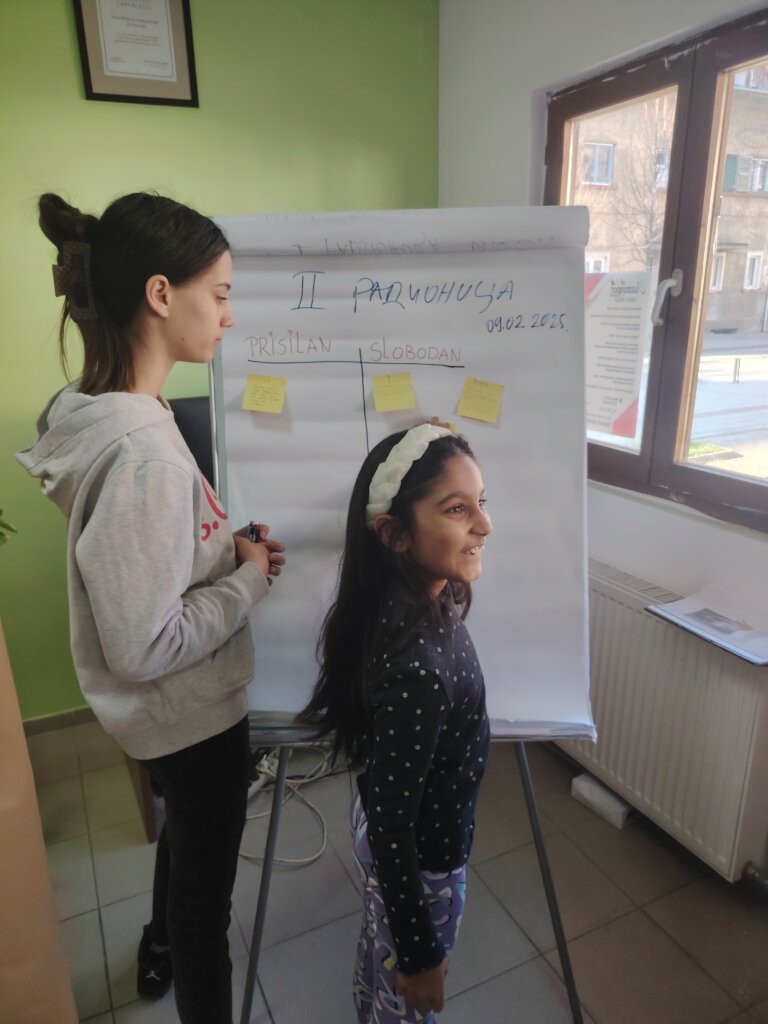
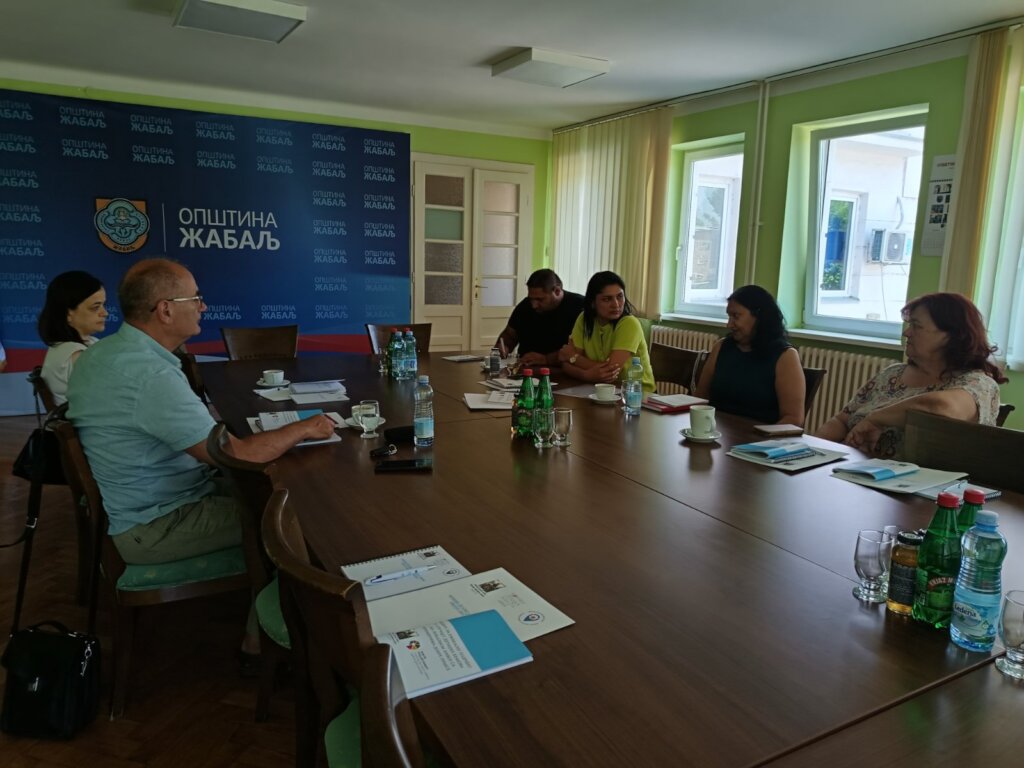
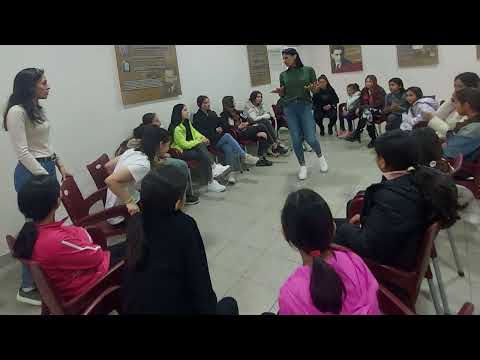
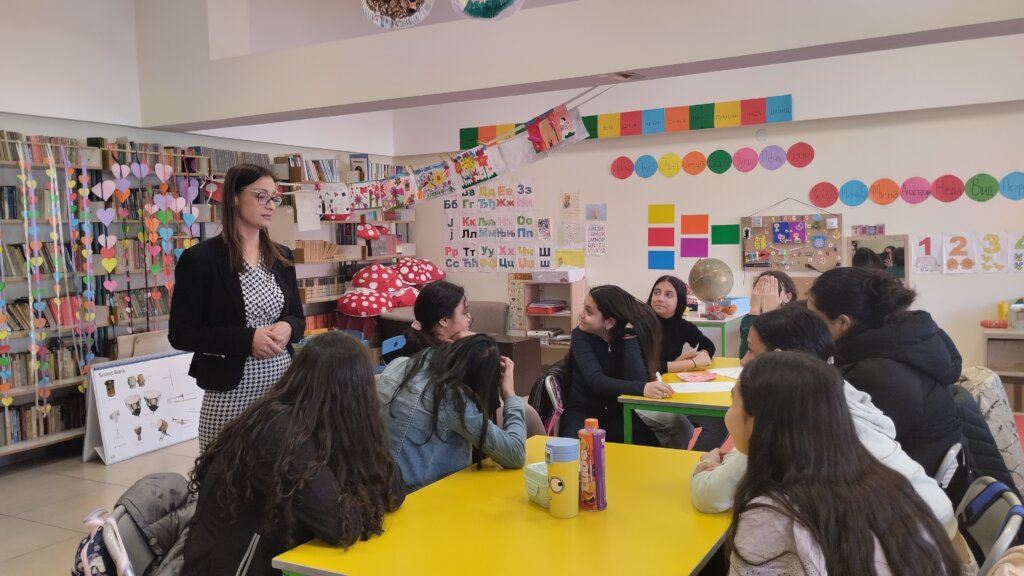
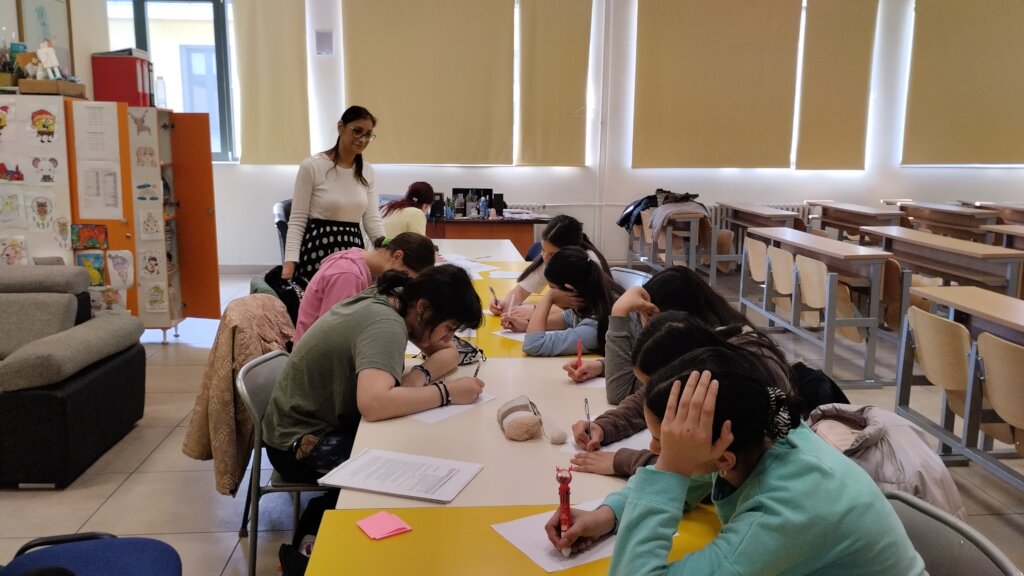
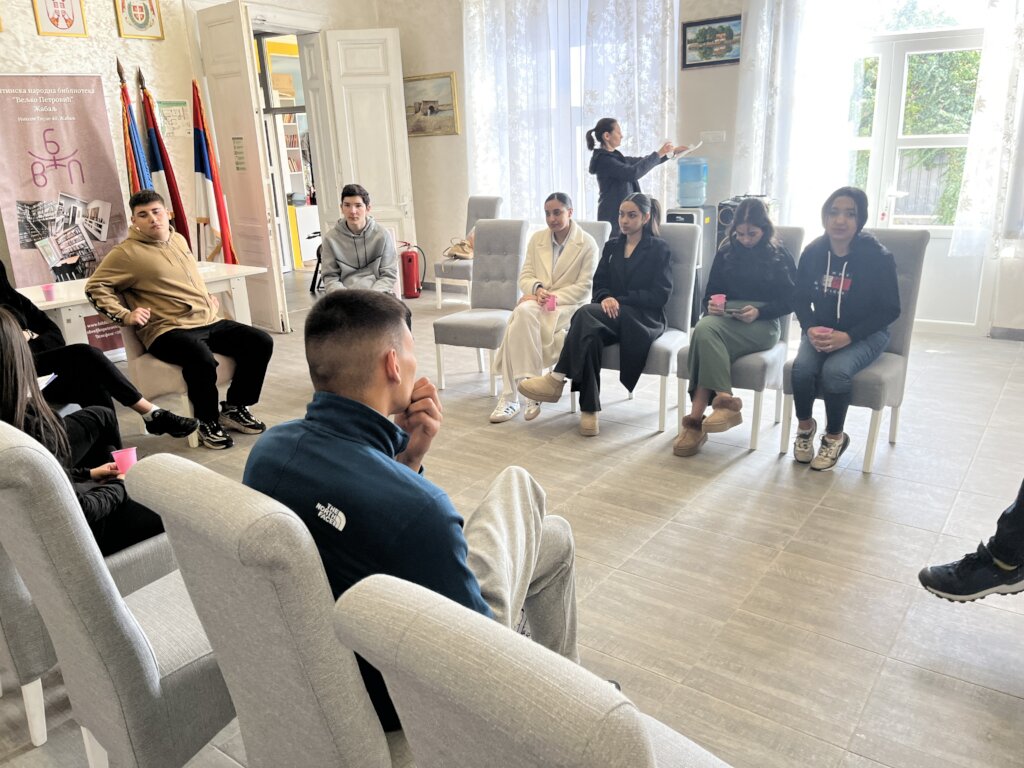
The workshops are intended for Roma adolescent girls aged 11-19, while the discussions are intended for the Roma community. In addition, the project also targets representatives of local institutions who, together with Roma activists, will be encouraged to form local coalitions against child marriage in 10 cities and municipalities in Serbia, and troše are: Bujanovac, Vranje, Leskovac Kruševac, Pirot, Kostolac, Kragujevac, Zabalj, as well as in the Belgrade municipalities of Zvezdara and Vozdovac. The workshops are designed in a way that, through interactive work, they point out the concept of child marriage, ways of protection, but also offer tools of empowerment and mutual connection of adolescent Roma girls. The goal of the discussions is to raise awareness in the Roma community, especially among parents, about the harmful practice of child marriage, the possibilities for responding and providing support to children, especially girls.
Workshop topics:
Girls are always happy to attend our workshops, they like to be active and participate. They are open to talk when we they are among their peers and alone, without parents. Only then are they open and shamelessly talk about everything that bothers them. Almost every girl knew a girl/girl who got married in that way and entered into an extramarital union as a minor. This is a devastating fact that shows the Roma have integrated with the majority population in everything except when it comes to education and minor unions (child marriage)."
As time and workshops goes on, we find out more, the trust is established, which is the basis for talking more openly about this wrong practice called child marriage. The workshops were designed to be interactive for the girls and they accepted the games very well, even the slightly older girls. The workshop experiences encouraged the girls to think about the value of their childhood and their freedom. They realized how important it is that they have the right to a carefree childhood, full of opportunities for development, and that they can make independent decisions about their lives. They asked themselves questions that touched deep into the heart of their personal freedom and individuality.They began to consider how they could contribute to changes in their communities and society as a whole.
Discussions with parents
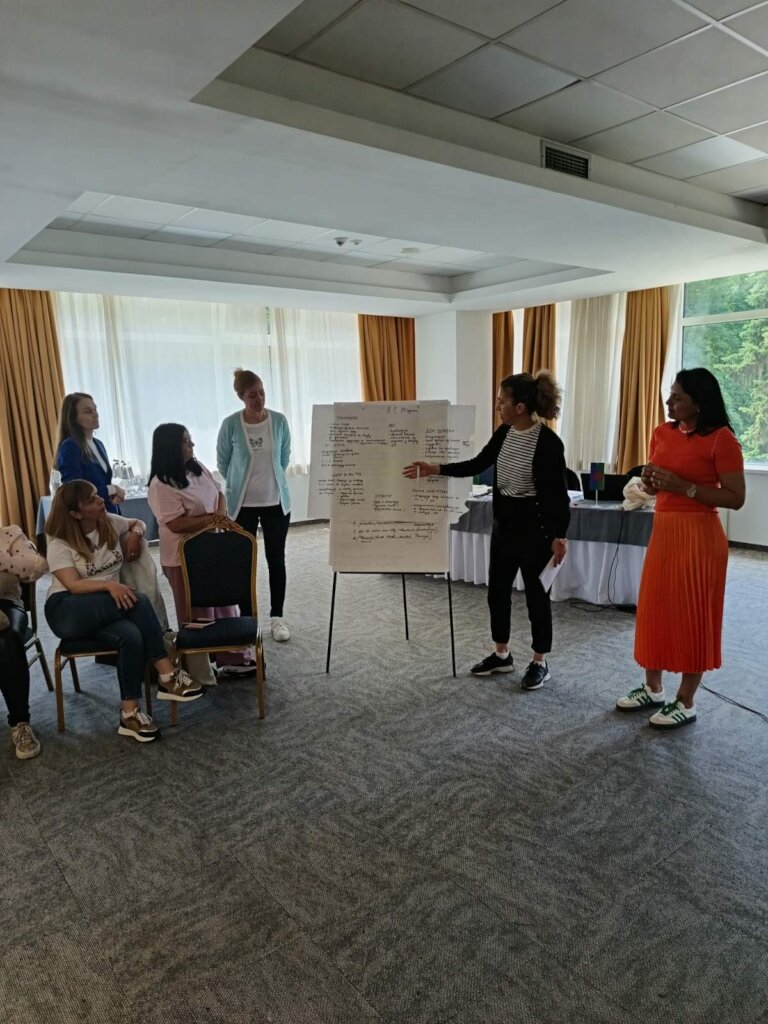
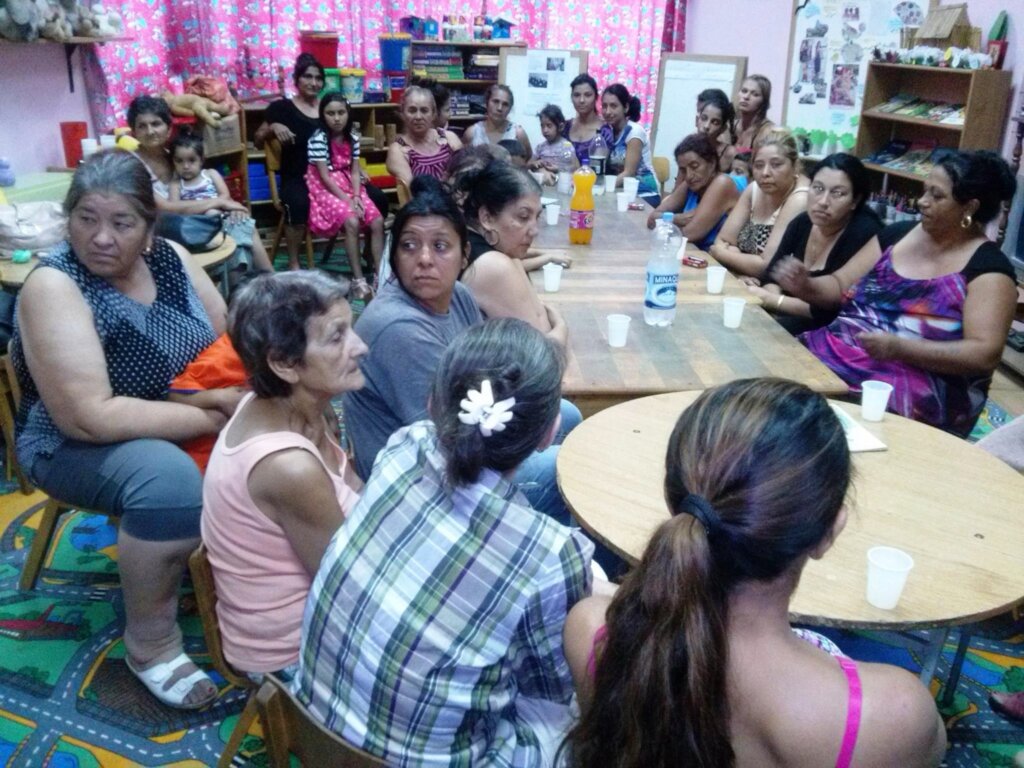
Discussions were organized in the same settlements and in this reporting period 60 discussions
Discussion topics:
The immediate expected results from the discussions are:
The changes we want to achieve will be reflected in the following:
Discussions were held in Kostolac, Kragujevac, Pirot, Leskovac, Vranje, Bujanovac, Krusevac, Zablje, Belgrade (Zvezdara and Vozdovac).
Through this activity, we got a more comprehensive and accurate insight into traditional practices and beliefs in the field. The general impression is that traditional practices and beliefs. These public discussions were open, and according to our estimation, of all the participants, about 65% are women. The topics we dealt with during the public discussions focused on traditional practices, customary law, gender equality, culture and identity, with arguments for and against a particular claim. Through fieldwork activities, we touched on the following issues:
• which traditional/customary practices have been maintained
• to which areas of life they are related
• to what extent these practices are part of everyday life
• gender dimension of traditional/customary practices
• an authentic view of the community of certain phenomena, e.g. early/arranged marriages
• to what extent they are an obstacle to integration and inclusion in the wider society
Findings from the field collected during the panel discussions clearly support the fact that the Roma tradition has all the characteristics by which this term is recognizable, which includes a set of values, norms, customs that are symbolically remembered and incorporated into cultural, national, regional, local individual and collective identity.
As a phenomenon, tradition had a great influence on the internal organization of the Roma family and local community. Continuity as a characteristic is particularly prominent in the traditional practices of the Roma community, which opens the tradition's way to longevity, but also the possibility of dynamics reflected in minor or major changes under the influence of surrounding cultures/traditions. We can say that valid "Roma traditions" play the role of a kind of preservation of existing social relations and qre closed off to social novelties; they are expressed in the maintenance of specific values and standards, which become an inseparable part of the identity of the Roma community. A significant part of the tradition that has been preserved is related to the rights and obligations of women/young girls towards family and community.
From the earliest times, customs have fulfilled one of the most important roles among all peoples, including the Roma, which is the preservation of national identity. The Roma are a people with a rich tradition, which, due to various historical circumstances, faced great challenges in preserving it.
These elements of tradition, such as customary practices in the field of family functioning, marriage, birth of children, are also the most resistant to change. The Roma families we worked with during this project are going through intense social changes, making a selection so that certain practices remain in "tradition", while others are transformed and developed at a pace that is very similar to the position of tradition in the majority population. Although it can be concluded that tradition in the Roma communities where we worked acts as a "mediating" factor that tries to bind tradition and progress so as to get the best out of both, it currently happens that the "binding" tradition is the one related to the position of women /girls in the family, while practices related to other life situations are lost and equated with the practices of the majority culture and tradition. The analysis of the debates held so far makes it clear that the Roma community restores and reproduces selected traditional practices from the past, interweaving historical, folklore, local heritage into current and future social norms, which should be valid at the individual level, but also at the collective level. These practices are, above all, - preserving the virginity of young girls, arranged or semi-arranged marriages.
The views of Roma women and men who participated in these discussions clearly show that the position of Roma women is determined by a strong patriarchal tradition, which often manifests itself through irregular school attendance, early school leaving and early marriage. Then comes the birth of children. Without school and a professional title, without work experience, with a large number of children, and with increasingly pronounced discrimination Roma women find it difficult to find a job. For the Roma women who participated in the forums, who are 45 and older, this picture of the life of women in Roma families is common and even desirable, and they see nothing wrong with it. Their views are reflected in the message to young girls that "a woman must know how to run a house and a family, to be responsible for the birth of children and that the family must have many children". In addition, the young girl and her mother also have the responsibility of virginity. This age group of our participants stuck very firmly to their "arguments", claiming that today's increasingly frequent divorces and disagreements in marriage are precisely the fault of disrespect for tradition.
On the other hand, younger Romani women, participants in the forums, do not want their daughters to prove their virginity by showing the sheets, while some of them are still undecided on this issue and are closer to the opinion that the custom of preserving virginity has more good features than bad. Tribunes where men ''led the show'' showed that tradition, upbringing and expectations of parents, especially fathers, play an important role in the lives of Roma women. Forum participants of all age groups would feel guilty if they did something contrary to tradition, a little less than 30% of women at the forums claimed that they would not feel guilty, while the rest did not declare themselves clearly and avoided a specific answer. Everyone, both men and women, agree that tradition, including Roma tradition, does not place men and women in the same position. In response to the question why they think they are not in the same position, the men gave the following answers: "why would they be, a woman must obey her husband", "a woman is below a man", "that is the tradition, it has been like that for a hundred years", "a man and a woman must not have the same position, it must not be the same position, then women would go wild, a man must take care of the family, a woman is for the home, and a man is for outside the home...".
However, almost everyone, both men and women who have participated in the forums so far, think that the Roma family is changing. The economic empowerment of Roma women and disrespect for the cult of virginity among young girls are the most difficult to accept. On the other hand, it is completely normal for young Roma boys to behave like their peers from the majority population. This is how we come to the absurd situation that the community is almost hermetically sealed for changes that should improve the quality of life of women, and thus the whole family, and the same community is very open to negative social news, such as the consumption of narcotics and drugs, alcohol, violent behavior etc. negative social phenomena that have been increasing in recent decades.
The "arguments" that were heard on the stands, by men of all ages, are interesting:
"When a woman gets a job and brings money into the house, it's a big change for men. They feel that they are not real men and that they are not worth anything. It is not good if the woman has money, it spoils the marriage. Women who have a job and earn some money, immediately want to order their husbands around".
Project reports on GlobalGiving are posted directly to globalgiving.org by Project Leaders as they are completed, generally every 3-4 months. To protect the integrity of these documents, GlobalGiving does not alter them; therefore you may find some language or formatting issues.
If you donate to this project or have donated to this project, you can receive an email when this project posts a report. You can also subscribe for reports without donating.



Support this important cause by creating a personalized fundraising page.
Start a Fundraiser