By Robyn Nietert | President
Dear Supporters,
We wish you a Happy New Year and thank you for your support over the past year. WMI is eagerly planning its 2025 activities as it focuses on sustainability, economic participation, and using technology to improve living conditions for our borrowers. One of our exciting new collaborations planned for 2025 is featured below!
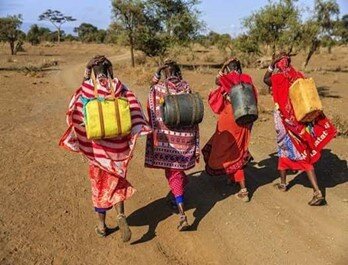
Maasai women in Ngorongoro face challenges in accessing both reliable energy and clean water. Many households rely on firewood and kerosene for lighting, which poses health risks and environmental concerns, while water scarcity requires them to walk long distances to fetch water. The community relies on seasonal rains for water, making access unreliable. Maasai women carry water on their backs from wells that can be several miles away. The ten-liter containers they use are then lined up outside their homes and refilled several times a day to accommodate bathing, cooking and cleaning for the entire household. During dry seasons, the women travel even further to find water sources, which consumes an enormous amount of time and energy.
The scarcity of clean water can lead to the use of contaminated sources, increasing the risk of waterborne diseases. This can significantly impact the health of families, particularly children. Water is essential not just for people but for livestock, which is crucial to the local economy. And, the time-consuming tasks of gathering firewood and fetching water take women away from their families and businesses for prolonged periods.
In collaboration with the Resilient Communities Africa Foundation (ReCAF) and the Village Community Banks (Vicoba) that manage the WMI loan funds locally, WMI is participating in a comprehensive solution that combines solar panel installation and water tank supply to enhance quality of life, support economic participation, and foster sustainability.
The initial phase will install solar panels in 100 households to provide clean, reliable lighting and reduce reliance on kerosene and firewood. Solar panels can be easily installed on the roof of the traditional Maasai mud and stick houses. The small panels provide sufficient energy to power lights and charge cell phones. They can also be disassembled and moved along with the semi-nomadic tribespeople.
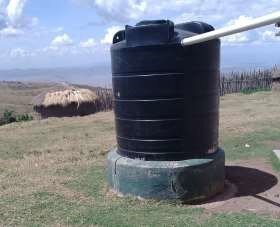
Additionally, to improve water access we will source 2000 to 3000-liter plastic water storage tanks to allow Maasai women to store clean water, reducing the frequency and physical burden of long-distance water collection. The large and safe plastic water storage tanks will revitalize water reliability among the Maasai homes and relieve the Maasai women from the daily burden of long distance fetching of water. Both upgrades will empower the women to manage resources efficiently, allowing for greater economic and social participation within their communities.
With proceeds from their local businesses, the women will provide a 25% down payment on the panels and tanks. WMI will fund the remainder of the purchase prices. ReCAF will source bids for the provision of the products and choose a supplier. It will also oversee delivery and installation and training for the women.
This integrated project of solar panel installation and water tank provision offers a holistic solution to the daily challenges faced by Maasai women in the Ngorongoro area, driving health improvements, empowerment, and sustainability. Your support of this project will impact 100 families – more than 1,000 people. Thank you!
The WMI Commuity
Project reports on GlobalGiving are posted directly to globalgiving.org by Project Leaders as they are completed, generally every 3-4 months. To protect the integrity of these documents, GlobalGiving does not alter them; therefore you may find some language or formatting issues.
If you donate to this project or have donated to this project, you can receive an email when this project posts a report. You can also subscribe for reports without donating.



Support this important cause by creating a personalized fundraising page.
Start a Fundraiser