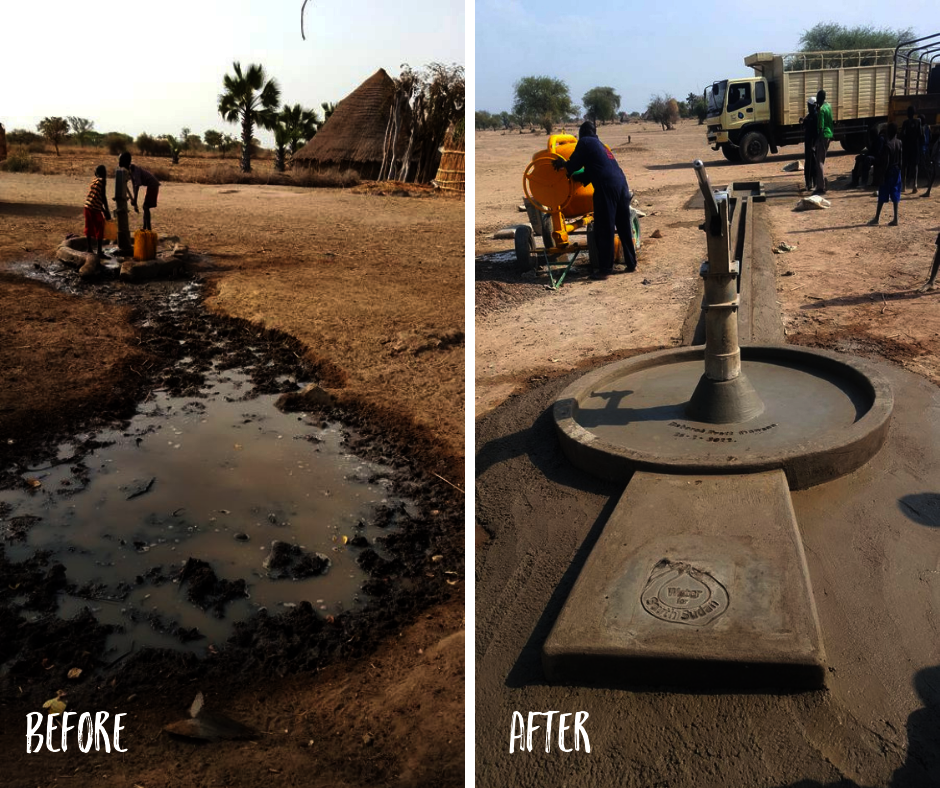
A new well is a beginning, not an ending.
Once clean water starts flowing, the work of keeping it flowing begins. Water Management Committees help communities manage their water sources, trained mechanics provide local repair support, and communities learn how to plan for the maintenance and supplies their wells will need over time.
But reliable water can support more than drinking and hygiene. For women and families, access to water can also make it possible to tend kitchen gardens. Growing vegetables that can supplement household meals and contribute to food security within the community. Water becomes part of the daily work of growing, caring for, and sustaining a household.
That work may not be as visible as a drilling rig arriving in a village. But it is what helps turn a new water point into something that supports community life long after the drilling team leaves.
For WFSS, sustainability means building that capacity alongside the infrastructure itself. Communities are not simply receiving a well; local leaders and Water Management Committees are actively managing the water system, planning for its needs and helping sustain access to water over time. This active management helps ensure that water can continue to support healthier households, productive work, and local leadership for years to come.
This season, as WFSS prepares to drill new wells, rehabilitate existing water systems, and improve sanitation facilities, that same approach will continue: reliable water that works today, and supported by local capacity to manage and sustain them tomorrow.