By Peggy Janich | Project Leader
Researchers from multiple Swiss universities and hospitals are investigating the genetic causes of cancer in children and adolescents to enhance diagnosis, treatment, and personalized follow-up care. They actively involve affected individuals and their families in the research process.
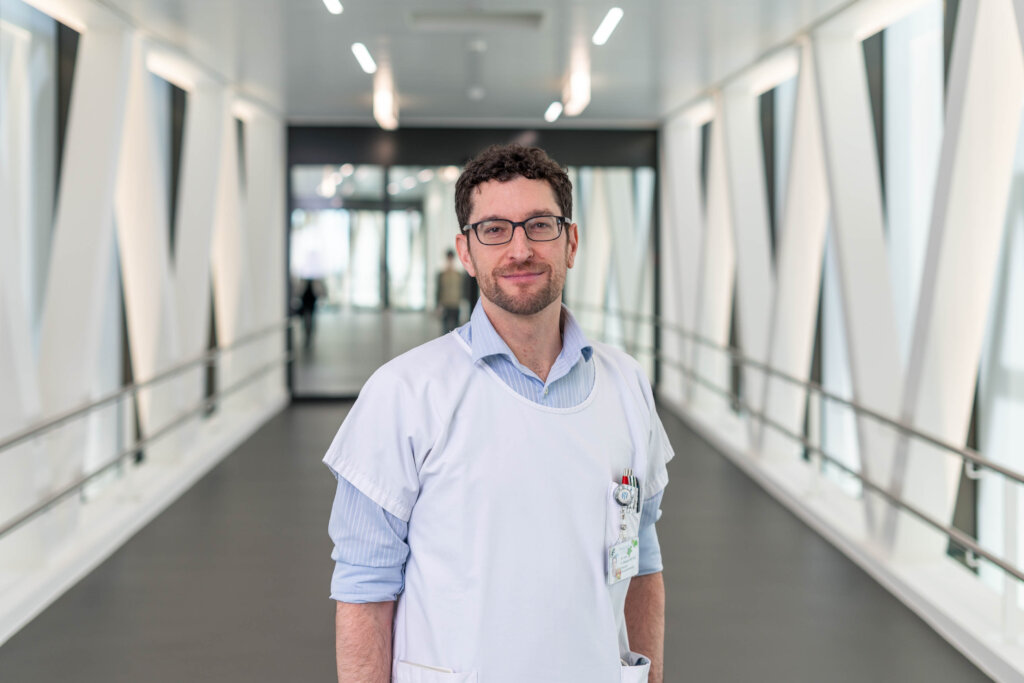
“We still know too little about the factors that trigger cancer in children and adolescents”, explains Dr. Nicolas Waespe. That is why the pediatrician from Inselspital Bern aims to focus on hereditary causes of childhood cancer. “To do this, it is essential to involve affected individuals and their families in the diagnostic and treatment steps right from the beginning,” says Dr. Waespe, who collaborates with the universities of Bern and Geneva.
Better Recognition of Hereditary Causes
In about one-third of children and adolescents with cancer, there are indications of a possible genetic predisposition. In one in ten cases, a clearly defined genetic cause can be identified. Since a predisposition to cancer can also negatively impact children's physical and mental development, a thorough medical history and clinical examination are crucial. Family history and the type of cancer can also provide clues as to whether a genetic predisposition exists.
However, such indications of a genetic predisposition to cancer are often overlooked and therefore inadequately investigated. Dr. Waespe and his team want to change this. That’s why their study, funded by the Swiss Cancer Research foundation, pursues several objectives: “We are developing a questionnaire to better identify signs in young patients.” Participants will be offered genetic counseling and testing to determine who has a genetic predisposition to cancer.
Involving Children and Their Families
Participants receive clear and understandable information to support them in their decision-making. The physician emphasizes: “We will put the children and their families at the center to better understand their needs. To achieve this, we will ask them about their knowledge and expectations at various points in time.” Particularly in genetics, understanding what is being investigated and its potential consequences is crucial.
Detecting a genetic predisposition to cancer can also affect other family members and may cause anxiety and uncertainty. However, early detection, treatment, and follow-up care can improve therapy outcomes. That is why Dr. Waespe places great importance on personal support: “We often accompany these families for many years, making long-term psychosocial care essential. This builds trust and can help alleviate fears.”
Links:
Project reports on GlobalGiving are posted directly to globalgiving.org by Project Leaders as they are completed, generally every 3-4 months. To protect the integrity of these documents, GlobalGiving does not alter them; therefore you may find some language or formatting issues.
If you donate to this project or have donated to this project, you can receive an email when this project posts a report. You can also subscribe for reports without donating.



Support this important cause by creating a personalized fundraising page.
Start a Fundraiser