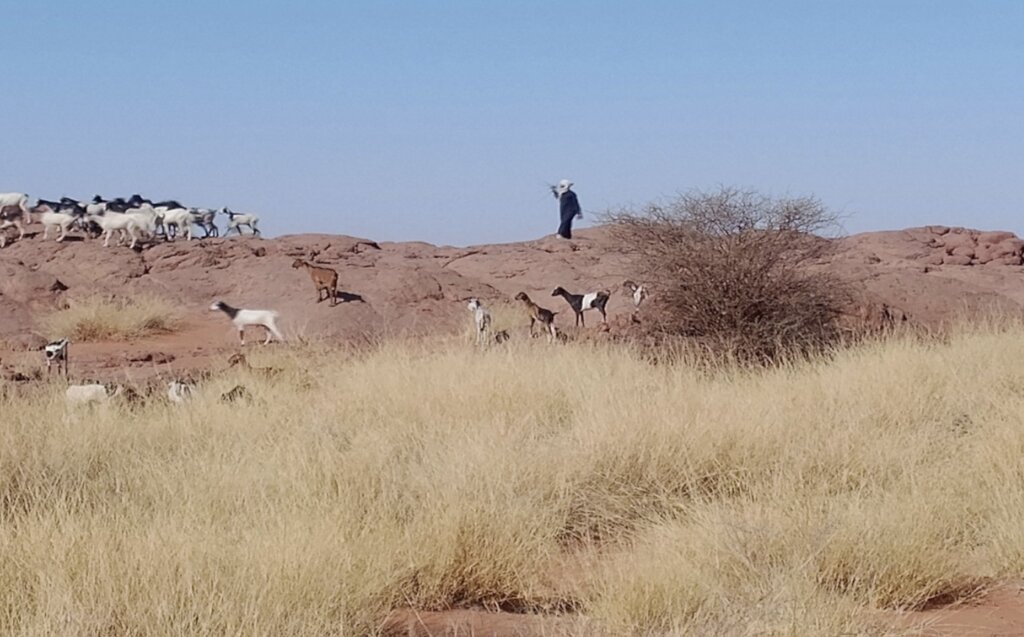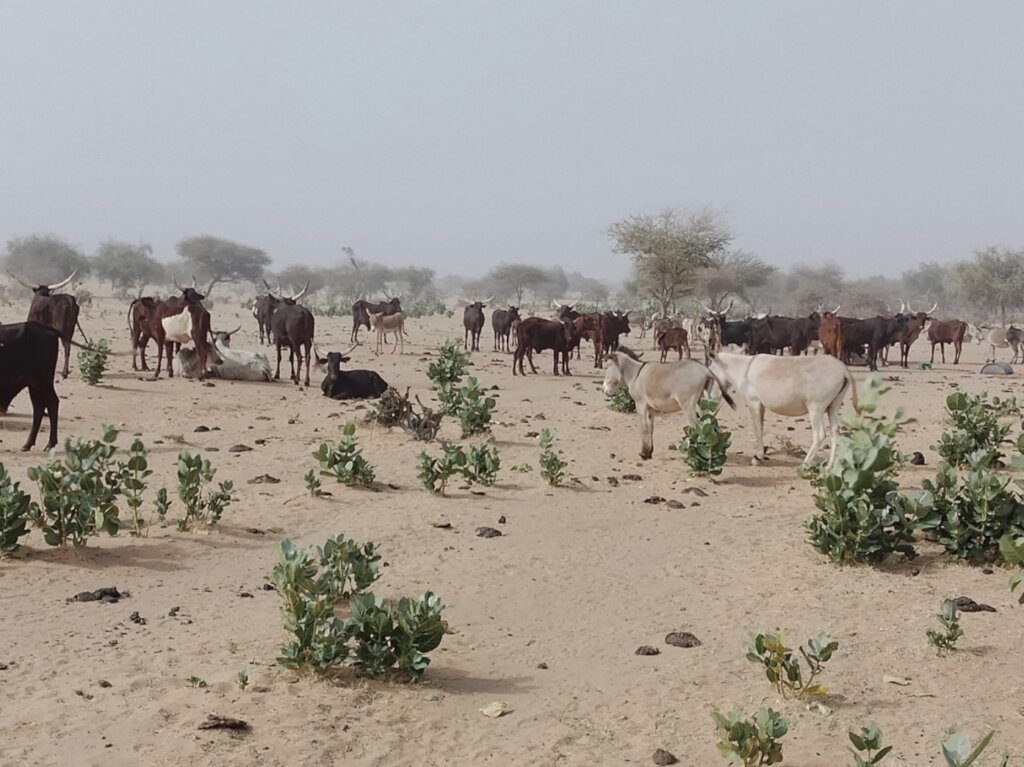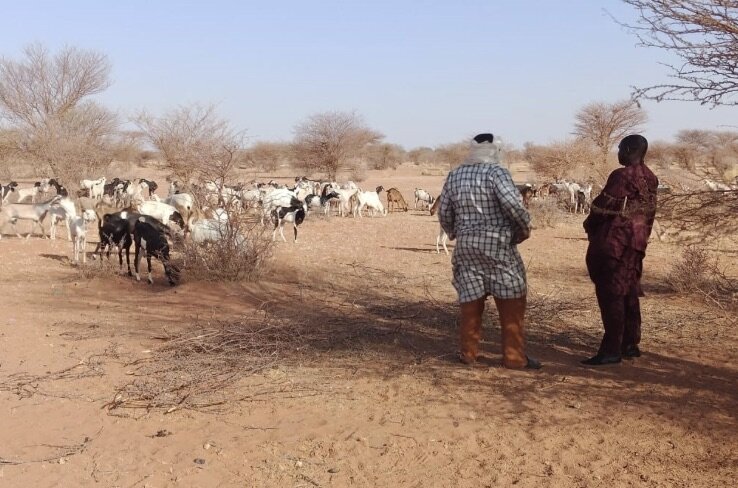
Recurrent drought and land degradation are devastating the Sahel's pastoral ecosystems, causing severe pasture loss and livestock deaths. RAIN's Regenerative Agriculture Initiative in northern Niger uses community-led rotational grazing to rebuild topsoil, regenerate native grasses, and restore degraded land. By pairing restoration with livestock health and local management, RAIN helps nomadic pastoralists adapt to climate change, restoring 20,000 acres to protect traditional livelihoods.
Northern Niger is among the world's most climate-vulnerable regions, suffering from rapid desertification and soil degradation. Traditional pastoral herds lack sufficient grazing land, leading to reduced livestock productivity, high animal mortality, and severe economic destabilization for nomadic families. Without active land rehabilitation, pastoralists are forced to travel increasingly perilous distances or abandon their heritage entirely.
RAIN mobilizes partner communities to establish community grazing committees, develop participatory land-use plans, and implement controlled rotational herding. By concentrating herd hooves and organic manure at targeted sites, this low-cost, natural technique breaks hard soil crusts, retains rainwater, and accelerates grass regeneration. RAIN also facilitates access to essential veterinary care, vaccinations, and herder training to ensure long-term ecosystem and herd health.
This initiative restores soil fertility and vegetation cover across 20,000 acres of degraded land while supporting herds of up to 1,000 head of livestock per community. Regenerated rangelands improve livestock health and milk production, fortify pastoral food security, reduce conflicts over communal land and resources, and create a scalable, community-owned model for climate adaptation across the Sahel and Sahara.


Support this important cause by creating a personalized fundraising page.
Start a Fundraiser