By Team RTF | Project Leader
Time seems to pass so quickly. In the several months since we last wrote to you, we have dealt with a number of events over and above the daily routine of hard work and care for our resident horses and burros.
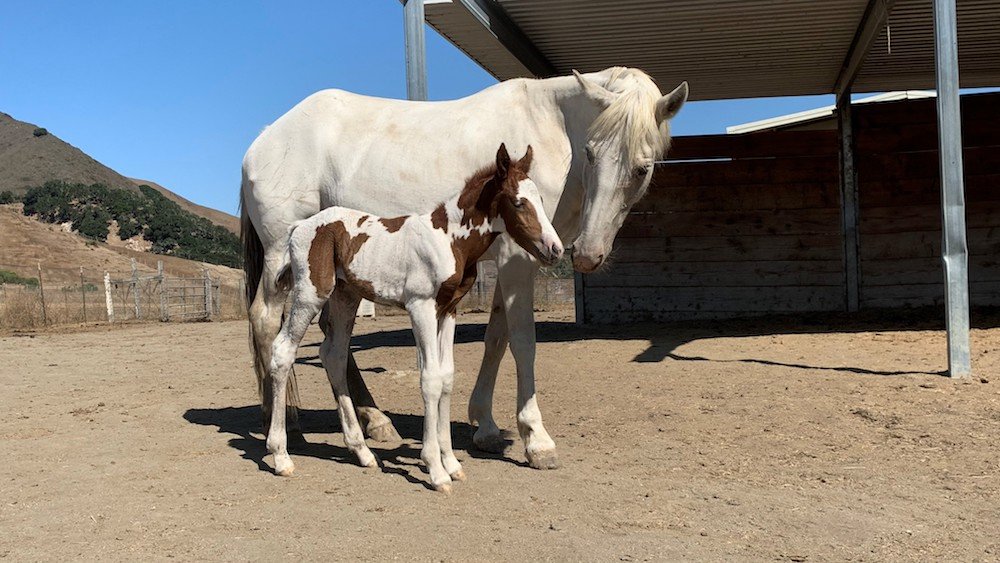
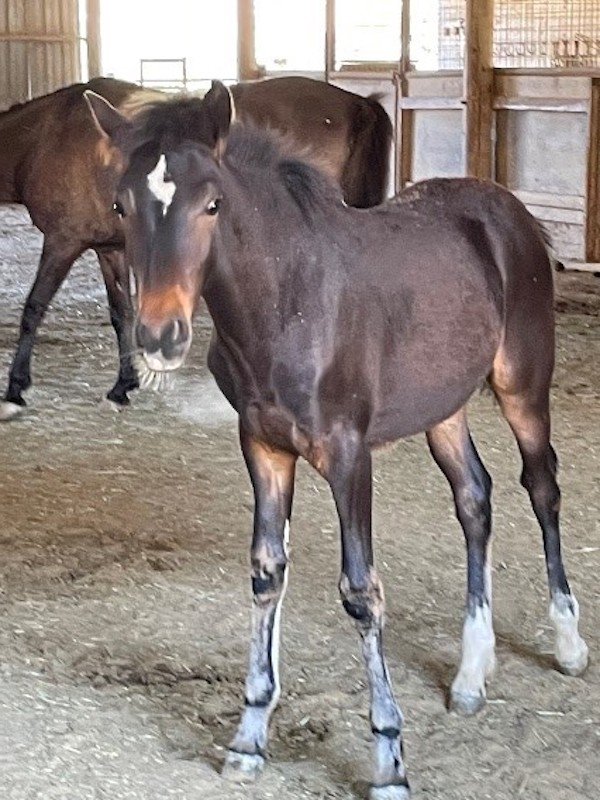
To our great concern, our rambunctious little Eros fractured his leg somehow, a potentially life-ending event for a horse. However, we don’t give up on our precious residents easily, and because of his youth we decided to do everything possible to save him. Eros was at the clinic for almost a month recovering from surgery, transitioning from a cast to heavy bandage to a regular wrap, at which point he came home to RTF for further recovery. He and his mom, Reina, hung out in the barn while he healed and took his supplements for bone growth, and he recently got a follow-up x-ray that showed he is healing well! We are now allowing him outside in a larger area for increasing amounts of time, and have recently put Kimmimila with her young filly Solstice with Eros and Reina in a larger space outside, so the young foals can have some much-needed play time. This was an expensive journey, but your support helped to save this precious little horse, and we are so thankful.
RTF has many moving parts—all the Spanish Mustangs we previously rescued are now registered with the Horse of the Americas, Inc., and the young Spanish Mustangs and Gilas are getting ready for adoption.
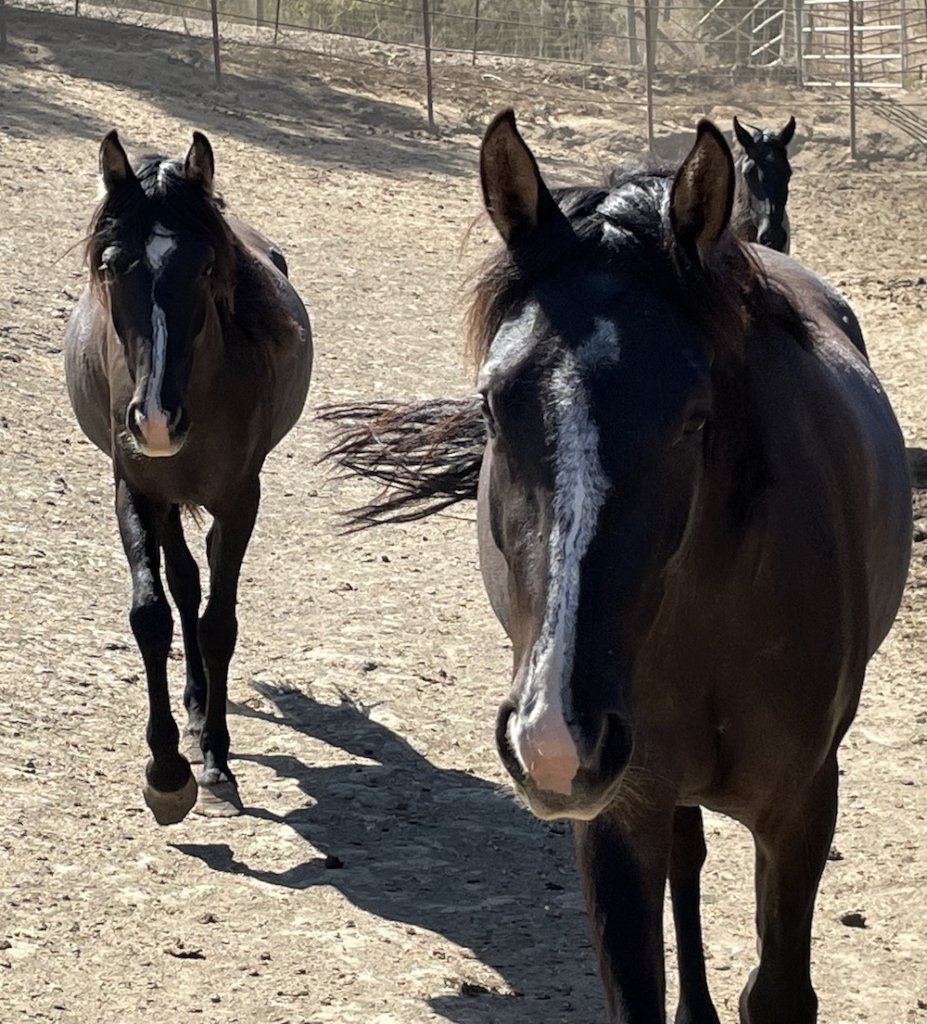
Something big is brewing—we are continuing the process of reuniting family/social bands that were separated during the Red Desert round-up in Wyoming last year. They will join several others who have been in transit, as well as three youngsters, Rosie, Isabelle, and Romeo, who have been with us at Lompoc since March. We’ll tell—and show you—more about this next time, when the reunion is complete. Keeping herds and families together, and reuniting families and family members shattered by heartless roundups has been a theme here at RTF since our founding. This is a big one, and the amazing and impossible story of how it happened is what you’ll hear next time.
Although RTF uses a non-hormonal and reversible birth control agent to keep our population stable, there is an occasional mare who is a non-responder to the program. These are happy “accidents”—however, no one could be sorry to see Choctaw mare Mariah’s new colt "Chahta Tushka appear! He is super curious and already attached to his older brother Talako, who is very sweet and patient with him. The Choctaw ponies are a threatened strain of horses who arrived to America in the 1500’s and carried the infirm on the tragic Trail of Tears.
We also transported Hart Mountain herd-member Maverick from our San Luis Obispo satellite to Lompoc headquarters for more hands-on care. He is 25 years old and is no longer able to keep on enough weight traversing the SLO hills, so he came to Lompoc to have his teeth done and be put on a special diet. He has rejoined members of his herd who have returned previously for special care (“the retirees”). He immediately reunited with Serena, a 28-year-old Hart Mountain mare, who he has known since they were free on the range.
We are also all very happy that our Ranch Manager, Jason, has returned to his post at RTF headquarters in Lompoc, CA, after his long deploymenton a project up north caring for members of the Gila Herd during their stay there.
Since his much-welcomed return, he has been catching up with the maintenance, repair and acquisition of ranch equipment. As a result, we now have a new-to-us used feed truck, have new tires on two ranch pickups and our side-by-side utility vehicle and Kubota tractor, and got our ailing water truck back to health. Jason also continues to address fencing needs and preparation for winter rains!
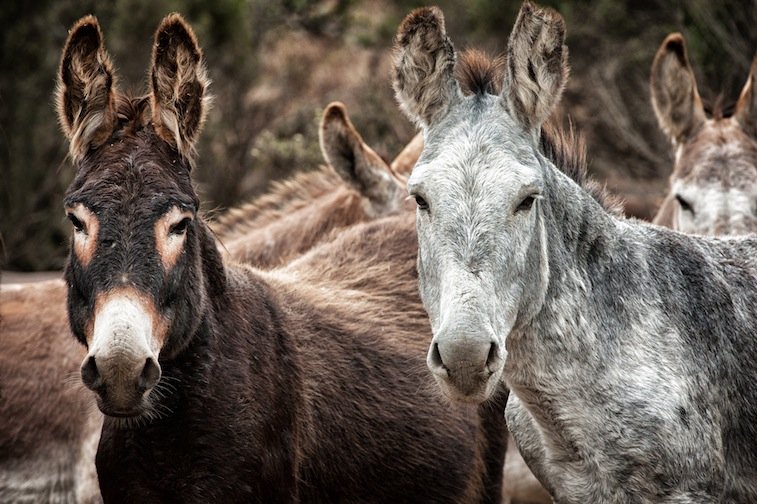
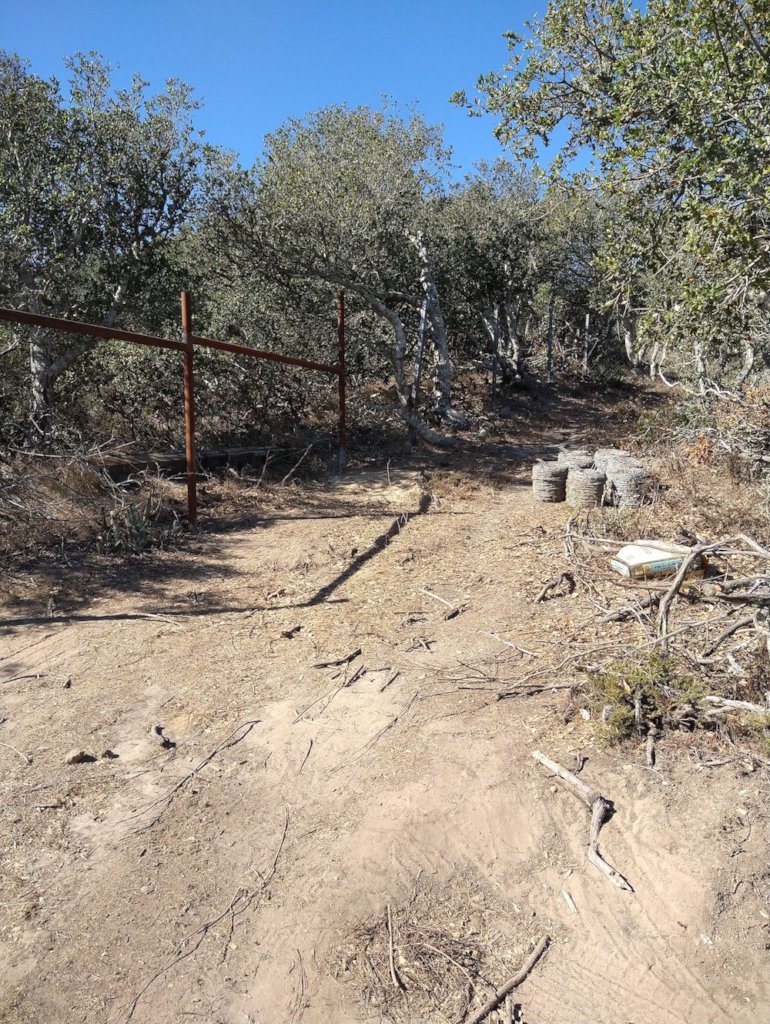
Our Sanctuary Director and founder recruited a small crew to work with RTF alumni Merced Tagle to repair 2500’ of perimeter fencing in our Oak Forest (where the RTF burros like to hang out), and had sand hauled into both of our barns for the comfort and safety of horses and people.
If you’ve ever cared for one horse, you can imagine the challenge of giving a high standard of care to 500. We are aware—every day— that we can’t do it alone, and your support is such an important part of us having done this large and life-preserving job successfully for the past 24 years.
Program—
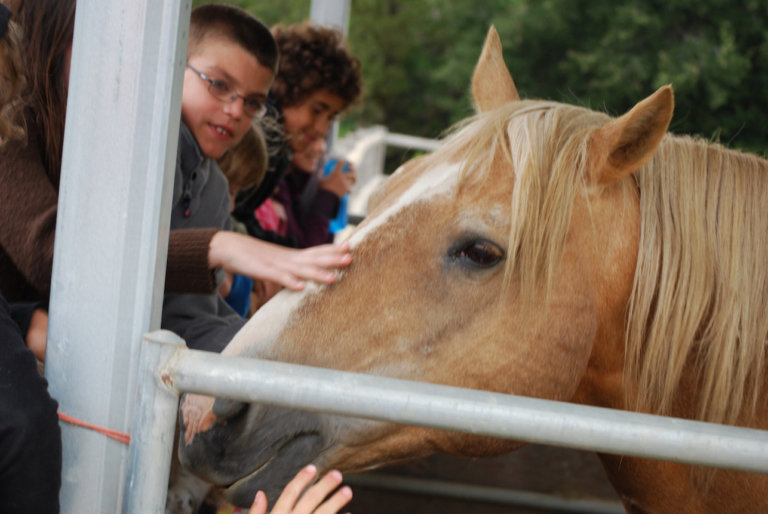
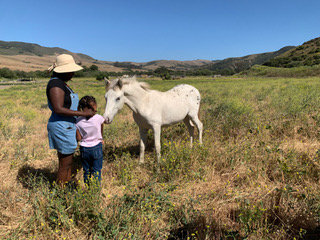
This summer we hosted many people happy to get back out after long limited activity. A lot of these private tours were for kids who were primarily excited to meet Spirit. Many of them wore their favorite Spirit t-shirts to meet the movie star. Public tours were also busy with the generally relaxed restrictions. To accommodate this demand, we have doubled our number of sanctuary tours for the 2022 Program Season.
Safaris and Photo Clinics this summer were also a hit with a lot of returning photographers. The RTF horses living at our San Luis Obispo satellite location recognized a lot of the photographers, which was very enlightening to see.
Our volunteers have been such a big help on Saturdays, and some have even made it a point to get out to the ranch and help on weekdays. Our volunteers are invaluable and we cannot thank them enough!
Advocacy—
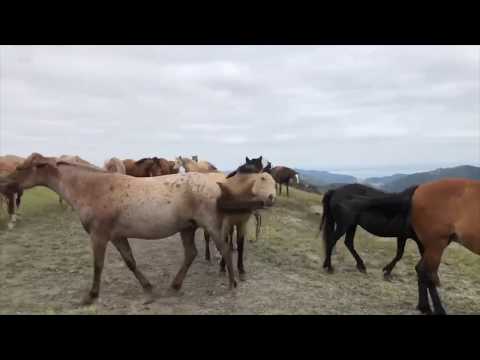
If you’ve been following RTF, you know that as well as providing sanctuary for approximately 500 displaced wild horses and burros, we work on the national stage to protect and preserve the wild equines still running free on our public lands. This is a long-standing battle, as these lands are used by multiple stakeholders, and most see the horses as an obstacle to their interests.
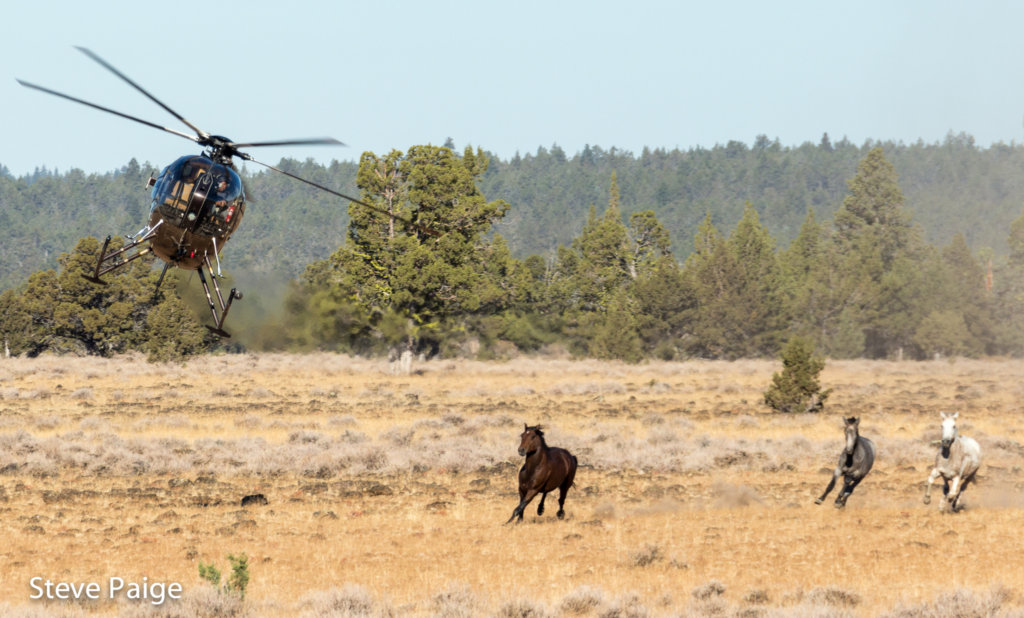
The Bureau of Land Management continues to pursue an aggressive roundup schedule, warehousing wild horses and burros by the thousands in already overcrowded holding facilities despite lawmakers appropriating millions of dollars for safe, proven and humane fertility control. Wholesale change cannot happen overnight -- but there’s little sign it’s happening at all.
In June, BLM’s roundup calendar called for only 2,405 mares to be treated with fertility control this year, out of the agency-estimated 86,000 wild horses and burros on the range. By Aug. 30, the number of mares that the agency planned to treat had been cut to just 1,172.
At the same time, BLM plans to capture almost 17,000 wild horses and burros this year. That includes an additional 6,000 that in August the agency announced it would remove from the range due to climate change-driven drought across the West.
Neither climate change nor drought are new to the West’s fragile rangelands, yet BLM has failed to be proactive by treating mares with fertility control in order to slow herd growth or even by putting into place contingency plans for emergency conditions.
In almost all instances, BLM has removed the additional wild horses from their home ranges without treating mares with fertility control then releasing them – all but guaranteeing that helicopters will soon return to the same places to remove more wild horses at taxpayer expense, and put more captured horses at risk of falling into the foreign slaughter pipeline through failed adoptions and sales. Congress must hold BLM’s feet to the fire on its implementation now. Otherwise, the agency will continue throwing good money after bad, removing wild horses and burros from their home ranges while failing to address reproduction.
On the horse slaughter issue: the Senate version of the Save America's Forgotten Equines (SAFE) Act (S. 2732), which would ban horse slaughter and the export of American horses for slaughter, was reintroduced on Sept. 14. The Senate version has three cosponsors, while the House version (H.R. 3355) has amassed 119.
The tens of thousands of horses shipped abroad for slaughter each year include an unknown number of wild horses.
Under a 2004 sale authority law, commonly called the “Burns Amendment,” the BLM is directed to sell “without limitation” wild horses age 10 and older or younger horses who have not been adopted after three tries. BLM has sold more than 6,455 wild horses and burros since 2012. Once title is passed, wild horses lose their federal protections and are no longer tracked by BLM.
Congress has made clear that BLM and the U.S. Forest Service are not to sell wild horses to known kill buyers; however, even if the agency abides by the law, the threat of slaughter looms. Once title is passed to the wild horse’s new owner, it loses its protected status. Likewise, after an adopter receives title after one year, a wild horse or burro can be sold and end up auctioned off to a kill buyer.
Earlier this year, a New York Times report found that wild horses adopted through a BLM program were being shipped to slaughter after their adopters received a $1,000 incentive. BLM has since altered the program in ways that fall short of real change. RTF is among those that have called for the program to be suspended pending a thorough investigation of the program. Last year, BLM adopted out 4,741 wild horses and burros.
---------
We hope that you enjoy these little periodic updates about the wild horses and burros who sadly lost their homes on the range, but found a safe and happy life here at RTF’s American Wild Horse Sanctuary. We wish that you all were here to meet the horses about which we write. If you can, you are most welcome to join in our scheduled programs, which will gradually resume a more normal routine. You can check them out at www.returntofreedom.org
Our deepest thanks for your part in making life so good for our residents. There is no RTF without people like you.
All of Us at Return to Freedom
Links:
Project reports on GlobalGiving are posted directly to globalgiving.org by Project Leaders as they are completed, generally every 3-4 months. To protect the integrity of these documents, GlobalGiving does not alter them; therefore you may find some language or formatting issues.
If you donate to this project or have donated to this project, you can receive an email when this project posts a report. You can also subscribe for reports without donating.



Support this important cause by creating a personalized fundraising page.
Start a Fundraiser