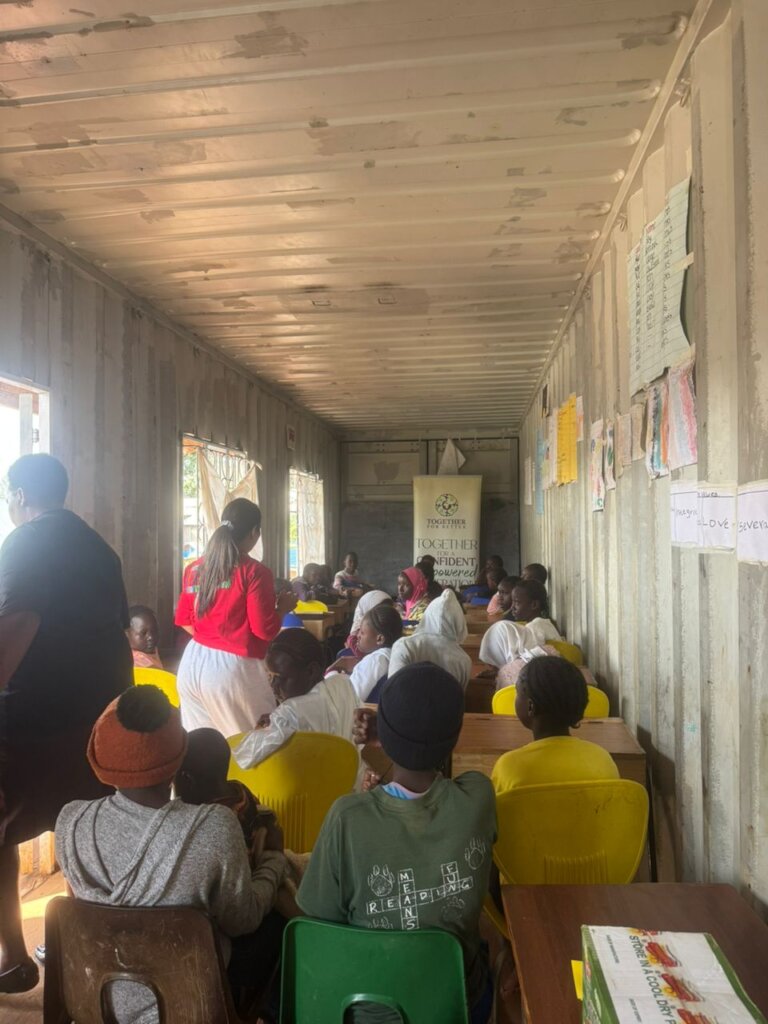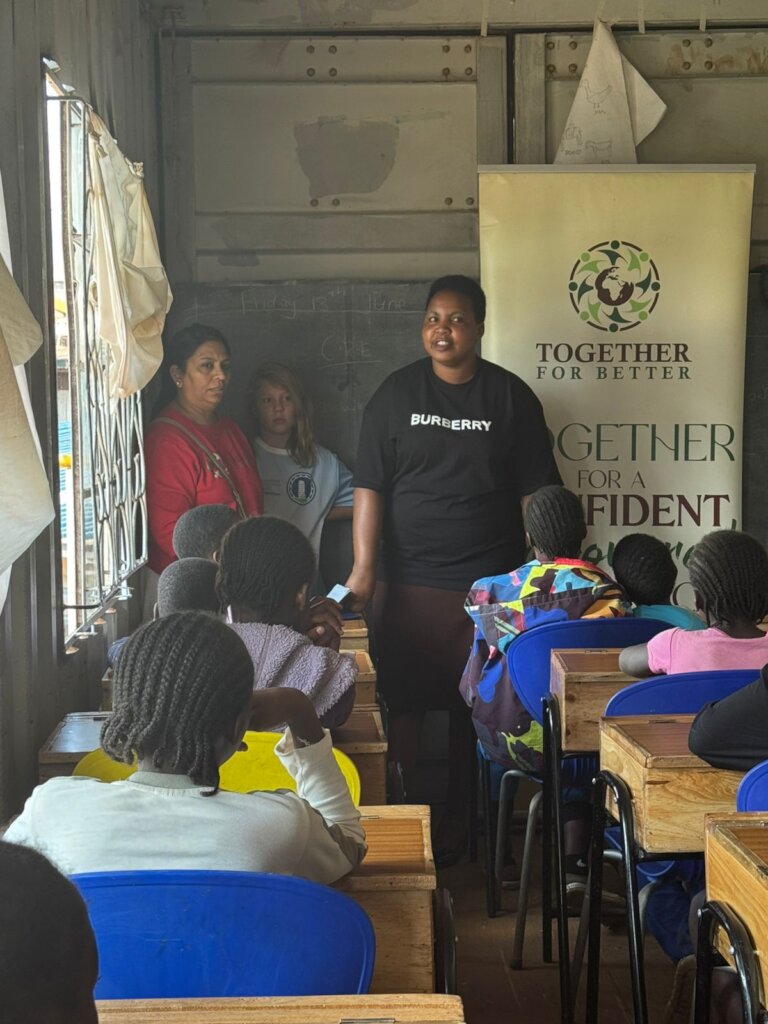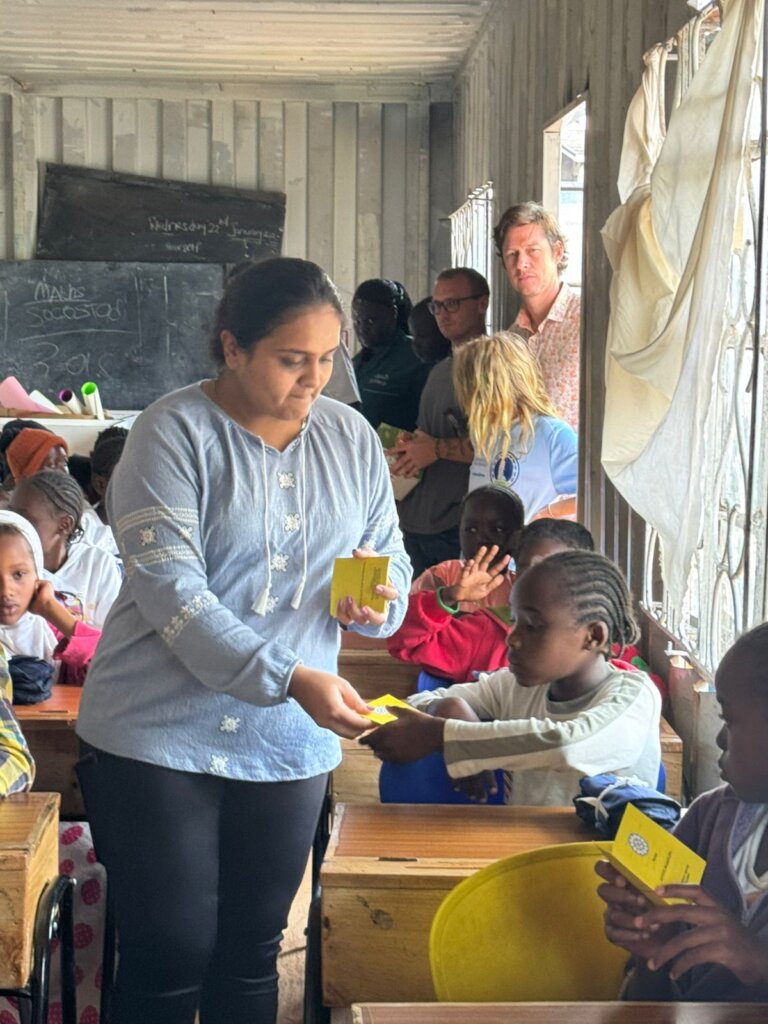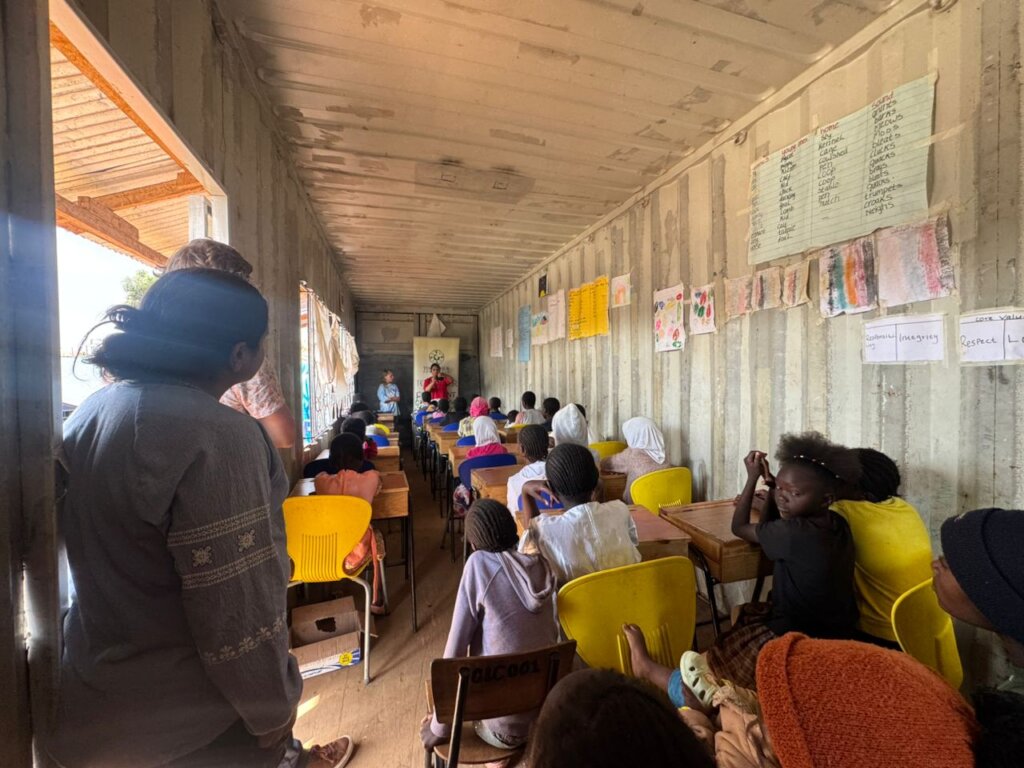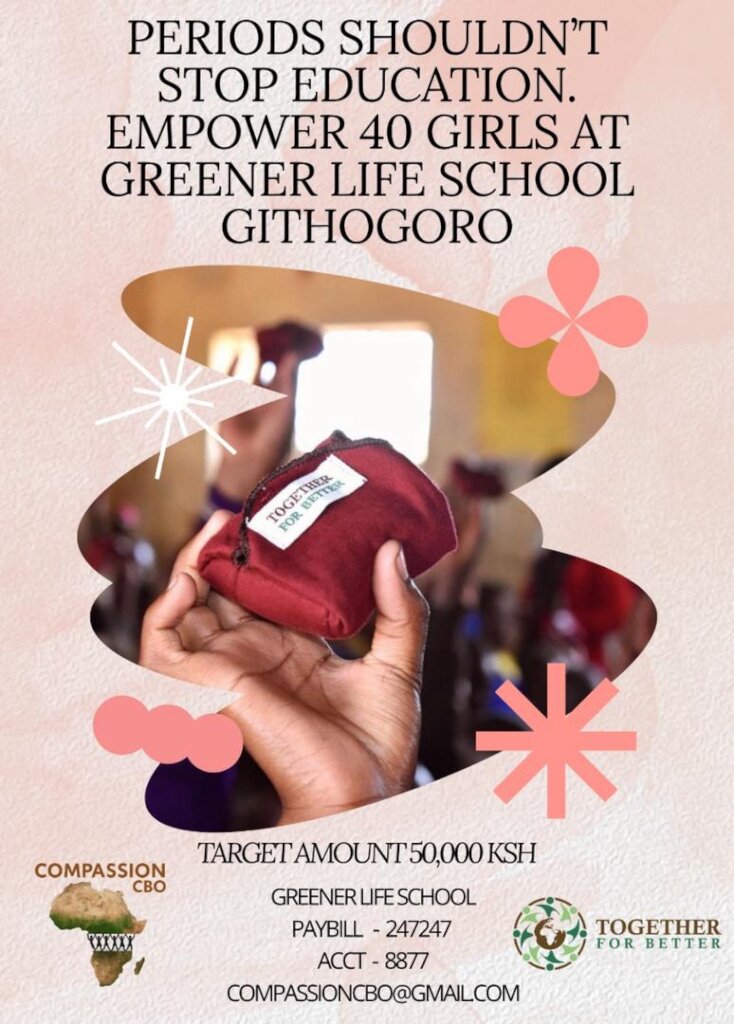
Empowering vulnerable girls in Githogoro slum in Nairobi with sanitary pads. Helping girls overcome Period poverty through sanitary pads is transformative. Many girls due to lack of sanitary pads miss school 4 to 6 days per month. Reusable pads are proving to be a more sustainable means of helping many girls manage Period Poverty. Period Poverty is inability to afford and access menstrual products, sanitation and hygiene facilities and education and awareness to manage menstrual health.
Menstruation - or period - is a natural and healthy process, yet millions of women and girls cannot afford menstrual products or access to safe water and sanitation to manage their menstrual health and hygiene. This interrupts their lives, rights, and freedoms. Period poverty is inability to afford and access menstrual products, sanitation and hygiene facilities and education and awareness to manage menstrual health. Simply put, period poverty costs women and girls too much. It must stop.
The project will reduce period poverty and empower vulnerable girls through sustainable solutions and inclusive programs. Reusable pads are often more comfortable than other materials. Reusable pads are cheaper in the long term. Reusable pads can be washed and reused multiple times. Reusable pads are quiet to change. Reusable pads offer a more hygienic alternative. Reusable pads can help to prevent leaks and reduce the risk of infection. Reusable pads are environmentally friendly
It will break down the barriers that menstruation poses to girls' education and pave the way for a future where no girl is left behind. Research shows that girls can miss up to five days of school each month due to menstruation-related issues. This adds up to 60 school days annually, or nearly one-third of the academic year.



Support this important cause by creating a personalized fundraising page.
Start a Fundraiser