By Monica Verma | Officer in Charge
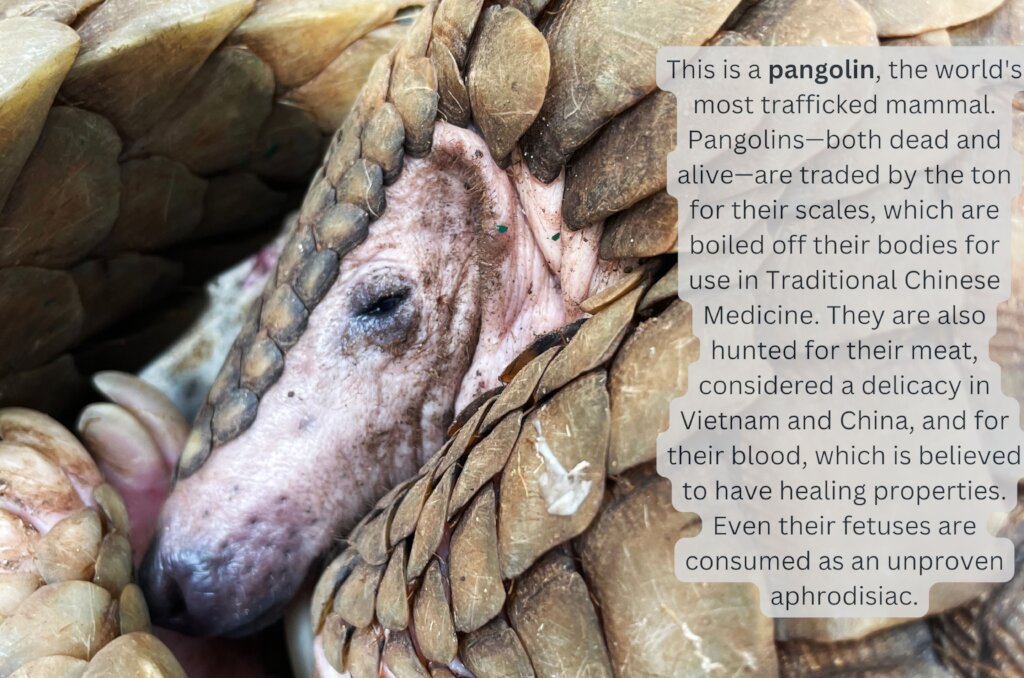
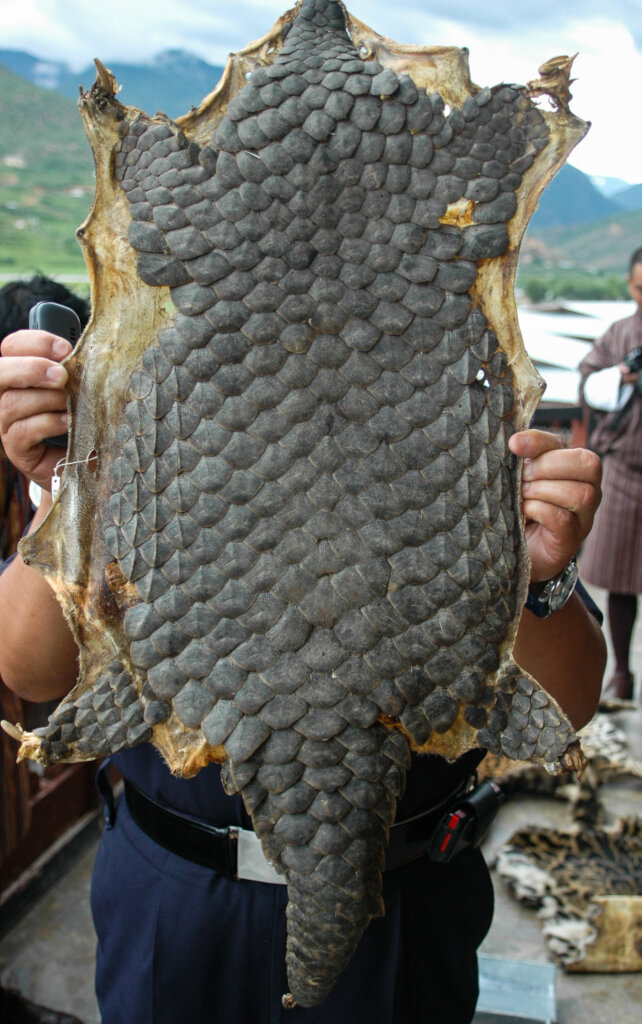
Pangolins are bizarre, highly elusive mammals covered in scales. About the size of a house cat, they are extremely shy and curl into a ball when frightened. People have described them as a walking pinecone, an artichoke with legs, a tiny dinosaur, or even a friendly crocodile.
Unlike tigers, rhinos, elephants, or bears, pangolins are not-so-charismatic. Even within the scientific community, there hasn’t been much research on them, leaving many aspects of their lives a mystery.
But while most of us remained oblivious to their existence, pangolins became the world’s most trafficked mammal.
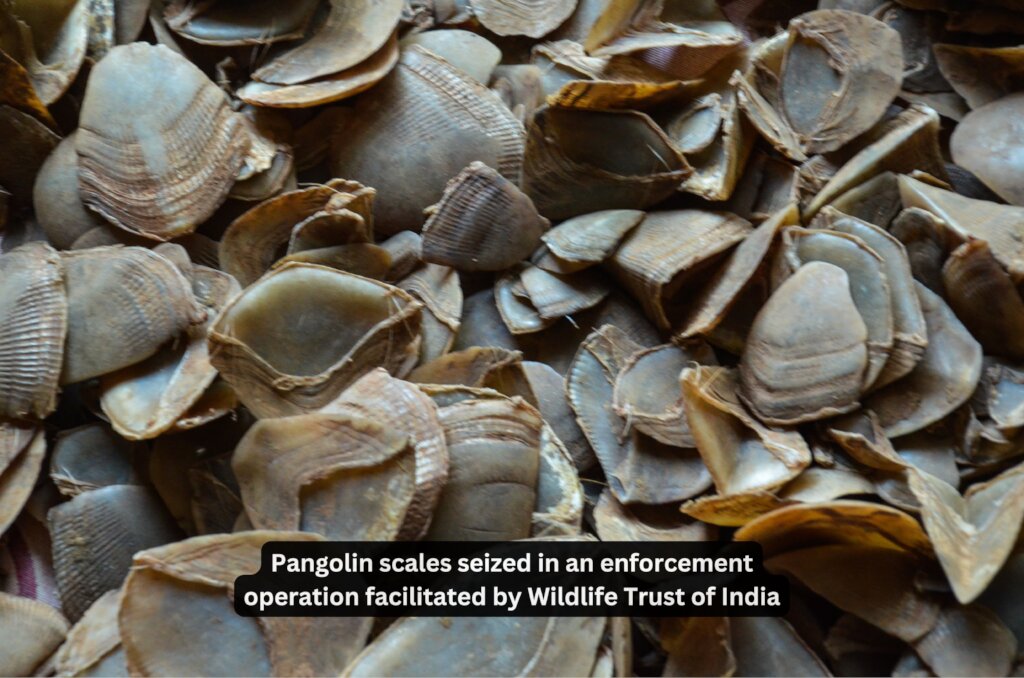
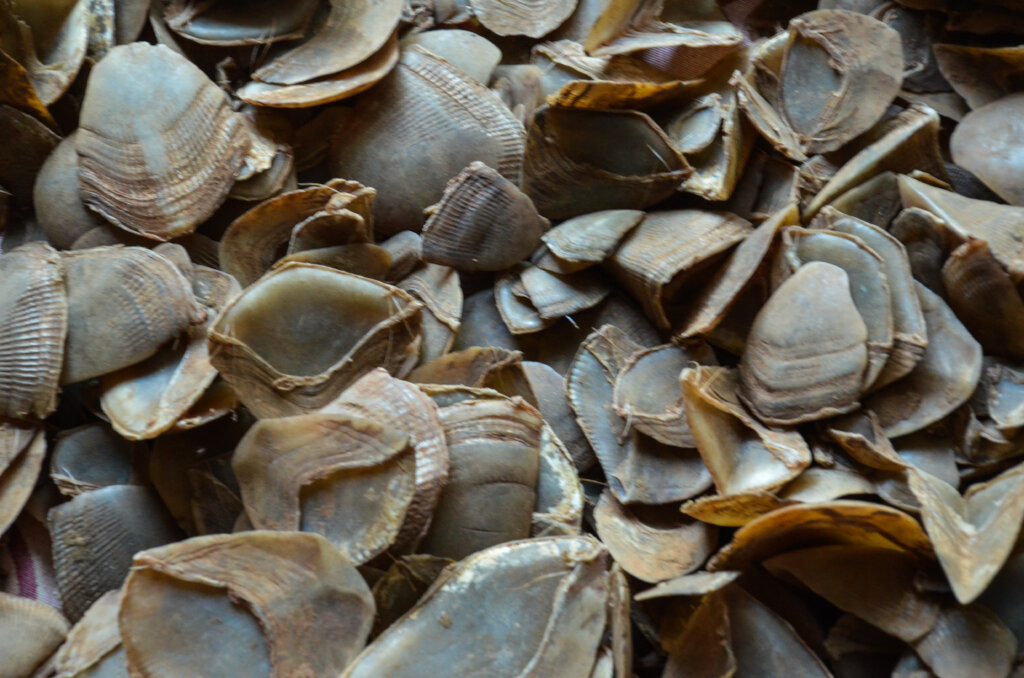
Pangolins – both dead and alive – are traded in tons for their scales, which are boiled off their bodies for use in Traditional Chinese Medicine. They are also hunted for their meat which is a delicacy in Vietnam and China, and for their blood allegedly believed to possess healing properties. Even their fetuses are consumed as an unproven aphrodisiac.
Due to relentless poaching, Pangolins in Mainland China have become critically endangered, feared to be extinct or functionally extinct in most regions. Yet, the demand persists. With dwindling supply in China, poachers have turned to Indian pangolins, already endangered, and African species to meet the market’s insatiable appetite.
At this point, you may wonder: why does it matter? Perhaps no one would miss a species they never even knew existed. But pangolins are pre-historic. Fossils show they date back 80 million years, shortly after the extinction of dinosaurs. Like every creation of nature, pangolins play a unique and indispensable role. They are a vital part of the ecosystems we all depend on.
This awkward-looking animal is undeniably fascinating. The more you learn about them, the more you’ll fall in love. Watch a few videos online - pangolins riding around on their mother’s tails, sticking out their tongues longer than their bodies, or curling into a tight ball when confronted by a tiger.
With their natural defense mechanism and their elusive nature, pangolins are pretty much safe in the wild. Humans are their greatest threat - so much so that we are driving them toward extinction.
All this happens despite the species being granted the highest level of protection under various national and international laws, which carry severe penalties for those involved in poaching, trading, consuming, or possessing pangolins.
Illegal Wildlife Trade is a lucrative business, worth over 23 billion US dollars annually. It is run by highly organized, covert, and ruthless syndicates that show no regard for the fact that pangolins could soon go extinct.
Various players are involved at different levels of this trade. There are end consumers, whom we are working to educate. There are traders at various stages who profit the most by turning animals into commodities. We are dismantling these trading networks using cutting-edge technology, providing actionable intelligence that leads to enforcement operations, and strengthening the capacity of frontline forest staff.
And then there are the hunters. To protect pangolins, WTI recently launched targeted conservation initiatives in Manipur, a hunting hub for pangolins and other species. Multiple signboards were installed in key locations across Ukhrul and Kamjong districts to raise awareness about pangolin protection. Collaborating with local churches, which hold significant influence in the predominantly Christian population, WTI facilitated a resolution to ban pangolin hunting in 252 villages across six districts.
We also conducted market surveys in Kamjong to monitor wildlife trade and actively tracked social media platforms to identify potential illegal wildlife trade involving pangolins, star tortoises, and tokay geckos.
Community sensitization programs further strengthened local support, engaging approximately 180 participants across Khuingai and Razai Khullen villages. These sessions, attended by village authorities, church leaders, and community groups, emphasized the ecological importance of pangolins and the urgent need for their protection.
A local resident, inspired by the conservation messages also reported a captive sub-adult Chinese pangolin, which was rescued and safely released back into the wild.
Enforcement is a powerful deterrent to hunting, but education and awareness are equally critical in combating Illegal Wildlife Trade. These efforts help transform hunters into protectors by fostering an understanding of why the loss of any species endangers our own survival.
Pangolins are easy to overlook. But if you've ever sat in a serene, untouched place far from the city’s chaos, you’d hear nature’s symphony—birds, insects, reptiles, and animals harmonizing in ways only the wild can. In those moments, the value of every life form, and the diversity it brings, becomes undeniable.
In Manipur, the pangolins of 252 villages are fortunate. Here, even if these elusive creatures are seen, they are protected—not out of fear of enforcement, but because people understand their importance. They know the world is richer, more balanced, and more beautiful with pangolins in it.
Join WTI's fight against Illegal Wildlife Trade this GivingTuesday!
On December 3rd, GlobalGiving's GivingTuesday Matching Campaign offers an opportunity to amplify your impact. Every donation made on this day will be matched, allowing your contribution to go even further in helping us protect pangolins and other endangered wildlife. With your support, we can strengthen conservation efforts, educate communities, and continue to combat illegal trade.
Project reports on GlobalGiving are posted directly to globalgiving.org by Project Leaders as they are completed, generally every 3-4 months. To protect the integrity of these documents, GlobalGiving does not alter them; therefore you may find some language or formatting issues.
If you donate to this project or have donated to this project, you can receive an email when this project posts a report. You can also subscribe for reports without donating.



Support this important cause by creating a personalized fundraising page.
Start a Fundraiser