By Uma Athale | Project Officer
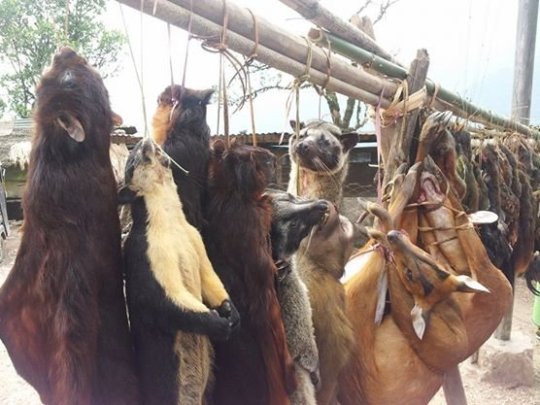
The State of Nagaland falls within a global ‘Biodiversity Hotspot’ and an Endemic Bird Area and supports considerable forest and other natural wealth. With a human population of around two million, the State is inhabited by 16 major tribes, along with other sub-tribes. A majority of the tribes are involved in subsistence agriculture. Hunting has been a tradition and an important part of the livelihood for the local people.
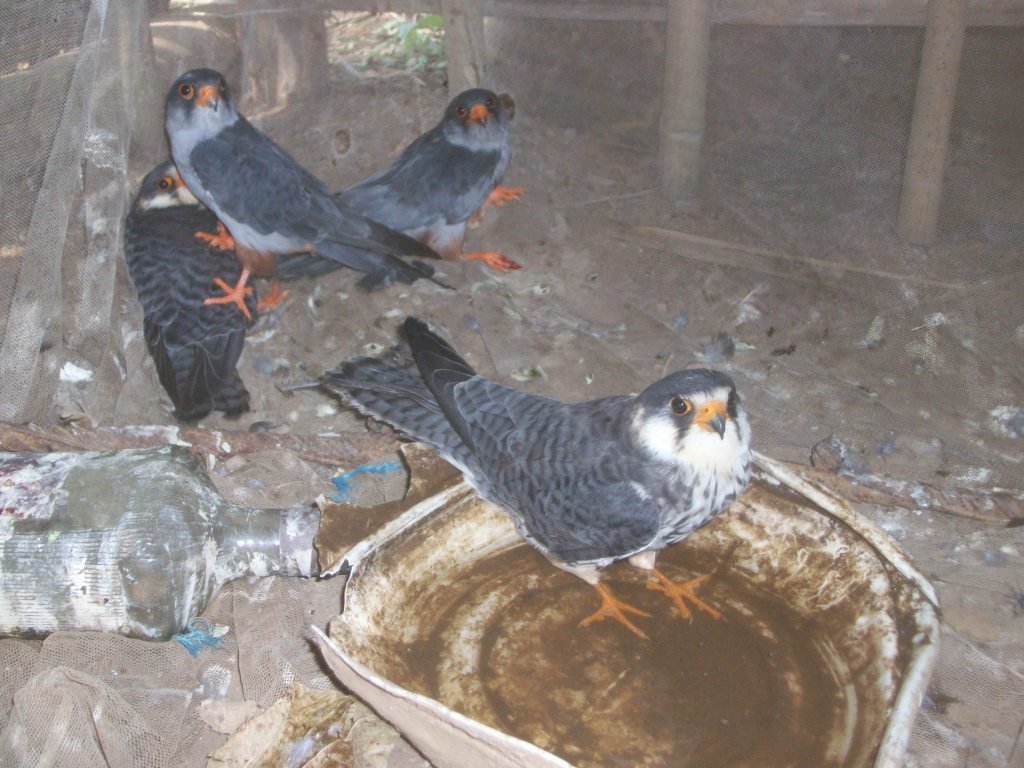
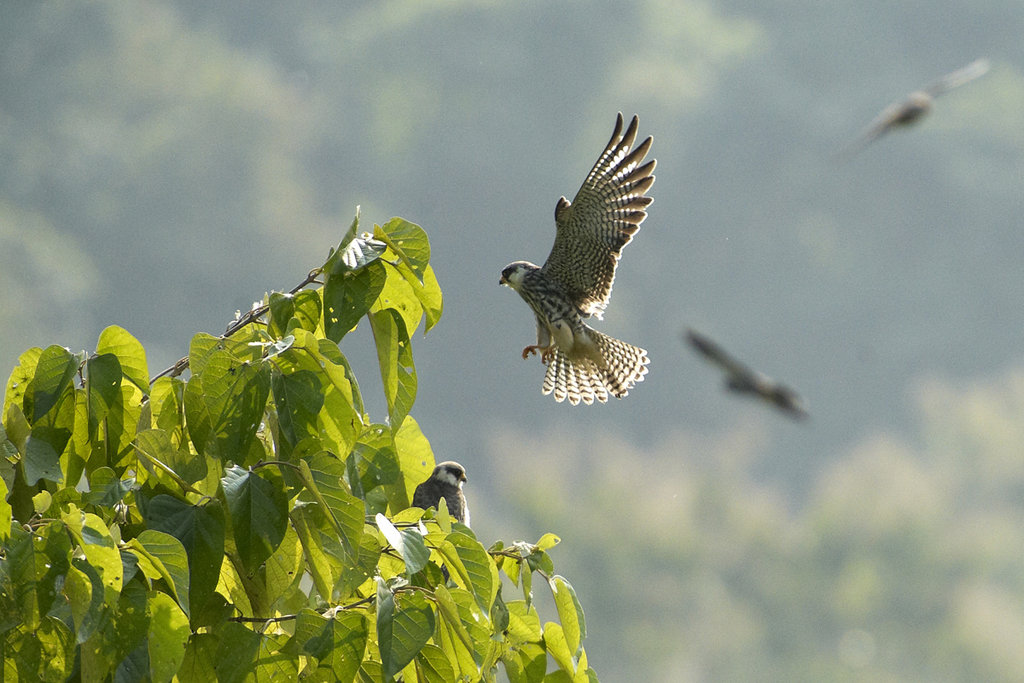
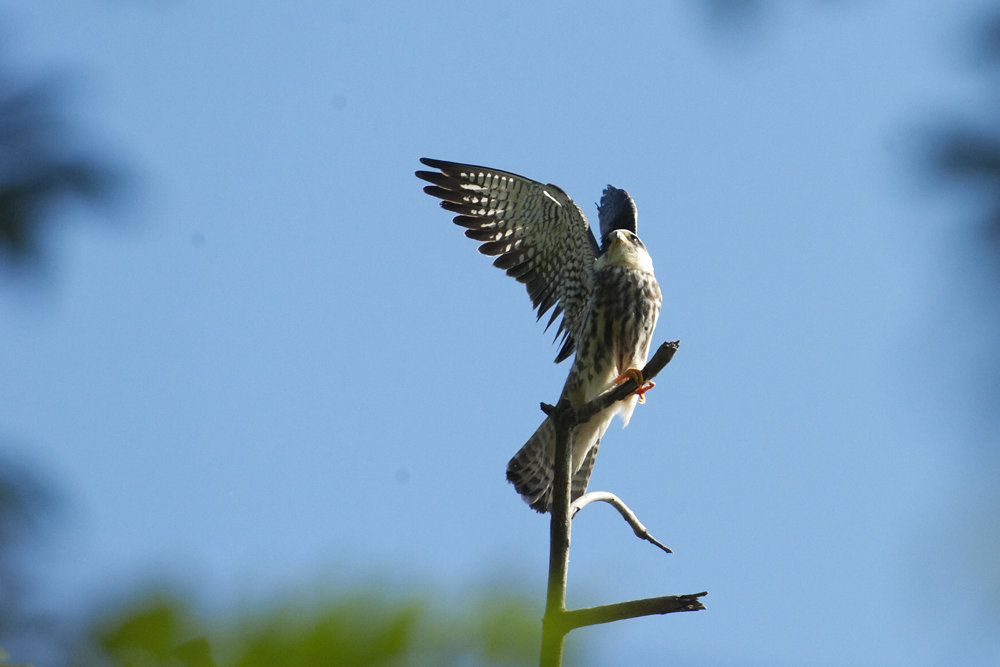
Although hunting wildlife is illegal under the Wildlife Protection Act (1972), the tribal people in Nagaland continue to hunt. Though local-level illegal hunting has been going on for years with little check, the recent (2012) mass killings of a migratory bird species, the Amur falcon (Falco amurensis) garnered considerable national and international attention. Every year, theses falcons migrate in large numbers from Eastern Russia and Northern China to Nagaland during October and stay on till December, as a part of their 22,000-Km-long annual migration to Southern Africa. Protected under the Convention on the Conservation of Migratory Species of Wild Animals (CMS) to which India is a signatory, these raptors are killed primarily for their meat and for live-bird trading. In 2012, an estimated 60,000 birds were illegally killed in three villages of Wokha district alone, causing widespread alarm all over the world regarding endangerment of the species and the blatant violation of national and international laws.
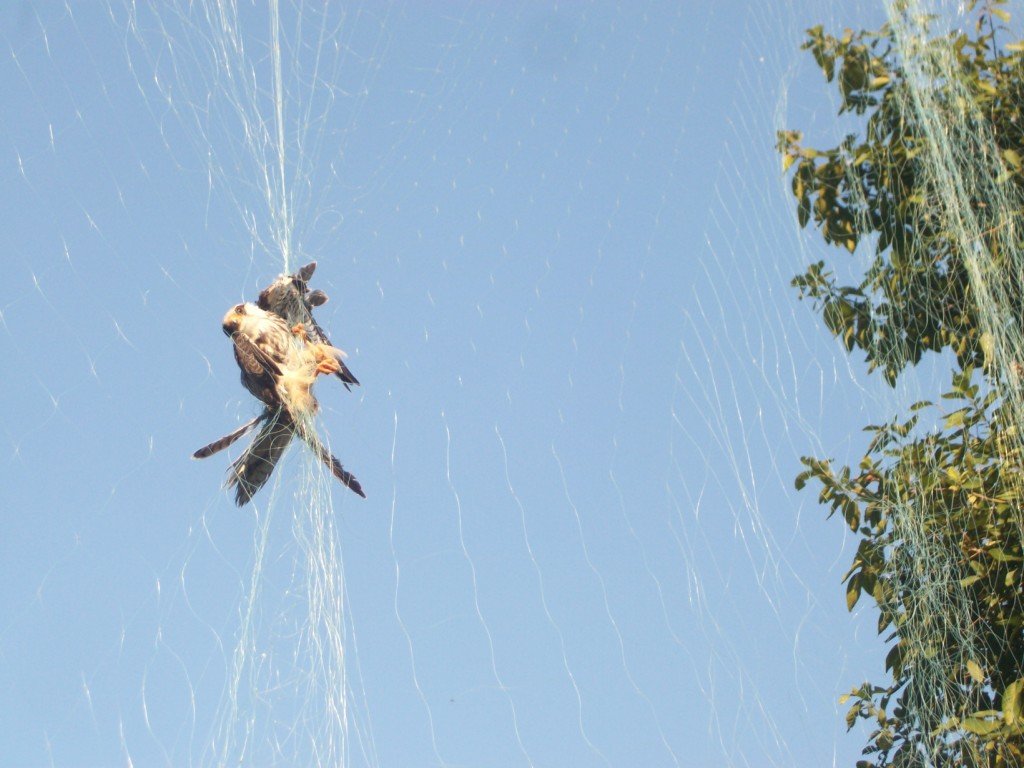
The major site of hunting is the Doyang hydro-electric project reservoir in Wokha district, which hosts the raptors in tens of thousands, believed to be the single largest aggregation of Amur falcons recorded. The hunters hoist their fishing nets high above the ground, close to the trees where the birds descend to roost; the birds get entangled in the nets, and are collected by the hunters, who sell them dead or alive, enabling them to earn lucrative amounts of money in a short span of time.
The local forest department made efforts to stop the mass hunting of these raptors. Seizures were made and all trapped birds found alive were released. Additionally, nets were also seized from the poachers. However, it was felt that much more needed to be done besides enforcing the law on the community, and that it will be useful to sensitize locals on the issue of illegal hunting of wildlife, highlighting the case of Amur falcon. WTI, through its Rapid Action Projects initiated a preliminary assessment of the on-ground situation near the Doyang reservoir in Wokha district, where the hunting had been reported. During the early phase (2013), the organization implemented:
Livelihood Support: From Pangti and Sungro, WTI identified 30 families of former hunters and provided them with communal poultry sheds along with a 1000 young birds and veterinary support and training.
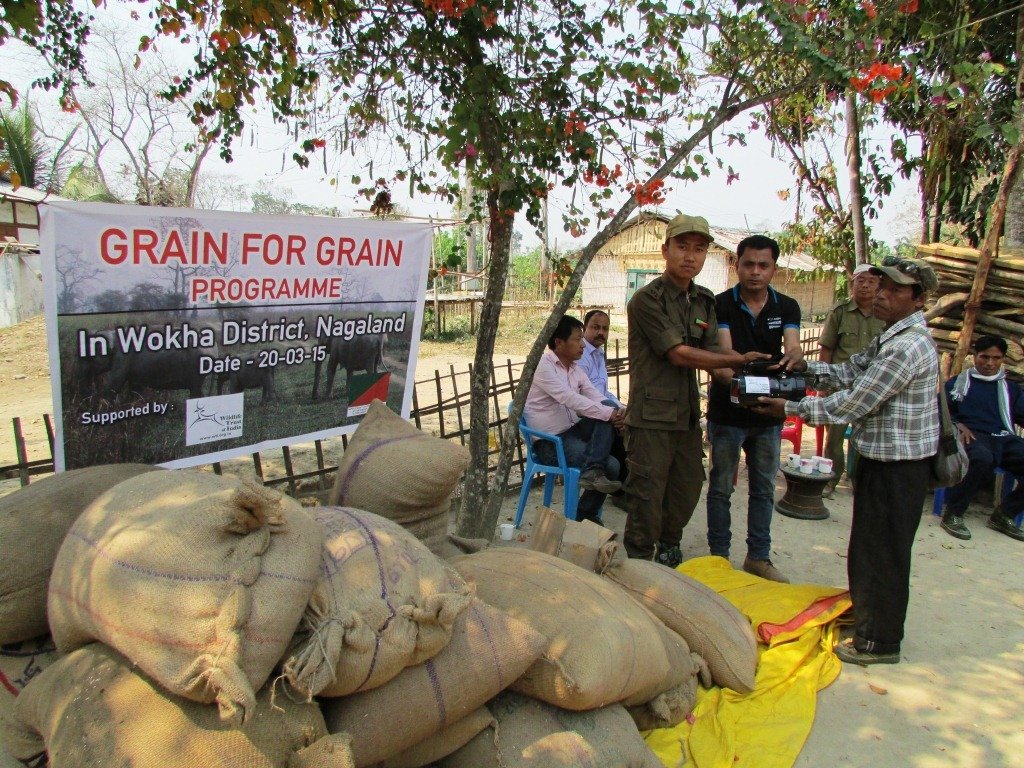
Grain for Grain: As a confidence-building measure, under its ‘Grain for Grain’ scheme, 11 WTI distributed 50 kg each to 99 families affected by crop losses due to elephants.
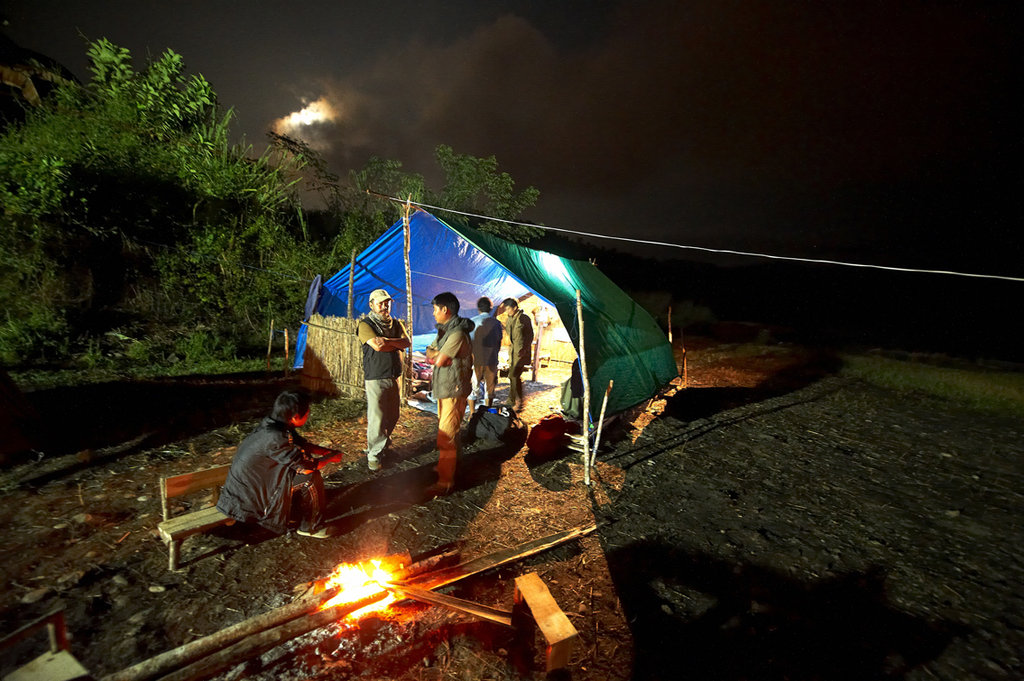
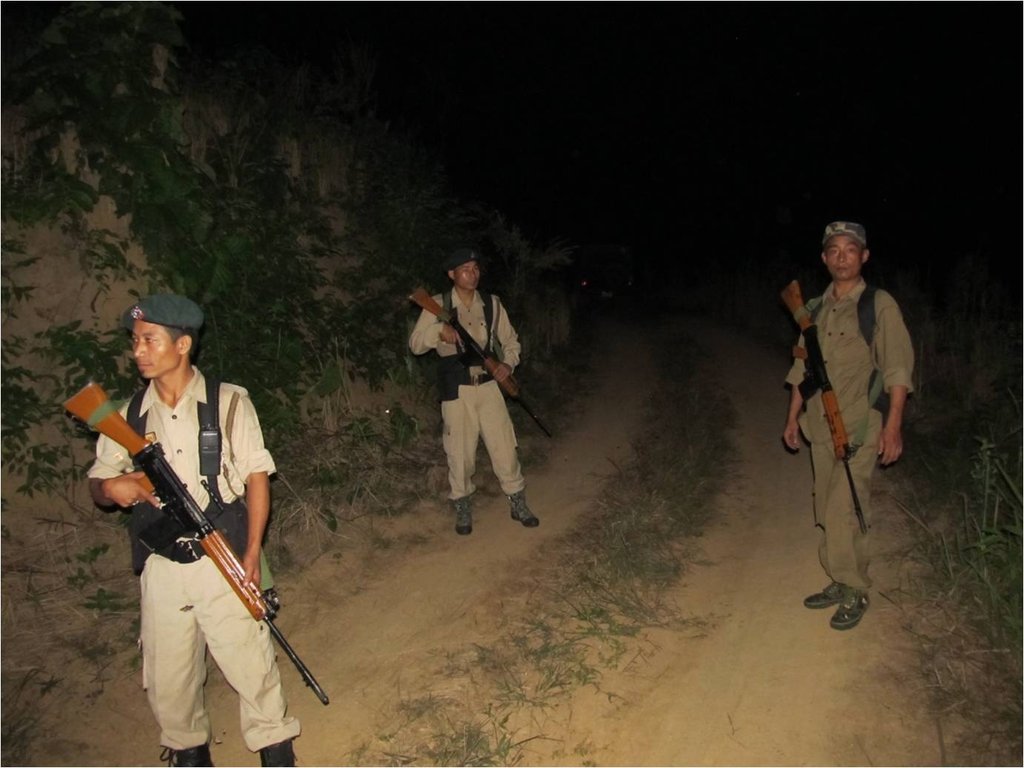
Hunters turn watchers: WTI initiated the formation of three local watch squads, consisting of ex-poachers from the villages, to monitor and prevent hunting of the falcons during the 2013 (November-December) season.
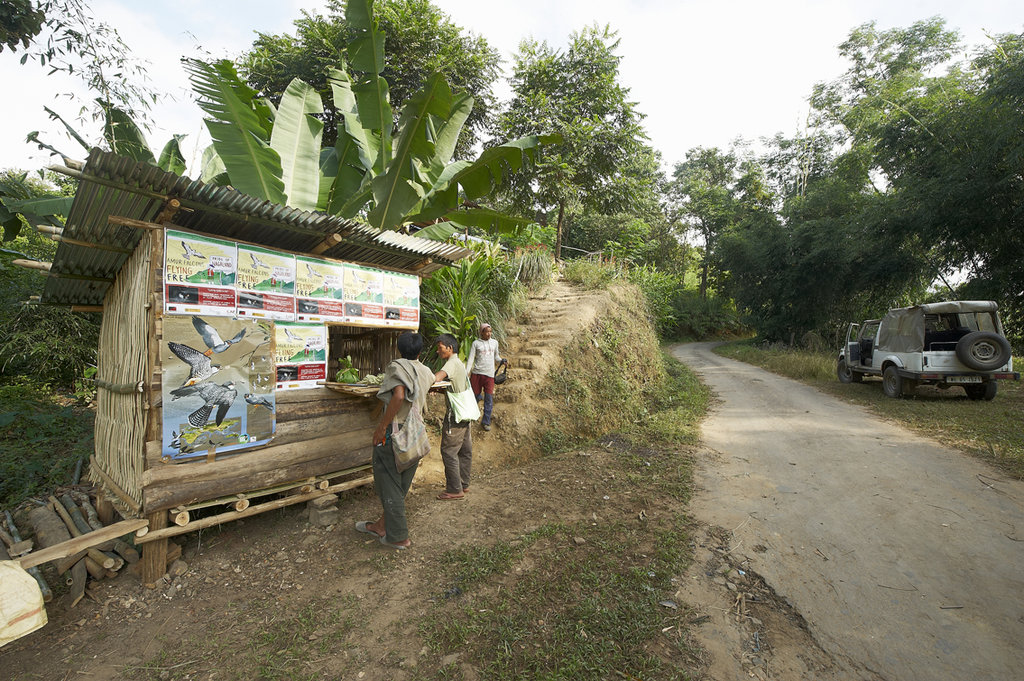
No Amur falcons were reported killed since then. However, the people in the area still need support to ensure that their livelihoods improve and the people continue to remain the custodians of their natural wealth. Although, there has been a considerable change in the attitudes towards hunting, the villagers are yet to achieve an improvement in their basic living, educational and developmental facilities. Continued and consistent awareness activities and further community-development activities are needed to find a long-term and sustainable solution to the matter.
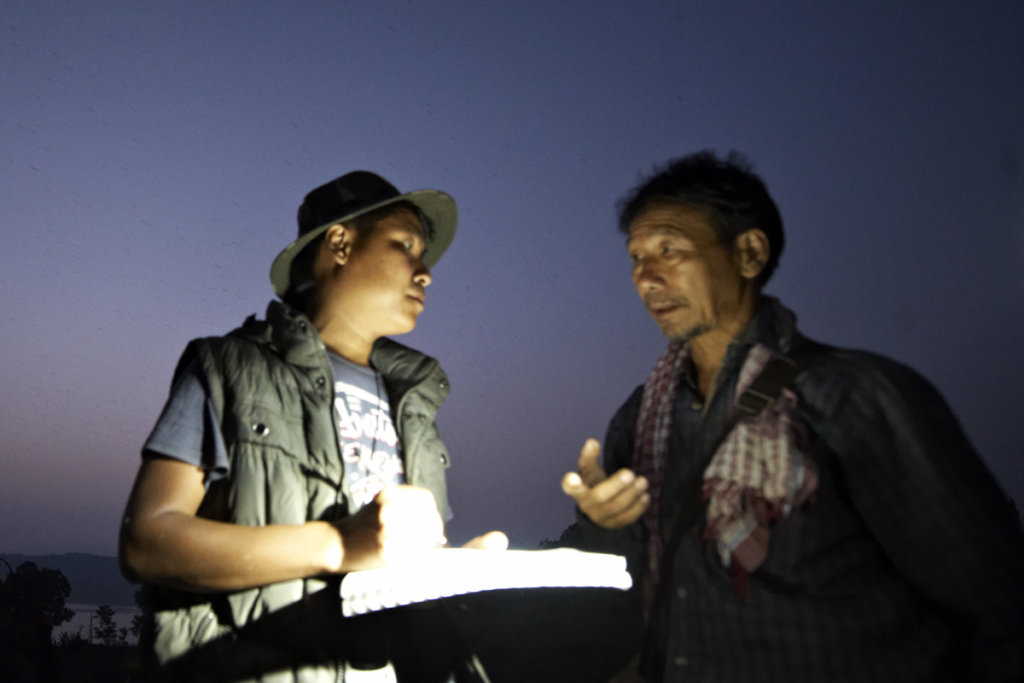
The project team has now conducted an assessment of the roosting sites of the Amur Falcon around the villages, with participation of the representatives of Pangti Village Council and assistance from landowners. The meeting identified 156 landowners, trees in whose canopies are used by the falcons to roost. Ex-gratia payment was provided to the landowners to discourage the slash and burn style of agriculture that is popular there.
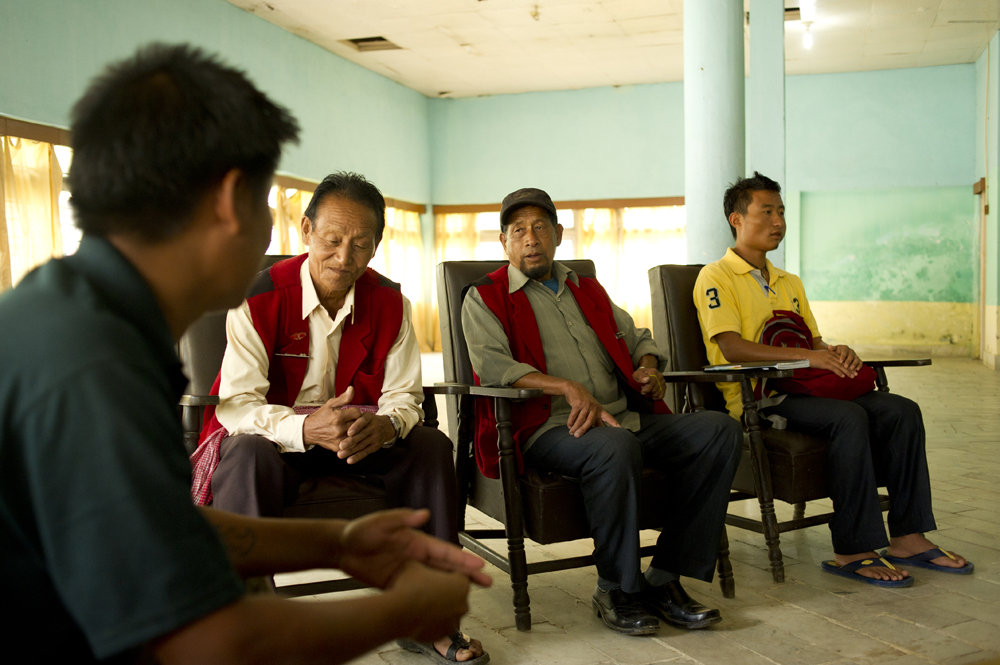
Various meetings have also been conducted with all key stakeholders, including the villagers, former hunters, Nagaland Forest Department and the Nagaland Government to formulate a long term strategy for the conservation of the falcons and the development of the people.
Future plans involve developing an eco tourism plan for the villagers to enhance their income through home stays as well as developing the peoples’ skills in traditional crafts like weaving, sericulture, bamboo and cane work etc.
Awareness activities will also continue throughout the year in order to ensure that no Amur falcons are killed and the whole community continues to support their conservation.
Project reports on GlobalGiving are posted directly to globalgiving.org by Project Leaders as they are completed, generally every 3-4 months. To protect the integrity of these documents, GlobalGiving does not alter them; therefore you may find some language or formatting issues.
If you donate to this project or have donated to this project, you can receive an email when this project posts a report. You can also subscribe for reports without donating.