By Rachael Risby Raz | International Relations Manager
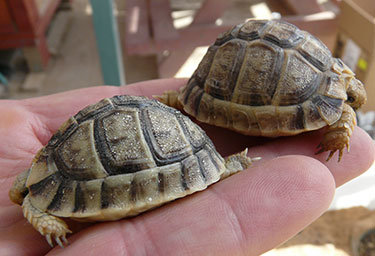
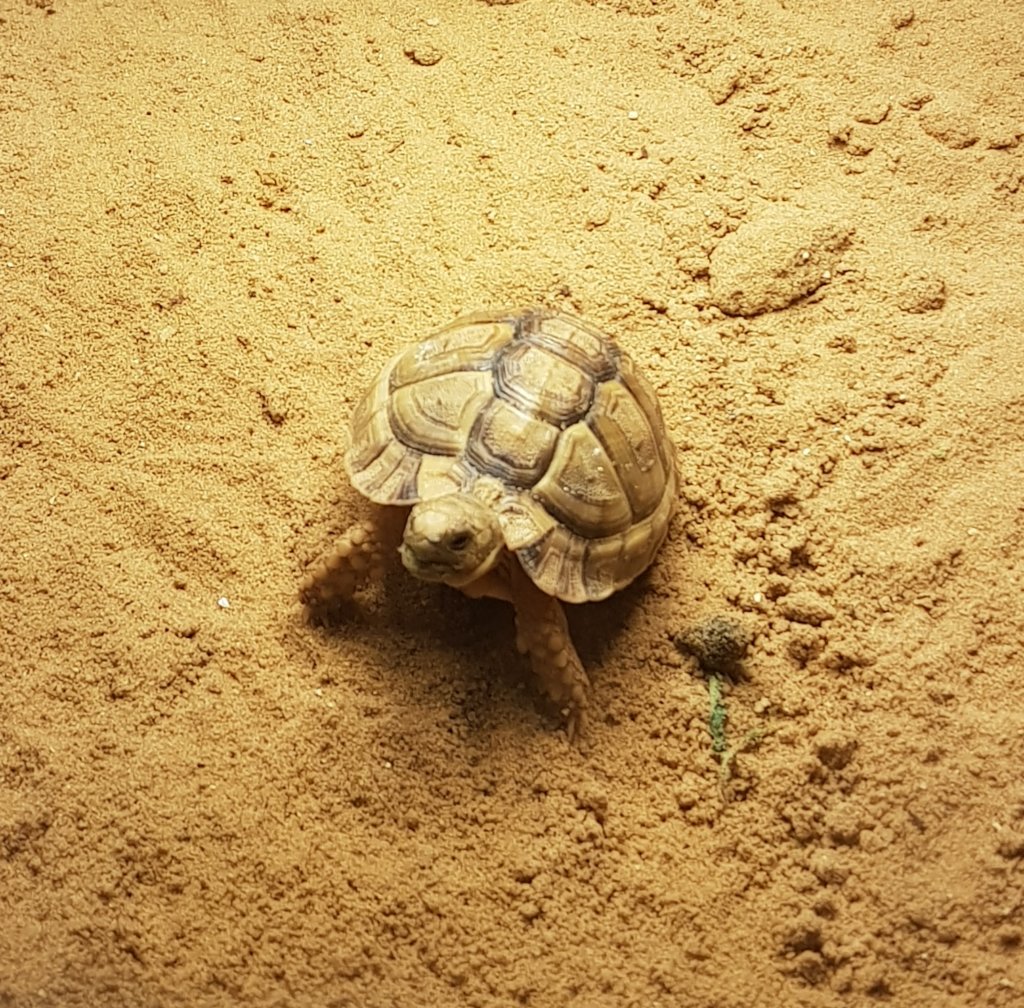
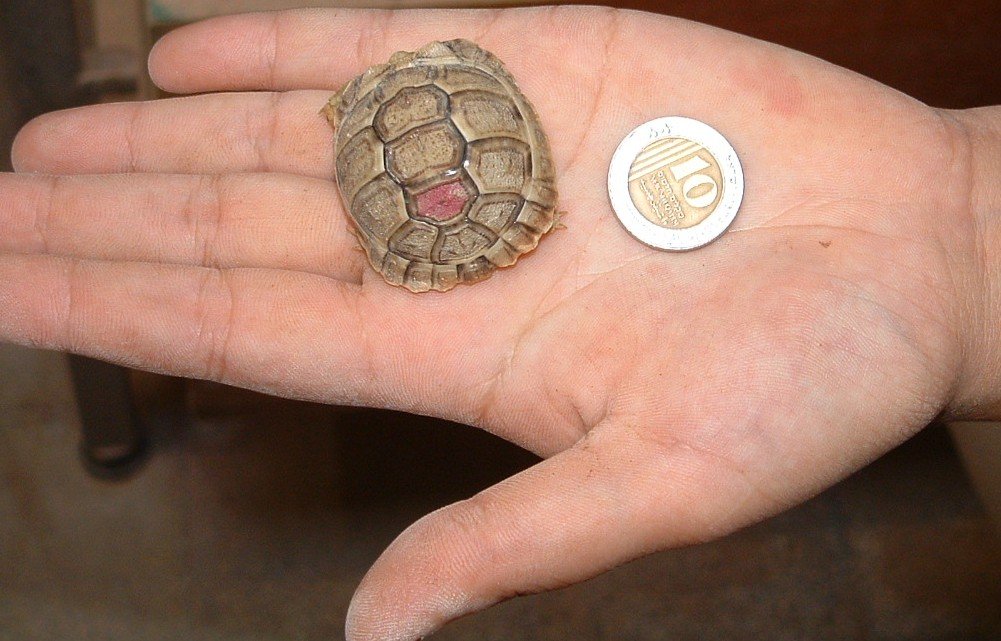
The two new baby tortoises that hatched this past spring are growing up fast.
They are still hanging out behind the scenes in the Small Animal House.
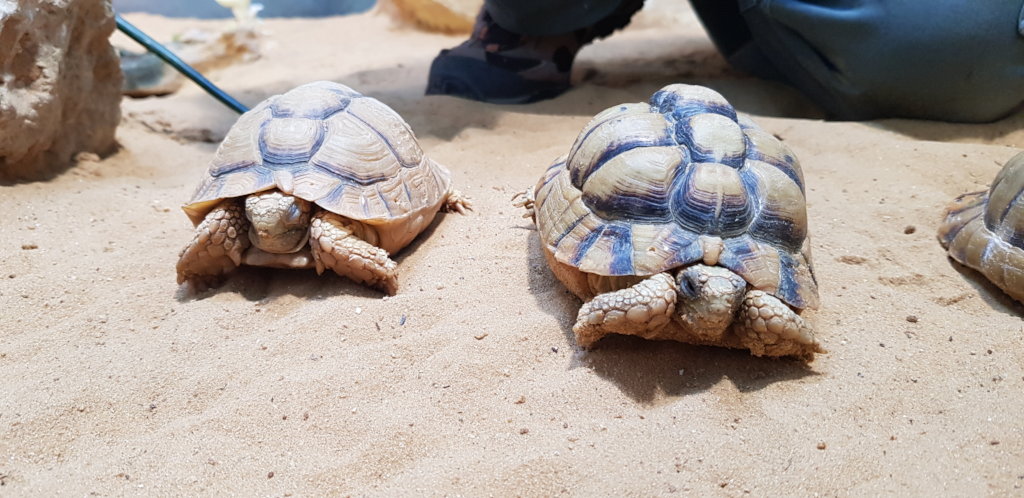
One of the interesting things that the keepers have learned this past year is about the impact of the tortoises' diet on the appearance of their carapaces.
In the picture below, you will see the difference between the tortoise raised in the Zoo (with the raised bumps on its carapace) and the tortoise that was rescued and had her carapace repaired, who grew uo outside the Zoo (her carapace is smoother.)
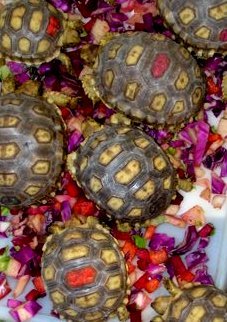
The keepers found that the tortoises who had been raised on lettuce had these bumpy shells and have since changed the tortoises diets from lettuce (which is not native to the Negev Desert, of course) to a local plant to the region: mallow
The mallow is an annual plant that reaches a height of some 50 cm (20 inches). It blossoms from February to June, and has pink, five-petaled leaves, approximately 2.5 cm (about one inch) in diameter. Mallow, whose modern Hebrew name, halamit, is almost identical to the biblical halamot (mentioned in Job 6:6 for example). The Arabic name for the plant is hubeza, which it is commonly. Israel is home to six species of the plant.
Project reports on GlobalGiving are posted directly to globalgiving.org by Project Leaders as they are completed, generally every 3-4 months. To protect the integrity of these documents, GlobalGiving does not alter them; therefore you may find some language or formatting issues.
If you donate to this project or have donated to this project, you can receive an email when this project posts a report. You can also subscribe for reports without donating.