By Abdouramane Traore | Researcher at UCRC-Mali/USTT-B
Hello again, I hope you had a wonderful summer!
To address the scientific challenges we face, collaboration between research groups and disciplines is crucial. Thanks to the generous support of donors like you, in 2024 ALC launched grants to support the mobility of researchers from Africa, Asia, and Latin America. This initiative allows talented scientists from these regions to spend a year working in Spanish research groups, enriching their academic training and fostering scientific collaboration. We are deeply grateful for your contributions, which make these opportunities possible. Below is a summary of the project being carried out by a promising young scientist from Mali who has received one of these fellowships.
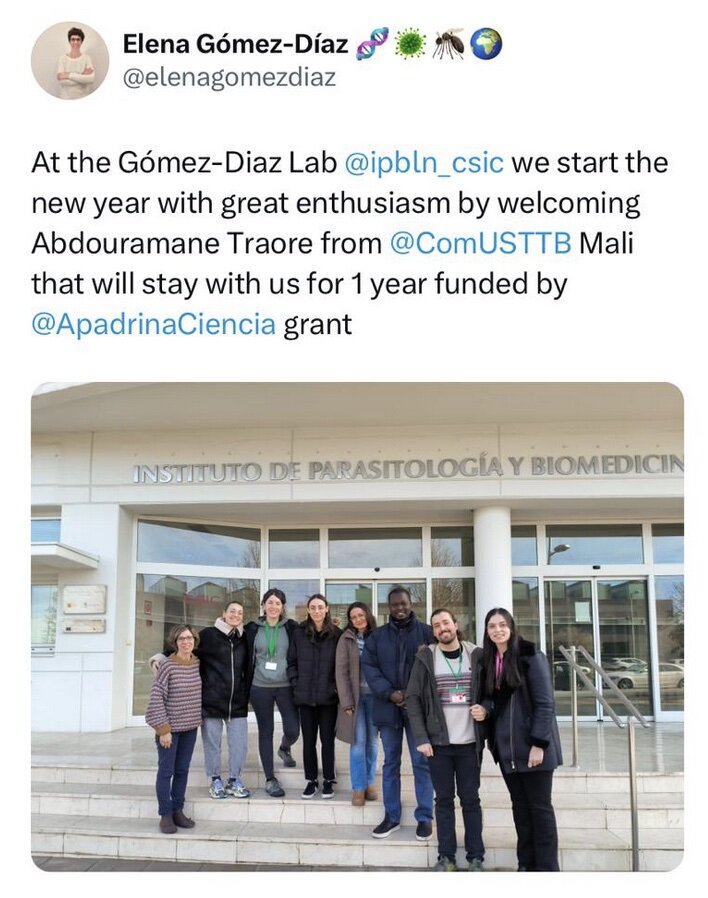
In this report, I would like first to express my most sincere gratitude to all those who, through their donations via GlobalGiving and Apadrina La Ciencia, are making my training possible and supporting the development of young African researchers like me. I would also like to sincerely thank the administrative staff at IPBLN-CSIC and the Gómez-Díaz Lab team, who warmly welcomed me and helped me integrate both into the research center and Spanish culture.
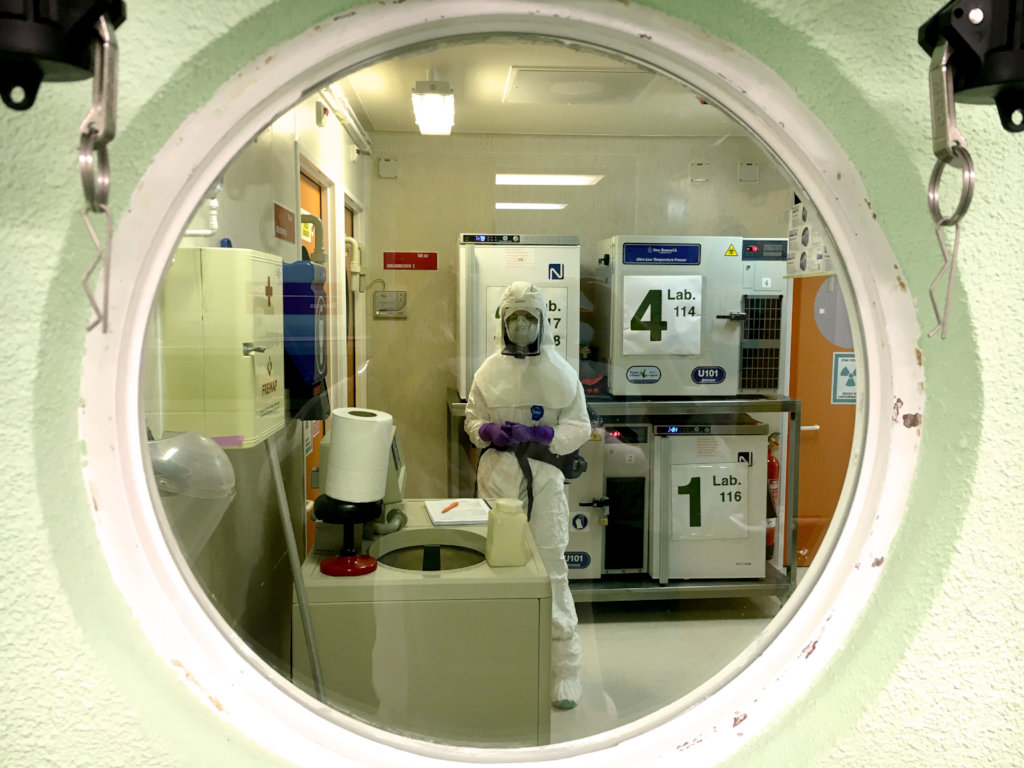
I'd like to take this opportunity to share with you a glimpse of the scientific experience I'm currently enjoying at the Institute of Parasitology and Biomedicine ”López-Neyra” (IPBLN-CSIC), in Granada, Spain, under the supervision of Dr. Elena Gómez-Díaz, Principal Investigator at this institution. I am lucky to be able to follow a high-level training course as part of an ambitious project to study the mechanisms of plasticity of the malaria parasite Plasmodium falciparum, responsible of the more severe forms of malaria, to better understand why its transmission persists in Mali despite control efforts.
Malaria remains a major public health problem. Despite the progress made over the last two decades, the disease is still rife, particularly in sub-Saharan Africa, where the interruption of transmission has still not been achieved. The P. falciparum parasite possesses a remarkable capacity for adaptation and survival, thanks to genetic and epigenetic mechanisms that are still largely beyond our understanding.
Short-term transcriptional or epigenetic modifications could influence the parasite's virulence, response to interventions and transmission capacity, without altering its genomic sequence. These rapid adaptation phenomena, invisible to conventional approaches, could be the key to explaining the persistence of the disease.
Thanks to cutting-edge technologies such as RNA-seq and single-cell transcriptomics, we can now explore this molecular diversity in detail. The aim of our project is therefore to characterize the genome and epigenome of field strains collected in Mali when exposed to different transmission environments. The data generated will constitute a valuable resource for the scientific community and for the development of more effective and sustainable control strategies.
This internship represents an exceptional opportunity to learn advanced research tools that are rarely available in my country: P. falciparum culture techniques and gametocyte production, Parasite cloning, High-throughput sequencing technologies: RNA-seq, ATAC-seq, ChIP-seq, Skills in bioinformatics and computational biology, Scientific writing and development of research projects (grants).
This training will strengthen my skills in biomedical research and functional genomics and mark a decisive step in my trajectory towards autonomy as an independent researcher. On my return to Mali, I am committed to sharing the knowledge I have acquired with my colleagues at the University Center for Clinical Research (UCRC) and the ICER Mali network, through training sessions, scientific collaborations and the development of local research projects.
By donating to our projects via GlobalGiving, you are helping to: a Train a new generation of African scientists, a Produce essential data to guide public health policies and a Strengthen local resilience to infectious diseases
Thank you again for your generosity, your trust, and your commitment to us!
Abdouramane Traoré, PharmD, MSc
Researcher at UCRC-Mali/USTT-B
Scientific fellow at IPBLN-CSIC, Granada, Spain
Project reports on GlobalGiving are posted directly to globalgiving.org by Project Leaders as they are completed, generally every 3-4 months. To protect the integrity of these documents, GlobalGiving does not alter them; therefore you may find some language or formatting issues.
If you donate to this project or have donated to this project, you can receive an email when this project posts a report. You can also subscribe for reports without donating.