By Rachel Kramer | CPALI Executive Director
Overview
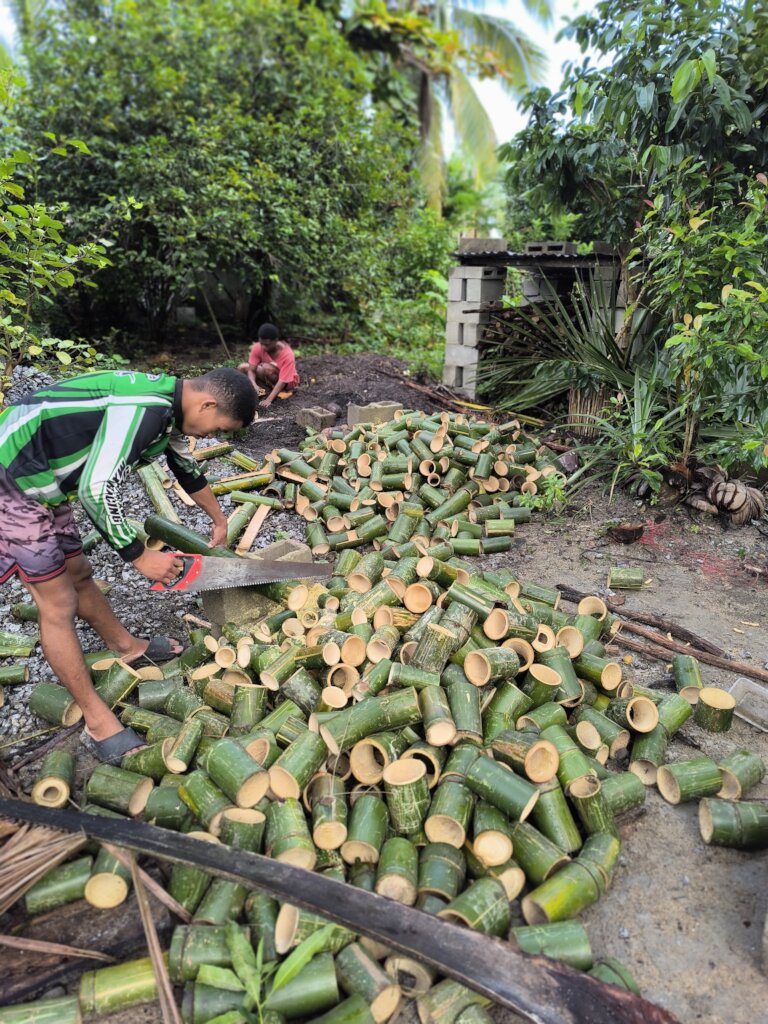
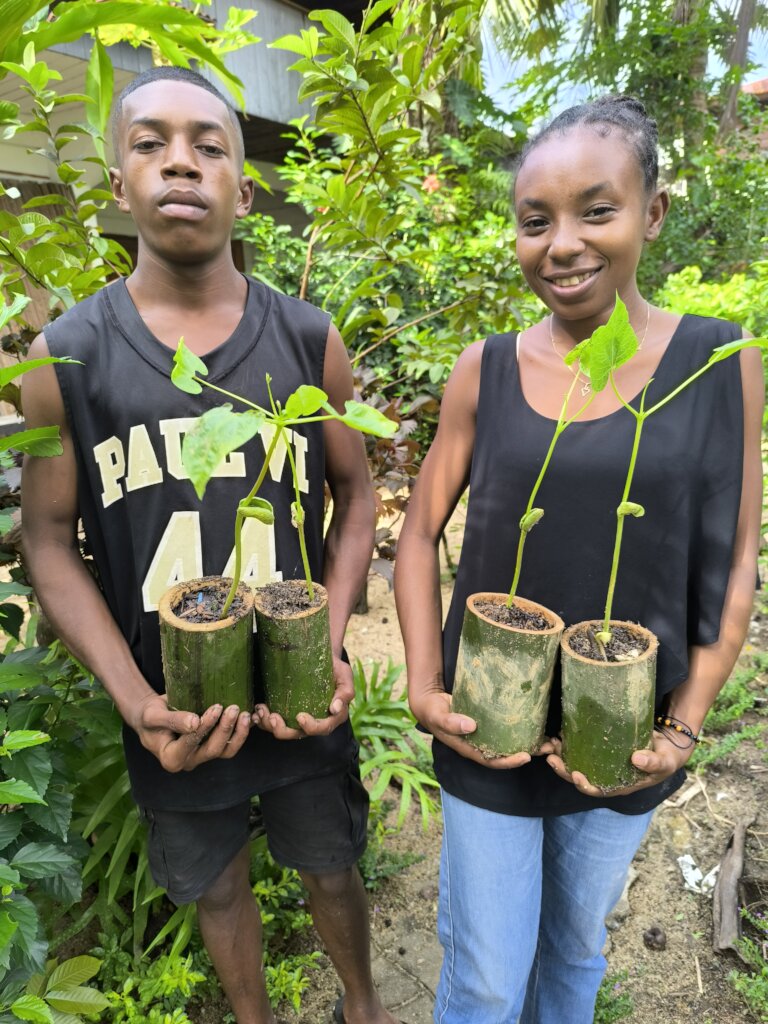
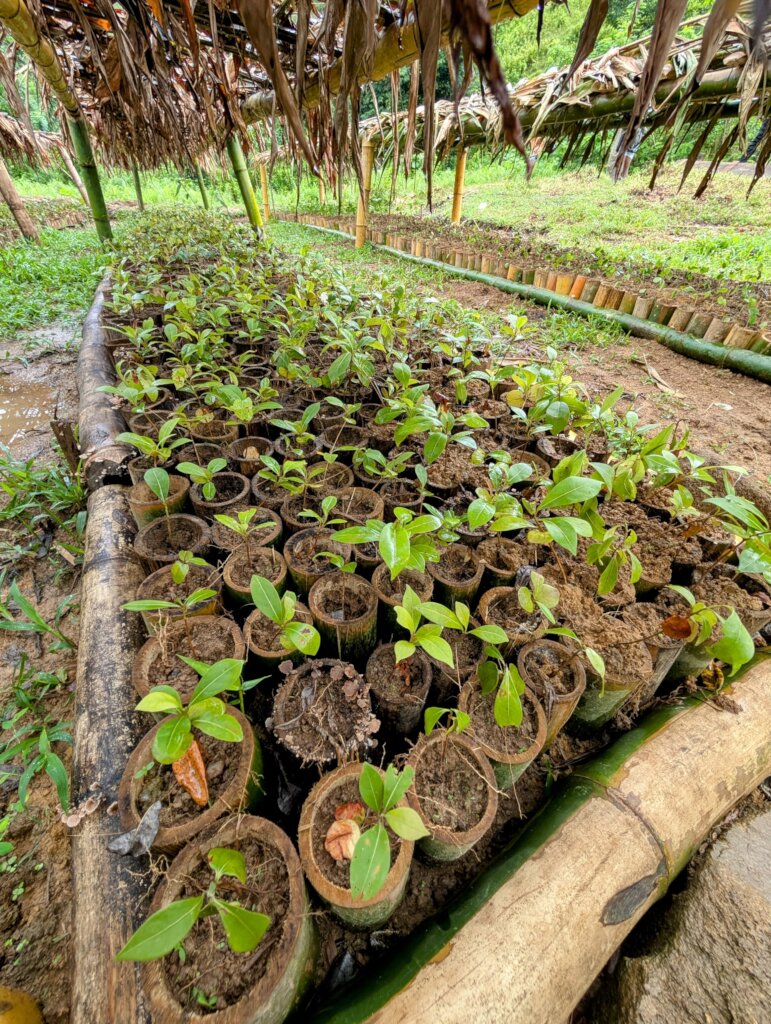
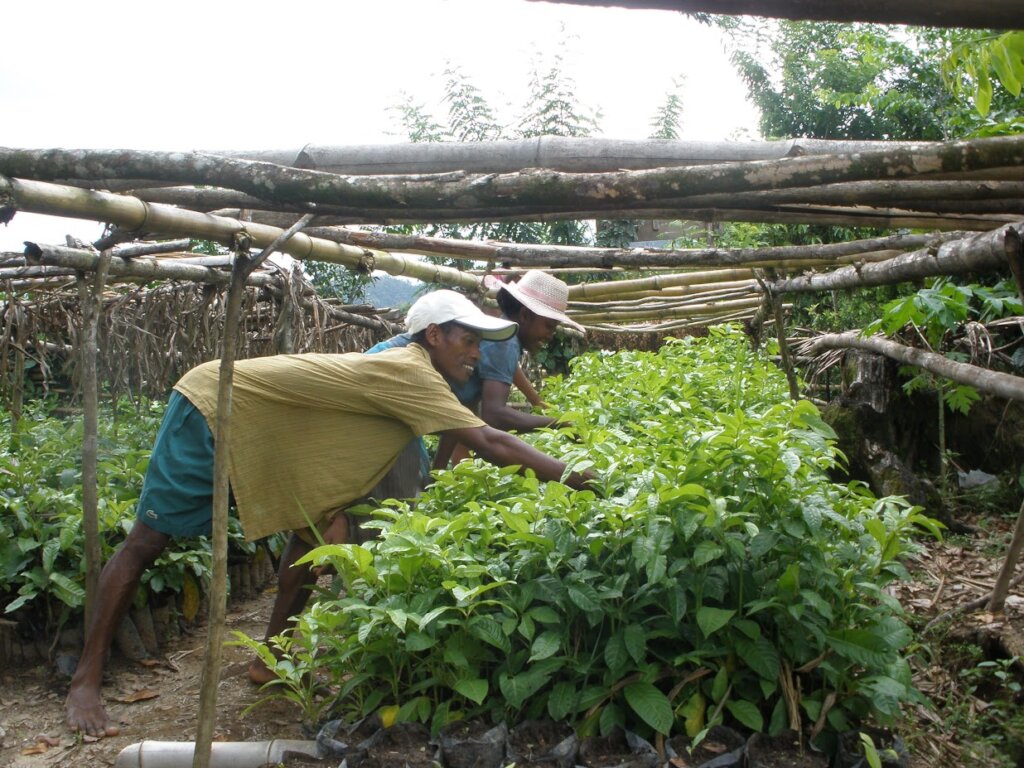
This year, the SEPALI Madagascar agroforestry team has worked with collaborating farmers in four protected area-bordering communities to plant 40,000 seedlings in local tree nurseries. Each seedling germinates in a handmade, biodegradable pot that’s locally constructed from bamboo to create zero waste (as compared to plastic pots). In April 2025, the first young trees were planted in agroforestry systems with local farmers in the forest-bordering communities of Mahalevona and Ambodivoangy. Starting in July 2025, two new nurseries came online in the remote villages of Fijoana and Marirano. This farmer-led agroforestry initiative is a source of pride that’s helping to strengthen resilience for people and nature and offering future economic benefits.
Locally led efforts for lasting change
On the margins of Madagascar's largest remaining contiguous rainforest, four circles of farmers are restoring native trees in local agroforestry systems. Their goal: to create living space for rare wild moths whose cocoons yield precious silk, and to grow valuable natural fibers like raffia palm for local textiles, together with other locally valued plants. This approach to regenerative agroforestry creates economic incentives for returning native species to degraded areas, with co-benefits including erosion control, soil improvement, and stepping-stone habitats for endemic biodiversity.
Returning native species to farmers' landscapes
The Madagascar native trees, vines, and understory species that have been planted in our nurseries this year include (listed by local name / Genus [family]):
Talandoha / Polyscias (ARALIACEAE), Vandrobanga / Plactaneia (APOCYNACEAE), Rotro / Eugenia (MYRTACEAE), Lalona Weinmannia (CUNONIACEAE), Hintsina / Intsia (FABACEAE), Lombiro / Rhopalocarpus (SPHAEROSEPALACEAE), Gavy be / Psidium (MYRTACEAE), Harongana / Harungana (HYPERICACEAE), Hazovola / Dalbergia (FABACEAE), Nanto / Mimusops (SAPOTACEAE), Raffia / Raffia (ARECACEA), Rambo / Pandanus (PANDANACEAE), Vontro, Ravenala / Ravenala (STRELITZIACEAE), and Bambou / Bambousa, Cathariostachys, Valiha (POACEAE).
These species were selected for a range of values that they bring people and disappearing biodiversity, from food for wild silkworms, to natural dyes, to local construction needs. Follow our narrative journey below as the first young trees of the season are planted in the community of Mahalevona:
"Meet at the nursery"
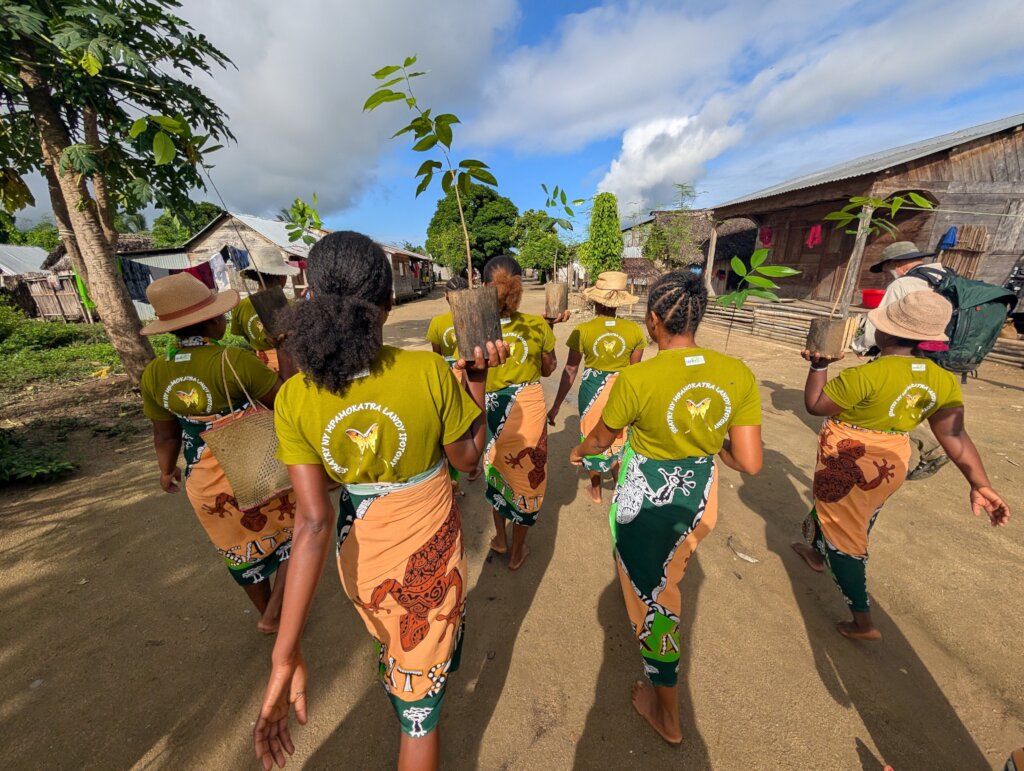
The team gathers in the early morning light at Mahalevona's farmer-run tree nursery. Young talandoha and hintsina trees are collected from among the nursery’s 10,000 seedlings. Growing in handmade bamboo pots that shelter developing roots, the bamboo biodegrades over time as the tree grows.
Cross through town
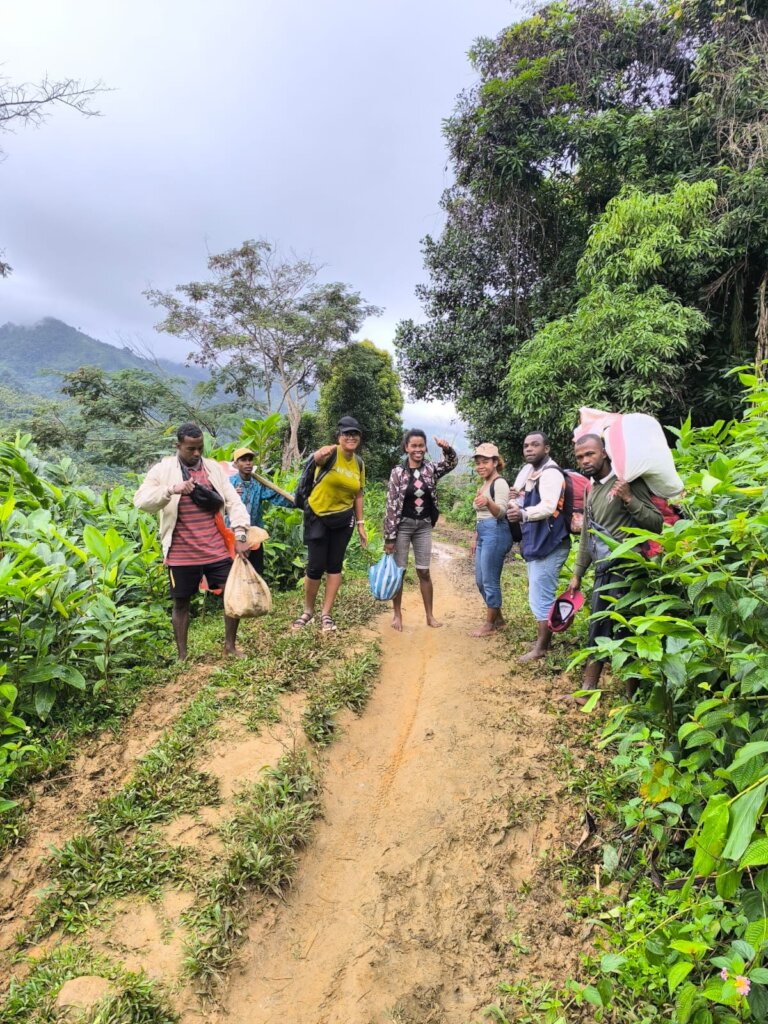
The young trees travel to an agroforestry site tended by Victor, a local elder and farmer leader. Victor’s land lies across the river, beyond the community’s irrigated rice paddies, and up a mountain slope.
Follow the leader
A first glimpse of Victor's agroforestry system shows a matrix of cleared grass for zebu grazing, clove trees, vanilla orchids, fruit trees including banana, lychee, mango, and green oranges, and native plantings. Over the years, Victor has planted an estimated 4,000 native trees that are hosts for wild silk moths, together with other trees of local value.
Searching for caterpillars
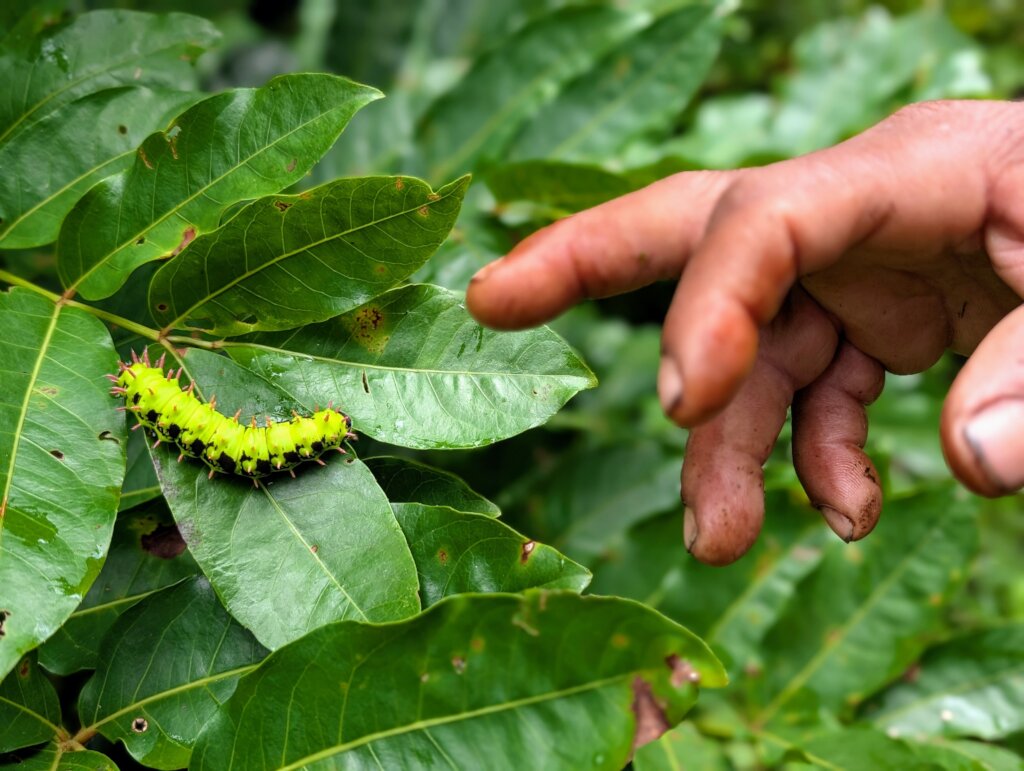
Members of the local women's artisan cooperative show Mamy Ratsimbazafy, Director of SEPALI Madagascar, and Rachel Kramer, Executive Director of CPALI, the way through a grove of talandoha trees in search of wild silk-producing caterpillars. When small, Antherina suraka caterpillars are inconspicuous. In their final stage of growth, they are big, green, and beautiful. Victor points to an Antherina suraka caterpillar among the leaves of a young talandoha tree that he planted for them several years ago. It takes 15 months of growth for a talandoha seedling to be large enough to support 30 wild silk caterpillars.
Hiding from predators
On the underside of branches on the same host tree, more Antherina suraka caterpillars are found feeding out of view of predators, such as birds and parasites, such as wasps. In their fifth instar, these caterpillars are in the final larval stage before they spin silk cocoons and transform into chrysalises.
Silk collection
Rummaging in the leaf litter beneath his talandoha trees, Victor proudly discovers three freshly-spun silk cocoons of Antherina suraka. Inside, caterpillars are preparing to morph into their chrysalis form. More Antherina suraka silk cocoons nestle in the leaf litter beneath a host tree, hidden from view. Their brown silk camouflages with the leaves around them.
Light hands
Back in town, Victor gently removes each Antherina suraka chrysalis from its silk cocoon. The chrysalises will be kept safe until the time comes for the moths to emerge. When they do, they will mate, lay eggs, and the lifecycle will begin again. The sustainably collected cocoons are sold by the piece to SEPALI Madagascar, CPALI's local sister organization, for handmade textiles.
A regenerative future
Protected rainforest lies beyond the agroforestry systems of many local communities in northeastern Madagascar. By integrating over 15 native tree species into spaces previously cleared for agricultural production, farmer lands can become more habitable for disappearing insects and other endemic wildlife, while supporting local livelihoods.
Our gratitude to all who help support this important project. With the right funding, we hope to work with more local farmers to plant 60,000 trees with 6 communities in 2026-2027. Please consider making a monthly gift to help us achieve this goal!
Links:
Project reports on GlobalGiving are posted directly to globalgiving.org by Project Leaders as they are completed, generally every 3-4 months. To protect the integrity of these documents, GlobalGiving does not alter them; therefore you may find some language or formatting issues.
If you donate to this project or have donated to this project, you can receive an email when this project posts a report. You can also subscribe for reports without donating.



Support this important cause by creating a personalized fundraising page.
Start a Fundraiser