By Rodolfo Ricardo Hernandez Navas | Agriculture Program Officer
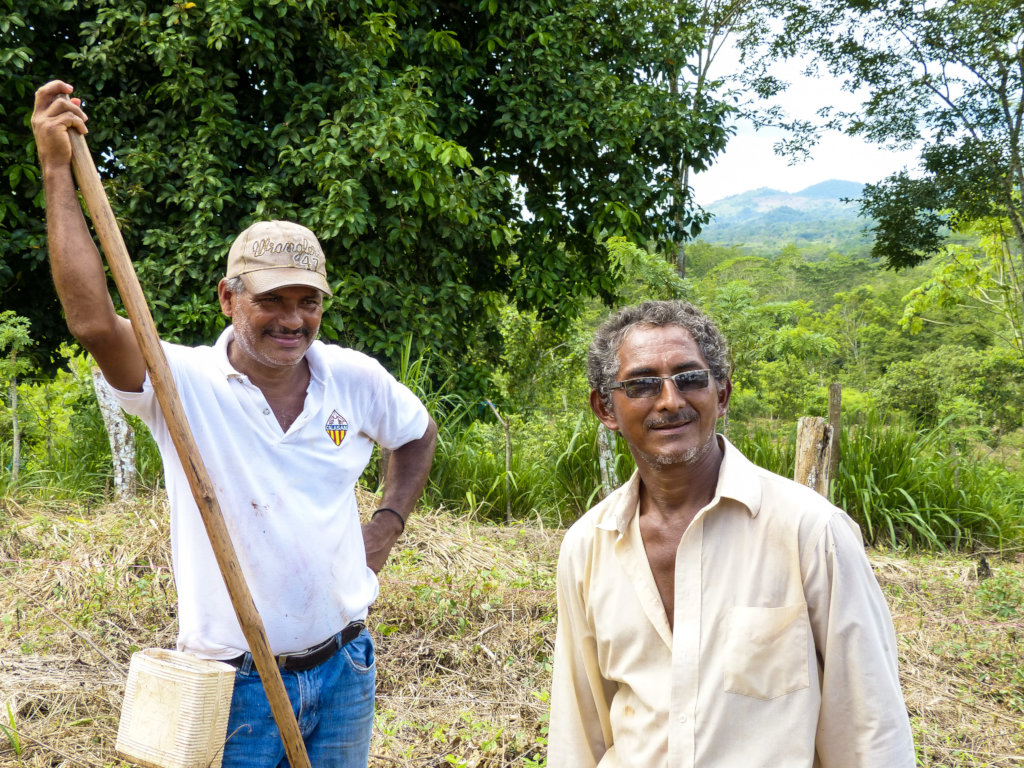
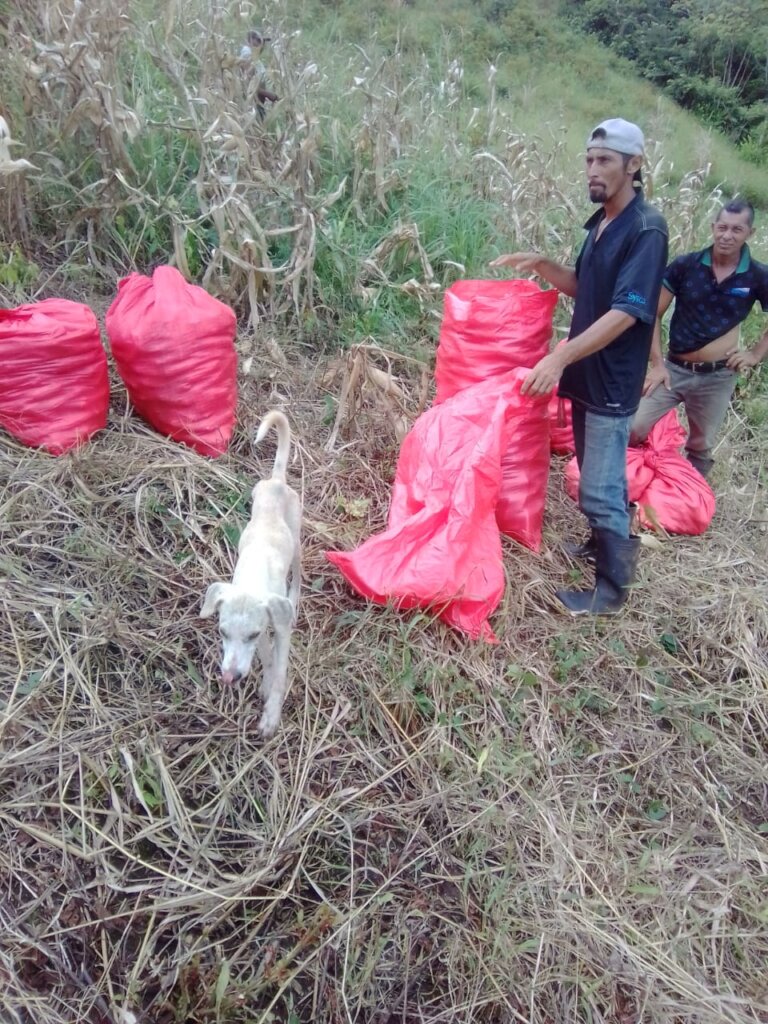
Roger is originally from Achuapa, León in western Nicaragua, but hecurrently lives in the La Concha community located between the communities of Mexico and Mata de Caña in San Carlos. He’s lived there for 23 years with his family of six. His wife owns a small shop and his children help him work the fields when they aren’t studying. They are a working family and everyone contributes to the family income.
Roger lived for a time in Costa Rica where he learned how to work the fields. He later decided to return to Nicaragua and bought a small piece of land in the community where he currently lives. He began to work his land, sowing corn and beans. He used the earnings from these crops to purchase small livestock, mainly pigs. He supported his wife who also worked and contributed to their family’s income and improvement.
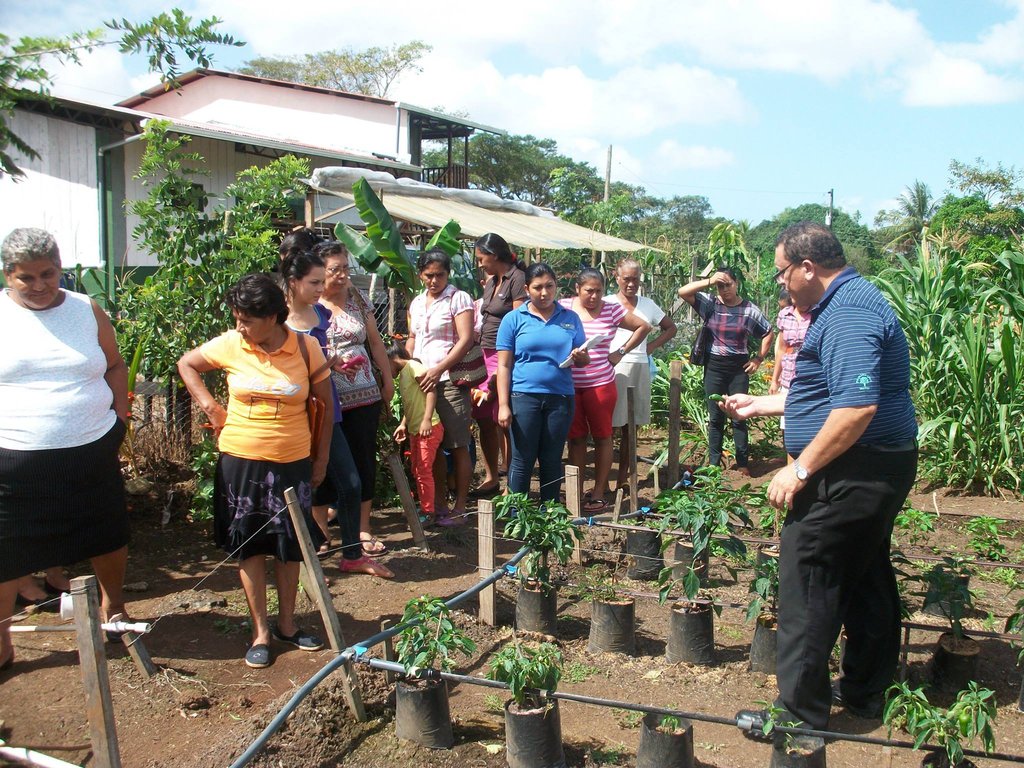
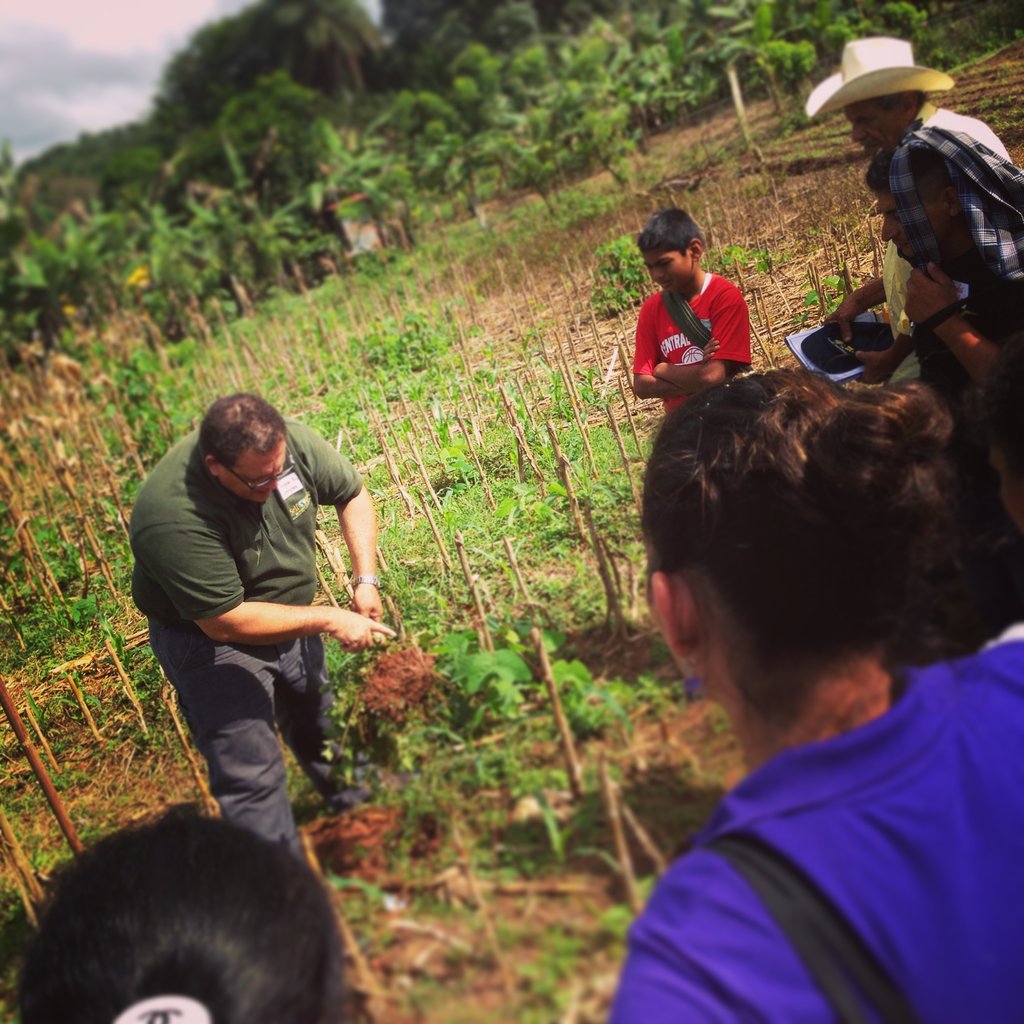
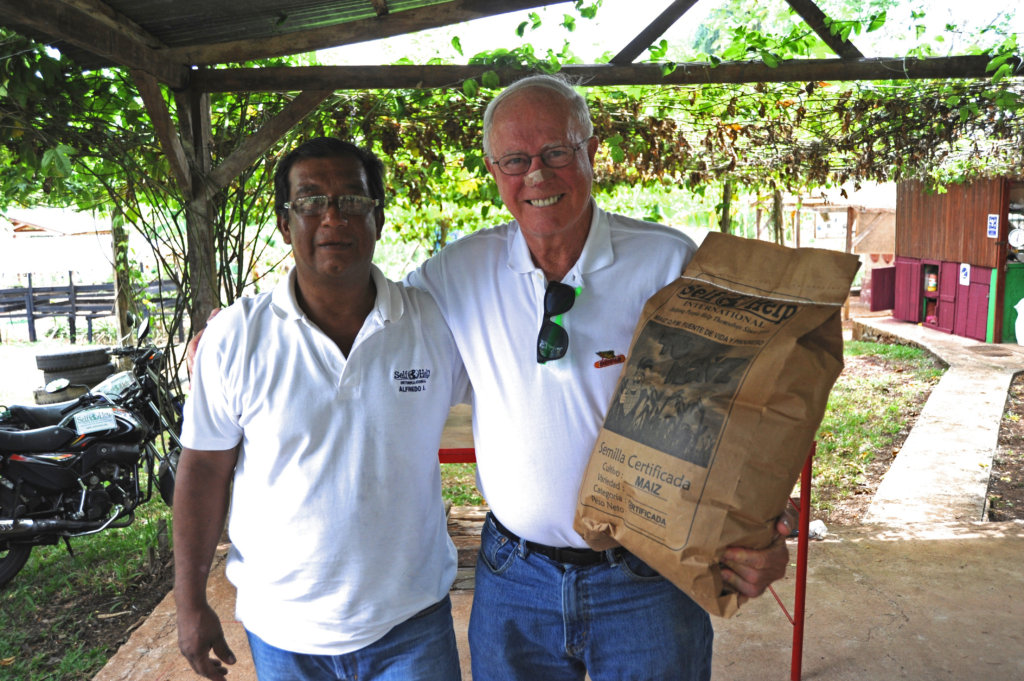
Self-Help International’s Agriculture Program visited Roger, and Roger was intrigued by Rodolfo’s, Self-Help’s Agriculture Program Officer, explanation of Self-Help cultivation techniques to obtain higher maize yields while minimizing farming expenses. Rodolfo explained that program involvement required forming a group of local farmers to share knowledge of a new farming technique by planting a demonstration plot with a new variety of high quality protein maize (QPM) called INTA Nutrader.
At first, Roger was hesitant to join this farming group because there were many pest problems (mice) and he wasn’t sure they would succeed. When explaining his hesitation to Rodolfo, Rodolfo responded and said that he would learn as much from the farmers as the farmers would learn from him and Self-Help. So, Roger accepted Rodolfo’s proposal and brought seven local farmers to the training at which they established a demonstration plot.
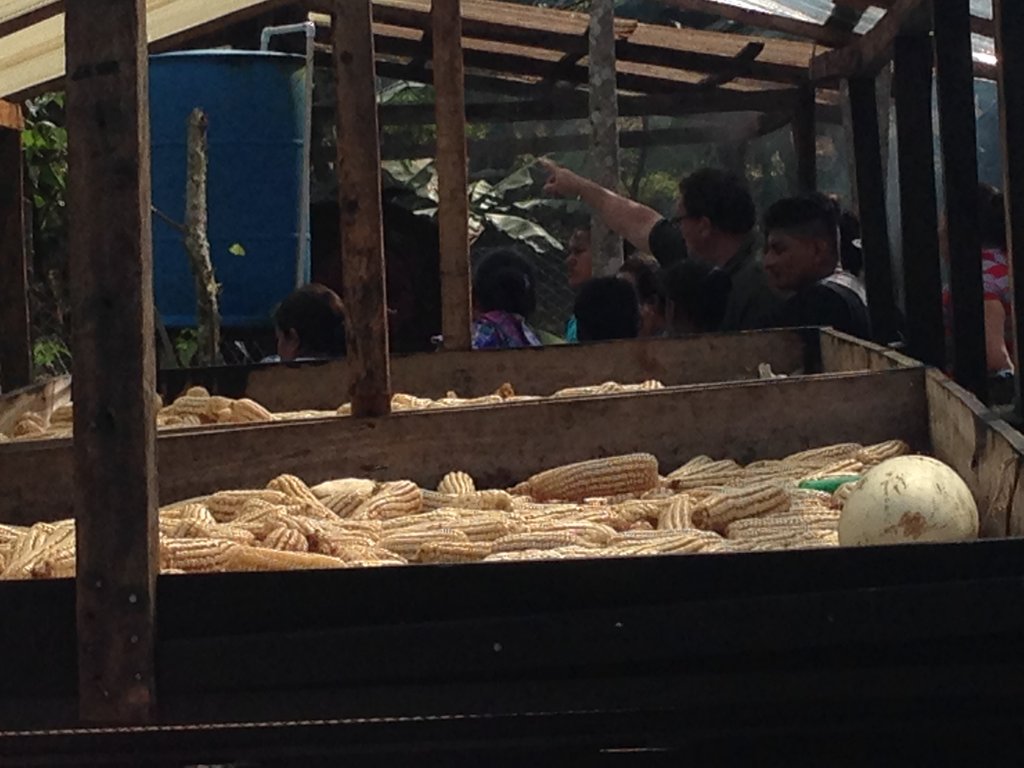
They sowed four pounds of QPM seed donated for the demonstration plot by Self-Help, establishing an area of 441 square meters. They learned that the seed they sowed had to be treated with chemicals to protect it from pests, which was something these farmers hadn’t previously done. They were also instructed to leave at least two clean meters around the plot to lower the incidence of affectation by mice and to let the maize soak with either a chemical called Counter or with black wood, a common tree in the area. The farmers followed these instructions and had success.
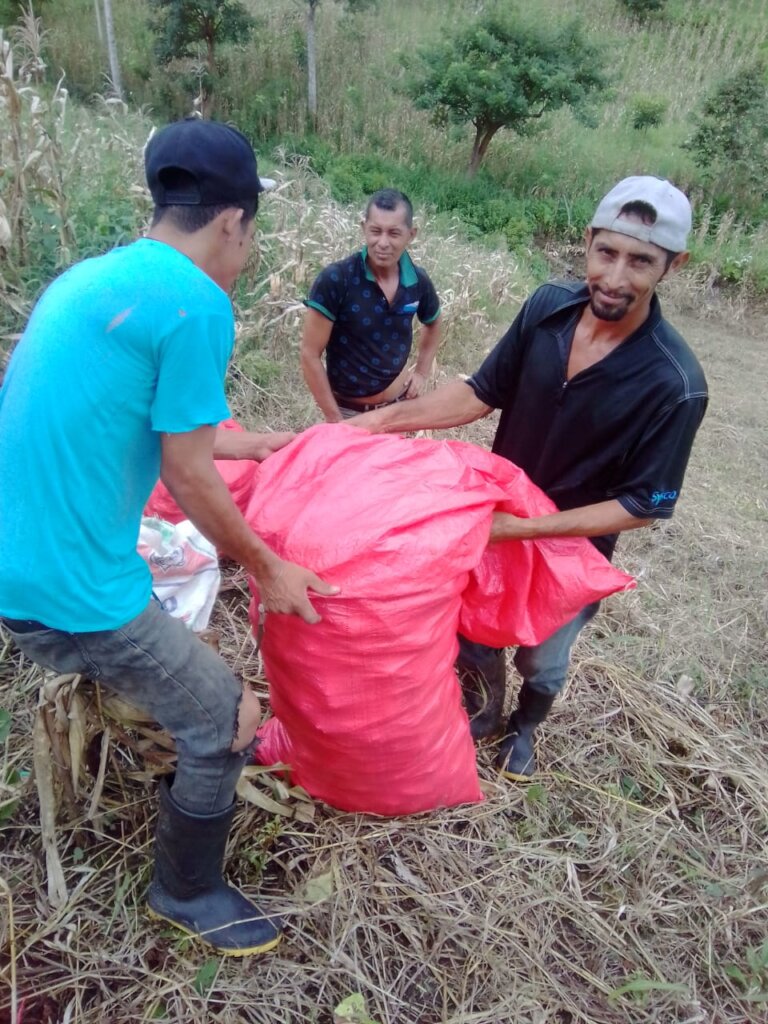
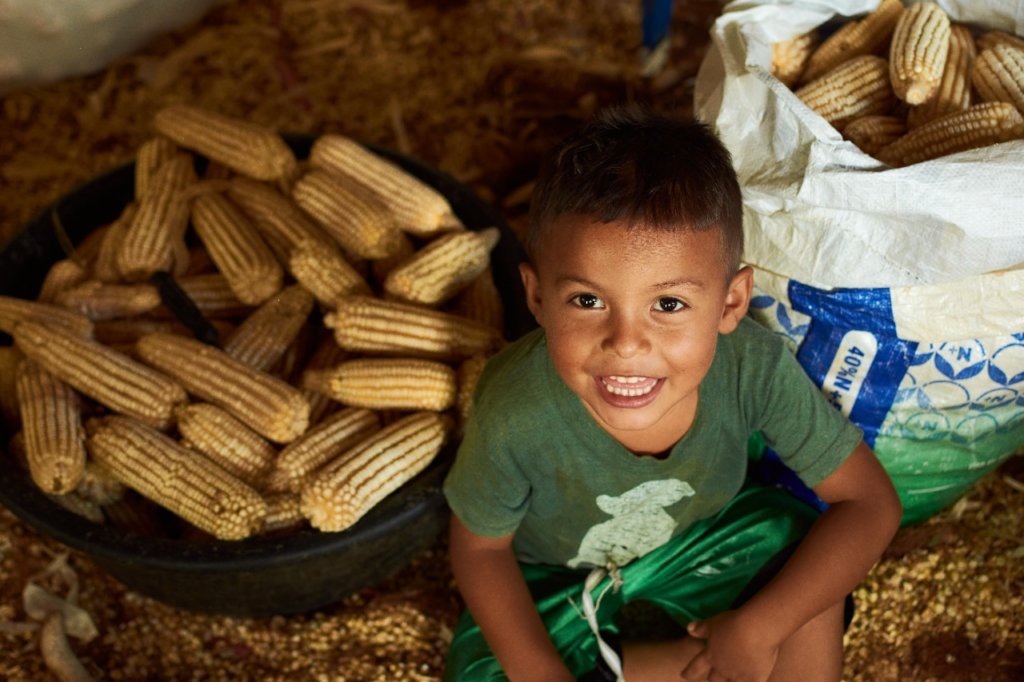
The farmers cared for this demonstration plot, but the fertilizers recommended by Self-Help didn’t exist at the market due to numerous external controls affecting agricultural inputs across Nicaragua. Instead, the farmers cared for this plot using traditional methods and obtained a harvest of 350 pounds of dry corn. This yield convinced the farmers that the planting technique and INTA-Nutrader QPM variety was very good. They were pleased to see that this maize variety yielded such good results in overworked soil with minimal chemical inputs (only given one application of herbicide and two of urea application). To them, this result was more than excellent, since their normal yields would have been between 2500 to 3000 pounds per manzana, which would have been the equivalent of 5600 pounds on this parcel of land, increasing production by more than 100%. The group found this experience to be very important, and will sow the seed they harvested in the last season.
Roger explains that he used to sow in a traditional way with five corn cobs where the gross production was 12,000 pounds. Now, he will establish two manzanas in the second season and his production will be similar, but his production costs will be less.
“Currently I am a partner of the Agriculture Program, and I thank Self-Help International for the support provided during the experiment and the opportunity to purchase the inputs for the last harvest cycle,” Roger said.
Project reports on GlobalGiving are posted directly to globalgiving.org by Project Leaders as they are completed, generally every 3-4 months. To protect the integrity of these documents, GlobalGiving does not alter them; therefore you may find some language or formatting issues.
If you donate to this project or have donated to this project, you can receive an email when this project posts a report. You can also subscribe for reports without donating.



Support this important cause by creating a personalized fundraising page.
Start a Fundraiser