By Rodolfo Ricardo Hernandez Navas | Agricultural Extension Program Officer
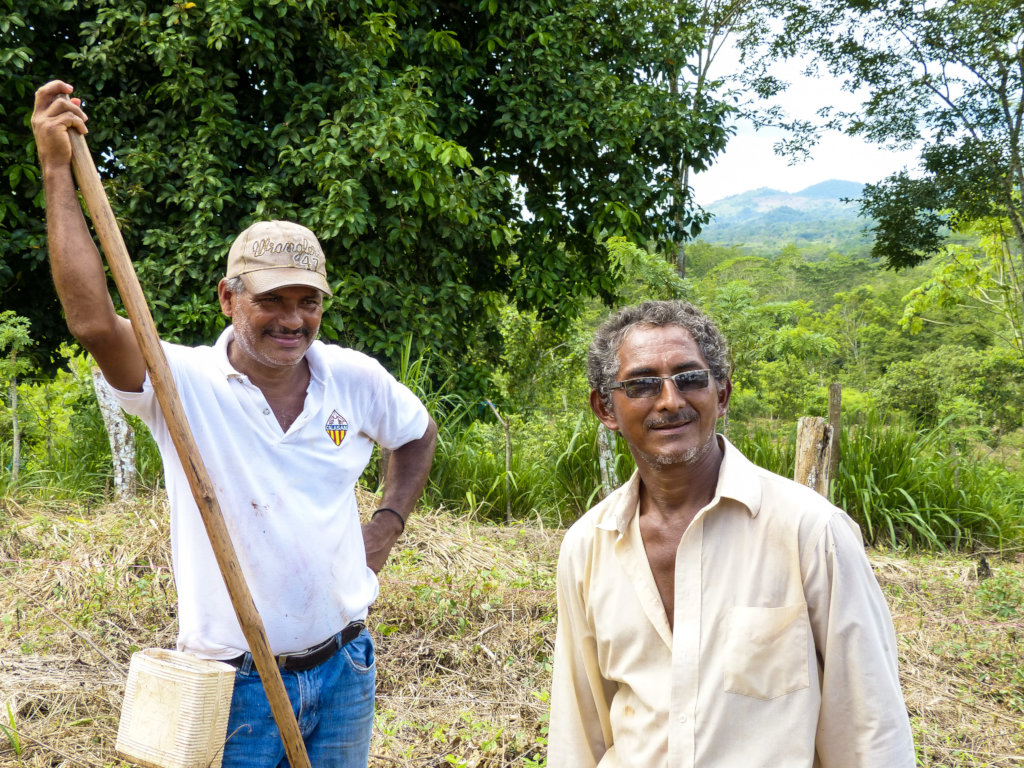
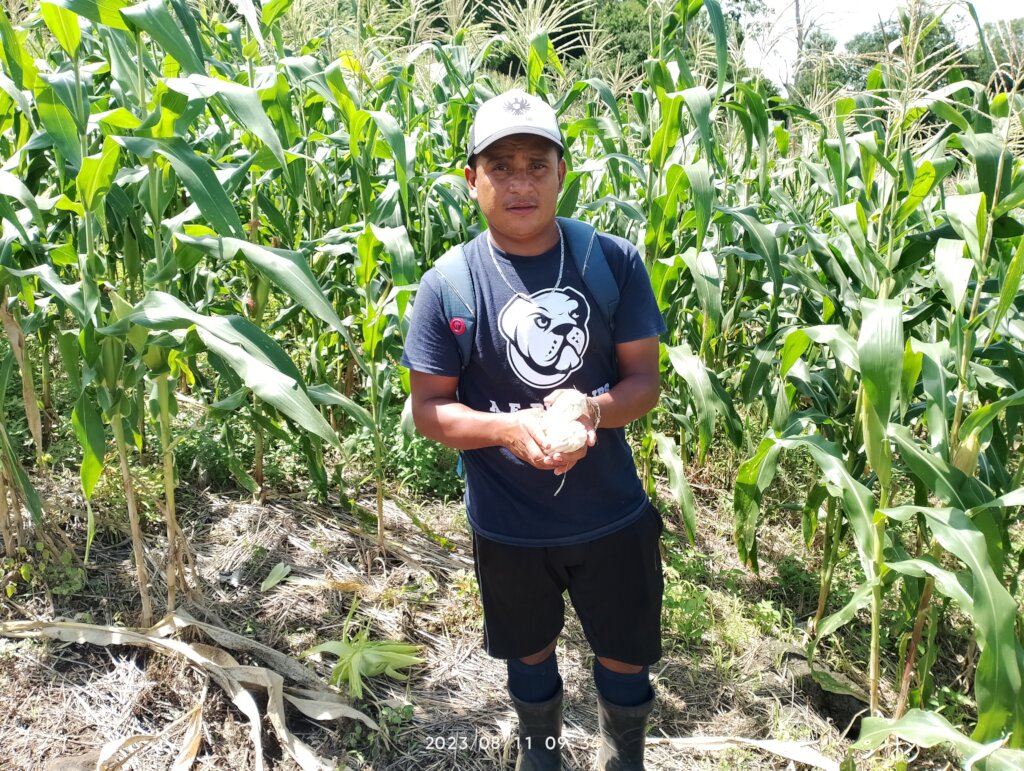
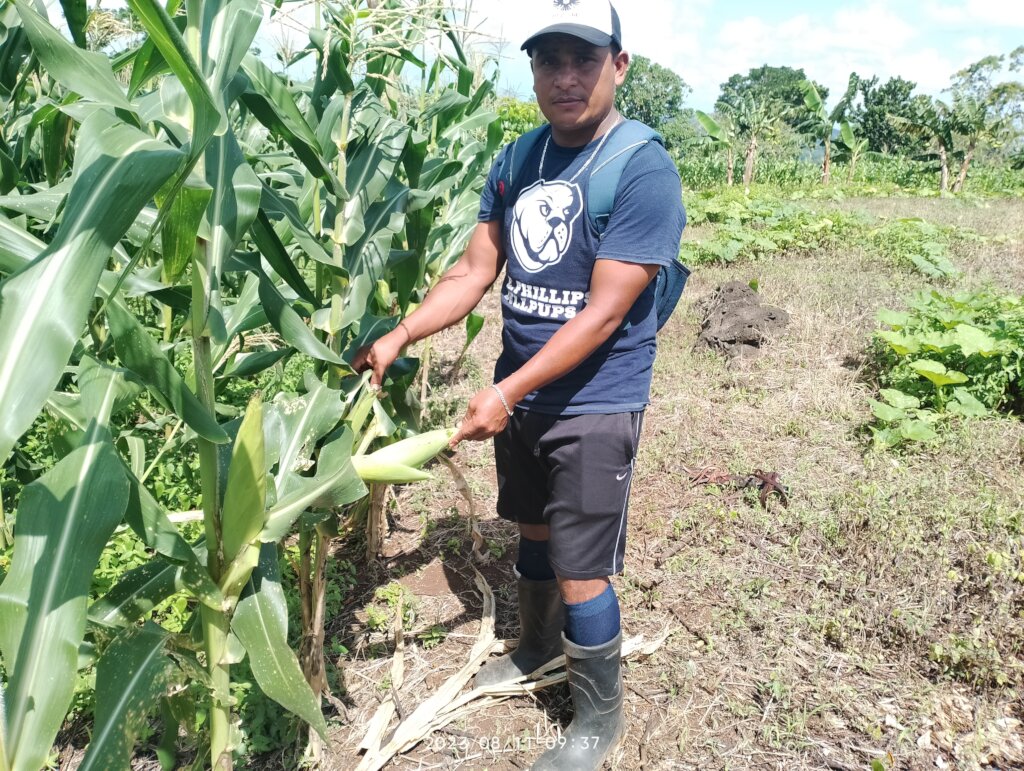
Darwin lives with his wife and his two children in a small community called Cruz Verde located at 14.92 miles from San Carlos head city of Rio San Juan, this young man has a low level of literacy and lives in the community for more than 20 years and has good knowledge of agriculture as he has been working the land with his father since he was 12 years old, helping him to prepared the land in a traditional way and remembered that always for each planting season they used to burn the land before planting or spread the corn in a broadcast manner and once it was planted cut down the forest, by those times they did not fertilize and used almost no chemicals to control weeds or pests, just sometimes when it was necessary to control weeds they used a hoe or machetes and the maize yields were good and not much money was spent to obtain good yield results, time has passed and the lands weakened so they have stopped these practices of preparing the land and cleaning it, stopping using tools and changed them by chemical inputs. He continued sharing: And I was always focused on that methodology of my ancestors because when I looked at changes and new planting strategies I usually said to me “the uses of these inputs are not very convenient for the soil since they damage and weaken the land, it is one of the reasons why when we currently sow the plants are thinner, the plant produces small ears or sometimes it does not produce because the soil does not have the necessary components for it due to the bad treatment that we cause using chemicals for its cleaning”.
I changed my mind once I got to know Self-Help International and the agriculture program. I learned that as time goes by it is necessary to make changes to achieve a desired yield because if not, we are just working for the daily meal.
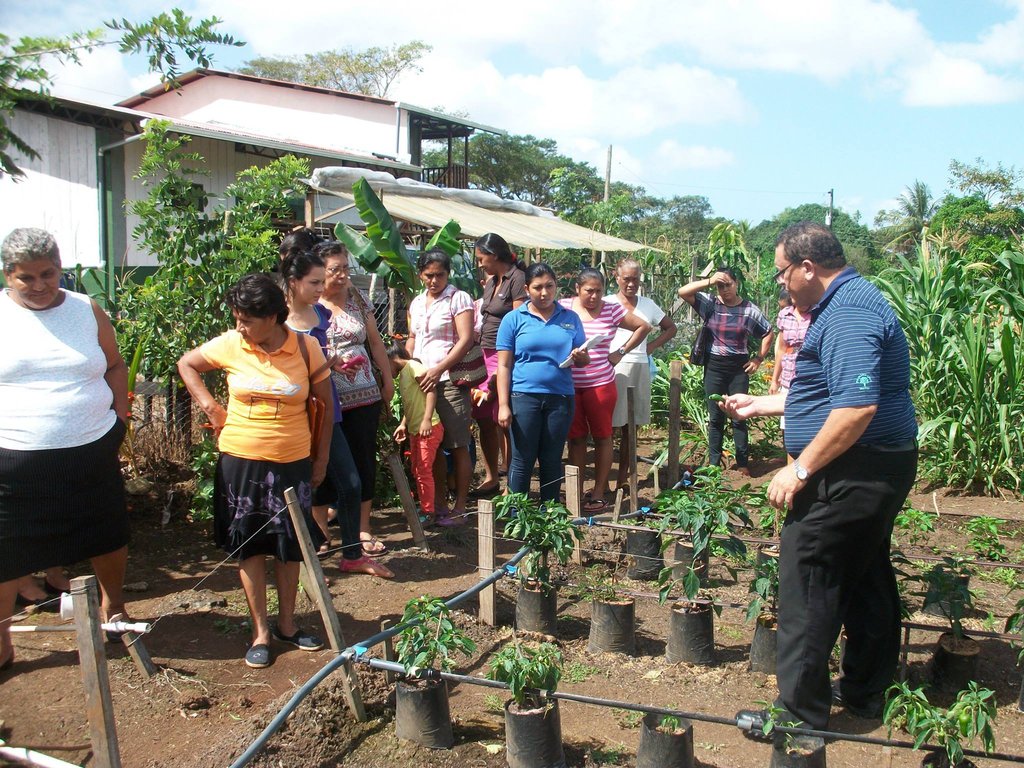
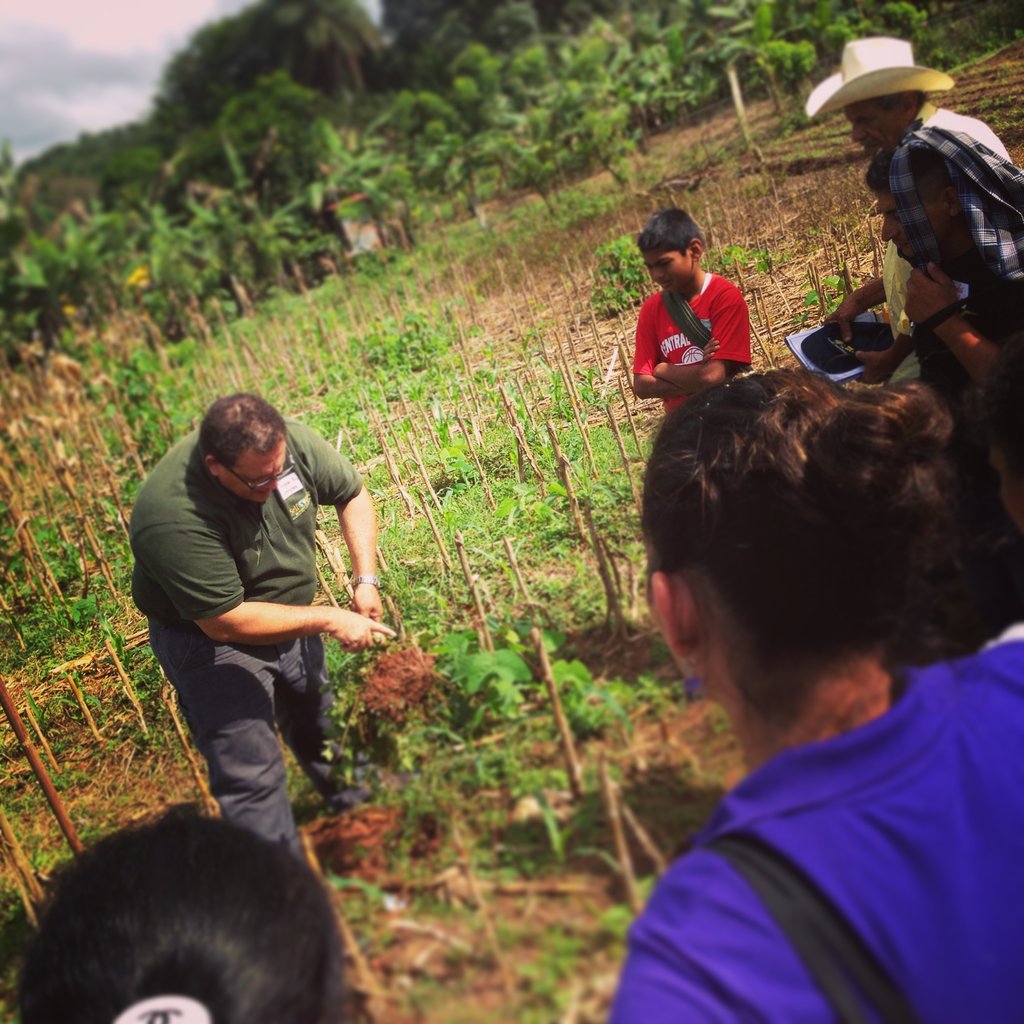
Like any other organization that works with the rural sector, Self – Help International works with community leaders who are people who organize the population for any activity in benefit of the community. Once we received a visit from the technician Rodolfo Hernández, my father (community leader) and I organized a group of farmers to be train. In that training session we learned everything regarding the corn, planting system as well as its agronomic management to obtain higher productive yields. Unfortunately, by the time we had that training all of our community farmers had already planted their corn in a traditional way and we were not table to make the proposal experimental plots as we did not have land available to carry out the new technique. I remember that all this was for a Primera planting season (in the month of May or raining season in our region), and since I already had a notion of this double row planting system because I have saw other farmers in the area to be working with Self – Help International and I even had obtain some seed previously of the organization visit, believe me I was really exciting to learn that we will have the same chance of experience as the other farmers had in previous years.
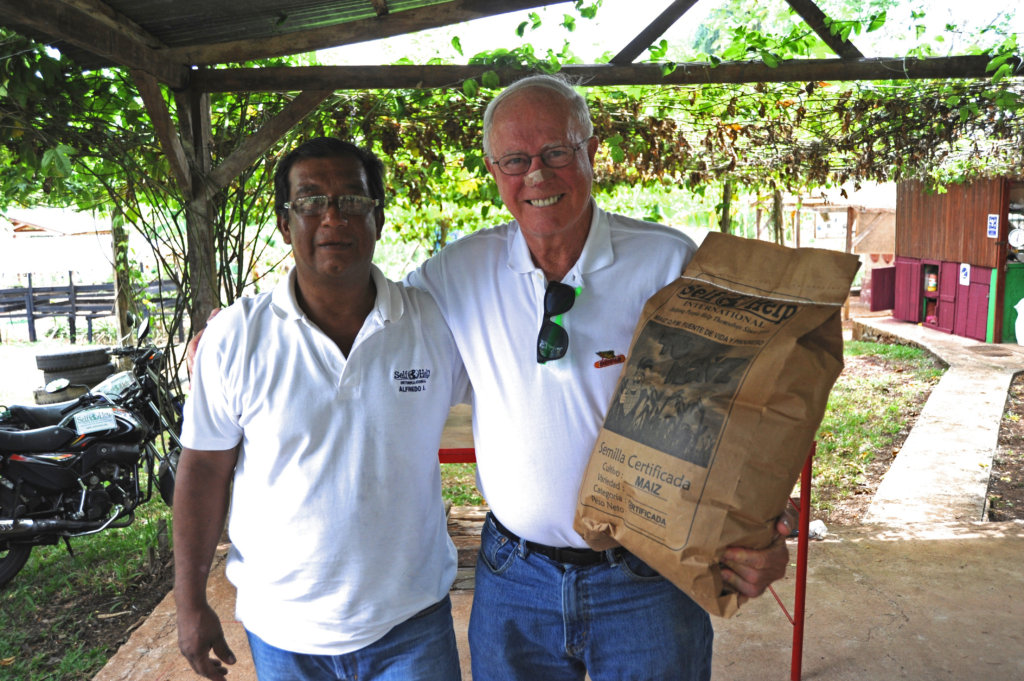
Nearing to the sowing season of postreras (October drying season in our region) we were invited by Self – Help International to another training session, this time was with the purpose of train farmers to have special skills in which they could become a “Certified Seeds Producer”, we (my community group members) attended the training at the organization's facilities and everything was explained to us, about all the process and requirements that we needed to follow up to become seed producer, also the organization would finance to us to be able to follow all the processes. I personally did not accept the proposal since I don´t have enough land available to make this type of job, as one of the main requirements was that the corn INTA – Nutrader (High Quality Protein) variety planting should not be near to other corn varieties due to pollen contamination. And in our case we all are small farmers with a small piece of land.
The only thing I considered was appropriated for us was to become a commercial corn producer using our small piece of land in which if we applied the double row technique we would get a higher yield even if we use that small amount of land, so after having received the training session of the Certified Seed Production, I asked to the Self – Help International representatives if they could support us with a small loan to sow commercial corn instead of certified seed, of course always using the "double row technique and the QPM corn”, the organization gave a positive response and financed around $275 (two hundred and seventy-five dollars net) for each one of the 5 young farmers including myself, to make all this possible we signed an agreement with the organization where we promised to use the variety of corn and carry out the double row sowing technique establishing 1.7 acres.
Sowing with this new methodology was a new experience for me since generally when I sow in the traditional way I do the sowing work on the same day, in the case of the double row it took me 8 days to finish it, which it was a bit difficult since I haven´t had planted corn so close between them. I was a little afraid about this planting method but I did it anyway and always thought about the debt I had with the organization I kept going. The finance received from Self – Help International was not enough to buy all of the input that we were told during the training sessions, since in that year the inputs prices were higher than previous years. I worked with those inputs who managed to buy more, the support of the technician was even greater to deal with all of my concerns. His assistance was very helpful to realize when we should apply the inputs, fertilizers and herbicides to obtain a good production.
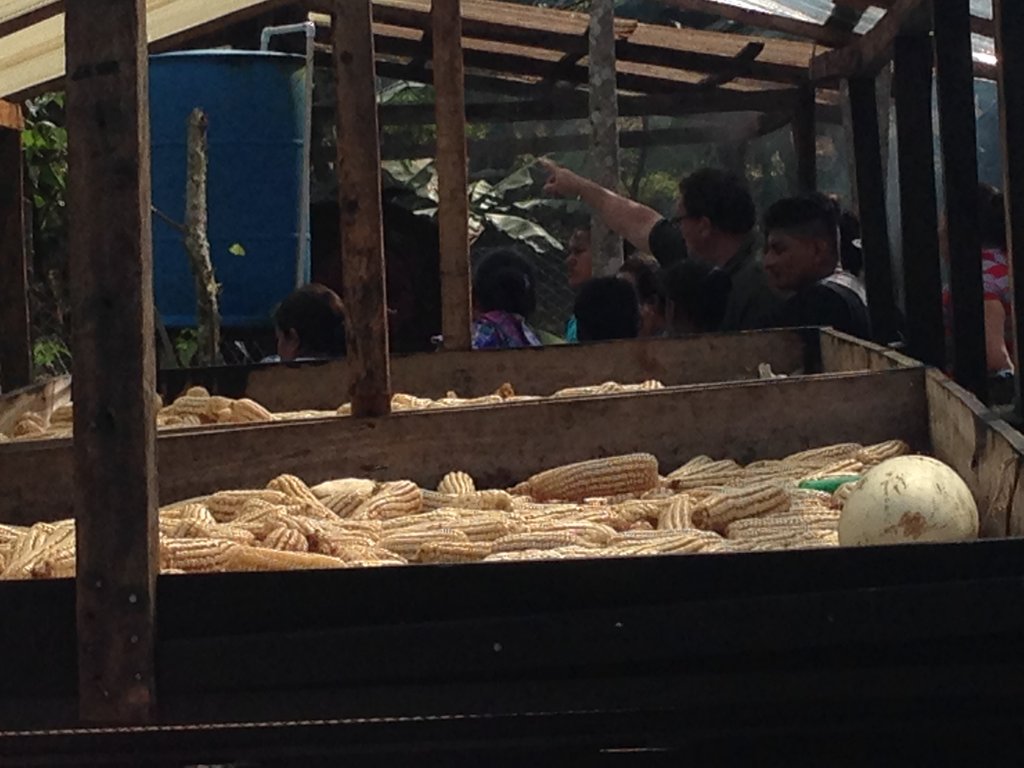
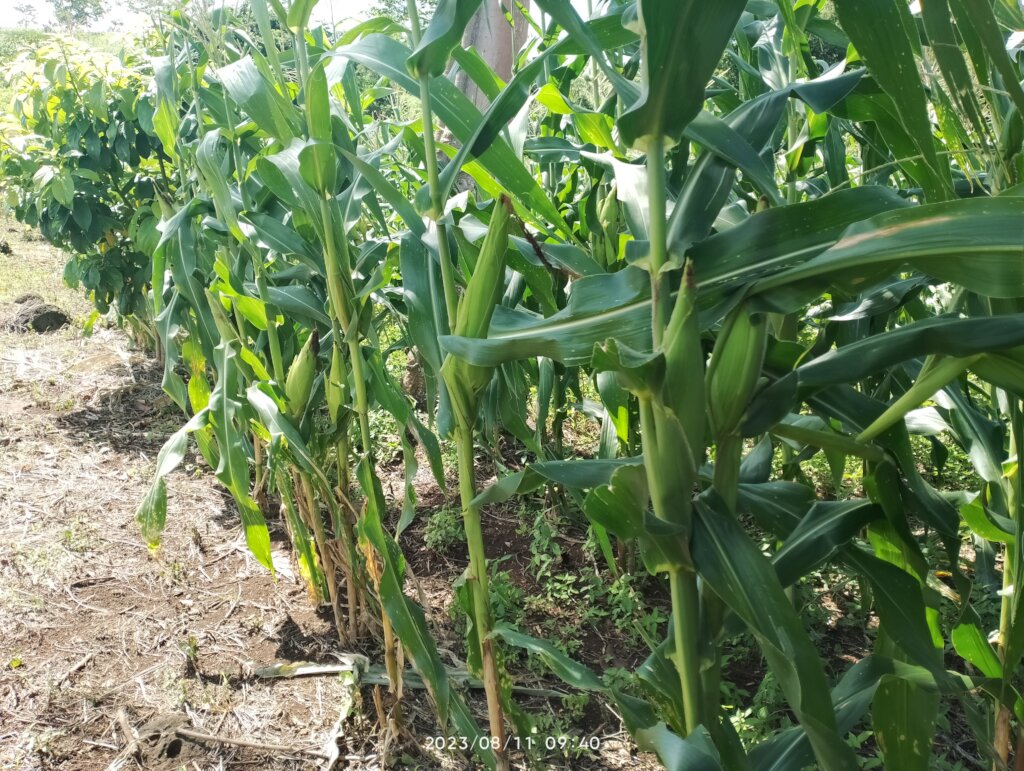
Still, I really mistrusted this planting method since I saw the corn very close between each other and I made a comment "this corn is not going to have a good yield, it is going to be burned because its to close between them" I was surprised when I saw that all the corn reached the baby corn stage and then the harvest time. I calculated that the planted area would yield approximately 1.82 tons, my surprise was when the result obtained was 2.95 tons all this without including 8.93 bushels that was stolen in the field, this yields results tells us that if we fertilize and use inputs in a timely manner in the crops and make good use of them, the result to be obtained is satisfactory. Of the 5 farmers that benefited, only 4 of us found the technique and the yields were similar. I also realized from the fact that the variety has a good weight at the time of packing the corn. But, despite having obtained a good performance on the yield, the price of corn was very low by that time since when there is a lot of corn the price gets lower imposed by buyers from other departments, mainly buyers are from the city of Masaya, which is about 160 miles from our region. At that time, the price was set at $12.33 (twelve dollars and 33/100 cents) for 2 bushels, so despite of the good harvest I got very little income, but even so I was able to pay the financing debt to Self - Help International, because I sold 2.72 out of the 2.95 tons I had harvested, and the rest of the corn I used 8.04 bushels for myself and my family's consumption and 1 bushel for seed purpose to be planted once again.
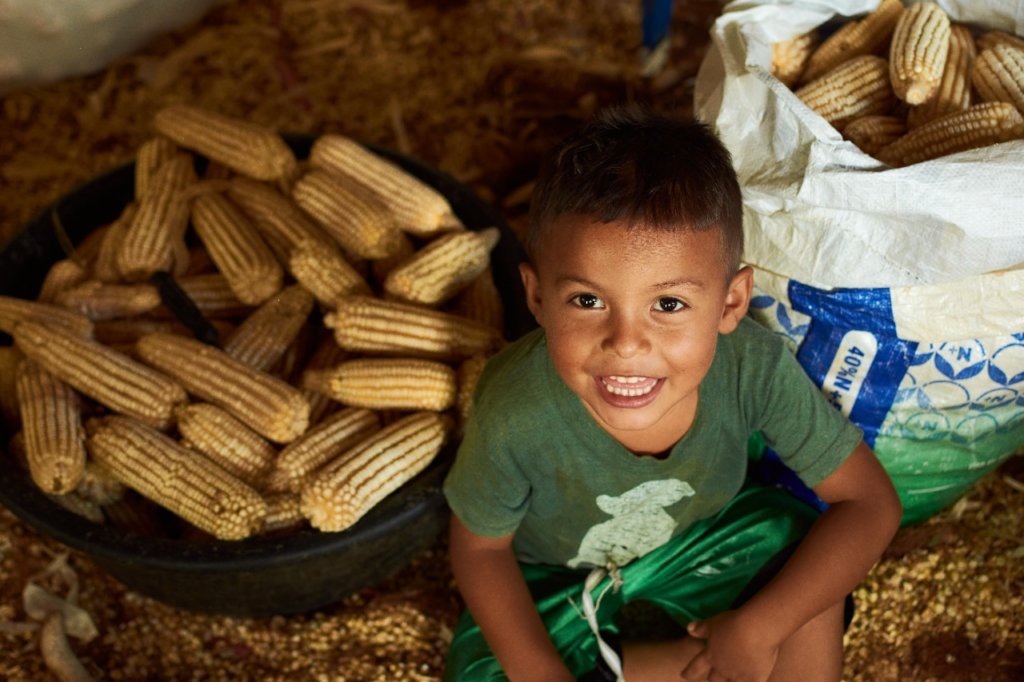
Now, that I had this experience I urge other farmers to use this sowing and the variety of corn since it is a very good variety and has characteristics that other types of corn do not have, such as protein, medium size, very good flavor and the main thing for us is that it does not present a peeled tip, it has very good coverage. Adding to this and speaking as a farmer, I tell others that we do not have to leave our country to improve our quality of life, but rather that we work our land and experiment with new techniques and technologies, being open minder farmers.
Currently I don´t want to change this new method of planting and I have been making several experience with this seed, right now I am carry out another activity in which I sow a smaller area where I give better care to the INTA NUTRADER maize to attend it in a better way and obtain seed to keep sowing my own seed in the next sowing cycle, in this small area I do thinning, eliminating plants that has different characteristics from the others, such as plants that are small, bent, with a greater height, etc, I am eliminating the spike to avoid that in the next sowing the plants present that height, always with the advice of the technician and help of the organization SELF HELP INTERNATIONAL.
In this Primera cycle of this year 2023 I sowed in mid-June and worked giving a different sowing framework, since Winter is not as good as it´s supposed to, then, I sowed my small land in a distance of 30cm and put two grains of corn per blow in a row of 70 cm and with this planting frame I yielded 1.82 tons, in this new experiment I also included the bean crop stubble on my land to help it to improve the soil and therefore there is greater availability of nutrients, in addition to this I applied at the 10 days of planting the corn 35 pounds of urea and then at 25 days I applied a combination of 35 pounds of urea again plus 35 pounds of NPK 5-15-15 (N=Nitrogen, P= Phosphorus, K= Potassiumand the results were excellent.
I will explain a little about the activities that I carry out for the sowing that I see that have given me a good result for my plantation.
Well, once the beans are harvested, I carry out the plowing activity in the field, clean it, pack it and transfer it to my small house. But from this I use all the remaining brushwood and begin to spread it all over the field that I will use for the corn planting. This practice has given me good results and I have used it two sowings already, in the postrera cycle and now in the Primera cycle, this has helped me a lot to lower production costs, to improve the soils that I use and to improve the quality of my corn, obtaining a better quality product, healthier ears, better size and very good weight.
In this primera season I have only planted 0.85 acres of corn in the month of June waiting for the rains to fall since winter in the area should be for the month of May and this year it was not like regular Winter conditions. Now, on these days we have to play with the weather and times to avoid losing our crops. We are currently experiencing a different climatic situation than what we are normally used to, so I recommend being curious about the weather and pests to avoid havoc with our crops.
I am grateful for the organization and the support provided through the training, credits, planting materials and technical follow-up given during all this time, and I hope that it continues to support the rural sector in the same way, providing new technologies and useful techniques for the common good of the our communities improving productive yields and food security. Thank you.
Project reports on GlobalGiving are posted directly to globalgiving.org by Project Leaders as they are completed, generally every 3-4 months. To protect the integrity of these documents, GlobalGiving does not alter them; therefore you may find some language or formatting issues.
If you donate to this project or have donated to this project, you can receive an email when this project posts a report. You can also subscribe for reports without donating.



Support this important cause by creating a personalized fundraising page.
Start a Fundraiser