By Ranna Khalil | Researcher
Dear Friends,
With this report, we wish to update you on the extremely dire situation facing the 100,000 Palestinian residents of Kufr 'Aqab, a neighborhood of East Jerusalem located behind the Separation Wall, who have been enduring a severe shortage of water supply.
For over three months, the water supply has sharply deteriorated plunging residents into a severe water crisis. In May 2024, residents received an average of just 12 hours of running water per week. As of mid-July 2024, they received only one and a half to two and a half days' worth of water per week, in stark contrast to all other residents of Jerusalem.
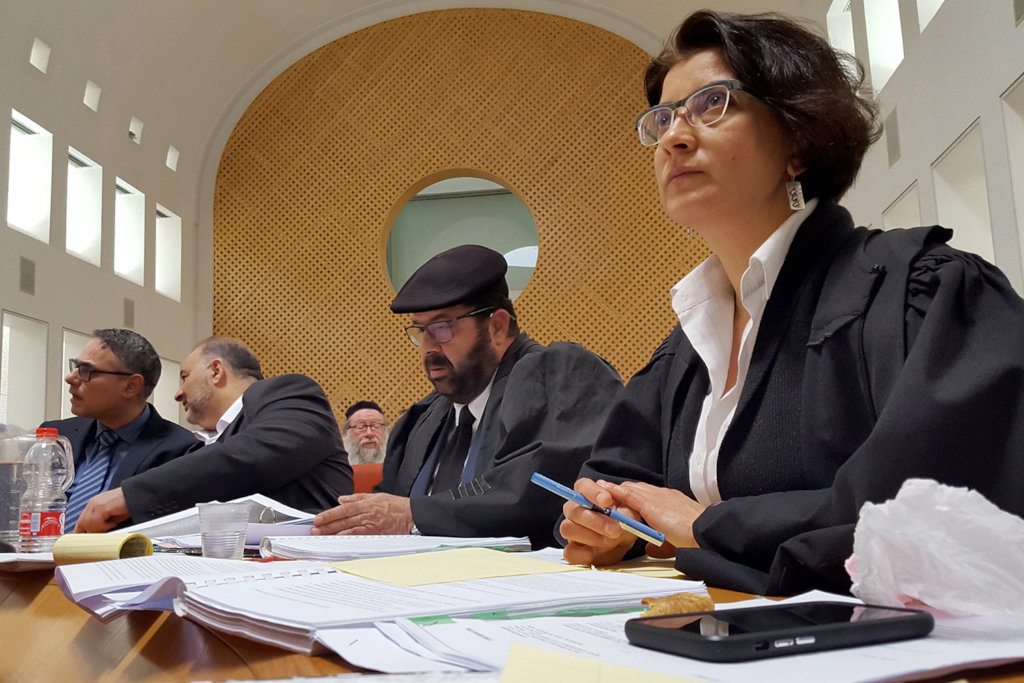
On 19 August 2024, Adalah filed a petition to the Israeli Supreme Court (SCT) on behalf of the Local Committee of Kufr 'Aqab and 200 residents, demanding the immediate provision of a regular, continuous, and adequate water supply to the neighborhood. Adalah argued that the insufficient water supply violates the Palestinian residents’ fundamental rights to health, life, and bodily integrity. This water shortage has a far-reaching impact on daily life, affecting essential public services such as health clinics and schools.
Kufr Aqab is Palestinian neighborhood in northern East Jerusalem that Israel annexed in 1967 in clear violation of international law, placing it under the jurisdiction of the Jerusalem Municipality and subjecting it to Israeli law. Under both international and Israeli law, Israel and its state agencies are obligated to provide a regular, high-quality water supply in sufficient quantities to the residents. However, the densely populated neighborhood is situated behind the Separation Wall, and Israeli authorities have used this fact as a pretext to neglect municipal services, including water and waste collection. Kufr ‘Aqab does not receive water from the Israeli municipal supplier, Hagihon Company. Instead, like other Palestinian communities in the occupied West Bank, the neighborhood relies on water supplied by the Jerusalem Water Undertaking, a Palestinian water company working with the Palestinian Water Authority, which purchases water from Israel’s national water company, Mekorot. Mekorot controls the water quotas, determining the amount of water available to the residents.
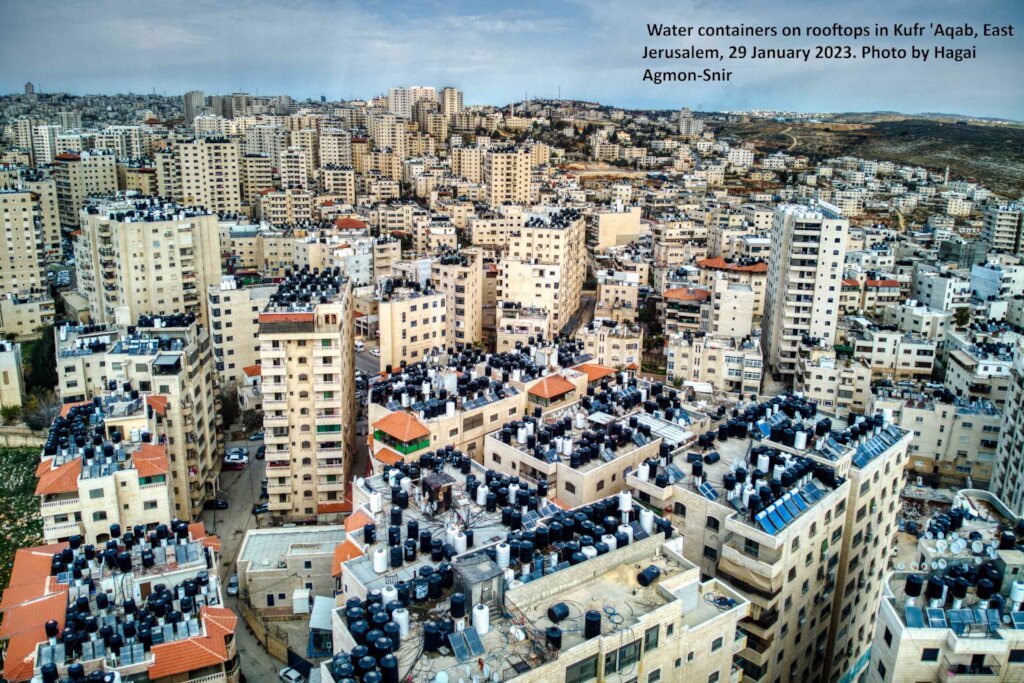
Due to the lack of running water for most days of the week, households, schools, clinics, and other facilities are forced to purchase water from private sources. This water is then pumped to rooftops using electric pumps and stored in large plastic tanks. This method is not only more than ten times the cost of the standard rate set by the Israeli Water Authority and Mekorot, but it also involves unregulated and potentially hazardous practices. Large quantities of stagnant water stored in plastic tanks exposed to the sun for extended periods, pose significant health risks, as they can degrade water quality and create conditions ideal for the growth of harmful germs. The significant weight from the large water containers also poses a serious structural hazard, potentially leading to the collapse of rooftops that are burdened with dozens of these heavy, water-filled containers.
The right to water is a constitutional right in Israel, derived from the rights to life, dignity, health, and equality, and it is also recognized in international human rights instruments. The UN Committee on Economic, Social and Cultural Rights, for example, in General Comment 15, emphasizes that “The human right to water entitles everyone to sufficient, safe, acceptable, physically accessible and affordable water for personal and domestic uses.. an adequate amount of safe water is necessary to prevent death from dehydration, to reduce the risk of water-related disease and to provide for consumption, cooking, personal and domestic hygienic requirements.”
Israel’s Water Authority claims that the water supply is managed by the Palestinian Water Authority and noted that Mekorot is "making efforts" to maintain the agreed-upon water quantities. Thus, the Water Authority is aware of the crisis, yet it also reflects a disregard for its legal obligations to ensure a continuous, adequate, and reasonably priced water supply, as required by law.
For decades, Israel has persistently failed to fulfill its obligations as an occupying power to provide water to Palestinians in the OPT, and at times, it has deliberately prevented access to these essential resources, including in areas Israel considers within its jurisdiction, such as Kufr 'Aqab. Israeli authorities refuse to take action, leaving Palestinians to rely on hazardous and unsafe practices that jeopardize their health.
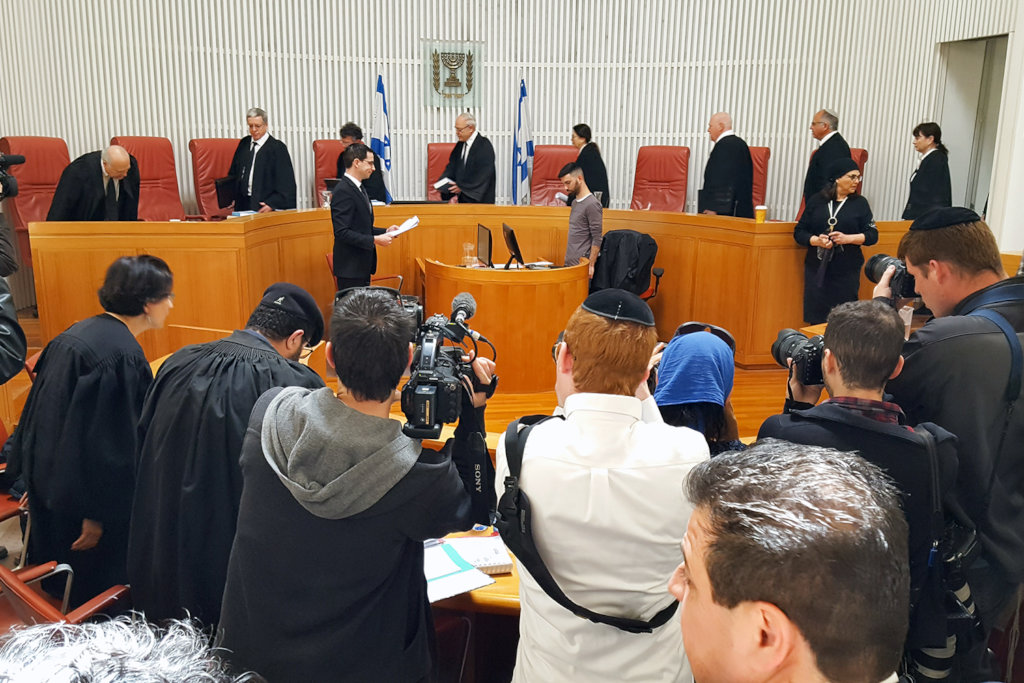
The SCT held a hearing on Adalah’s petition and others filed regarding this matter on 28 August 2024, during which the justices acknowledged the severity of the situation and expressed their intent to oversee the case until a solution is reached. Following the hearing, the SCT issued a decision requiring the Israeli authorities and the Jerusalem Water Undertaking to meet within one week to examine solutions for both short-term and long-term water provision to Kufr ‘Aqab. Specifically, the court demanded they address solutions such as increasing water allocations to the Palestinian Water Authority and implementing necessary infrastructure improvements. The court further ordered the respondents to submit an update by 15 September 2024.
Thank-you again for supporting Adalah’s strategic litigation. Your support for this critical work enables Adalah to continue to fight daily to defend the human rights of Palestinians in Israel and the OPT.
In solidarity,
The Adalah team.
Project reports on GlobalGiving are posted directly to globalgiving.org by Project Leaders as they are completed, generally every 3-4 months. To protect the integrity of these documents, GlobalGiving does not alter them; therefore you may find some language or formatting issues.
If you donate to this project or have donated to this project, you can receive an email when this project posts a report. You can also subscribe for reports without donating.



Support this important cause by creating a personalized fundraising page.
Start a Fundraiser