By Siphiwe Vilakati | Executive Director
1. Background and Project Overview
Super Buddies Club (SBC) is an Eswatini-based non-profit organisation established in 2008. SBC works to empower adolescents, young people and communities through innovative interventions that address HIV prevention, gender-based violence prevention, access to quality education and integrated health services, as well as entrepreneurship and employment opportunities.
Recognising agriculture as a viable pathway towards sustainable livelihoods and economic empowerment for rural communities, Super Buddies Club facilitated the formation of the Chakaza Kupheleni Multi-purpose Co-operative Society in 2025. The cooperative is based in Kupheleni, under Motjane Inkhundla, Hhohho Region.
The cooperative currently engages in vegetable production across approximately 2.5 hectares of farmland. It has established market linkages through the Hawane Multi-purpose Cooperative Society, creating opportunities for members to access agricultural markets. Members are also benefiting from an agribusiness training programme facilitated by a Community Development Specialist through a partnership with the United States Peace Corps Response Volunteer Programme.
2. Strategic Direction and Organisational Development
In March 2026, Super Buddies Club provided technical support to the cooperative in developing its five-year Strategic Plan, which will guide its growth and development from 2026 to 2030.
The Strategic Plan is anchored on four strategic objectives:
Over the five-year period, the cooperative will prioritise the commercial production of crops suited to local climatic conditions and market demand, including beans, potatoes, maize, vegetables and other high-value crops.
To achieve these objectives, members will receive practical training, demonstrations, mentorship, access to agricultural inputs, technical assistance and support in coordinated production and collective marketing.
3. Project Implementation and Expected Impact
The project seeks to strengthen the institutional and productive capacity of Chakaza Kupheleni Multi-purpose Co-operative Society, directly supporting 30 cooperative members, approximately 70% of whom are women and young people.
A key component of the intervention is the development of the existing cooperative farm into a Centre of Excellence for Sustainable Agriculture. The centre will serve as a hub for agricultural demonstrations, practical training, commercial production and knowledge sharing, benefiting both cooperative members and neighbouring farming communities.
Through the partnership with the United States Peace Corps Response Volunteer Programme, cooperative members will receive practical training in:
Members will also receive seedlings to support production on their individual farms, while the cooperative will coordinate collective marketing and facilitate access to established markets. This approach will enable members to increase agricultural productivity, improve household incomes and strengthen their participation in commercial agriculture.
4. Building Local Agricultural Expertise Through the Lead Farmer Model
The project builds on an established Training-of-Trainers (ToT) approach designed to promote local ownership and ensure the sustainability of agricultural knowledge and skills.
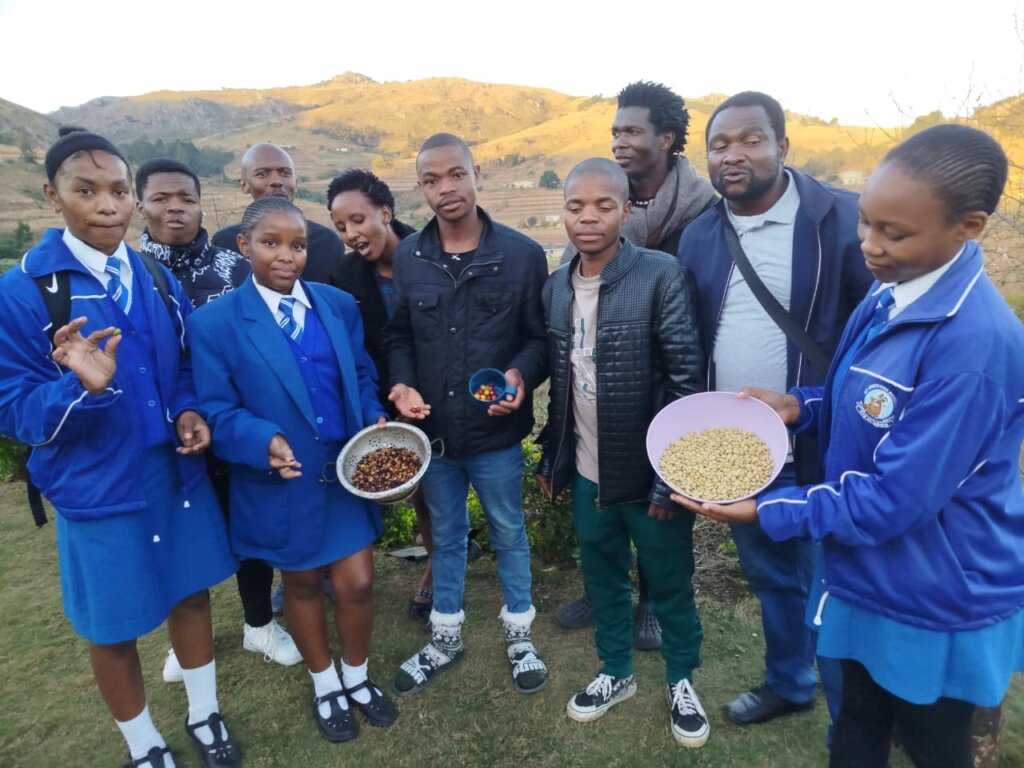
Six cooperative members have been selected as Lead Farmer Trainers. They are currently receiving technical support from two Peace Corps Response Volunteers: one providing virtual technical instruction and the other offering practical, on-site mentorship.
Following their training, the Lead Farmer Trainers will transfer their knowledge and skills to other cooperative members and neighbouring farmers through practical demonstrations, peer learning and ongoing mentorship.
This approach will strengthen local technical capacity, encourage community-led knowledge sharing and ensure that agricultural expertise remains within the community beyond the project's implementation period.
5. Market Access and Progress to Date
The cooperative is building on its existing market linkages with the National Agricultural Marketing Board (NAMBOARD) and local retail outlets. These partnerships provide opportunities for farmers to produce crops based on identified market demand, reducing marketing uncertainties and strengthening the commercial viability of their farming activities.
An important milestone was achieved when the cooperative successfully tested its retail market linkage by supplying lettuce and Swiss chard to Shoprite between August and October [confirm year]. This provided valuable experience in meeting market requirements, coordinating production and supplying fresh produce to a formal retail outlet.
Building on this achievement, the cooperative is now undertaking the production of carrots and green beans, which are intended for supply to NAMBOARD.
These developments demonstrate the cooperative's progress towards transitioning from small-scale agricultural activities to a more organised, market-oriented commercial farming enterprise.
6. Challenges and Emerging Needs
Despite the progress made, the cooperative continues to face resource constraints that limit its ability to fully implement its agricultural development plans.
The main challenges include:
Addressing these constraints will enable the cooperative to expand its production capacity, diversify its agricultural enterprises and take advantage of emerging market opportunities.
7. Support Required and Opportunities for Investment
Super Buddies Club is seeking additional financial and technical support to strengthen the cooperative's agricultural production capacity and accelerate its development into a sustainable rural agribusiness enterprise.
Priority areas requiring support include:
1. Practical training in bean and potato production
Funding is needed to facilitate hands-on training, demonstrations and mentorship in commercial bean and potato production. This will equip cooperative members with the necessary skills to improve productivity, manage production costs and produce quality crops that meet market requirements.
2. Establishment of a vegetable seedling production facility
Financial support is required to establish a dedicated vegetable seedling production site, including the necessary infrastructure, equipment, seeds and other production inputs. This facility will provide a consistent supply of quality seedlings to cooperative members, support expanded vegetable production and create opportunities for an additional income-generating enterprise.
3. Strengthening sustainable agricultural production
Additional investment in agricultural inputs and production infrastructure will help the cooperative expand its farming activities, strengthen existing market relationships and increase its capacity to supply consistent volumes of quality produce.
8. Looking Ahead
Through this initiative, Super Buddies Club aims to establish Chakaza Kupheleni Multi-purpose Co-operative Society as a model of community-led, commercially viable and sustainable agriculture.
The development of the Centre of Excellence for Sustainable Agriculture, combined with practical skills transfer, market access and enterprise diversification, will create opportunities for rural communities to improve food security, generate sustainable incomes and build economic resilience.
By investing in the cooperative, supporters will contribute to empowering 30 rural farmers, particularly women and young people, while creating a foundation for wider community benefits through knowledge sharing, agricultural enterprise development and improved access to markets.
With continued support, Chakaza Kupheleni can become a demonstration of how organised rural communities can use agriculture to create sustainable livelihoods and inclusive economic opportunities.
Strengthening Rural Livelihoods Through Sustainable Agriculture: Chakaza Kupheleni Multi-purpose Co-operative Society
1. Background and Project Overview
Super Buddies Club (SBC) is an Eswatini-based non-profit organisation established in 2008. SBC works to empower adolescents, young people and communities through innovative interventions that address HIV prevention, gender-based violence prevention, access to quality education and integrated health services, as well as entrepreneurship and employment opportunities.
Recognising agriculture as a viable pathway towards sustainable livelihoods and economic empowerment for rural communities, Super Buddies Club facilitated the formation of the Chakaza Kupheleni Multi-purpose Co-operative Society in 2025. The cooperative is based in Kupheleni, under Motjane Inkhundla, Hhohho Region.
The cooperative currently engages in vegetable production across approximately 2.5 hectares of farmland. It has established market linkages through the Hawane Multi-purpose Cooperative Society, creating opportunities for members to access agricultural markets. Members are also benefiting from an agribusiness training programme facilitated by a Community Development Specialist through a partnership with the United States Peace Corps Response Volunteer Programme.
2. Strategic Direction and Organisational Development
In March 2026, Super Buddies Club provided technical support to the cooperative in developing its five-year Strategic Plan, which will guide its growth and development from 2026 to 2030.
The Strategic Plan is anchored on four strategic objectives:
Over the five-year period, the cooperative will prioritise the commercial production of crops suited to local climatic conditions and market demand, including beans, potatoes, maize, vegetables and other high-value crops.
To achieve these objectives, members will receive practical training, demonstrations, mentorship, access to agricultural inputs, technical assistance and support in coordinated production and collective marketing.
3. Project Implementation and Expected Impact
The project seeks to strengthen the institutional and productive capacity of Chakaza Kupheleni Multi-purpose Co-operative Society, directly supporting 30 cooperative members, approximately 70% of whom are women and young people.
A key component of the intervention is the development of the existing cooperative farm into a Centre of Excellence for Sustainable Agriculture. The centre will serve as a hub for agricultural demonstrations, practical training, commercial production and knowledge sharing, benefiting both cooperative members and neighbouring farming communities.
Through the partnership with the United States Peace Corps Response Volunteer Programme, cooperative members will receive practical training in:
Members will also receive seedlings to support production on their individual farms, while the cooperative will coordinate collective marketing and facilitate access to established markets. This approach will enable members to increase agricultural productivity, improve household incomes and strengthen their participation in commercial agriculture.
4. Building Local Agricultural Expertise Through the Lead Farmer Model
The project builds on an established Training-of-Trainers (ToT) approach designed to promote local ownership and ensure the sustainability of agricultural knowledge and skills.
Six cooperative members have been selected as Lead Farmer Trainers. They are currently receiving technical support from two Peace Corps Response Volunteers: one providing virtual technical instruction and the other offering practical, on-site mentorship.
Following their training, the Lead Farmer Trainers will transfer their knowledge and skills to other cooperative members and neighbouring farmers through practical demonstrations, peer learning and ongoing mentorship.
This approach will strengthen local technical capacity, encourage community-led knowledge sharing and ensure that agricultural expertise remains within the community beyond the project's implementation period.
5. Market Access and Progress to Date
The cooperative is building on its existing market linkages with the National Agricultural Marketing Board (NAMBOARD) and local retail outlets. These partnerships provide opportunities for farmers to produce crops based on identified market demand, reducing marketing uncertainties and strengthening the commercial viability of their farming activities.
An important milestone was achieved when the cooperative successfully tested its retail market linkage by supplying lettuce and Swiss chard to Shoprite between August and October [confirm year]. This provided valuable experience in meeting market requirements, coordinating production and supplying fresh produce to a formal retail outlet.
Building on this achievement, the cooperative is now undertaking the production of carrots and green beans, which are intended for supply to NAMBOARD.
These developments demonstrate the cooperative's progress towards transitioning from small-scale agricultural activities to a more organised, market-oriented commercial farming enterprise.
6. Challenges and Emerging Needs
Despite the progress made, the cooperative continues to face resource constraints that limit its ability to fully implement its agricultural development plans.
The main challenges include:
Addressing these constraints will enable the cooperative to expand its production capacity, diversify its agricultural enterprises and take advantage of emerging market opportunities.
7. Support Required and Opportunities for Investment
Super Buddies Club is seeking additional financial and technical support to strengthen the cooperative's agricultural production capacity and accelerate its development into a sustainable rural agribusiness enterprise.
Priority areas requiring support include:
1. Practical training in bean and potato production
Funding is needed to facilitate hands-on training, demonstrations and mentorship in commercial bean and potato production. This will equip cooperative members with the necessary skills to improve productivity, manage production costs and produce quality crops that meet market requirements.
2. Establishment of a vegetable seedling production facility
Financial support is required to establish a dedicated vegetable seedling production site, including the necessary infrastructure, equipment, seeds and other production inputs. This facility will provide a consistent supply of quality seedlings to cooperative members, support expanded vegetable production and create opportunities for an additional income-generating enterprise.
3. Strengthening sustainable agricultural production
Additional investment in agricultural inputs and production infrastructure will help the cooperative expand its farming activities, strengthen existing market relationships and increase its capacity to supply consistent volumes of quality produce.
8. Looking Ahead
Through this initiative, Super Buddies Club aims to establish Chakaza Kupheleni Multi-purpose Co-operative Society as a model of community-led, commercially viable and sustainable agriculture.
The development of the Centre of Excellence for Sustainable Agriculture, combined with practical skills transfer, market access and enterprise diversification, will create opportunities for rural communities to improve food security, generate sustainable incomes and build economic resilience.
By investing in the cooperative, supporters will contribute to empowering 30 rural farmers, particularly women and young people, while creating a foundation for wider community benefits through knowledge sharing, agricultural enterprise development and improved access to markets.
With continued support, Chakaza Kupheleni can become a demonstration of how organised rural communities can use agriculture to create sustainable livelihoods and inclusive economic opportunities.
Project reports on GlobalGiving are posted directly to globalgiving.org by Project Leaders as they are completed, generally every 3-4 months. To protect the integrity of these documents, GlobalGiving does not alter them; therefore you may find some language or formatting issues.
If you donate to this project or have donated to this project, you can receive an email when this project posts a report. You can also subscribe for reports without donating.


Support this important cause by creating a personalized fundraising page.
Start a Fundraiser