By Davis Nordeen | Resource Development Assistant
For many Syrian refugees, depression and anxiety have become a staple of everyday life. An estimated 54% of Syrian refugees are living with severe emotional disorders as the Syrian crisis approaches its eighth year without an end to the violence or displacement.
A key factor contributing to this prevalence are the barriers surrounding treatment. Limited access to mental health services, cultural stigma surrounding mental illness, and the fear associated with clinical labels of psychological distress persistently bar refugees from seeking out and receiving the care they need.
“I have spent 5 years suffering from hearing voices. I wasn’t trusting others, I had social problems, and was sad all the time,” Amal said, a Syrian woman who received psychiatric support at International Medical Corps’ mental health clinic at Azraq camp in Jordan.
“During the past years I went to many scholars and mystics but none of them helped me. When I came to the camp, I heard about mental health services through an awareness session, then I sought their help.”
Reducing the stigma surrounding mental illness, and ensuring that refugees know what mental health services are available to them, are priorities of International Medical Corps’ mission at Azraq Camp. In addition to providing direct support through case management services, psychological sessions, and psychiatrist consultations at two mental health clinics, we integrate mental health care into primary health services and spread awareness of mental health issues to ease the fear, embarrassment and shame that can be associated with pursuing treatment.
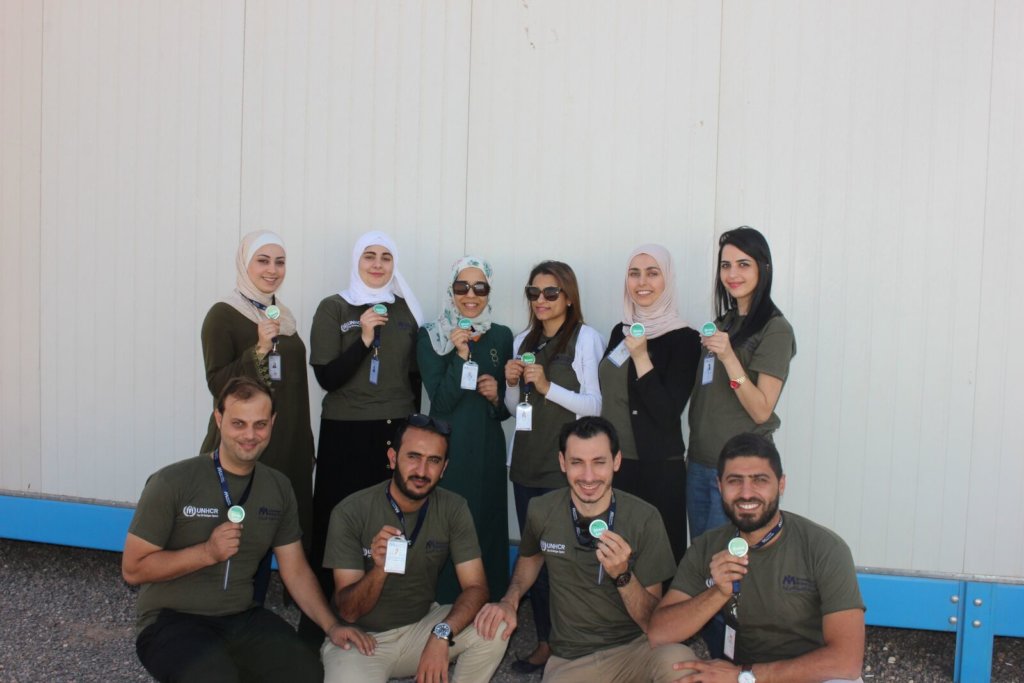
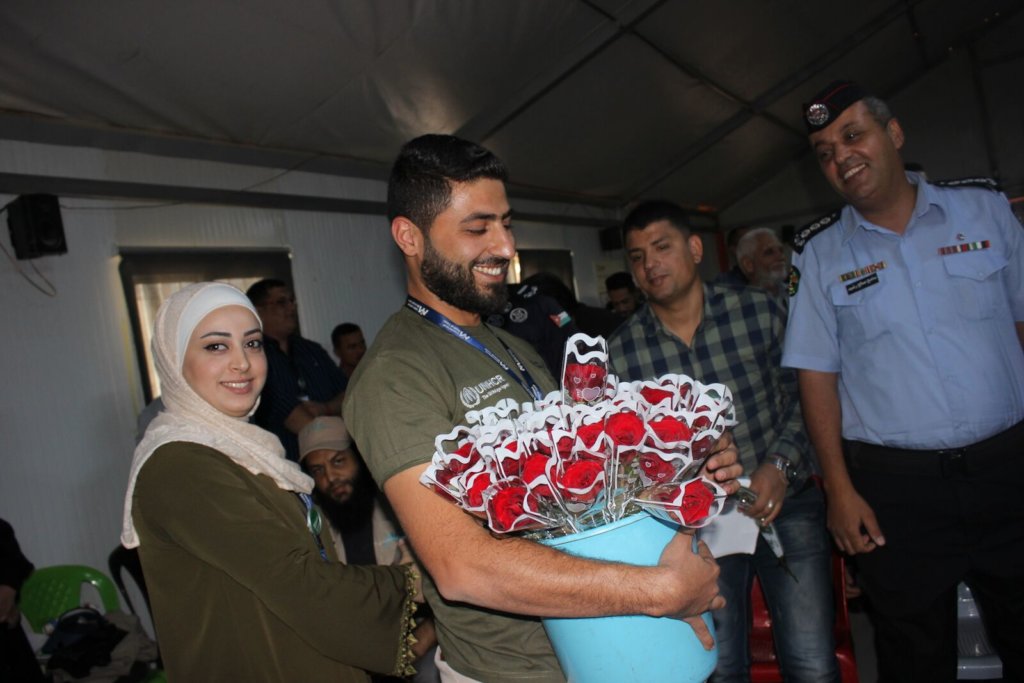
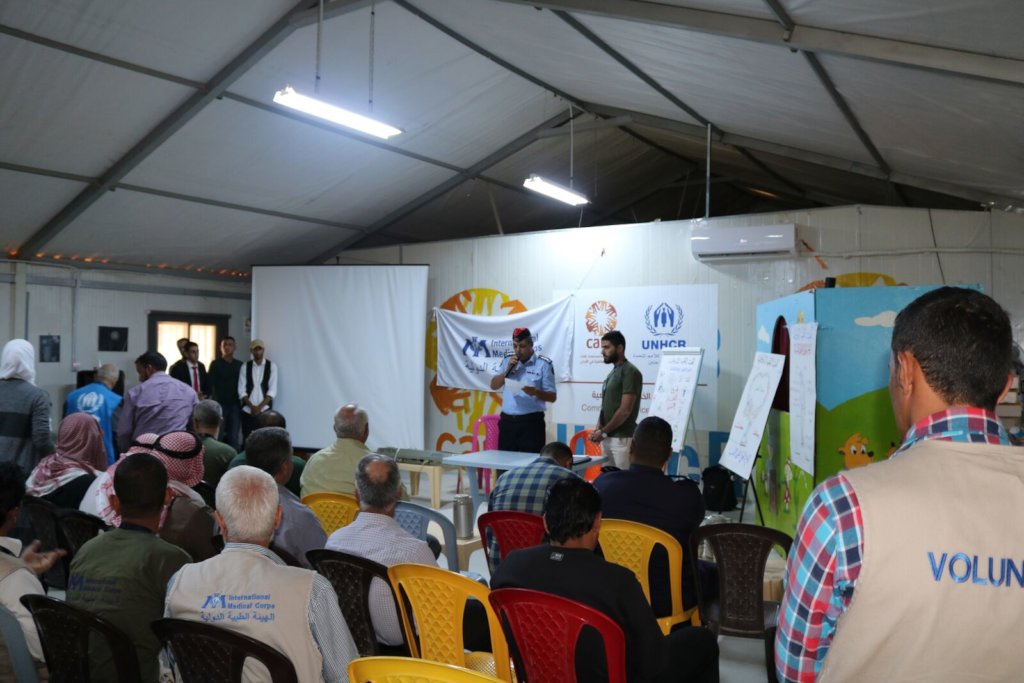
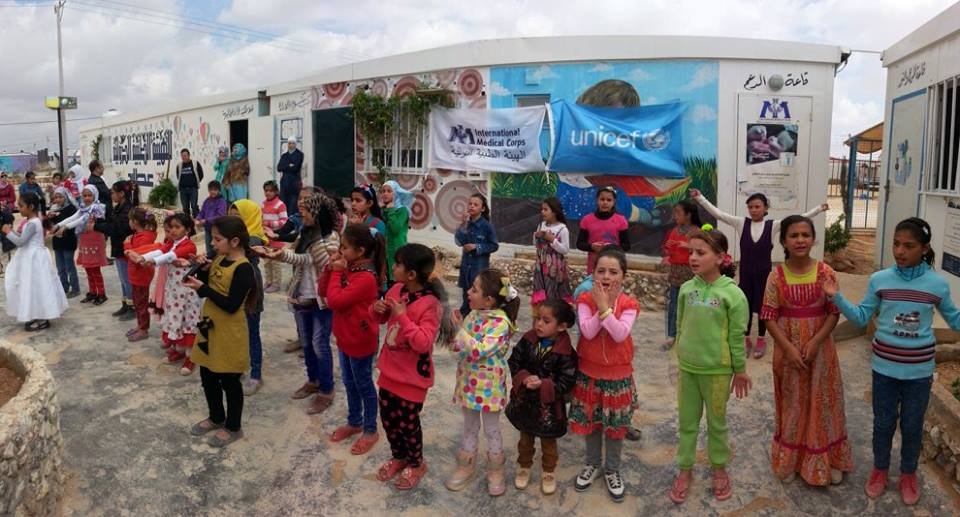
At Azraq Camp in October, International Medical Corps hosted an awareness-raising event in celebration and observance of World Mental Health Day with the theme of promoting positive mental health in the workplace. Over 60 camp residents attended the event in addition to other NGO staff, and representatives from the Ministry of Health, the Syrian Refugee Affairs Directorate (SRAD) and UNHCR.
The event consisted of four awareness sessions about stress management techniques, a role-playing performance by community health volunteers about mental health at work, a performance by the Azraq Camp band, and a video of success stories from those who received care through International Medical Corps mental health services, one of whom was Amal.
“They provided me with psychological support, psychotropic medication, and intensively followed up with me. I felt the improvement in my mental health, I have improved my social skills, and I no longer hear voices,” Amal shared in the video.
Our goal, as with all of our awareness-raising activities, was to show refugees at Azraq camp that they are not alone—that their mental health is important and that we support them. In the past three months, International Medical Corps provided mental health care services to 110 new patients at Azraq Camp, and we will continue to raise awareness in camp communities to encourage refugees to reach out for the mental support they need and deserve.
We thank all of you in the GlobalGiving community for your support of Syrian refugees living in Azraq Camp in Jordan. Your generosity is helping International Medical Corps provide critically needed mental health and psychosocial services to vulnerable Syrian refugees.
Links:
Project reports on GlobalGiving are posted directly to globalgiving.org by Project Leaders as they are completed, generally every 3-4 months. To protect the integrity of these documents, GlobalGiving does not alter them; therefore you may find some language or formatting issues.
If you donate to this project or have donated to this project, you can receive an email when this project posts a report. You can also subscribe for reports without donating.