By Iain Guest and Stella Makena | Project leaders
This report is being sent to friends who have generously donated to our GlobalGiving appeal for composters in the informal settlement of Kibera, Nairobi.
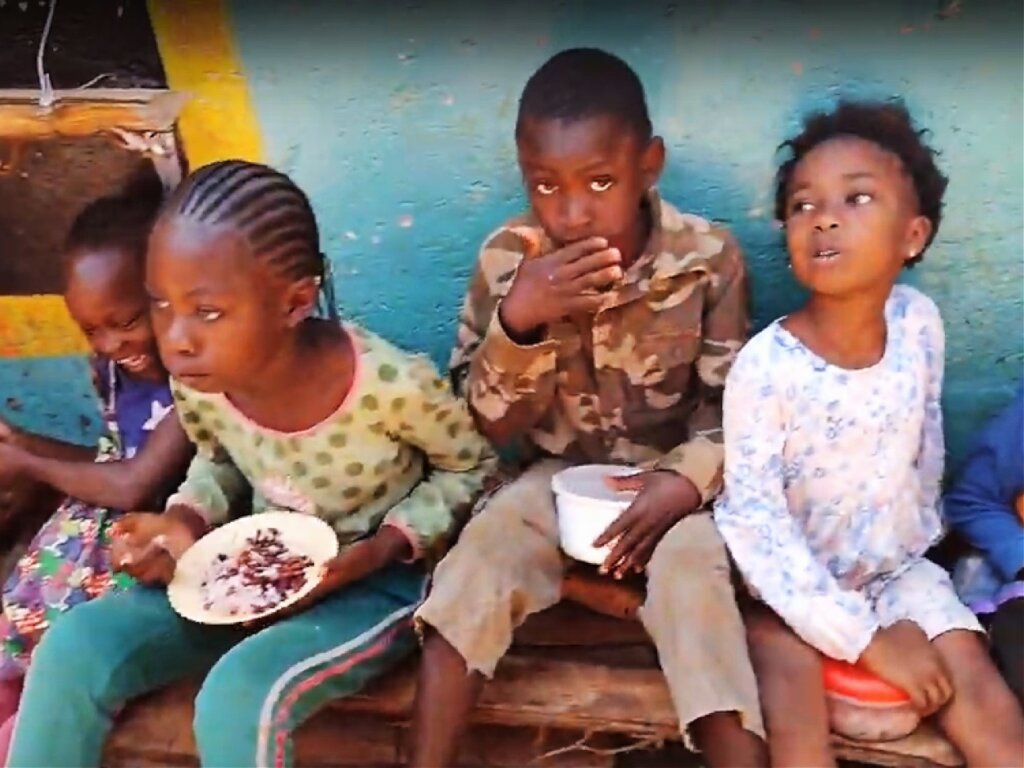
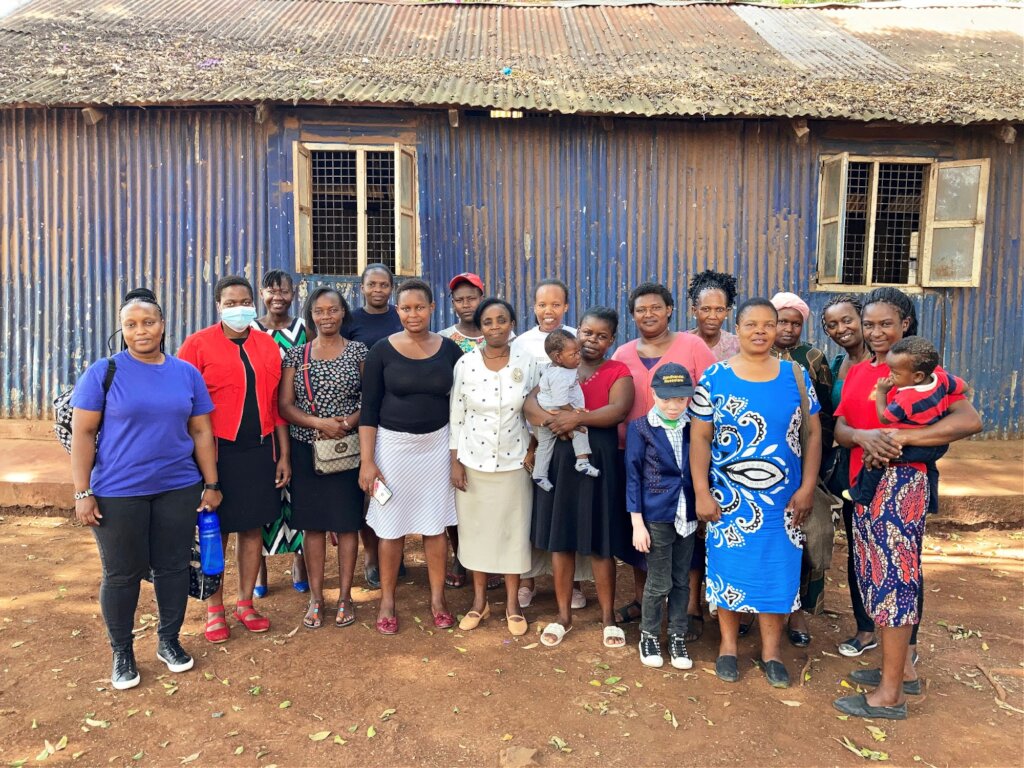
As we have explained in earlier reports, the composting project was launched last year by Shield of Faith, an association of women who have decided to take action against garbage and pollution in what has been described as the largest slum in Africa. Kibera produces around 230 tons of garbage a day and much of the produce consumed in the settlement is grown in sewage. Most of the women are single mothers, and several have children with albinism.
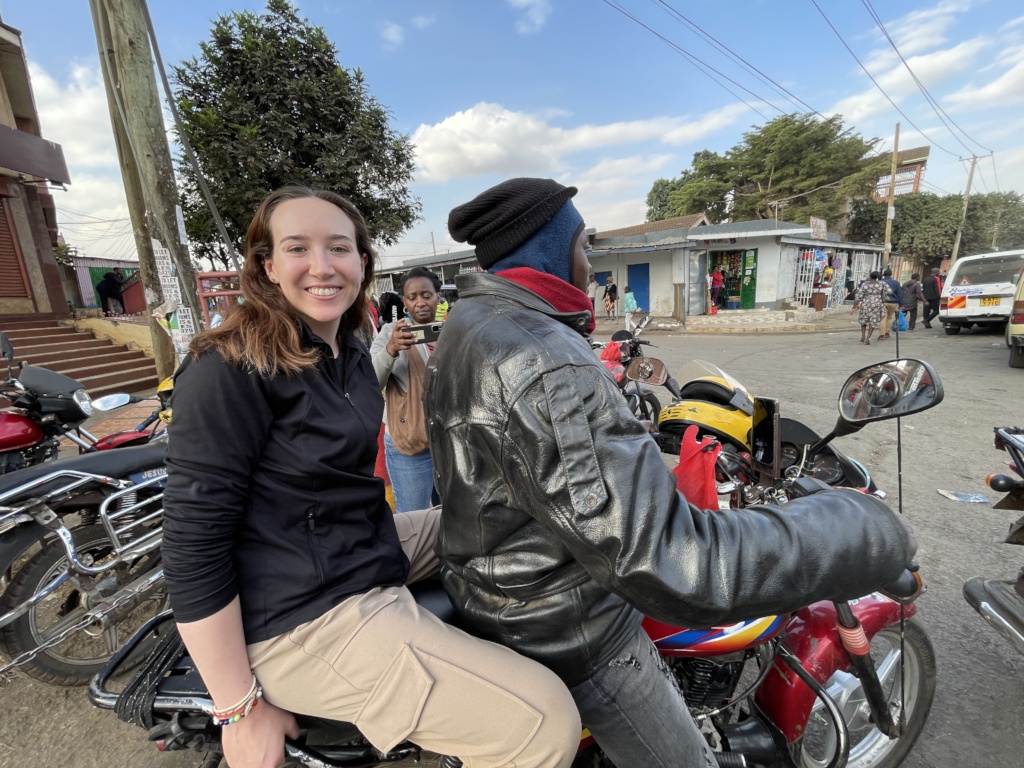
I was fortunate to visit Kibera and meet with Shield of Faith this past summer, accompanied by our 2023 Peace Fellow Caitlin, a graduate student at the George Washington University in Washington. The trip was a real eye-opener.
I won’t pretend that Kibera is an easy place to live. Indeed, some of the conditions are really challenging. The main service provided by the government is education. Otherwise, it is up to the inhabitants to secure essentials like water and electricity. Much of the water is purchased from small traders in the streets and has to be carried home by the women in large buckets, often up many flights of stairs. Electricity is tapped illegally from the lines that run above the settlement and then resold. Most of the garbage is tossed onto open spaces.
But however forbidding it may seem to outsiders, Kibera is home to over 250,000 people. I asked Ruth, a single mother and member of Shield of Faith who lives on the top floor of a gloomy tenement, to describe her community. “I love it!” she replied without hesitation.
*
Shield of Faith formed after its members met at an embroidery training organized by The Advocacy Project in November 2019 on the occasion of the UN Summit on Women and Girls in Nairobi. We have introduced you to the group leader Stella in previous reports and in our news bulletins. Meeting her again in person, and visiting the homes of her friends, was an eye-opening experience. She is a dynamo!
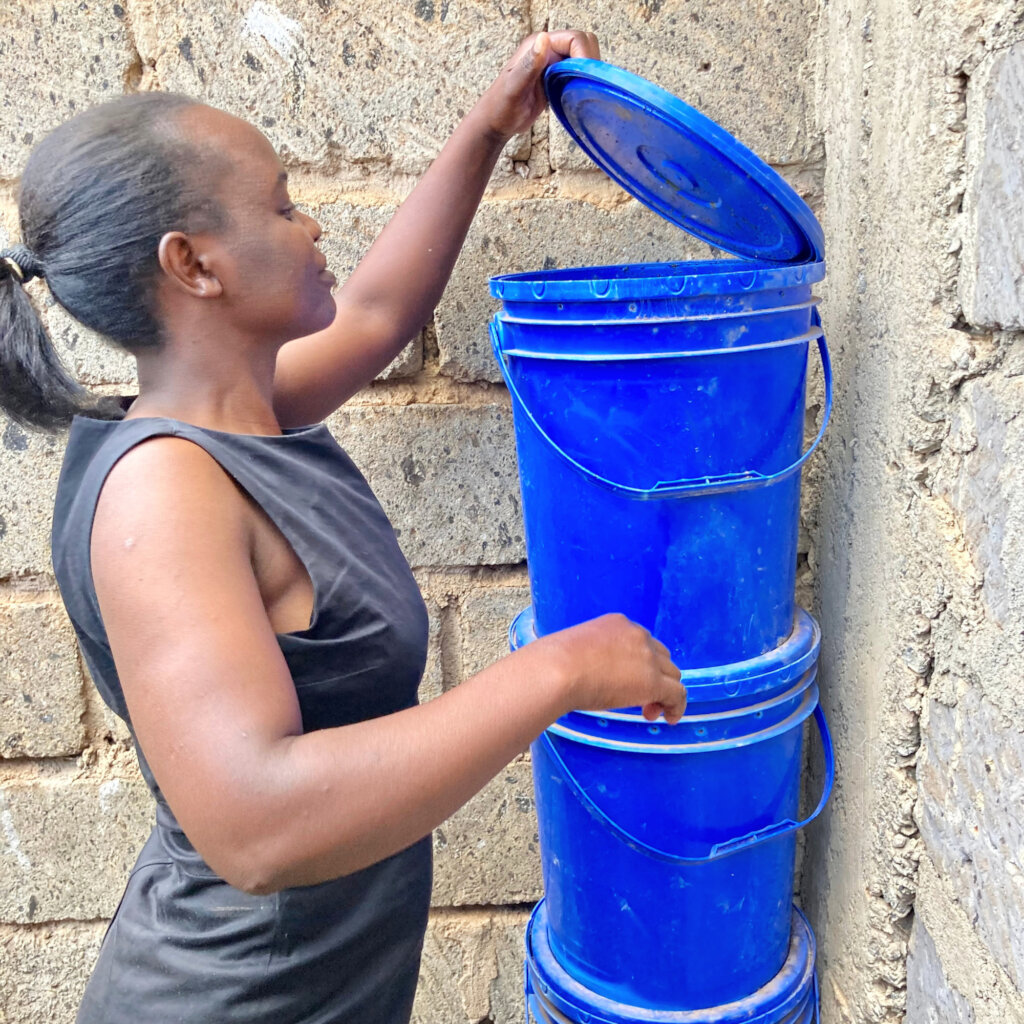
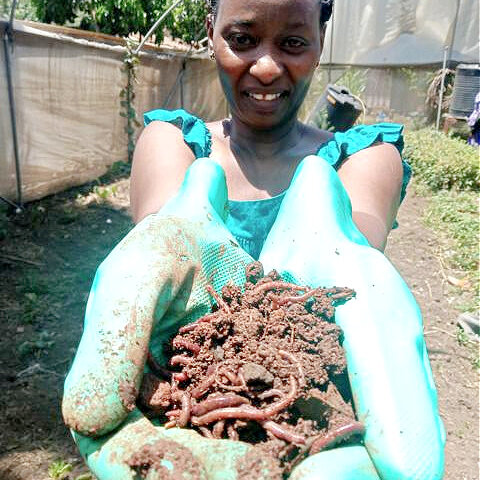
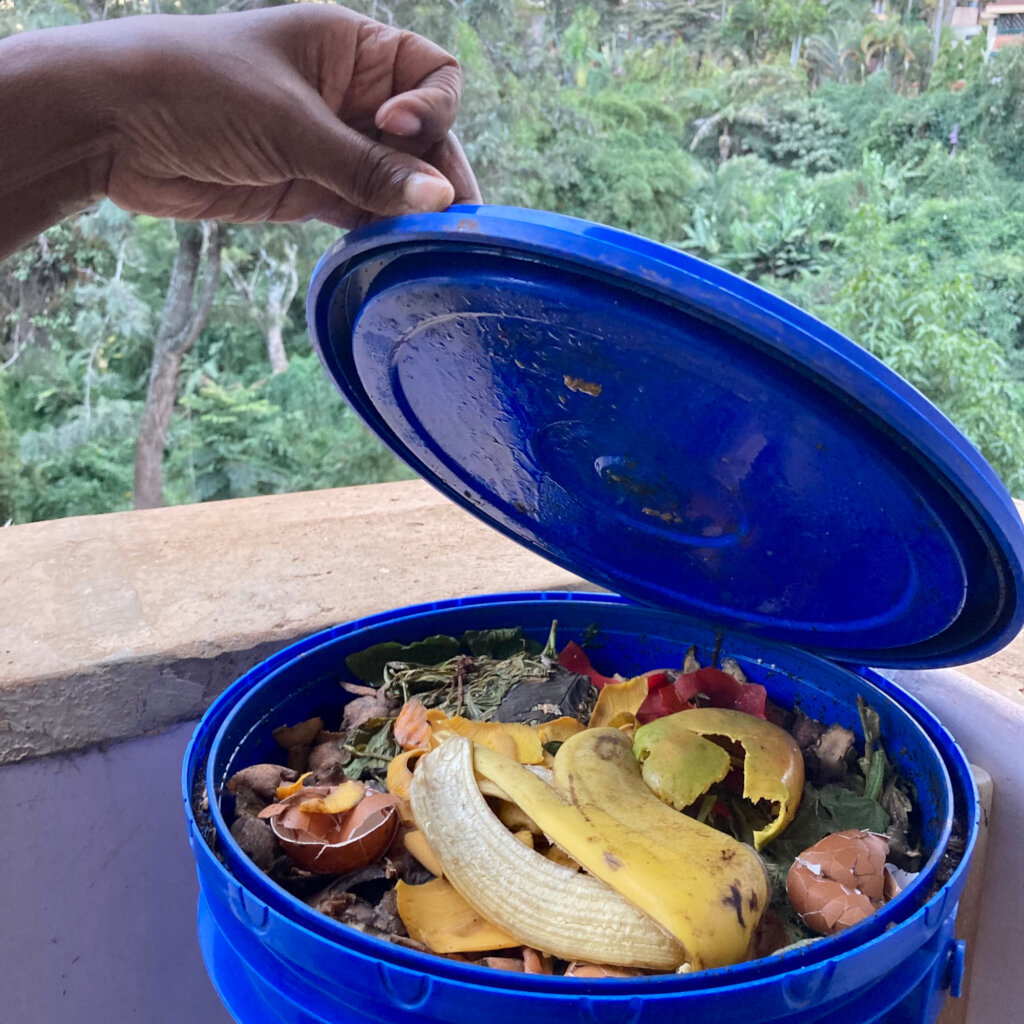
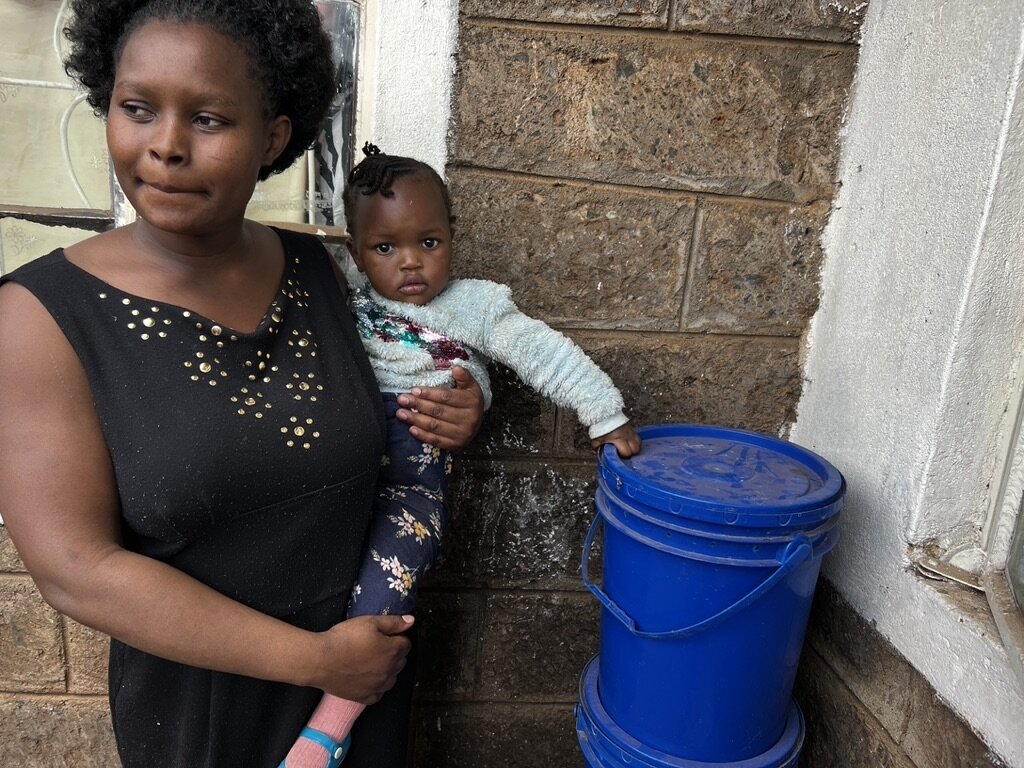
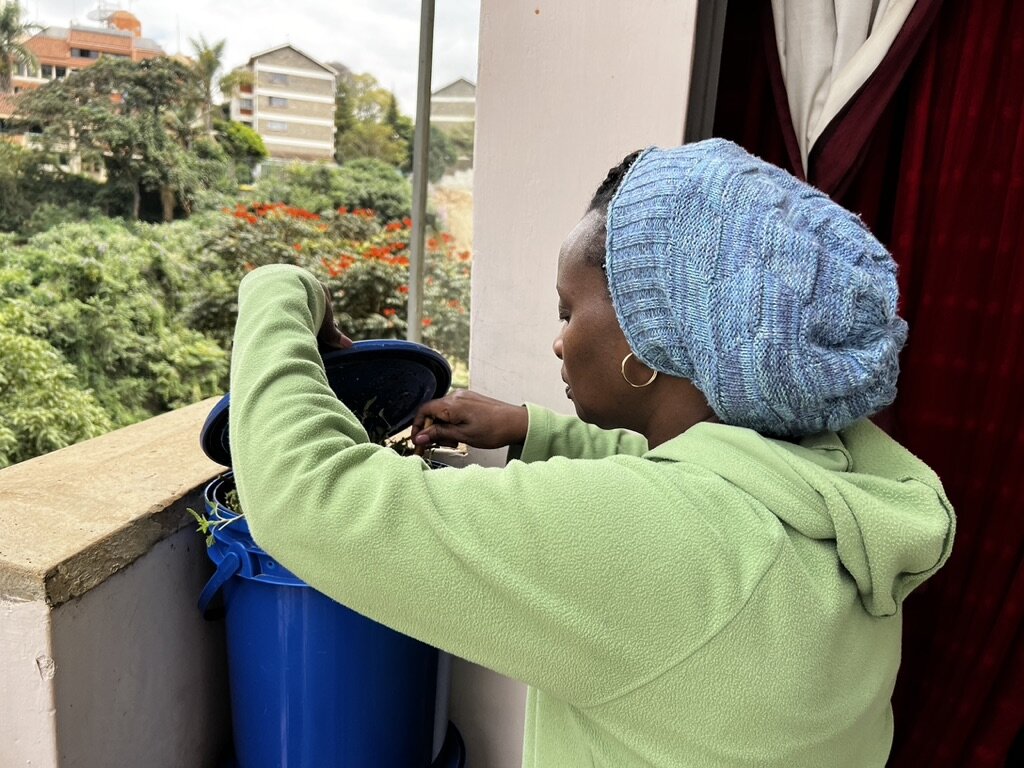
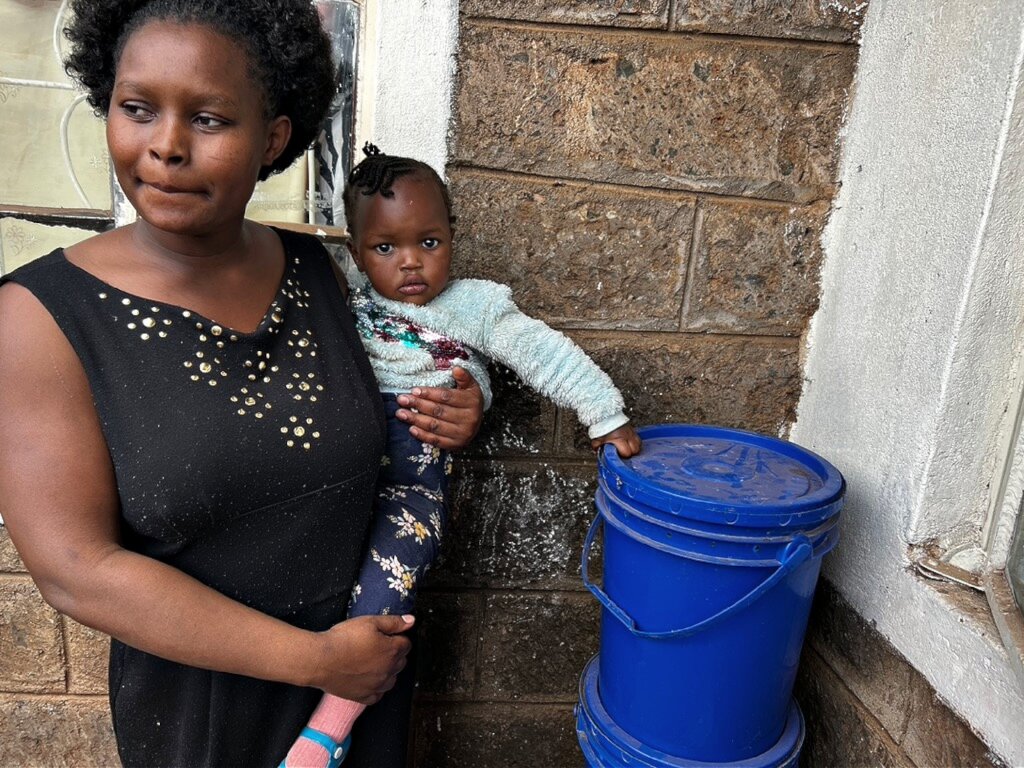
Shield of Faith began by designing bins for food waste, which are stacked in kitchens. They then added red wriggler worms to keep the waste clean. (The bins are emptied every six months but give off remarkably little odor). Stella keeps a worm bank at her home and replenishes the worms as needed by team members.
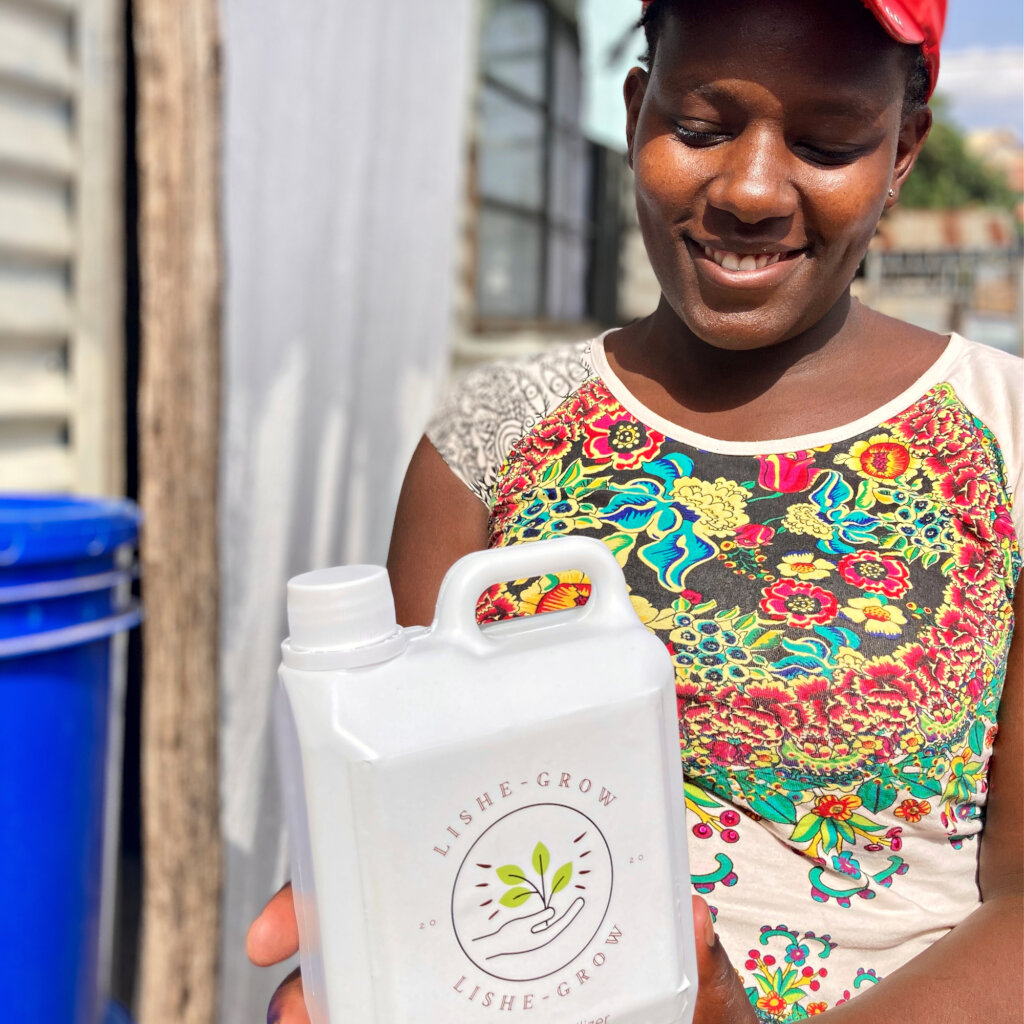
The worms produce a highly concentrated liquid or “leachate” which is tapped from the lowest bin, collected by Stella every few weeks, and then bottled as fertilizer with the brand name of Lishe-Grow (“Grow Nutrition” in Swahili). Last year, during the start-up phase, Stella had the product tested at a laboratory, which certified that Lishe-Grow was safe for use on food. Stella then sold several kilos at the annual fair of the Agricultural Society of Kenya (ASK) in Nairobi.
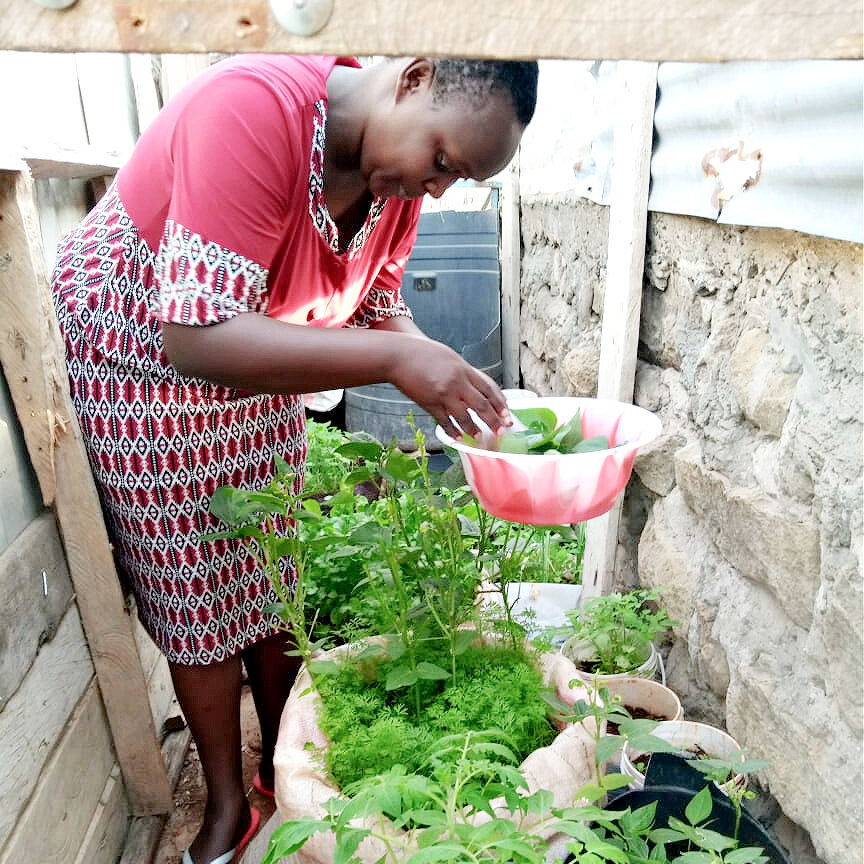
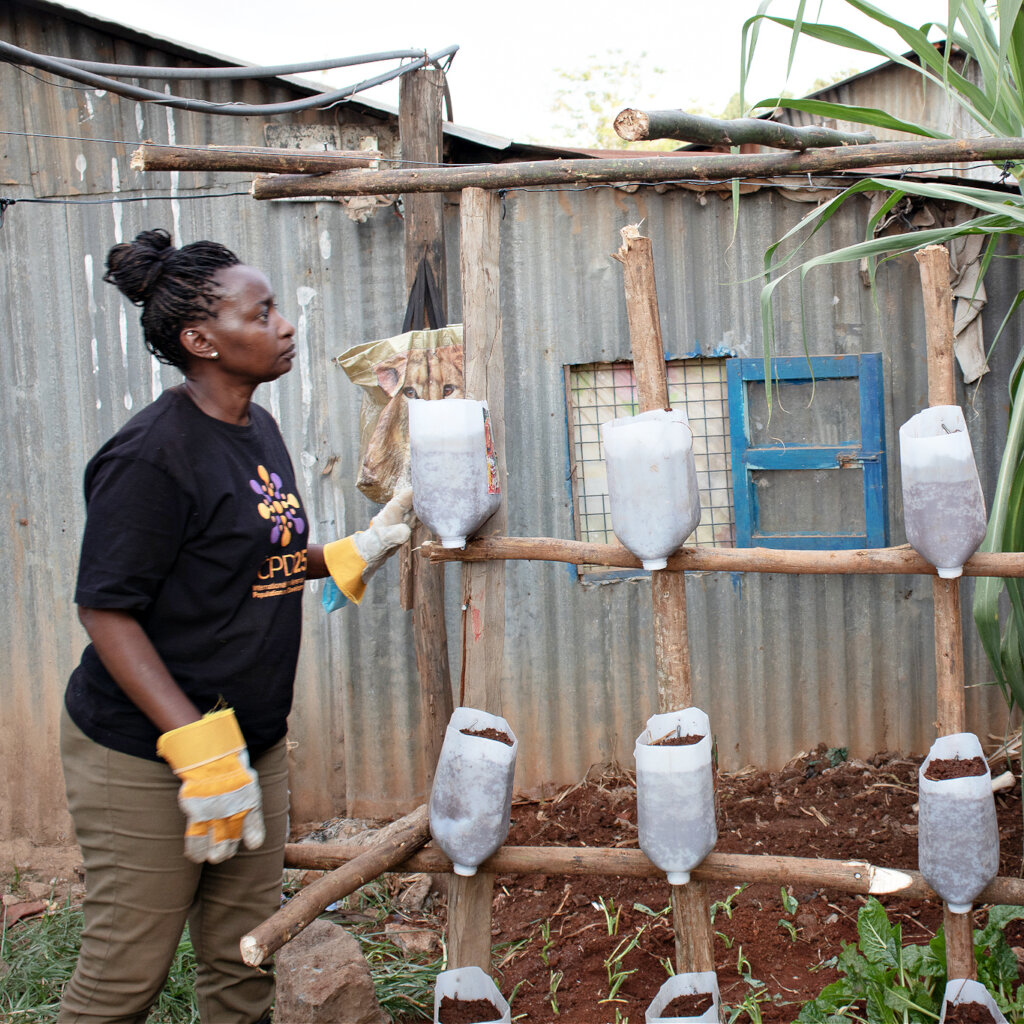
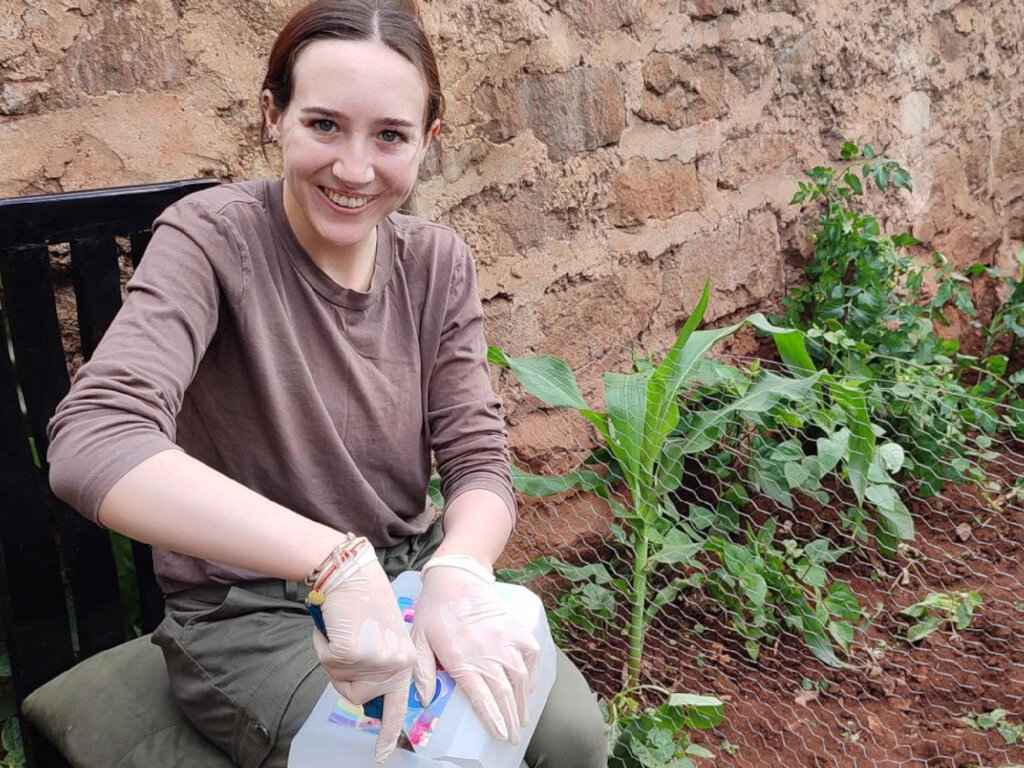
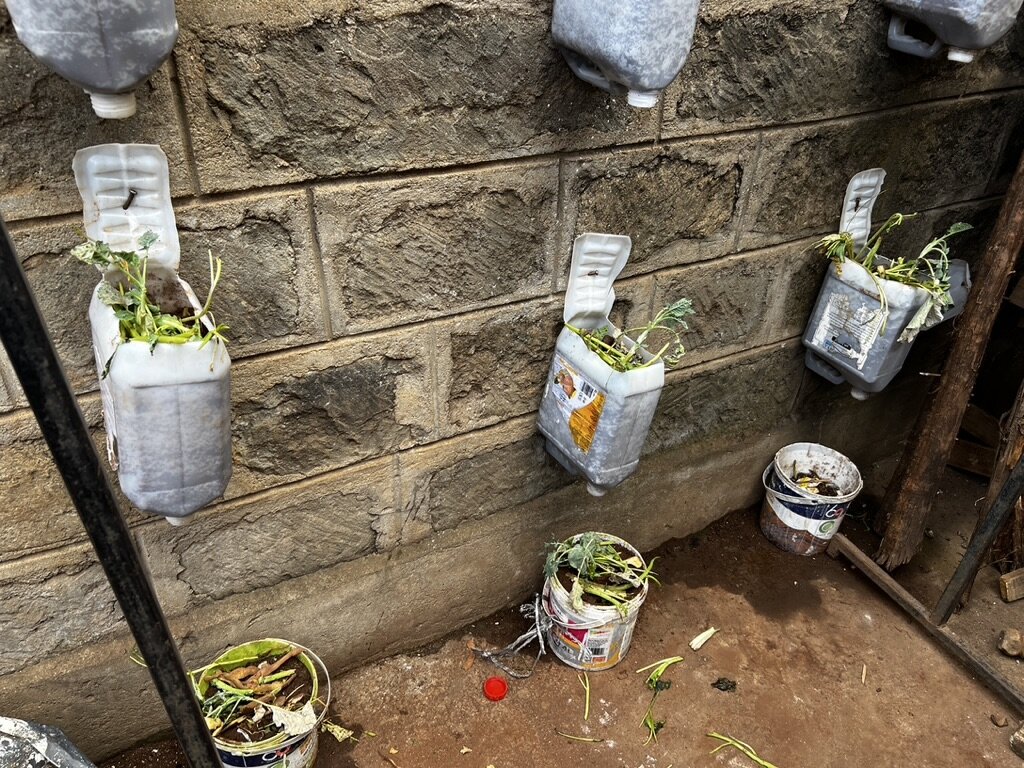
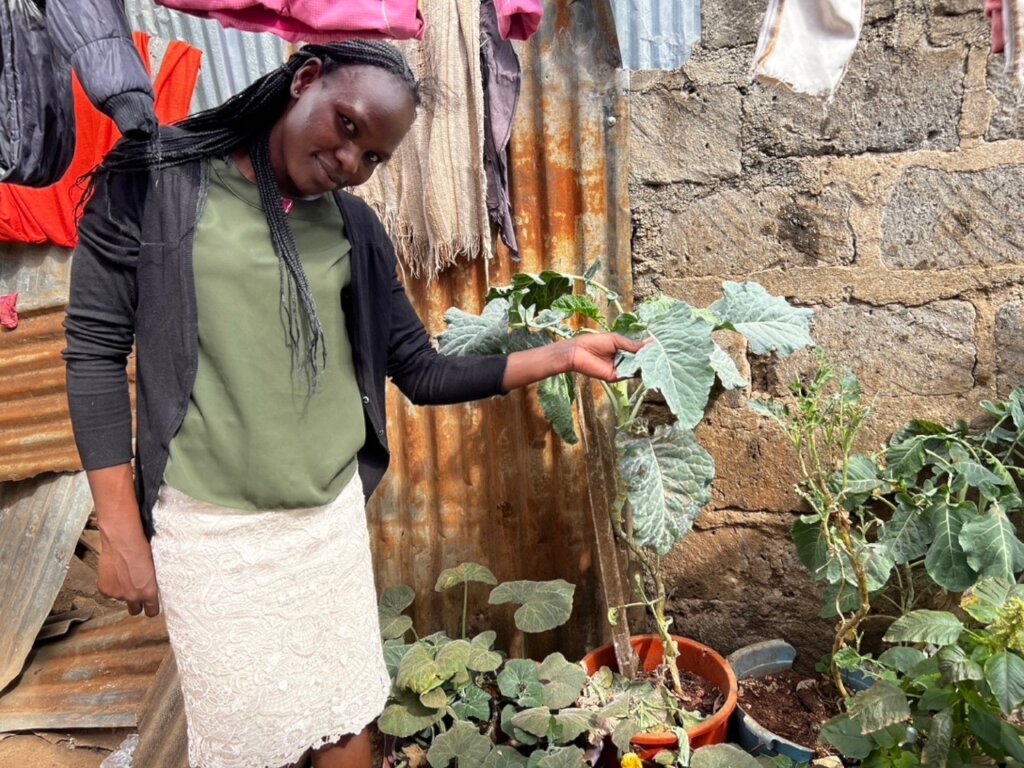
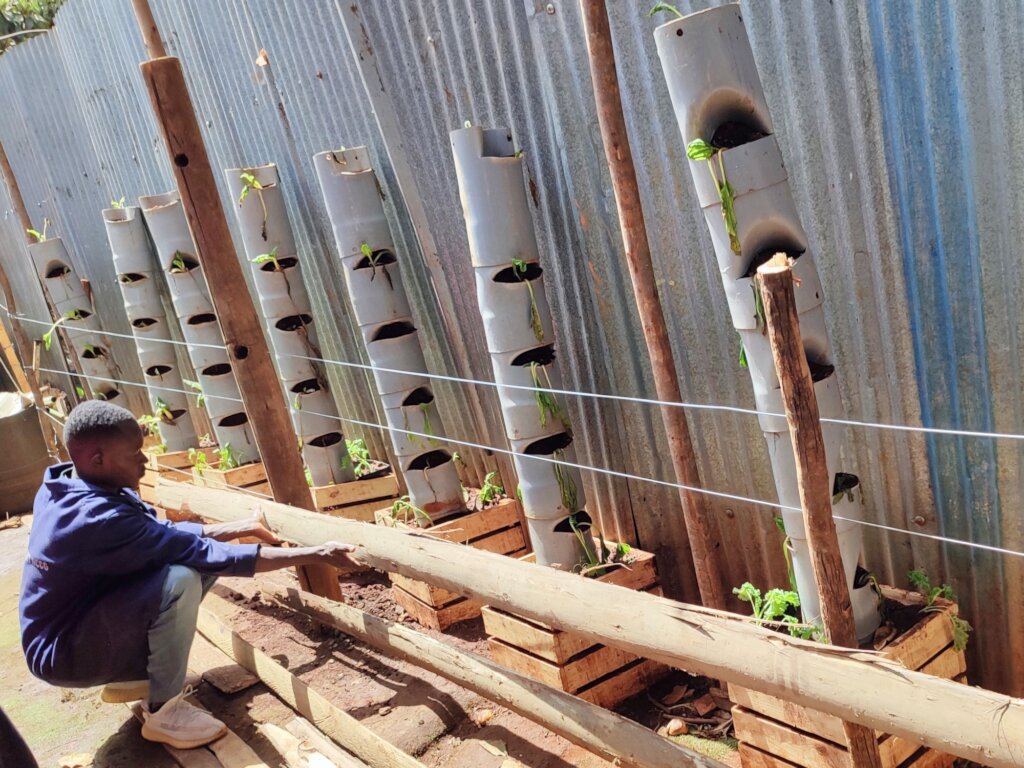
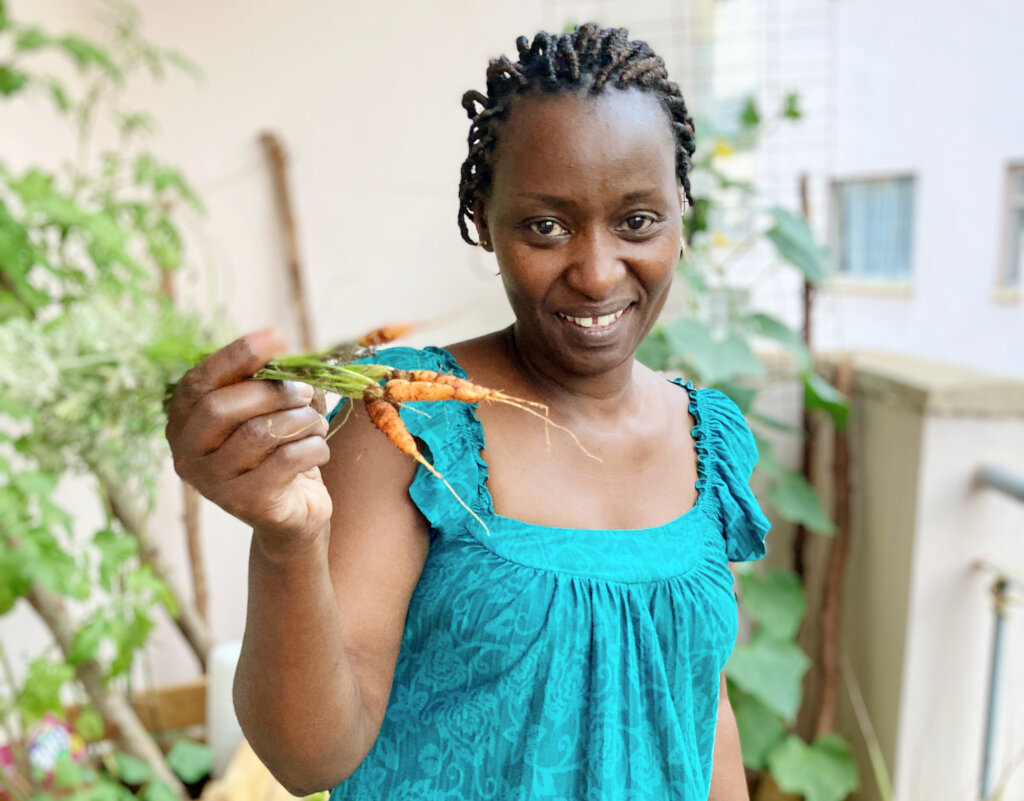
While the income is of course welcome, Lishe-Grow’s most important function is to help the Shield of Faith team grow vegetables in kitchen gardens. As we have reported in the past, these gardens are a testament to the ingenuity of women under pressure. They are made from discarded plastic containers which are attached in rows to walls and filled with soil. The women then plant vegetables and add Lishe-Grow to help the process along.
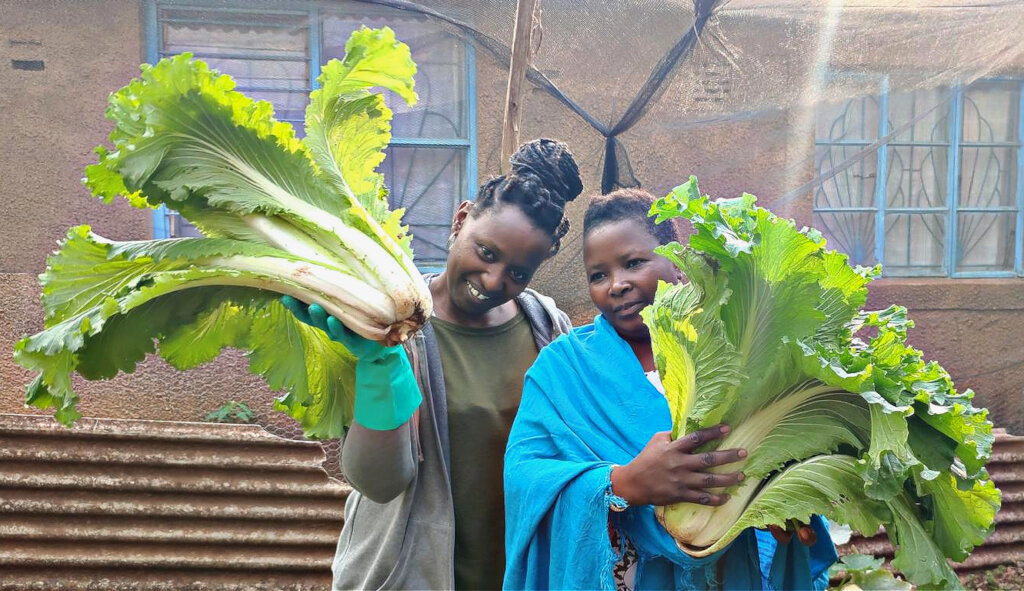
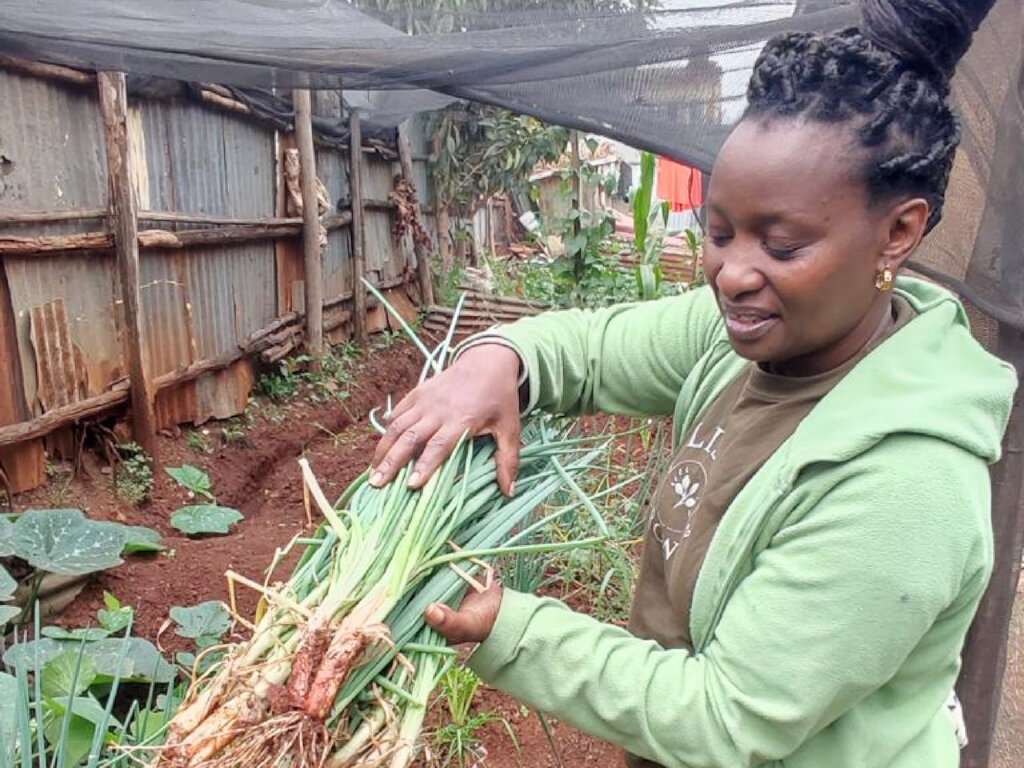
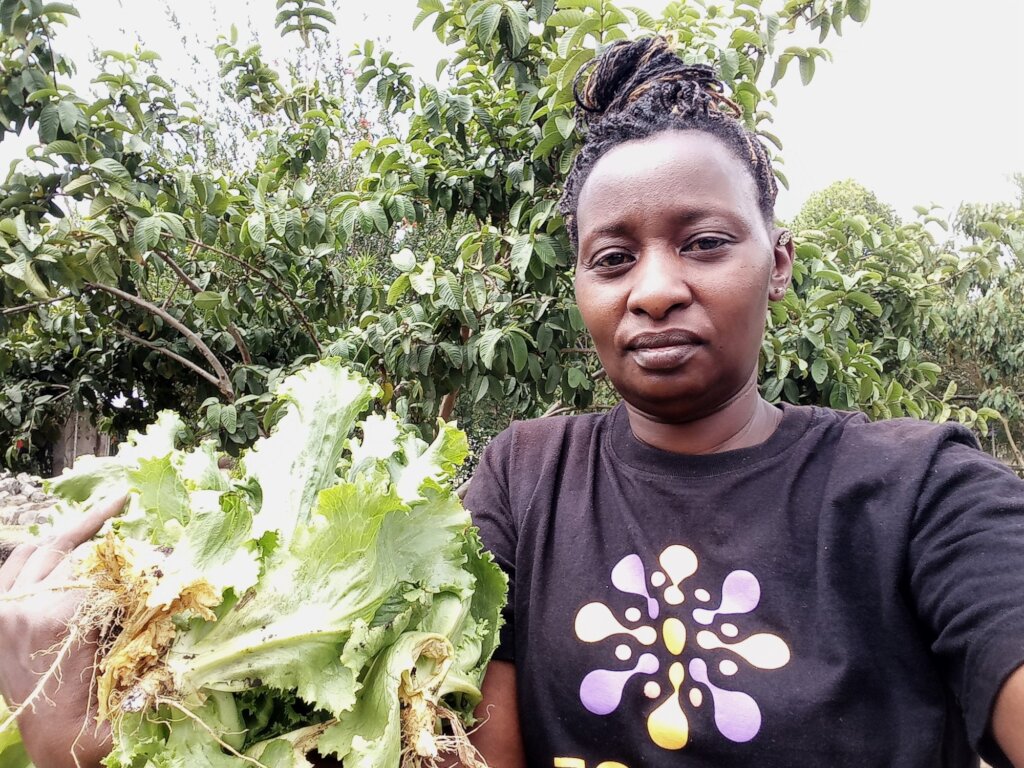
Their vegetables include Chinese cabbage as shown in the top photo, and are very nutritious. Indeed, several women told me that their gardens supply food for up to four meals a week. This goes a long way in a settlement where undernutrition is rife, particularly among children.
*
This formula was tested out last year and proved to be very successful. As a result, we launched our appeal on GlobalGiving towards the end of the year. We also secured a generous grant from the Foundation for Systemic Change to help out this year.
This has been a year of experimentation, to see what works and what needs improvement.
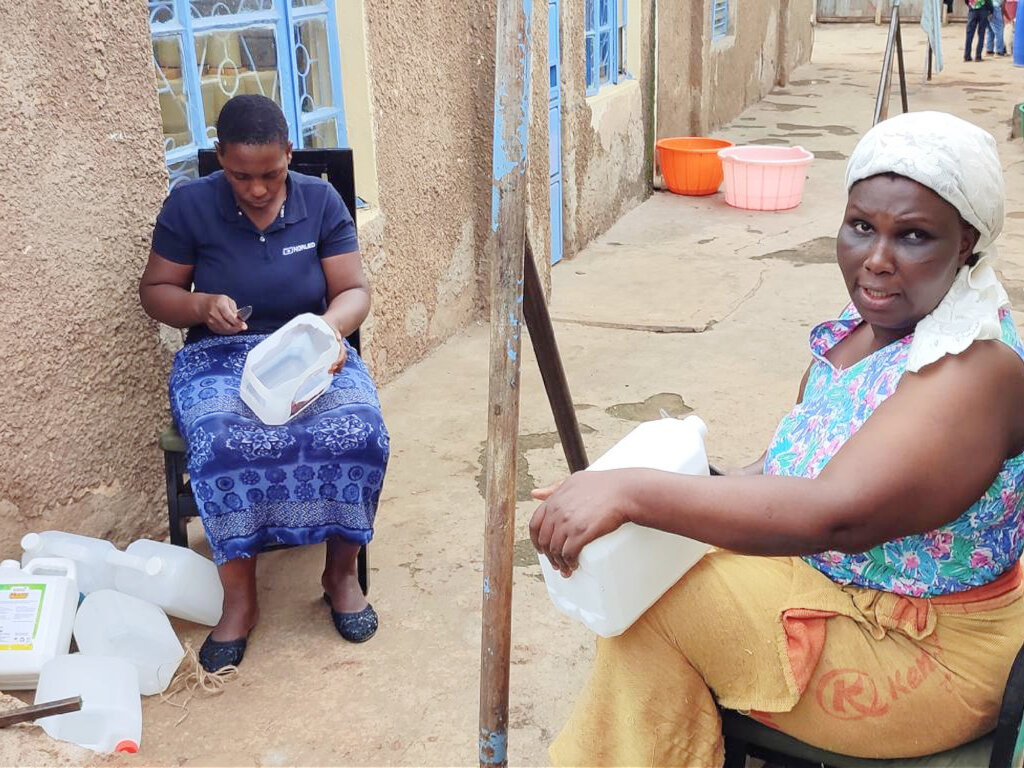
First, and importantly, Shield of Faith has grown steadily and now has 19 members. About half, like Roseanne (photo), have children with albinism and have used embroidery to describe the discrimination and ostracism that they and their children have faced. Their participation is central to the composting project, which is intended to empower women who are marginalized and under pressure. Almost all Shield of Faith members are single mothers.
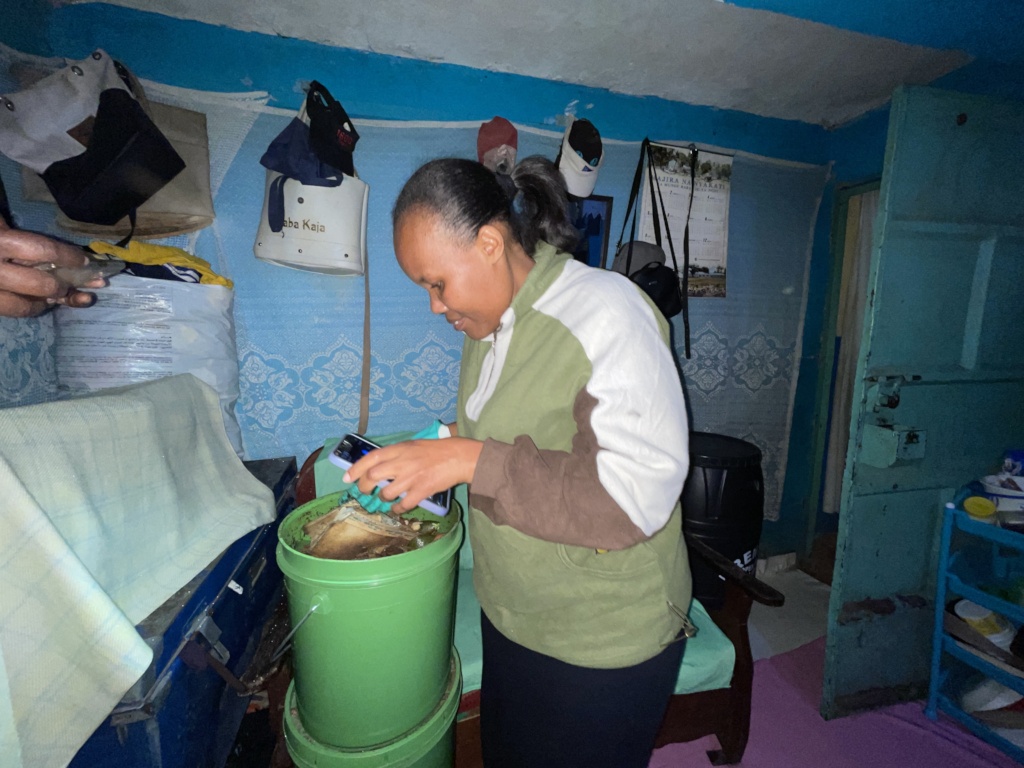
The project has purchased scales so that the women can weigh their food waste. While this takes up space in crowded kitchens, as shown in the photo of Irene, the women are proud of their disciplined approach and want it recorded.
So far this year, they have composted 2,949 kilos of food waste (3.25 tons), which is a lot more than expected. As well as producing nutritious vegetables this is also combating climate change because food waste converts into methane gas in the landfills. The women report every month to Stella, who enters the data in an “output tracker” on our Google Drive that is accessible to our teams in Kenya and the US.
This year, team members have also produced 386 liters of their fertilizer Lishe-Grow. They bottled 137 liters and sold 42 liters at this year’s ASK fair. This was less than last year because there was more competition from other brands and also less overall media coverage. But it was more than offset by some wonderful new connections that included the 4-K clubs of Kenya, an organization that trains young agriculturalists and works with scores of schools.
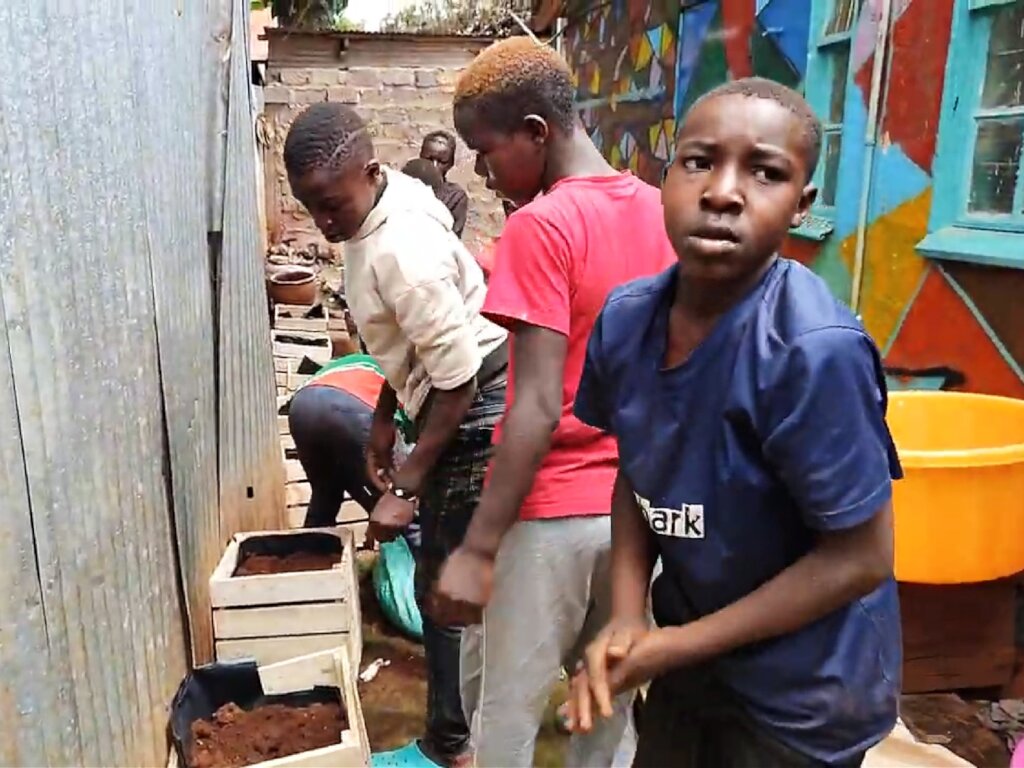
As we have noted in previous reports, a key goal for this composting project is to introduce composting and kitchen gardens into Kibera schools, which generate large amounts of food waste. Shield of Faith already partners with Project Elimu, the largest after-school program in Kibera, and Stella hopes that the 4-K clubs will open the door to many more schools. This would expand the scope and impact of her model considerably.
Here in the US, meanwhile, The Advocacy Project has been making the case for composting at American high schools. This past summer we recruited three dynamic Peace Fellows from schools in Rhode Island – Emma, Maggie and Bella – who have led the push to introduce composting at their schools.
The three can be seen cleaning up beaches in the photo and have described their composting experience through excellent blogs which - we hope - will inform other composting pioneers at schools in the US and Kenya. Eventually we hope to introduce students from schools both countries to each other, remotely or maybe even in person.
*
To sum up, Stella’s campaign against pollution and undernutrition has made remarkable strides this year and is poised for another banner year in 2023. We will be reviewing lessons learned in December and will have a new plan (and budget) to share with you early in the new year.
In the meantime, we would appreciate any feedback and encourage you all to compost at home if you are not already doing so!
In gratitude and solidarity
Shield of Faith in Nairobi and The Advocacy Project in Washington
By Stella Makena and Iain Guest | Project coordinators
By Iain Guest | Project Coordinator in the US
Project reports on GlobalGiving are posted directly to globalgiving.org by Project Leaders as they are completed, generally every 3-4 months. To protect the integrity of these documents, GlobalGiving does not alter them; therefore you may find some language or formatting issues.
If you donate to this project or have donated to this project, you can receive an email when this project posts a report. You can also subscribe for reports without donating.



Support this important cause by creating a personalized fundraising page.
Start a Fundraiser