By Stella Makena and Iain Guest | Project coordinators in Kenya and the US
This report is going to 27 friends who have donated $1,613 to our appeal on behalf of our composting partners in the informal settlements of Nairobi. Our thanks to you all!
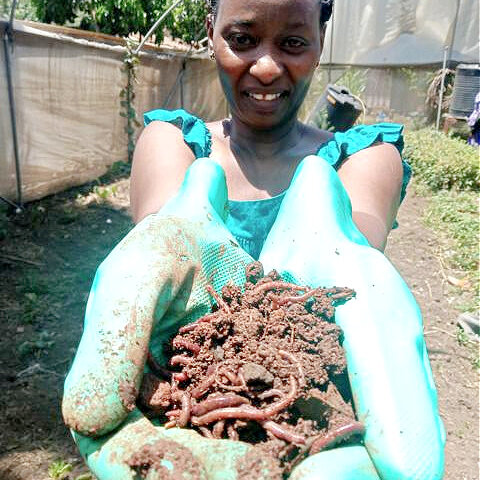
We hope that you will be familiar with the Worm Ladies of Kibera by now! As you'll know from past reports they have formed an association, Shield of Faith, and set themselves three main goals: first, compost food waste in their homes; second, grow healthy vegetables, and third, earn money. And all of this is taking place in one of the most unfriendly environments on the planet.
They launched their project in 2022 and we’ve told their inspiring story on several occasions – in five reports here on GlobalGiving, in news bulletins, through photos, and through social media. Please take a look, if you haven’t already!
We will use this report to fill you in on their 2024 achievements, but let us start by noting that it was a brutal year for inhabitants of the Nairobi settlements. Between January and March they baked in a heat wave. In April, they were hit by torrential rains that displaced hundreds of thousands of slum-dwellers. (We profiled the heroic response of Ruth, one of the composters, in our last report).
Then in July, riots broke out in the center of Nairobi over a tax hike and paralyzed all movement for weeks. It became so dangerous that we withdrew our Peace Fellow.
Given all of this it was a miracle that the composters were able to achieve anything last year. In the event they dug in and defied the odds, as they have done for much of their lives. Here’s a brief summary:
Beneficiaries: Shield of Faith expanded composting to eight settlements in 2024, including Kibera, and kept the focus squarely on women in need. Twenty women now participate. Most are single mothers and ten have children with albinism, a rare skin condition that can pose a serious health risk and result in social isolation. (Read stories of albinism from Kenya here.)
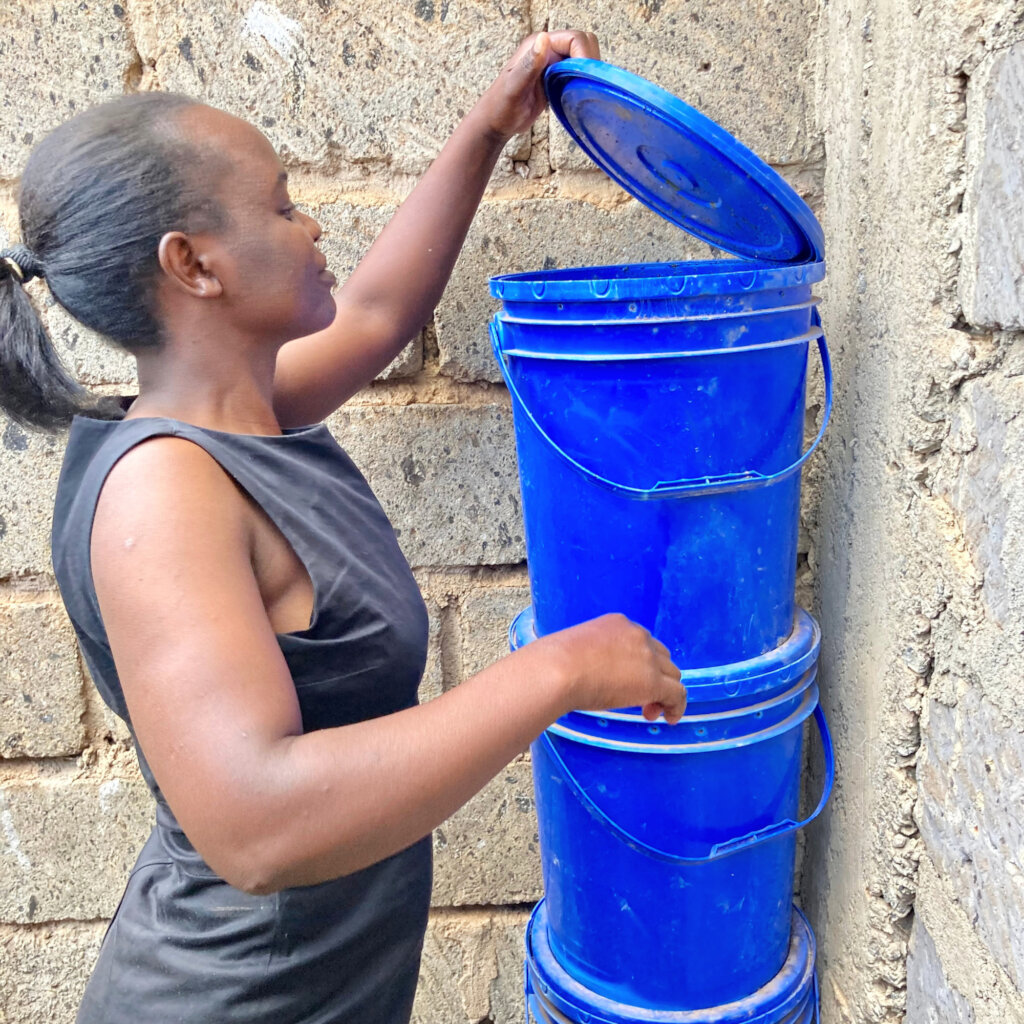
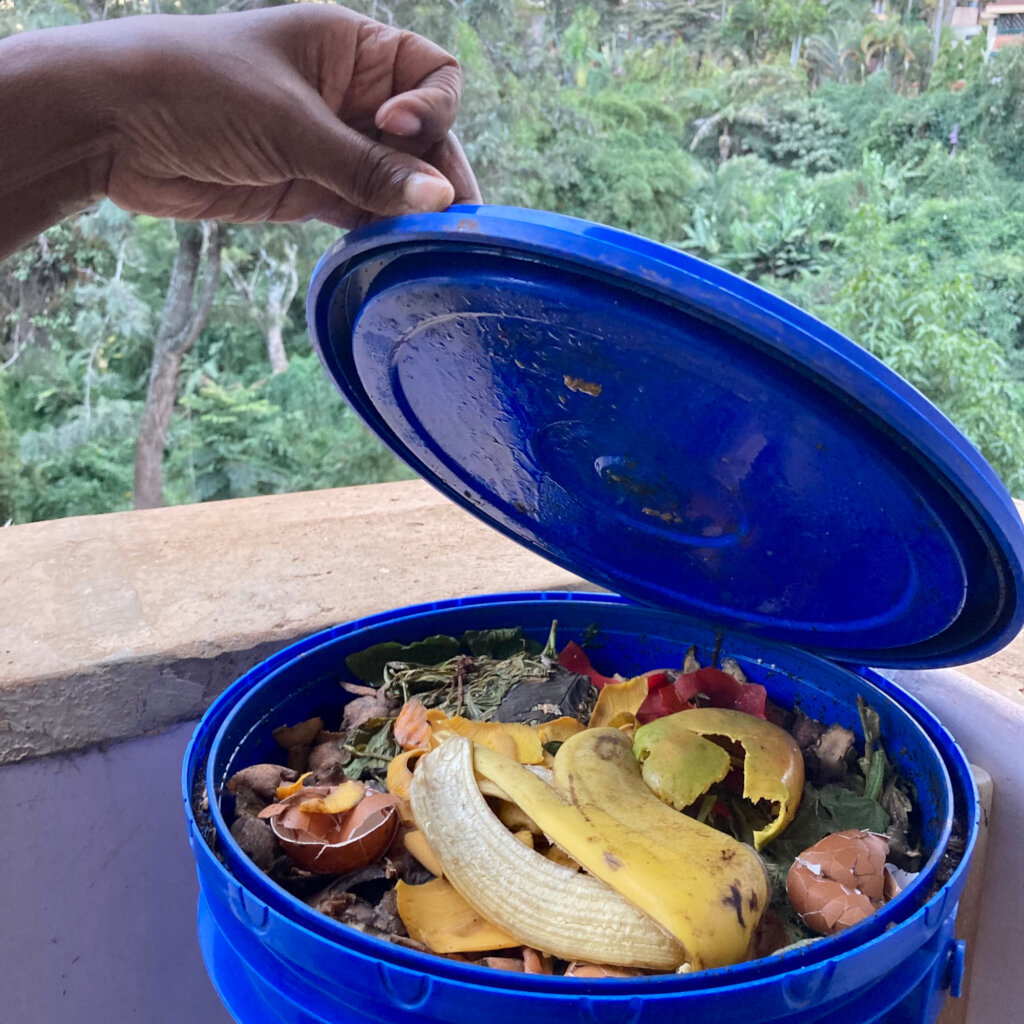
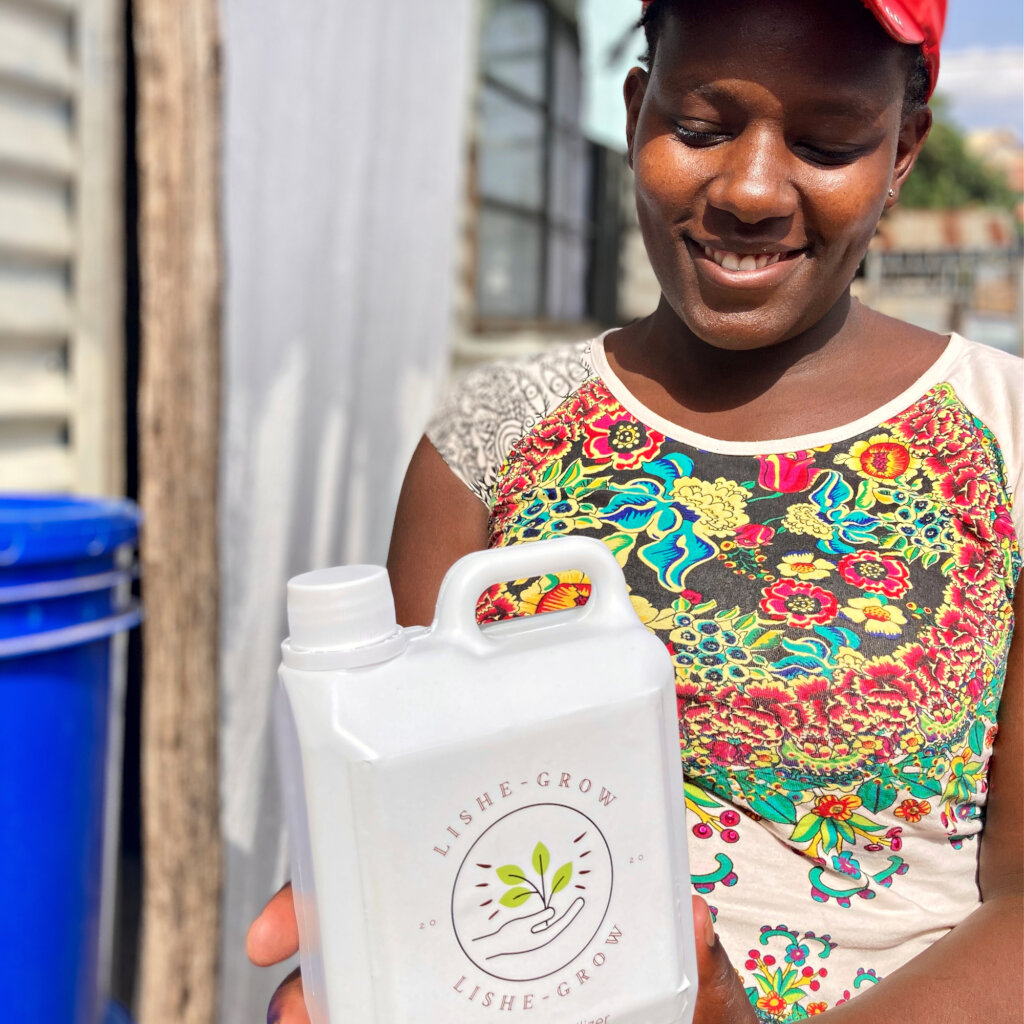
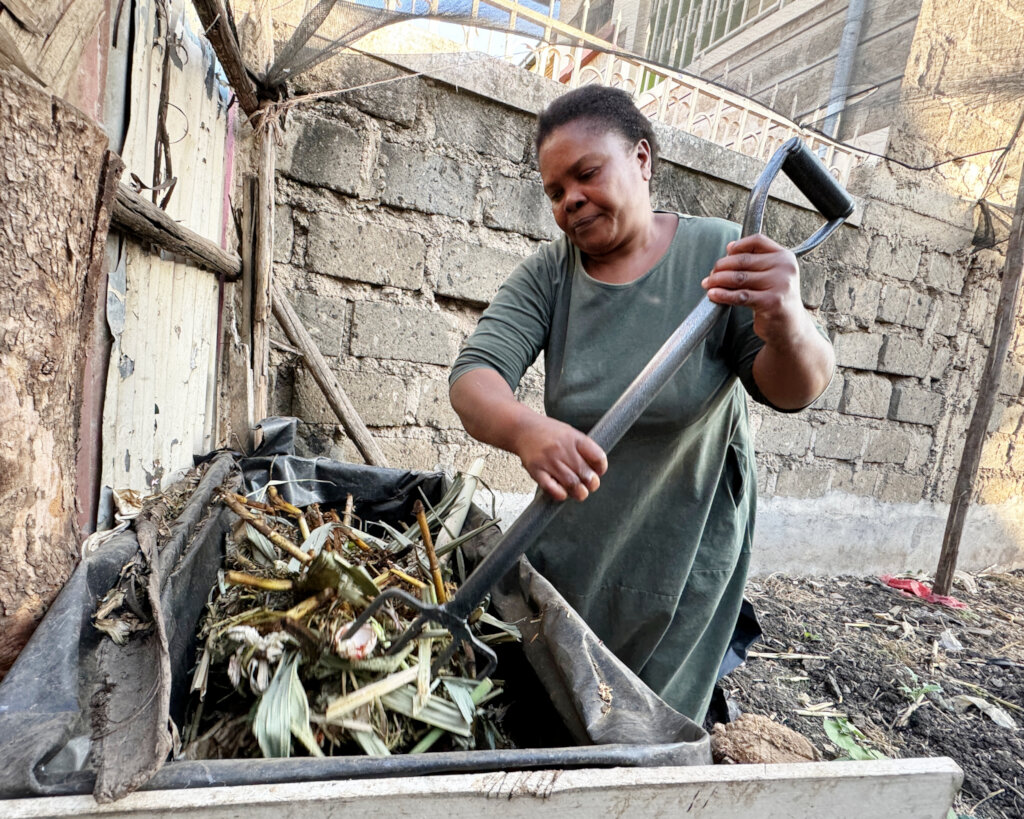
Composting food waste: The project uses vermiculture (worms). Last year the team composted a combined 5.5 tons of food waste and produced 315 liters of Lishe-Grow leachate (a highly concentrated fertiliser that comes from worm castings). Ten team members also set up dry composting sites (“hubs”). These two options have given them a lot of flexibility and opportunities for innovation. In one example, Rehema saved her fruit seeds and set up a small tree nursery in her compound, helped by her compost and worm droppings. She sends the tree seedlings up country for planting in her rural family home.
Pay to weigh: The composters weigh the food waste before it is binned and post the data on Google Drive for review by our two teams in Nairobi and Washington. Each composter receives 1,120 KES (Kenyan shillings) a month for data collection. This is $8.60 at current rates.
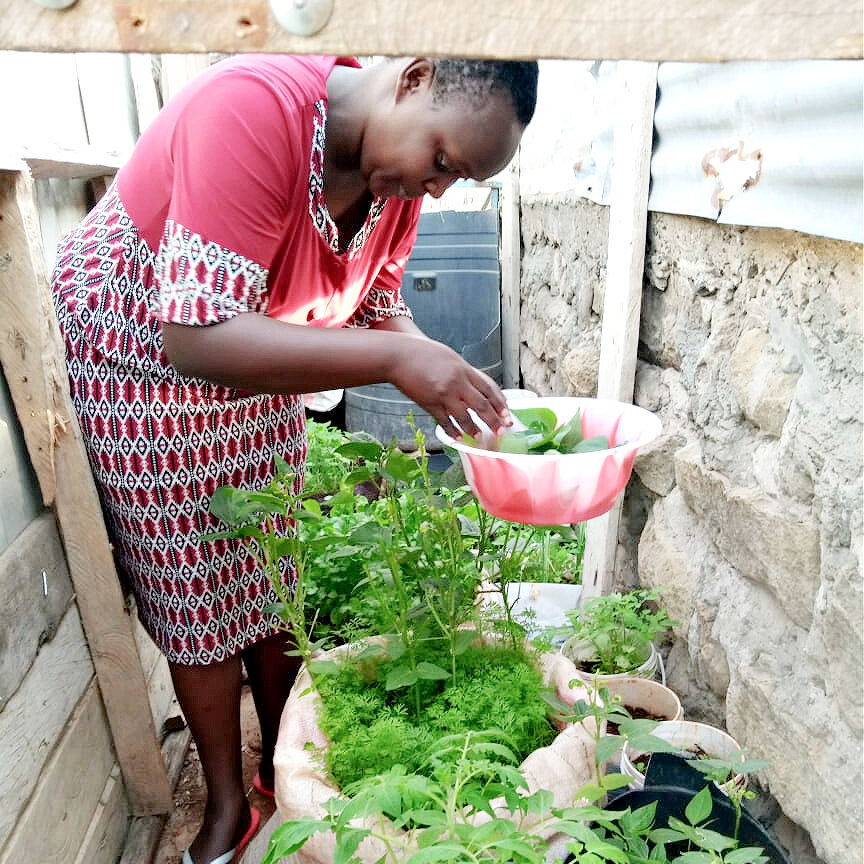
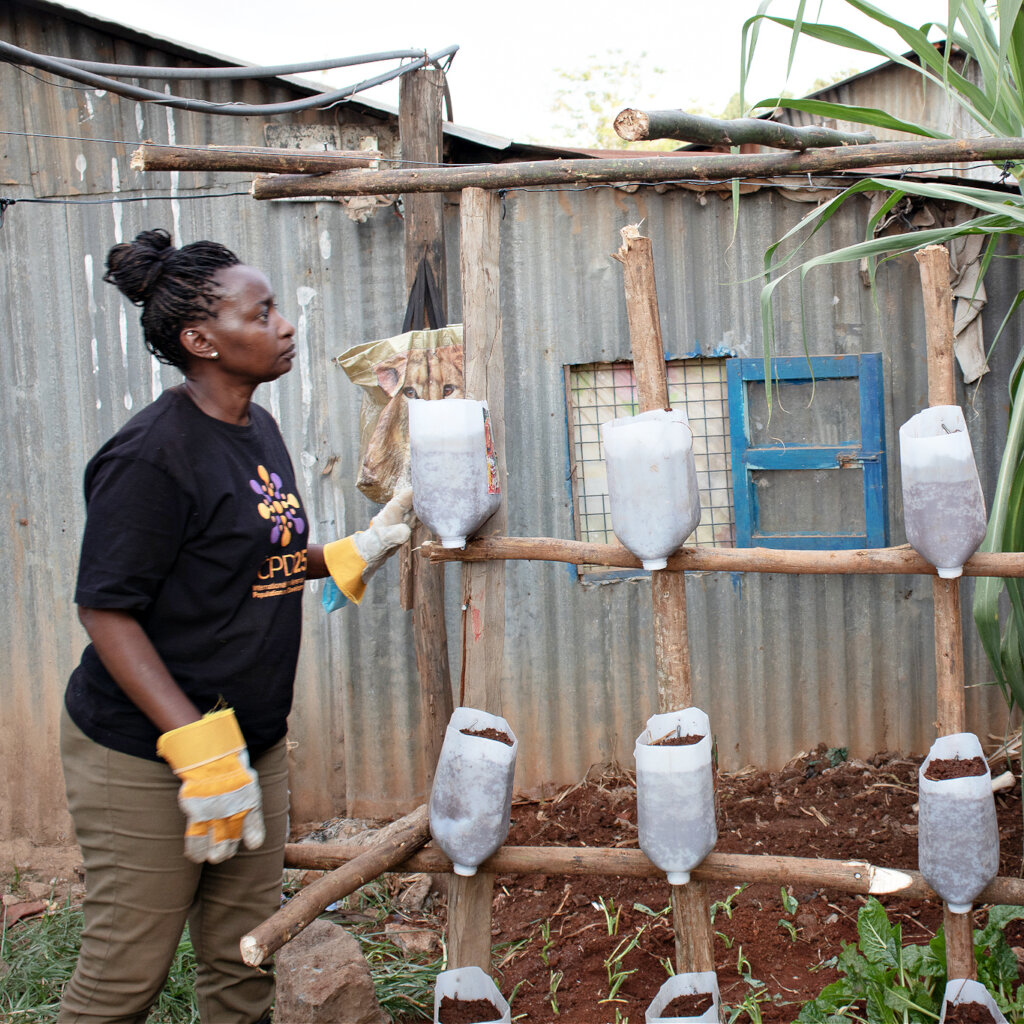
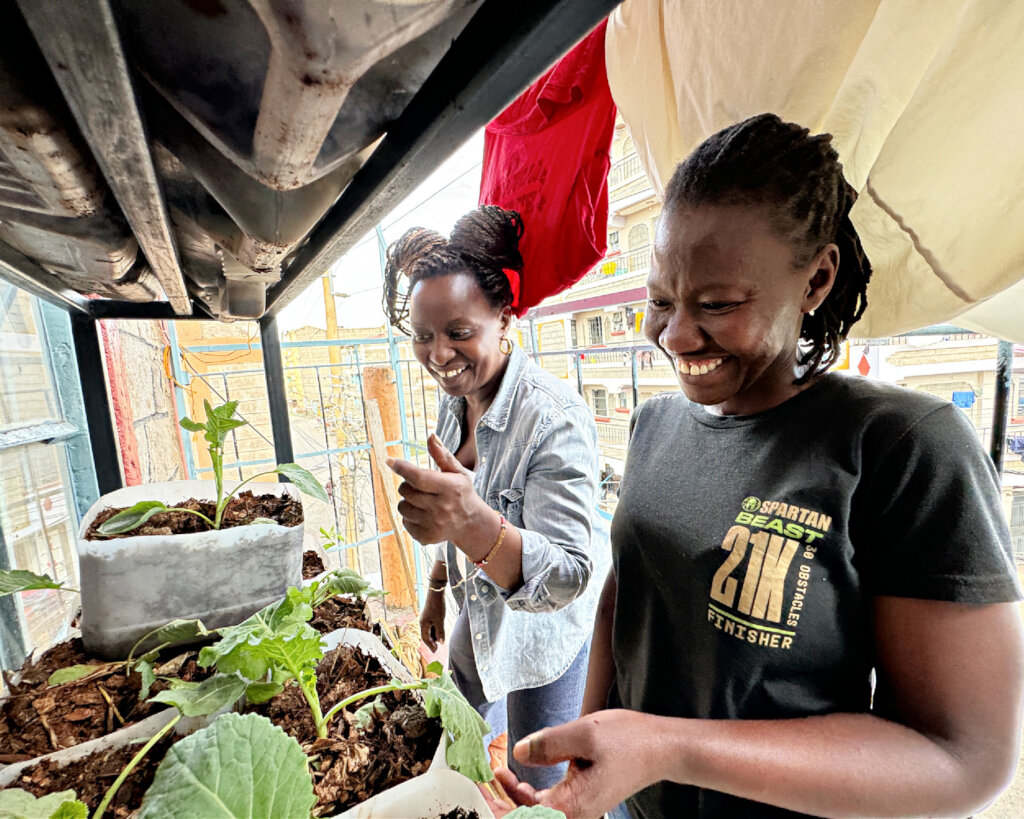
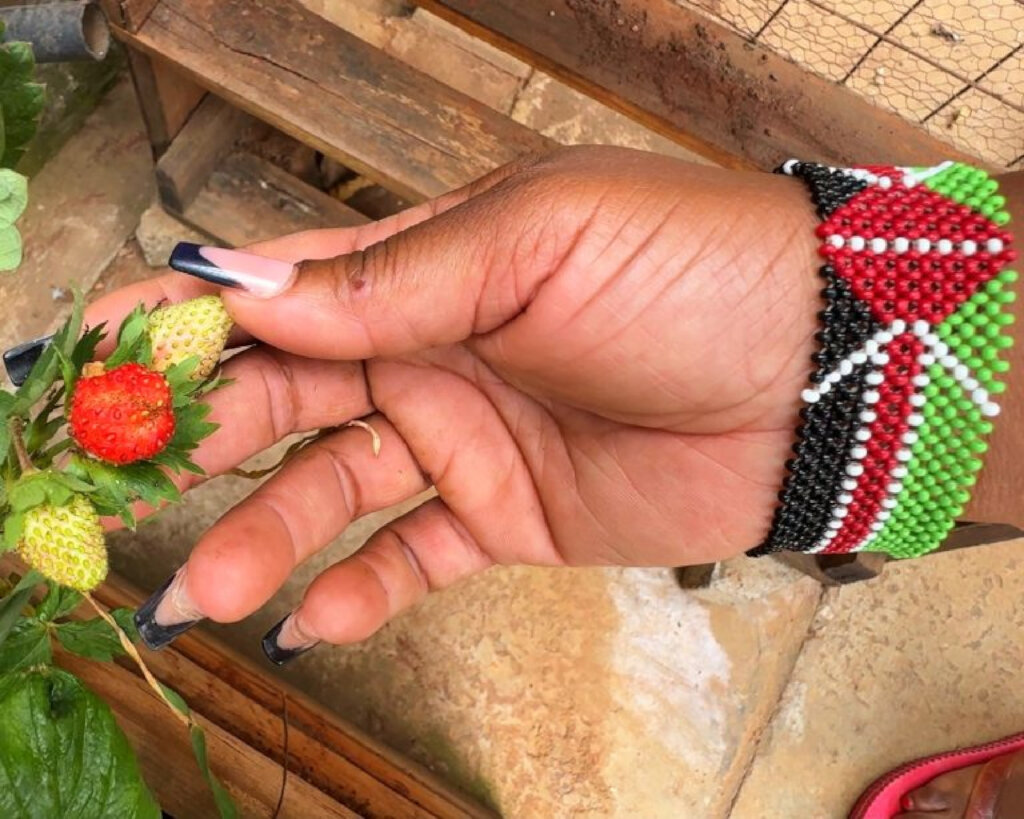
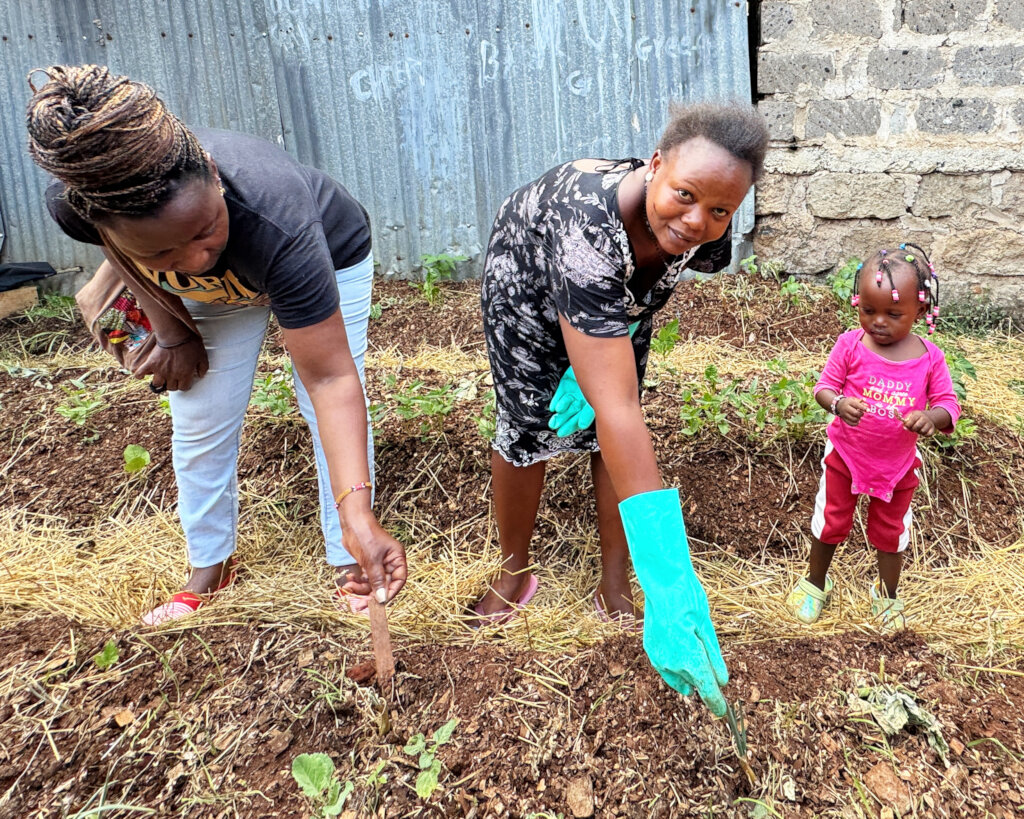
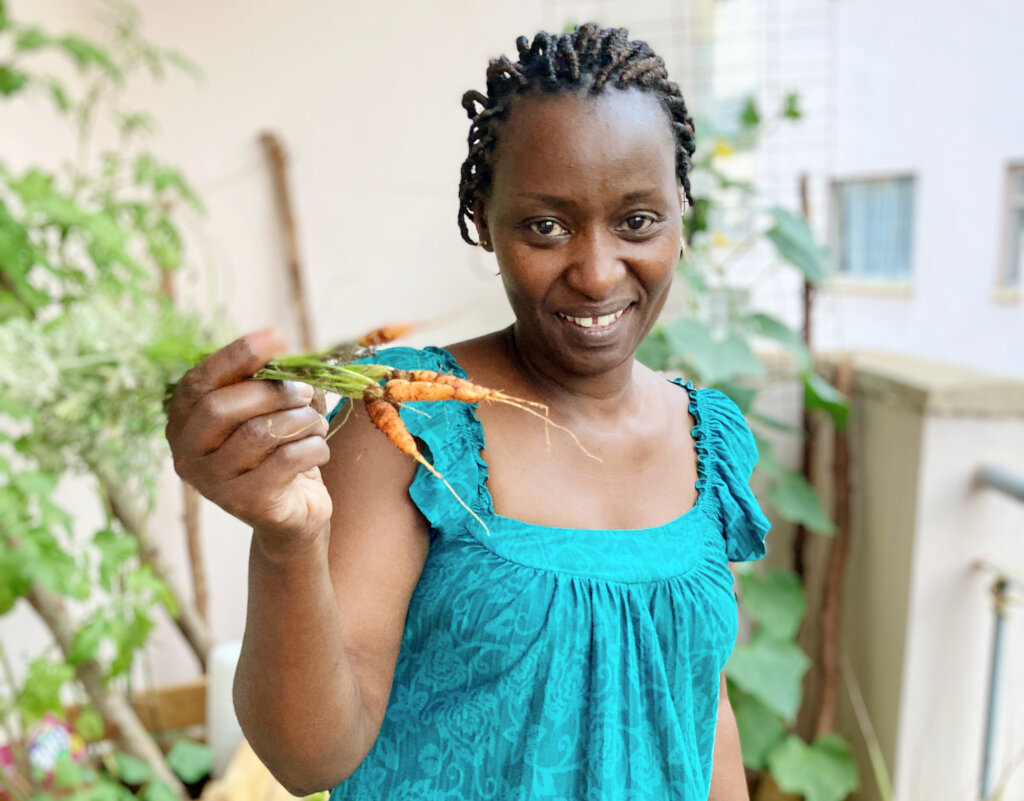
Grow organic vegetables: Fourteen Shield of Faith members maintained kitchen gardens in 2024. This enabled them to provide their families with healthy vegetables three times a week and save around 400 shillings ($7) in weekly food bills. The project also provided seeds/seedlings to replenish old vegetables, and each member received a monthly supplement of 280 shillings ($2) to cover the cost of water.
We have not been able to measure the impact on nutrition but we’re confident that the project is reducing the risk of stunting in children and malnutrition in expectant mothers. Since the project began in 2022, seven babies have been born to participating mothers.
The project has also rented land outside Nairobi for composters who do not have room for a garden in their own homes. Three members made use of the farm in 2024 and planted traditional greens, pumpkins, cabbage, onions, bananas, maize and beans. This produced a bumper harvest: 30 pumpkins, over 200 kilos of maize, spinach, managu, Chinese cabbage, brinjals, carrots and spring onions! The main drawback is that the farm is some distance from Nairobi. We hope more members can take advantage of it this year.
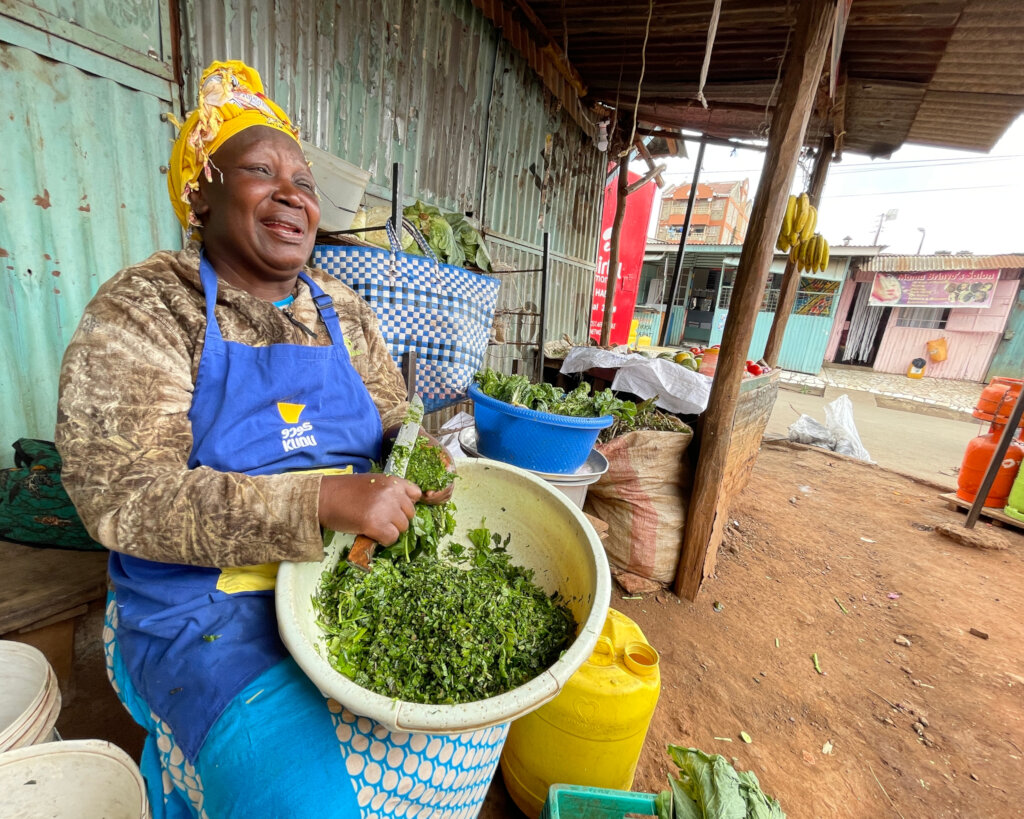
Community engagement: Another key goal is to expand the composting model beyond individual homes by creating composting “hubs” that can be used by local communities and street vendors. Vendors produce - and toss out - vast amounts of organic waste (photo) and Shield of Faith is offering them an alternative by taking the waste off their hands, free of charge. This is going down well in several neighborhoods. Eunice, Esther, Emma, Rehema and Roseanne all collect fruit and vegetable waste from local vendors near their houses and compost the waste in their hubs. They then use the compost to grow vegetables. It's a win-win all round.
The idea of hubs is also starting to attract decision-makers in the settlements, which is key to producing sustained social change on a much broader scale. Ruth set up her composting hub in the compound of the local county ward administration office and uses it to include waste from the office and nearby vegetable vendors. Stella set up her hub behind a large apartment where it now services the entire building and is managed by the property caretaker.
Income generation: In 2024, the project generated four different, but important, forms of income for members: a) 1,400 KES ($10) a month from composting; b) 1,000 KES ($7) a month in saved food bills; c) 3,500 KES ($25) from a savings scheme; and d) 7,500 KES ($54) from the sale of Lishe-Grow leachate.
Composting in Kenyan schools: Shield of Faith hopes to introduce composting into schools in Nairobi. This is another way to expand the model, because schools produce huge amounts of organic waste. If the students get excited, the project can also reach their families.
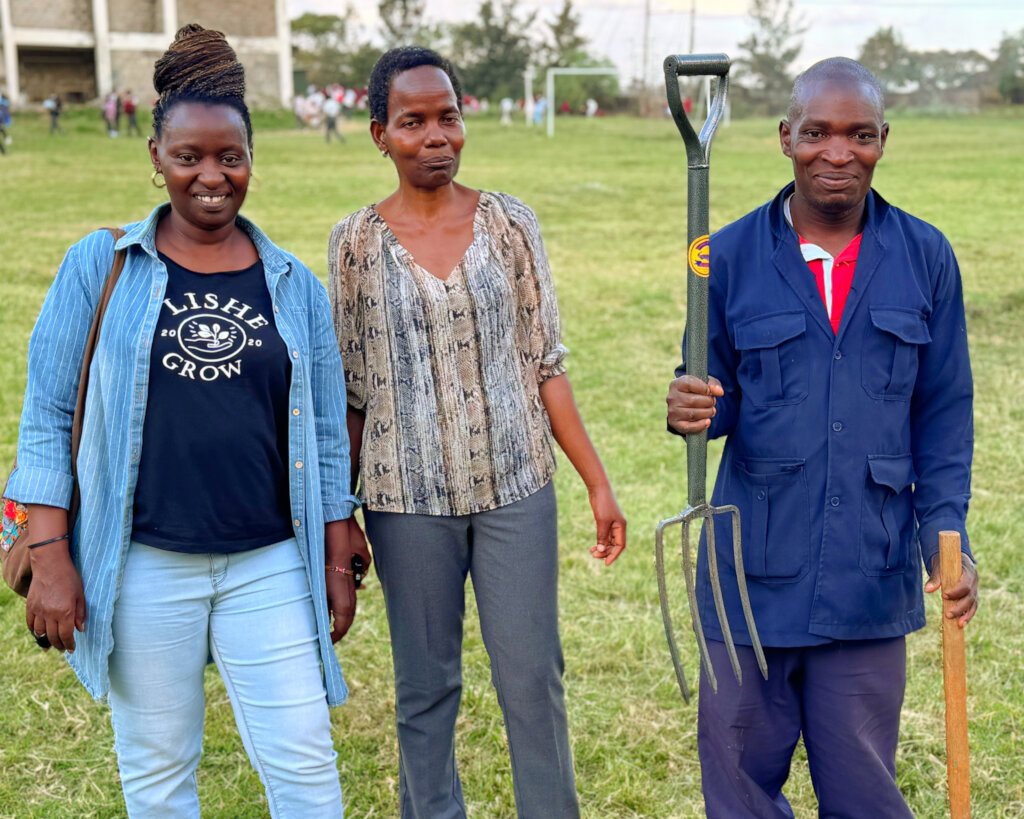
The team achieved a breakthrough in 2024 when it helped to erect a composting hub at Our Lady of Mercy, a boarding school for girls with over 700 pupils. This connection came through 4 K Clubs of Kenya, a government initiative for aspiring young farmers in primary and secondary schools in Kenya. Shield of Faith also provided seeds and seedlings for the school kitchen garden (donated by the Turkish Embassy).
Twenty-three girls from the school’s green club rolled up their sleeves under the watchful eye of their teacher Jacquiline who is seen in the photo with Stella and the school gardener, and by December they had composted nearly 1,4 tons. Stella and her team hope to reach more schools through 4 K Clubs of Kenya in 2025, and plan to select student leaders as composting “ambassadors.”
Composting in US high schools: We are also delighted to report success at several schools in the US, where AP is supporting composting projects. In 2023, AP secured a grant of $20,000 to launch composting at the Lower Merion High School in Pennsylvania, and our partner in the state (Mother Compost) composted food waste from the school kitchen throughout 2024. We hope to expand to other schools in Pennsylvania in 2025.
Further North, in Rhode Island, two high school Peace Fellows, Emma and Bella, are urging the RI state legislature to enforce a ban on food waste in all state schools. We profiled these two valiant campaigners in an article last spring and will report back on their progress in the months to come.
Finally, as composting catches on in schools in Nairobi and the US, we hope to introduce the students from the two countries to each other. They are the real stakeholders here: they have most to lose from pollution and waste, and they can be incredibly effective agents of change as Emma and Bella have shown.
Fundraising: As we all know, this is a terrible time for aid in general. But there is one bright spot to report! Late last year we posted an appeal for the composting project on the World Bank’s Community Connections Campaign. We are delighted that this has yielded $500 in donations so far. This is another example of how Shield of Faith is defyting the odds in the face of many headwinds.
Thanks again for your support!
Stella in Nairobi and Iain in Washington, project coordinators.
Project reports on GlobalGiving are posted directly to globalgiving.org by Project Leaders as they are completed, generally every 3-4 months. To protect the integrity of these documents, GlobalGiving does not alter them; therefore you may find some language or formatting issues.
If you donate to this project or have donated to this project, you can receive an email when this project posts a report. You can also subscribe for reports without donating.



Support this important cause by creating a personalized fundraising page.
Start a Fundraiser