By Yuko Ito | Programme Coordinator
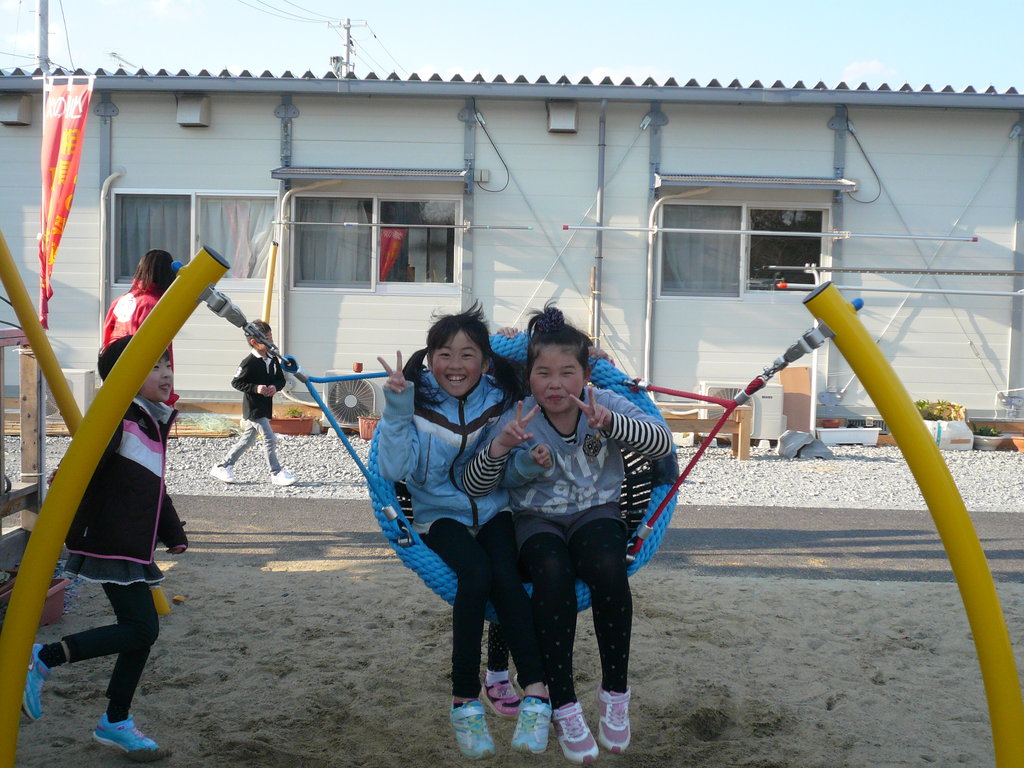
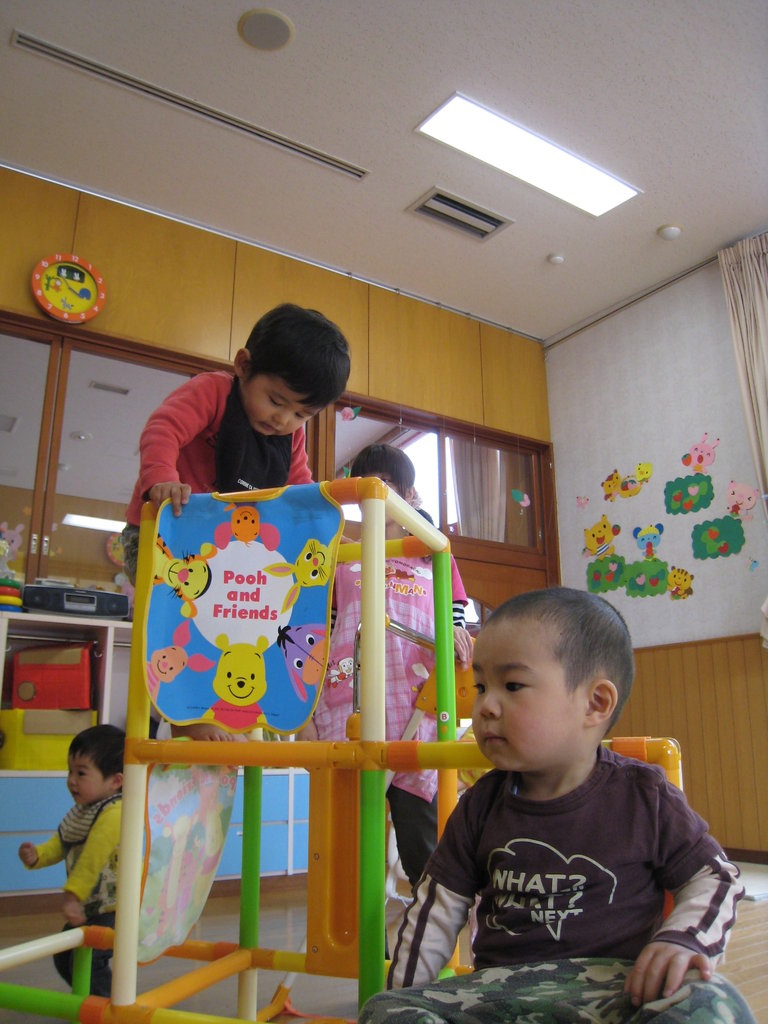
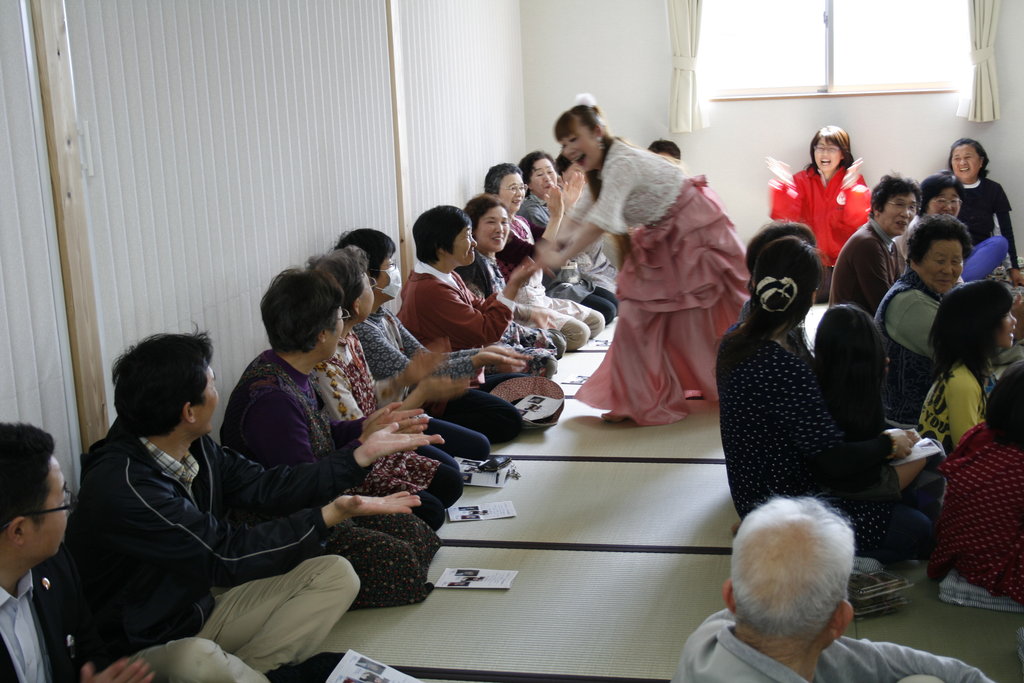
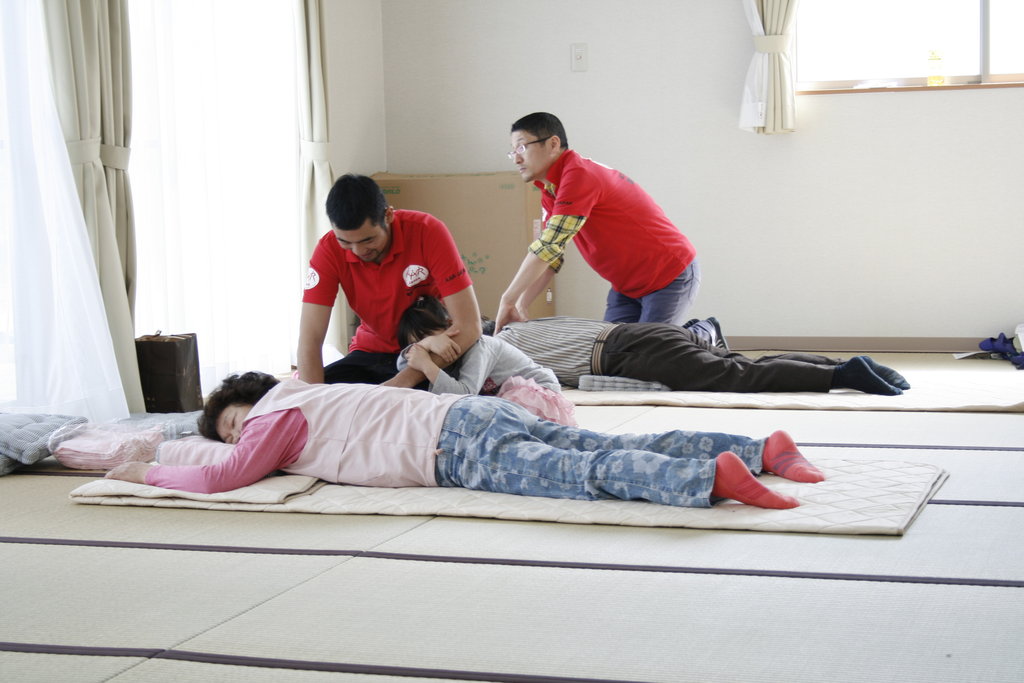
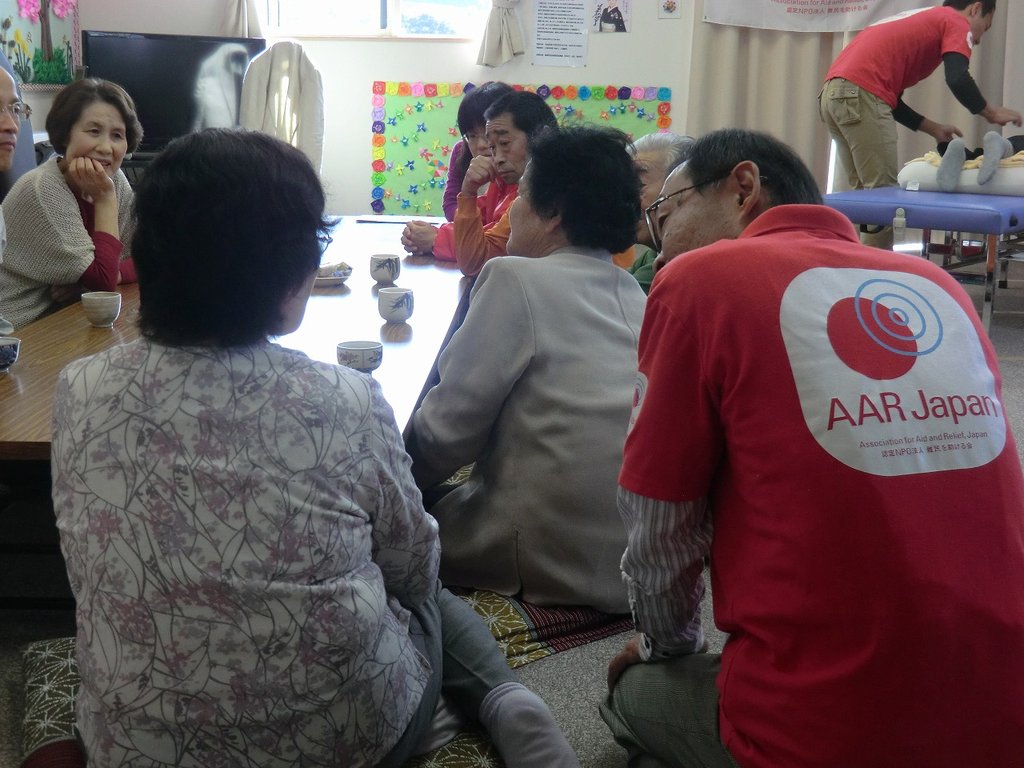
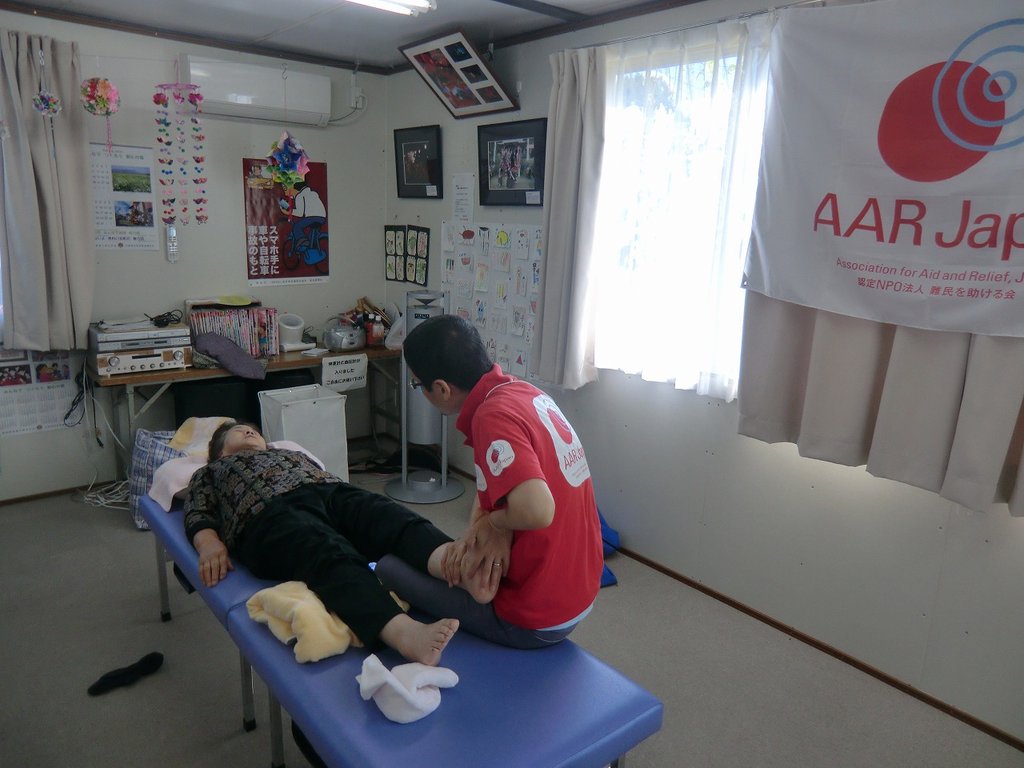
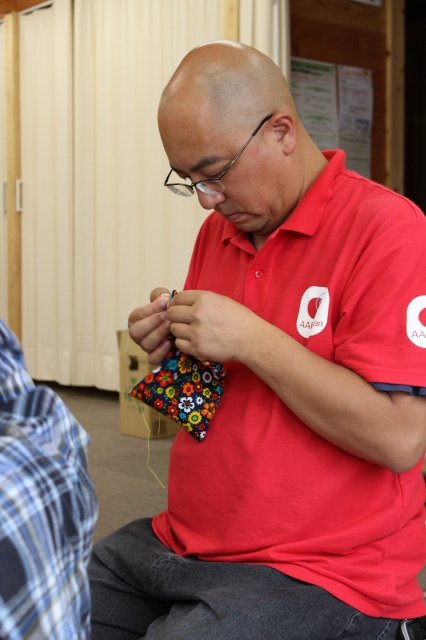
AAR Japan has continuously carried out a project called “Building Healthy Communities” ever since the earthquake and tsunami on March 11th, 2011, to prevent isolation and stress accumulation, as well as ill health among evacuees in temporary housing complexes. “Rehabilitation and active listening” are the main activity components in the project, which we have conducted in meeting halls in temporary housing complexes in Miyagi, Iwate, and Fukushima Prefectures since July 2011. Every weekend, volunteer physiotherapists and occupational therapists visit different meeting halls, and offer massage and physical exercise sessions. Further, whilst the participants wait for their turn with the therapists, volunteer counselors from JAICO (Japan Industrial Counselors Association) listen to the participants over a cup of tea. They sometimes enjoy handcrafting pouches and small bags, as well. We aim to promote physical relaxation through massage, as well as relieve psychological burden through casual conversation with the counselors and handicraft. AAR’s Programme Coordinator, Shinichiro OHARA, who has been engaged in the program since the emergency phase reports his experiences in Fukushima.
A great number of people have not been able to return home, and are distressed under pro-longed stay in temporary housing in Fukushima Prefecture, as the radiation from the nuclear power plant has yet to cease. On the other hand, some of the disaster survivors from coastal areas, whose home were destroyed by tsunami, have seen some progress; they began to move into public restoration housing from temporary housing complexes. We hear lively and cheerful voices more frequently from these people who can move to permanent houses and set goals with longer term prospects.
Among these seemingly lively people, there are those who strive to overcome grief. A case in point is Kazuko KOBAYASHI, a survivor who lives in the coastal area in Fukushima. On March 11th, 2011, tsunami swallowed her son who was a fire fighter. The son went back to work after telling Kazuko who was tidying the earthquake-stricken house to “evacuate, tsunami is coming.” Kazuko swiftly evacuated to a high ground by car at her son’s instruction. Her son who was trying to stop cars heading toward the coast on duty was reflected in the rearview mirror. That was to be the last time Kazuko saw her son. “I am moving out of the temporary housing in the coming March”, Kazuko tells us cheerfully, but she has carried psychological burden for these three years and eight months. She added “on my son’s birthday, I planted a tree on the lot where our house used to be. The tree was to abandon sorrow and move forward. The only unfortunate thing is that I cannot live with my daughter-in-law and grandchildren, as they fear the sea so much that they cannot live near it.
There are many survivors like Kazuko who hold agony experienced since the earthquake and tsunami, but they are able to move to new permanent houses from temporary housing and make progress in their lives.
Although the situations surrounding the residents in temporary housing complex vary, they all have undergone hardships, such as collapse of house and loss of family members. Since they know that everyone has difficulties, it makes the residents reluctant to discuss their bitter experiences and worries among themselves. Some residents actually find it easier to talk with AAR Japan staff. We believe that our activities provide psychological care through conversation and interaction, in which the disaster survivors are able to share pain and worries with us.
It has been three years and nine months since the disaster struck Tohoku area, but approximately 84,000 people have no choice but to live in temporary housing even today. We will continue our activities alongside the survivors.
The interviewee in this report is mentioned by pseudo name.
Project reports on GlobalGiving are posted directly to globalgiving.org by Project Leaders as they are completed, generally every 3-4 months. To protect the integrity of these documents, GlobalGiving does not alter them; therefore you may find some language or formatting issues.
If you donate to this project or have donated to this project, you can receive an email when this project posts a report. You can also subscribe for reports without donating.