By Savannah Paolillo | Impact Report Services
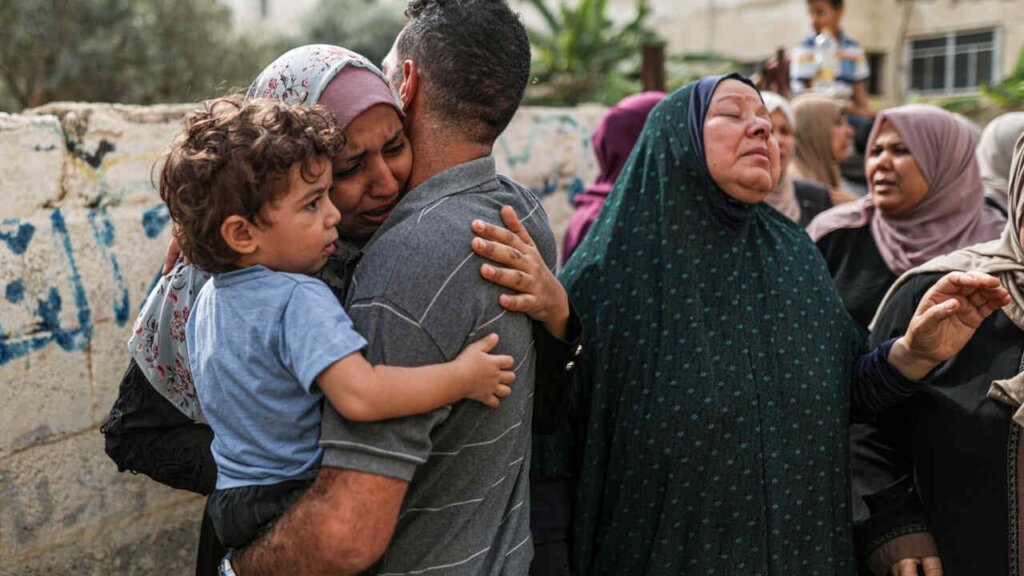
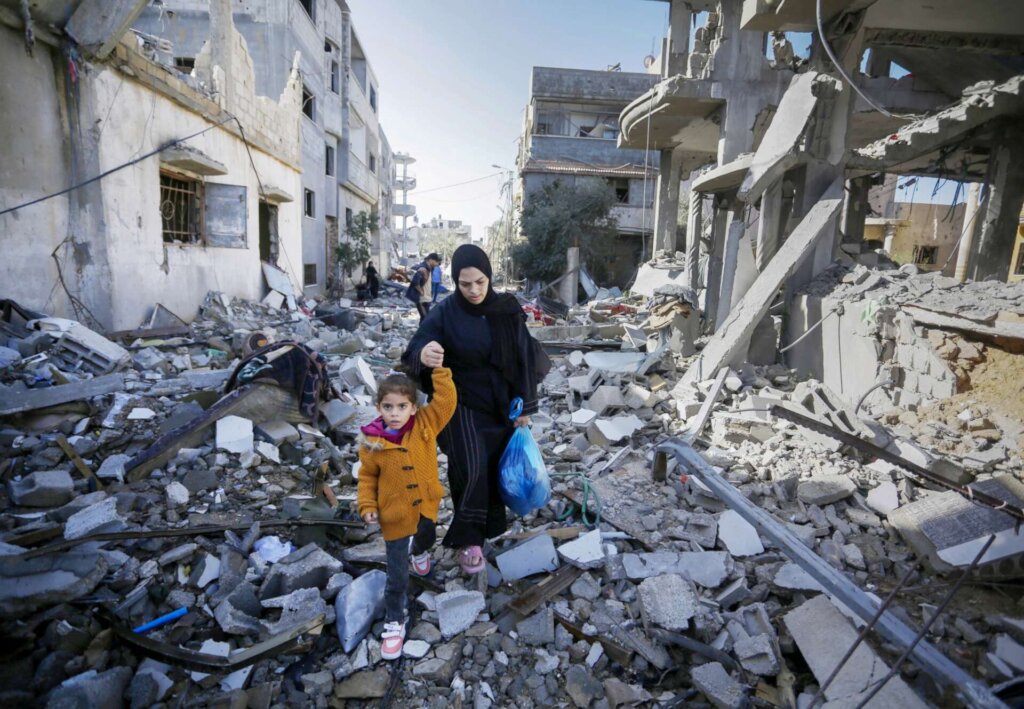
The ongoing conflict between Israel and Hamas has killed over 35,000 Palestinians, with more than 79,000 sustaining injuries. The crisis has also left hundreds of thousands of Palestinians requiring urgent mental health support. Attacks on hospitals, restrictions on the movement of humanitarian aid workers, and blockades on vital medical supplies have severely limited the capacity of health care facilities to provide essential treatment to those in need. Despite facing enormous challenges, Gaza’s health care workers are bravely risking their own lives to see patients.
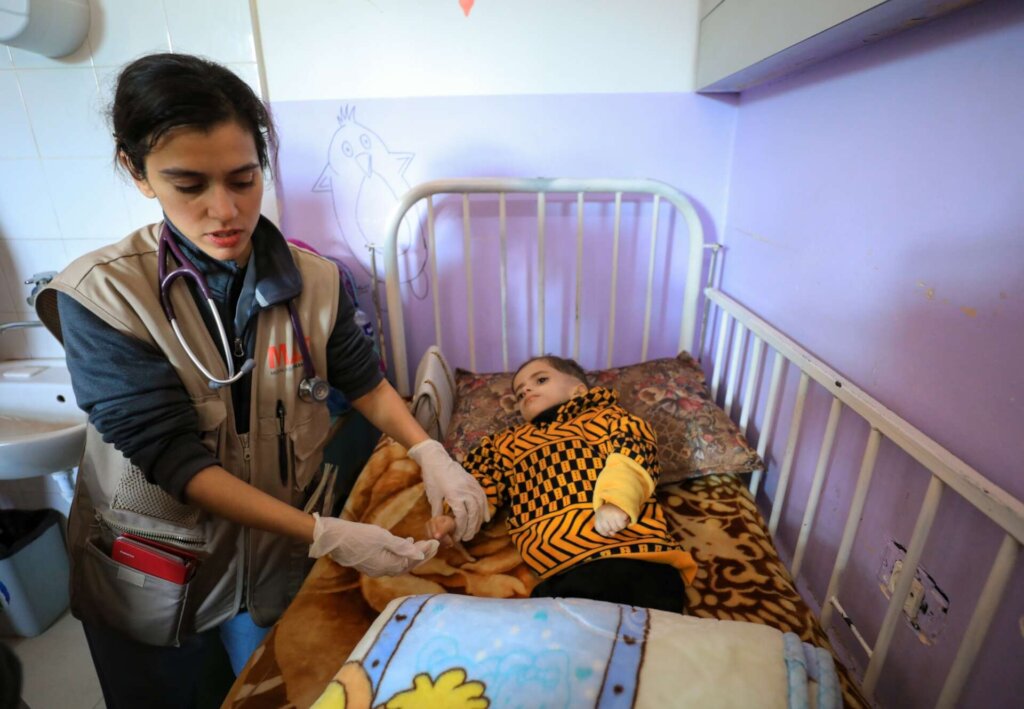
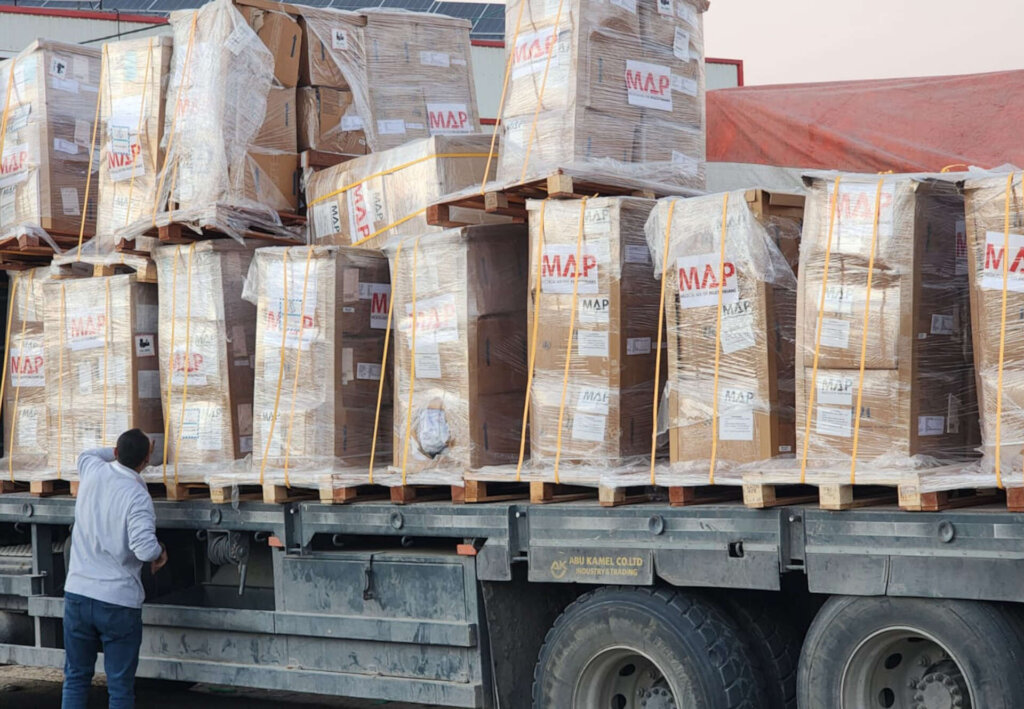
The International Rescue Committee (IRC) and Medical Aid for Palestinians (MAP) have deployed Emergency Medical Teams (EMTs) to support them in providing emergency and life-saving medical care. Dr. Seema Jilani, pediatrician and member of the first Emergency Medical Team, recently returned from working alongside Palestinian medical professionals in Al Aqsa Hospital. Al Aqsa is only partially functional and stands as the sole remaining hospital in Gaza’s middle region.As a result of increasing Israeli military activity, the Emergency Medical Team was forced to withdraw from Al Aqsa and cease activities.
We are monitoring and assessing rising needs elsewhere in the region and continue to support the delivery of food, medical supplies and pharmaceuticals, and the provision of critical services to meet the basic needs of Palestinians.
What was your role in the IRC’s Emergency Medical Team?
Dr. Jilani: I entered Gaza and worked at Al Aqsa Hospital from December 25 – January 8, 2024, in partnership with Medical Aid for Palestinians. I served as a pediatrician on the Emergency Medical Team, working often in the emergency room and on pediatric wards. I've worked in Gaza in 2005, while it was still under Israeli occupation, and again in 2015, shortly after the 2014 ground incursion. I've also been in and out of the West Bank for about 19 years now.
Can you describe the scene at Al Aqsa Hospital?
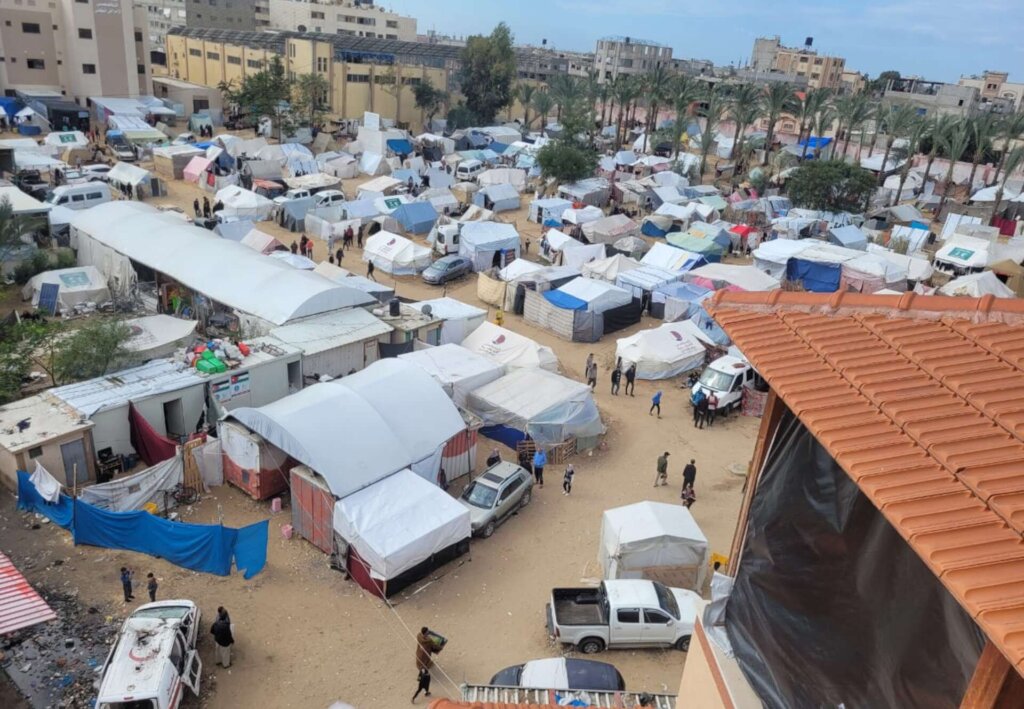
SJ: The hospital itself became a de facto village full of hundreds, if not thousands of people. Inside the hospital were tents, a magnitude of tents. New ones pop up every day.Every square inch of the hospital was taken up by families sheltering together. Even patients who were expected to be discharged would not leave because there was no safe place to go. So, they were sheltering in what they assumed would be a safe place, which ended up not being a safe space for them.
As I was rounding on the pediatric wards, counseling new mothers on how to breastfeed, I could see plumes of smoke rising in the air. I could hear the bombings, nearer every day.It’s very surreal to be explaining breastfeeding, or dehydration, or fever management to a new mom and then hear the bombings in the background, hearing gunfire and seeing smoke clouds rise into the air around us.
What are the medical needs of Palestinians in Gaza?
SJ: These injuries in particular were extraordinarily severe. The scale and magnitude of what we were seeing was phenomenal, especially in children.I took care of an approximately 1-year-old patient who had sustained a traumatic amputation of his right arm and right leg and was bleeding into his chest…
In any other circumstance the patient would immediately have been taken to the operating theater. However, this patient, who we were treating on the ground because there were no beds available, could not go to the operating theater because there were more pressing life-threatening emergencies than this.Gaza’s healthcare facilities are not built for mass casualty. And in fact, no hospital in the world could endure this kind of sustained, severe mass casualty.
How are children in Gaza affected by the war?
SJ: I never thought as a pediatrician that I would be at all useful in a war, but I was treating war-wounded children and pronouncing them dead at rates I had not done before.One day in our code resuscitation room, four out of the five patients we were actively bringing back from the brink of death were under the age of 15.
That speaks a lot to the demographics of the population that we are serving. The high proportion of children amongst war injured and dead is appalling.My fear is around the generation of new amputees, and children who have been traumatically burned or left to live with a disability, who will now face adolescence and adulthood without the support they need.The children of Gaza deserve better.
What was the IRC’s impact at the Al Aqsa hospital?
SJ: They [Al Aqsa hospital staff] are doing everything they can to serve their communities with a colossal amount of bravery, dedication, and work ethic. But they are completely overwhelmed, as are their systems.So, when they saw us, they were acutely aware that it was a symbolic form of solidarity, of us, from the outside saying, “We see you,” and as they voiced, “Thank you for not forgetting us.”
There was one day in particular when we were waiting in the doctor's area, and I noticed that a nurse was quietly sobbing in the corner. When we inquired how we could support or help, it turned out that he had pronounced his friend, another colleague from the hospital, dead overnight. And this morning he was still there. Of course, it being a very delicate situation, I asked what support we could provide or should we leave out of respect for his mourning and he said, “Please stay. Please stay. I can't face my patients out there right now. Please just go see my patients for me.” And that is just one small thing we could do for him.
What did the people of Gaza want you to know?
SJ: They were asking explicitly for advocacy efforts to talk about the level of human destruction, of tragedy, of devastation, and the cataclysmic humanitarian crisis that they are wading through at this time.Health care infrastructure, civilians, and health facilities need to be protected. Physicians, nurses, and health care staff are not targets.We need a sustained cease fire to be able to deliver any meaningful, scalable humanitarian aid for the people of Gaza who are under relentless bombing and suffering tremendous consequences to their families, their children, often burying whole families or burying their children without a dignified death or burial.
How is the IRC supporting Palestinians?
The IRC is closely monitoring and assessing the situation in the occupied Palestinian territory (oPt). Alongside the deployment of the Emergency Medical Team in collaboration with MAP, the IRC has procured 47 metric tons of pharmaceuticals and medical supplies and is working to distribute supplies to hospitals and clinics in Gaza.The IRC is also supporting partners to deliver food, medical supplies and pharmaceuticals, and to provide critical services in emergency shelters including healthcare, psychosocial support and cash assistance for people to meet their basic needs.
The IRC’s response in oPt draws on our global experience and expertise in emergency response, as well as our longstanding presence in the region. Throughout 2022, IRC teams across Syria, Lebanon, Jordan, Iraq, Yemen and Libya helped 6.3 million people.
How can I support people in Gaza?
The IRC is working with partners to deliver critical emergency aid to families in Gaza and conflict zones around the world. Donate now to support our critical work. We are on the frontlines providing critical aid to crisis-affected people in more than 40 countries, including places on the 2024 Emergency Watchlist.
Project reports on GlobalGiving are posted directly to globalgiving.org by Project Leaders as they are completed, generally every 3-4 months. To protect the integrity of these documents, GlobalGiving does not alter them; therefore you may find some language or formatting issues.
If you donate to this project or have donated to this project, you can receive an email when this project posts a report. You can also subscribe for reports without donating.



Support this important cause by creating a personalized fundraising page.
Start a Fundraiser