By Jennifer Wilder | Director of Development and Communications
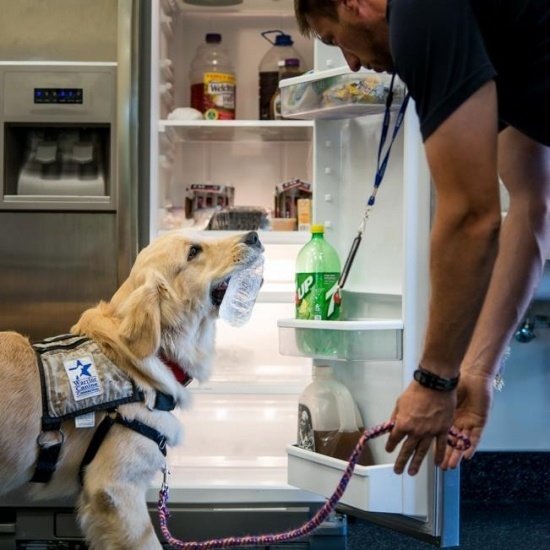
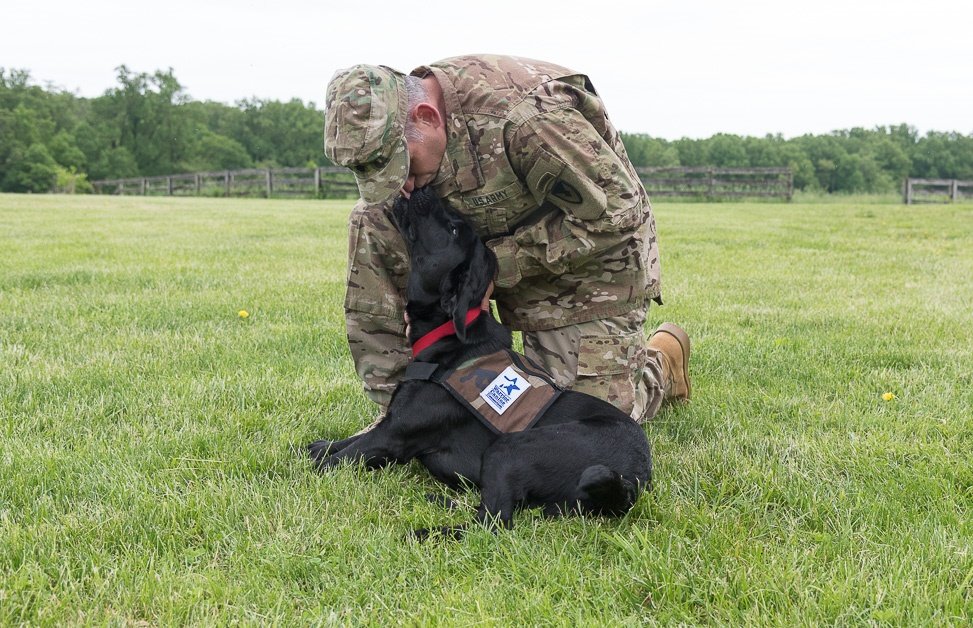
A new research study funded by the National Institutes of Health and published in Behavioral Sciences took a close look at Warrior Canine Connection’s unique approach to helping Veterans heal by having them train service dogs for their fellow Veterans. The service dog training program, known as WCC’s Mission Based Trauma Recovery or MBTR, has been provided by the organization since its founding in 2011.
While service dog programs for Veterans are increasingly common, this study focused on a group we hear less about in research: women Veterans living with PTSD. Women experience PTSD at higher rates than men, yet their needs are often overlooked. This project set out to learn whether working hands-on with service dogs could improve both mental and physical health for these women.
Researchers from the University of Maryland followed 28 female Veterans with PTSD for eight weeks. Half of them trained a future service dog alongside professional instructors at WCC through the MBTR program. The other half watched online dog-training videos at home. Both groups spent one hour each week in their assigned activities, and completed surveys and simple health tests before, during, and after the program. These tests measured stress, PTSD symptoms, anxiety, and even biological signs of aging.
One of the most interesting findings involved telomeres—tiny protective caps on the ends of our DNA that naturally shorten as we age or experience chronic stress. In the group that trained dogs, these telomeres actually got longer over the eight week MBTR program, suggesting that their bodies were under less stress and aging more slowly. In the group that only watched training videos, telomeres got shorter. Women with combat exposure showed the most notable improvement when training the service dogs.
The mental health results were also encouraging. All participants—whether they trained dogs or watched videos—reported lower PTSD symptoms, stress, and anxiety by the end of the study. However, only the hands-on dog training group showed biological changes, hinting that working with dogs offers something special that videos just can’t provide.
Consistent with findings from other several other studies on WCC’s MBTR program, this most recent research suggests that training service dogs may offer real, measurable benefits for women Veterans—especially those who have faced combat. A link to the published research findings is below.
Links:
Project reports on GlobalGiving are posted directly to globalgiving.org by Project Leaders as they are completed, generally every 3-4 months. To protect the integrity of these documents, GlobalGiving does not alter them; therefore you may find some language or formatting issues.
If you donate to this project or have donated to this project, you can receive an email when this project posts a report. You can also subscribe for reports without donating.



Support this important cause by creating a personalized fundraising page.
Start a Fundraiser