By Abhishek Narayanan | Project Lead, Animal Rescue
Jan-March 2015
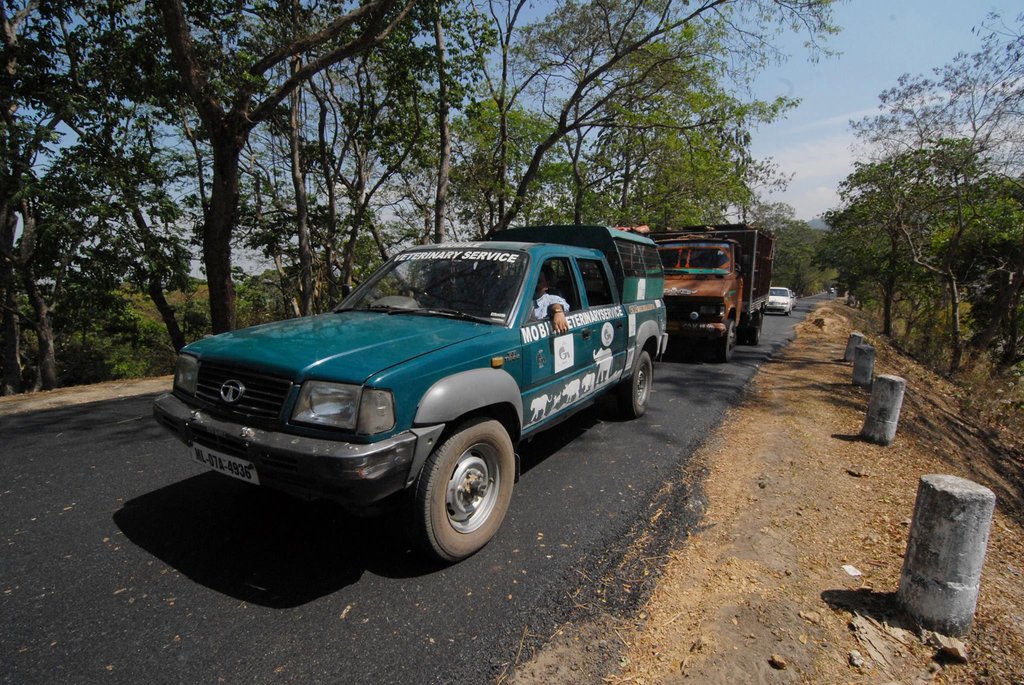
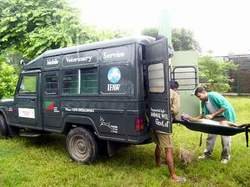
Wildlife Trust of India has pioneered wildlife rehabilitation and wildlife health monitoring as tools for conservation in India. Together with the International Fund for Animal Welfare it has successfully built the first two super-specialty centers for wildlife rehabilitation in India: the Centre for Wildlife Rehabilitation and Conservation (CWRC) in Assam and Centre for Bear Rehabilitation and Conservation (CBRC) in Arunachal Pradesh. Apart from this, WTI has been also operating six Mobile Veterinary Services (MVSs) that have attended to more than 3800 individual animals, vaccinated over 12,000 cattle, attended and provided health support to around 1,000 captive elephants located around the protected areas. As a result, protocols for the rehabilitation of eight species of endangered wildlife have been formulated and field-tested, and around 300 vets given hands-on exposure to wildlife veterinary science and rehabilitation.
WTI provided wildlife health and rescue support in India vides three arms namely:
The main goal of a MVS unit is “to rescue wild animals in the face of conflicts and natural disasters and rehabilitate back to the wild where they serve the greatest conservation benefit”
The salient features of an MVS unit are:
The activities of MVS-EA and MVS-Arunachal unit can be broadly categorised under:
The summary of activities done in the previous quarter by all the six MVS units is tabulated as follows:
Activity head
Update for Jan-March 2015
Rescue and rehabilitation of displaced wildlife due to man-made causes
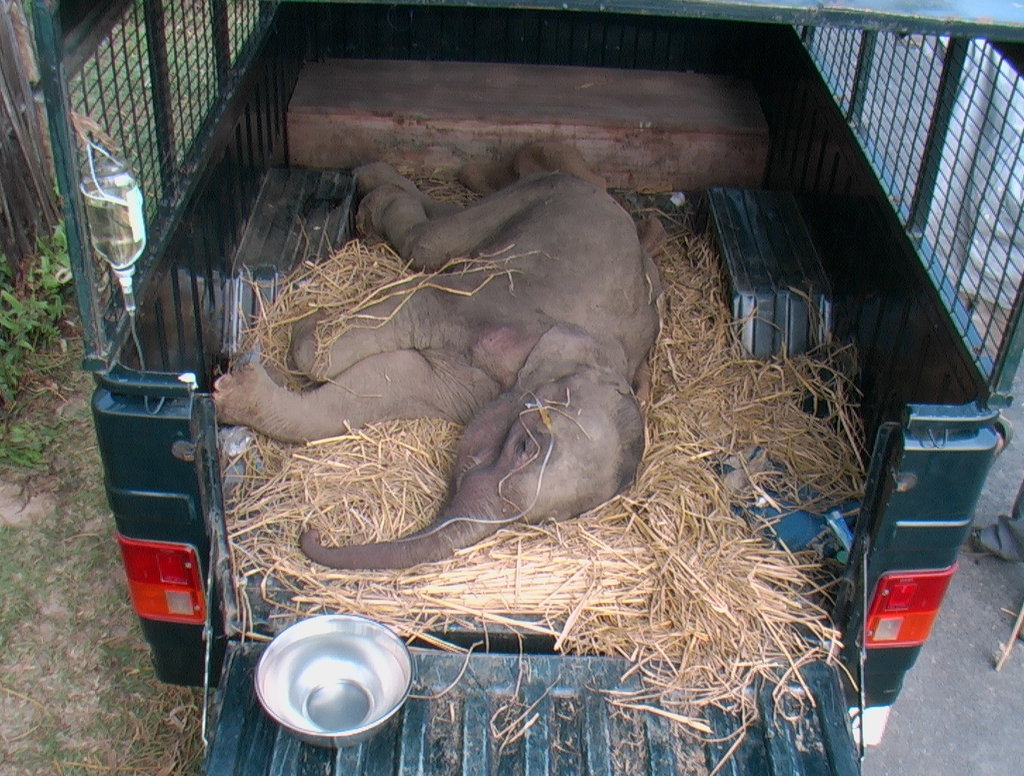
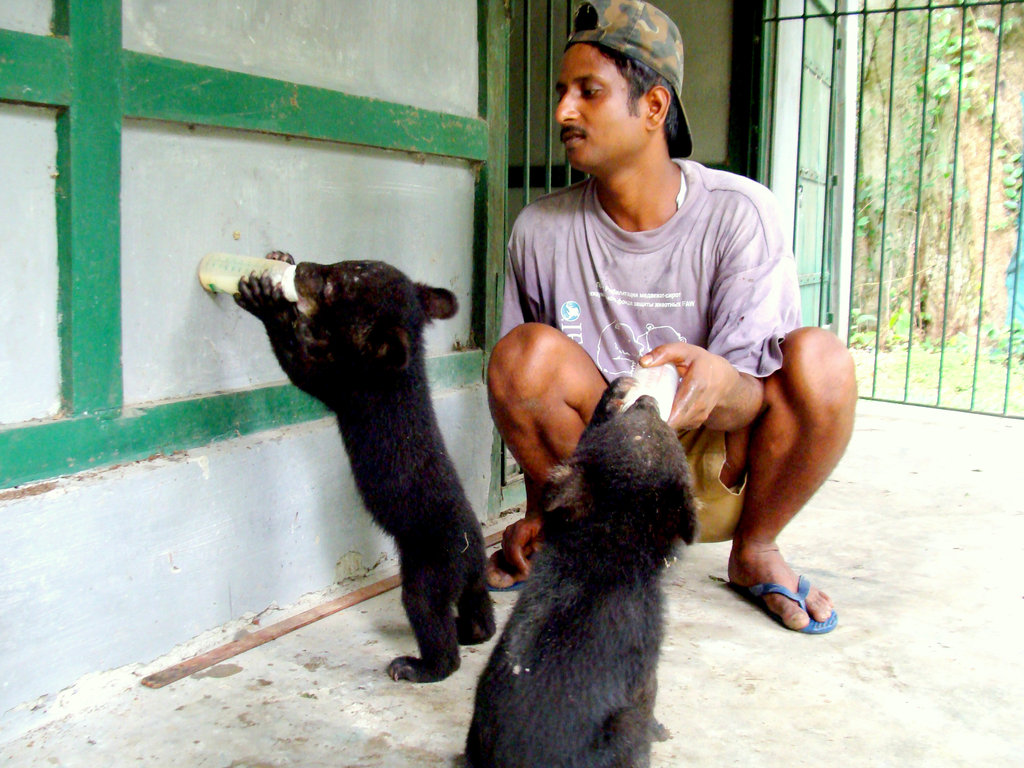
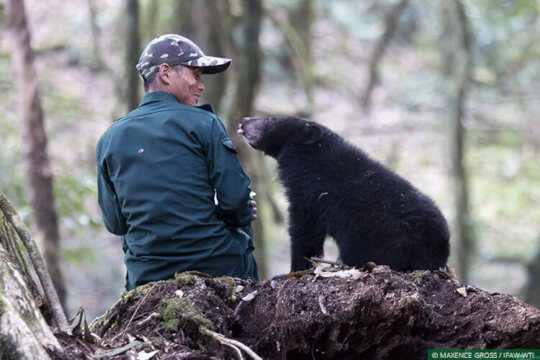
A total of 101 cases of displaced wildlife were attended to by the six MVS unit across India. Mammals contributed to 43% of the cases, birds 39.09% and reptiles only 17.82%. The majority of the cases belonged to adults (77%) and the rest to the young ones that need protracted care. The maximum number of cases were attended to by the MVS-Central Assam (MVS-CA) unit at Kaziranga (32.67%), followed by MVS-Eastern Assam (MVS-EA) (28.71%) and MVS-Western Assam (20.79%) (MVS-WA). Similipal MVS that was started in May 2014, attended to around 11% of the total number of cases. Out of the total number of cases attended by all six MVS units, around 48% of the animals were released after necessary treatment and care. 30.21% of the cases are still under care at the respective centers/MVS stations. Some of the species handled by the MVS units are shown in figure 1.
Emergency relief to wildlife displaced during natural disasters
Floods, cyclones, landslides and poisoning are some of the calamities that affect wildlife on a regular basis. Emergency relief to wildlife in distress during such disasters in the form treatment, stabilization and accommodation is one of the primary objectives of the MVS units. North Bank of river Brahmaputra is highly prone to flooding during the monsoons, displacing many wild animals. Fortunately, no natural disaster occurred at any of the project sites in the reporting quarter
Livestock immunization around fringe areas
Thousands of livestock live around the fringe areas of every National Park and Wildlife Sanctuary in India. They pose a great threat to wild ungulates as they can be a major source of infectious diseases to them. The MVS units organize regular immunization camps for livestock in the villages to protect wildlife against diseases. The main objective of such camps is to prevent spread of diseases like anthrax, black quarter, hemorrhagic septicemia, blue tongue and foot and mouth disease in wild buffaloes, elephants, sambhar, cheetal and gaur. MVS-CA vaccinated 30 cattle and 15 goats in Ramterang and Sarkro village of Karbi Anglong in the month of February in association
Captive elephant care
All the MVS-unit veterinarians are regularly called for routine health check for all the forest department captive elephants either through camps and individual visits. Around 20-25 captive elephant cases are attended to by the MVS units annually. Routine health care includes checking vital parameters, screen stool samples for endo-parasites and blood samples for hematological parameters. Anthelmintic depending on the species and parasitic load is administered at the end of the health check in front of the veterinarians. Minor surgical interventions like wound dressing and suturing, pedicure and other abnormalities are also taken care of during the check-ups. A total of 17 captive elephants were attended to in the reporting quarter. As mentioned above, apart from routine deworming minor dressing and surgeries were done.
Disease investigation procedure
Investigating the cause of deaths and prevalence of diseases in wildlife is essential for prevention and control disease transmission. WTI has deployed trained MVS veterinarians who can attend to postmortems to determine the cause of death. Poisoning has been found to be the major cause of death of many species of wildlife.The animals under care also undergo, regular screening, for endo-parasitic load through fecal examination. Other forms of disease investigation operations include sero-prevelance, parasite load, hematology, histopathology and microbial investigation. The MVS units conducted a total of 19 disease investigation procedures, majority of which were necropsy. Out of these 3 cases were of animals that had died in the wild, while the rest were of those that died under care.
Links:
Project reports on GlobalGiving are posted directly to globalgiving.org by Project Leaders as they are completed, generally every 3-4 months. To protect the integrity of these documents, GlobalGiving does not alter them; therefore you may find some language or formatting issues.
If you donate to this project or have donated to this project, you can receive an email when this project posts a report. You can also subscribe for reports without donating.