By Abhishek Narayanan | Assistant Manager and Officer in Charge
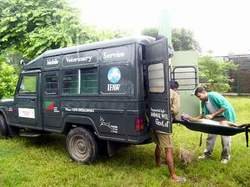
Till date, the Wildlife Trust of India (WTI) has successfully saved about 4000 individual animal lives, vaccinated more than 12000 livestock around fringes of protected areas, and provided healthcare support to 1000 captive elephants through its six Mobile Veterinary Service (MVS) units.
The Field Director- Similipal Tiger Reserve, Odisha, approached WTI in setting up a rescue center-cum-MVS unit operating from Similipal Tiger Reserve. The forest department in Similipal informed WTI that they have been attending to cases of wildlife emergencies for almost two years now through their local infrastructure. The field director indicated that they had attended to 66 cases since 2011. The affected wildlife belonged to various species of mammals (elephants, fishing cat, pangolin, mouse deer, etc.), birds (owls, parakeets, hornbill, etc.) and reptiles (banded krait, python, chameleon, etc.). The MVS unit in Similipal Tiger Reserve was officially launched on 15th May 2014.
Similipal Tiger Reserve, located in the northern part of Orissa’s Mayurbhanj district, is spread over 2750 sq. km and is home to the highest number of tigers in the state apart from over 54 other species of mammals, 304 species of birds, 60 species of reptiles, 21 species of frogs, 38 species of fish, 164 species of butterflies and 1078 species of plants. The 1,555.25 sq. km Similipal Buffer Zone has 65 villages, with a population of over 12,500 people, mostly within the Reserve Forest. An estimated 250,000 people from nearly a dozen tribal denominations reside in over 400 villages on the fringes of Similipal Tiger Reserve. The MVS-STR is conveniently located at the fringe of STR at Pithabada Wildlife Range Office in Baripada and poised to immediately respond to any wildlife emergency which may arise. For the first time, the state of Odisha will have a dedicated mobile unit manned by trained veterinarian and caretaker to attend to wildlife emergencies reported from the region. The main objective of the MVS unit is to return every displaced animal to the wild while following the IUCN guidelines on translocation and placement of confiscated animals. The unit will be served by a small field station that will have basic facilities to accommodate temporarily displaced animals till their release. Non-releasable animals will be sent to zoos for lifetime care and breeding. The unit by its presence in the area will also help to create awareness drives amongst the local villagers on how to deal with and respond to different conflict scenarios.
The MVS unit has the following objectives
A. Rescue and rehabilitation of displaced wildlife
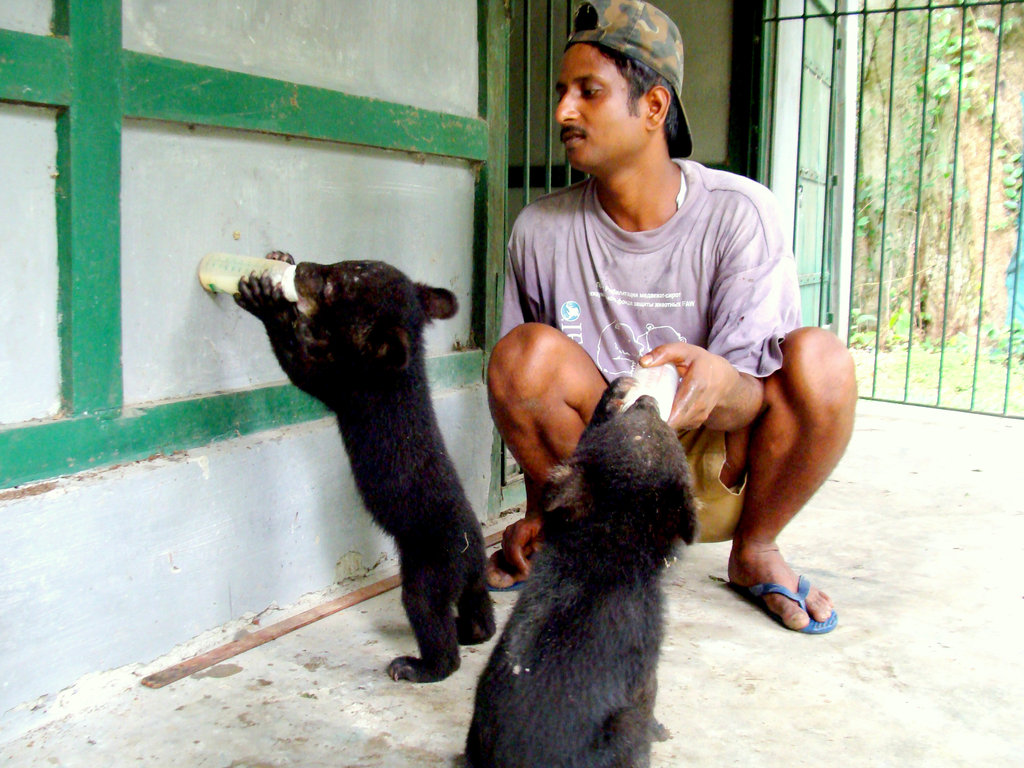
Wildlife displacements due to man-made causes is increasingly becoming a concern from conservationists and wildlife park managers. The MVS functions by promptly responding to reports of such displacements. It is also instrumental in deciding and executing appropriate options for rehabilitation of that individual through release back to the wild either immediately (reuniting young ones, or in case of adults and sub-adults) or through long term hand-raising and subsequent rehabilitation.
The MVS Similipal Unit attended to a total of 45 cases of wildlife displacements in the reporting quarter. Majority of these cases included cases of snakes and other reptiles (30 cases, belonging to 13 species) that were either injured and had entered human habitats like houses, gardens, etc. The remaining cases were of mammals (13 cases, 4 species) and birds (2 cases, 2 species).
Table 1: Key species handled by MVS Similipal unit (April - September 2015)
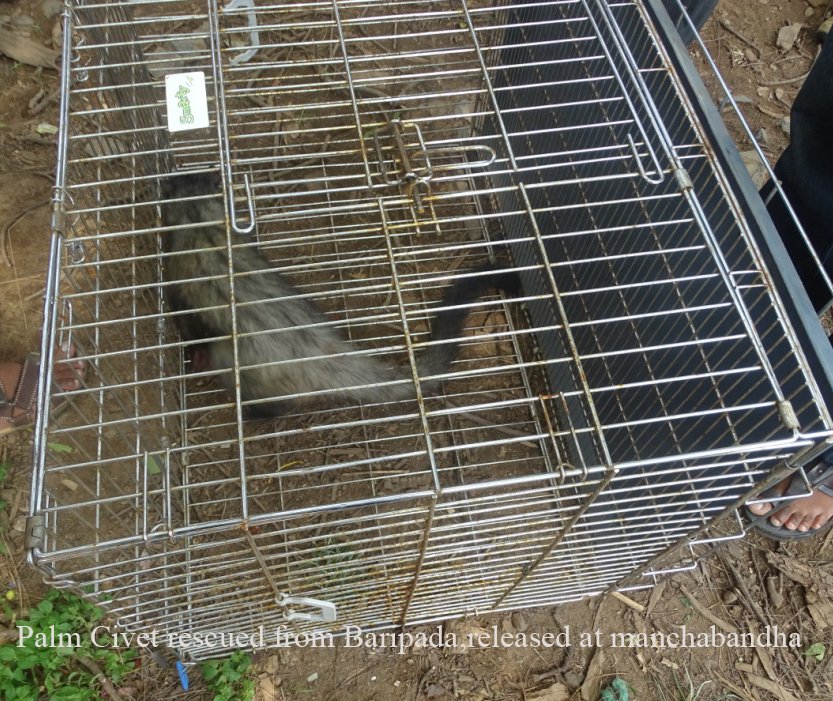
Mammals: Asian elephant, common palm civet, common leopard
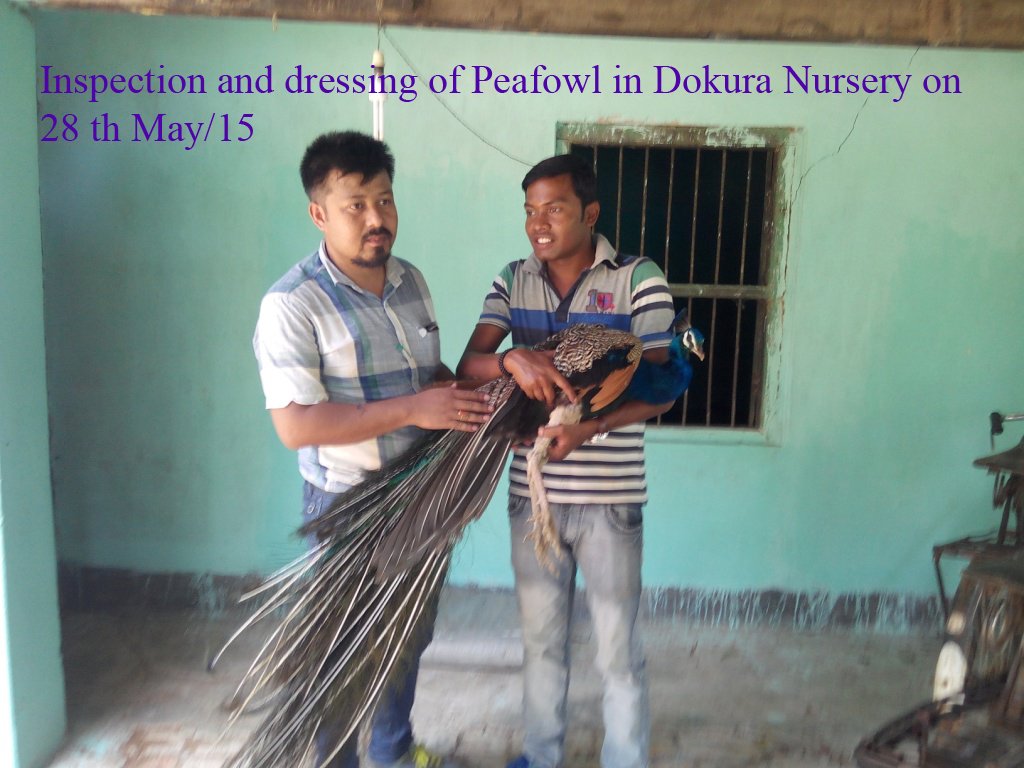
Birds: Indian peafowl, barn swallow
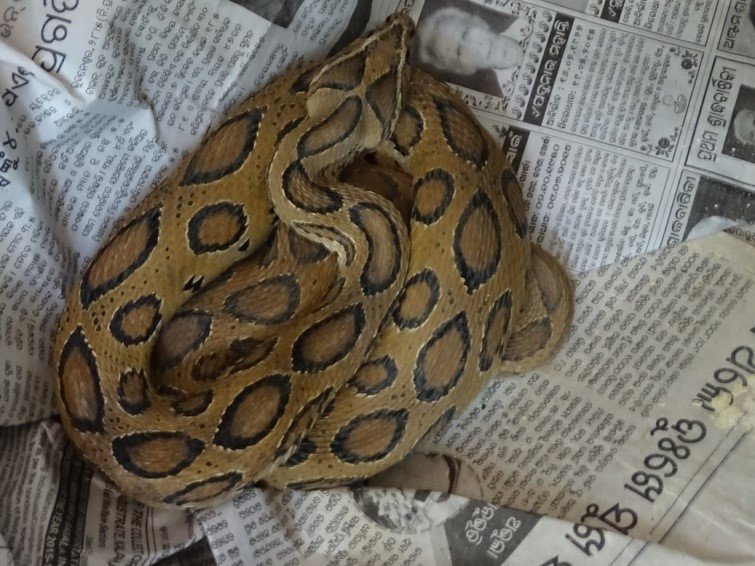
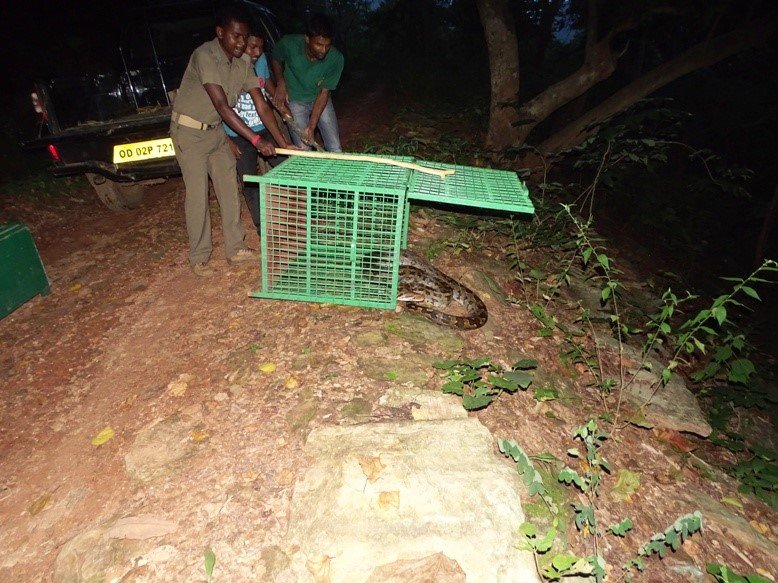
Reptiles: Indian rock python, spectacled cobra, king cobra, Russel’s viper, Indian chameleon
Majority of the cases were field rescued (80%) and remaining (20%) were confiscated from people keeping the animals illegally. The commonest cause of displacement and consequent intervention was when the wildlife had entered human habitats (71%). Only 35% of the admitted cases were of young ones (mainly mammals) that were admitted to the center for hand raising, while remaining were of adults and sub-adults (65%).
Around 62% of the cases were attended to in situ and after necessary intervention 92.86% of these were released within 24 hours of intervention. Two cases died under care and included a juvenile sloth bear that was gravely injured and had to be shifted to Nandankanan zoo immediately for surgery. The other case was of a leopard that had entered a local village and was killed by the mob during the intervention itself (the details of which is given below as a case study). A total of 38% cases were admitted to the field station of which around 52% were of young mammals, that had been found alone or picked up by people and required protracted care and hand-raising. The remaining 48% included adults that had moderate to severe injuries after coming into conflict with humans and needed treatment and care. Out of this 52.94% died under care and 29.41% were released back in the wild. Two cases of common palm civet kittens are still pending and will be taken to the release site by November.
B. Conflict animal management:
There is no state in India where human-wildlife conflict has not been reported. Conflict with leopards, elephants, and bears are on the rise and WTI’s MVS vets are frequently called upon to address conflict animal management issues. The MVS units assist the forest department in mitigating the conflict by managing the conflict animal. The animal itself will be stressed and most of the times injured, for which necessary intervention and treatment may be required. In absence a qualified veterinarian for such an intervention the injured animal will have limited prognosis. Conflict mitigation and animal management usually involves a collaborative approach between a veterinarian (for dealing with the animal itself), a biologist (to study the dynamics of conflict and ecology of the conflict animal) and a sociologist (to understand and execute measures at the community level for awareness).
This reporting period the MVS unit was busy attending to many snake displacements and consequent interventions as mentioned above. Most of these cases required intervention, as the snake had entered human use areas (houses, gardens, etc.) and people wanted its removal. Many of these cases were attended by the local ‘snake rescuers’ working in the same landscape who would normally ‘rescue’ the snake and bring it to the attention of the forest department or the MVS unit. On many occasions, intervention is also required, as the snake would have been captured or trapped either accidentally or intentionally.
In addition to this, the team also attended to a juvenile sloth bear as informed by the local honorary wildlife warden in August at Baholda, Rairangpur. Upon reaching the spot the team examined the bear, which was female bear, about one and a half years old, that was injured, presumably attacked by locals. She was in a state of shock; her right side was completely paralyzed and was she unable to stand. After discussing the matter with the Forest Department the team decided to shift the bear to the Odisha Veterinary College for radiography and treatment. The bear was transported to Bhubaneshwar and x-ray were taken. Although no fracture was detected, there was slight subluxation of the shoulder and pelvic joint. It was decided that the bear would be kept for a few days for treatment at the center. However, unfortunately she succumbed to her injuries a week later.
C. Captive elephant care
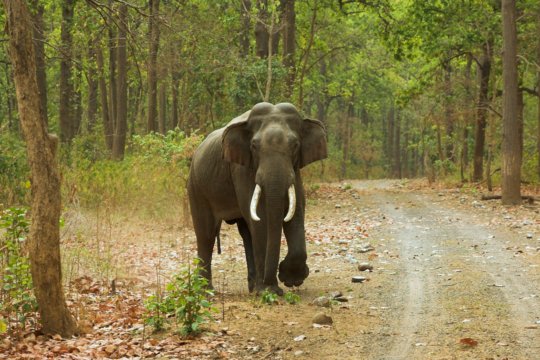
The Asian elephant is inextricably linked to the continent’s mythology and history has been thus associated with various aspects of Indian culture and religion for thousands of years. Traditionally worshipped as Lord Ganesha, the elephant headed god, the elephant is also a symbol of fertility, wealth and abundance. India also has a long history of capturing and training elephants for use in war, temple festivals and timber extraction since Vedic times. They were even maintained in thousands, in the armies of the rulers of the subcontinent, in ancient times. However, with modernization and industrial revolution the use of such working elephants in wars and industries like timber, etc. has reduced over the years.
At present, there are captive elephants in Similipal Tiger reserve and mostly they were used as “Kumki” (trained captive elephants) and now slowly also for tourism. Regular health checkups of these elephants are carried out in order to prevent the spread of any diseases.
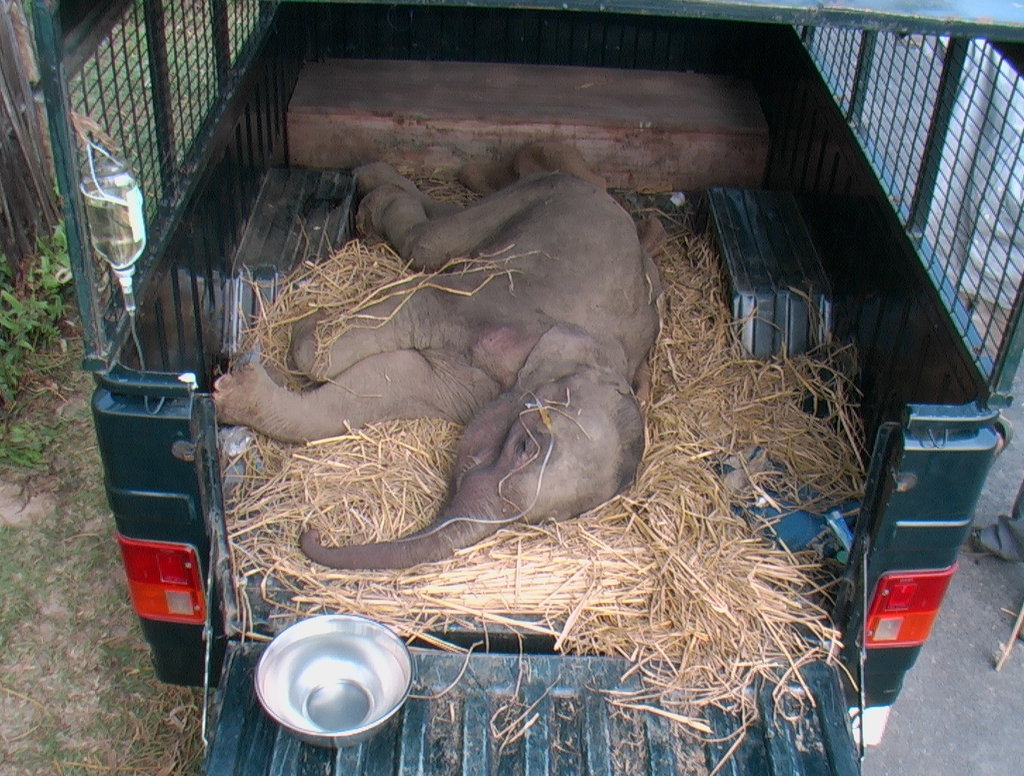
Apart from assisting the Forest Department in managing the elephant calf that was admitted last year, the MVS unit did not attend to any captive elephants. The calf, Bablu, was found alone, fallen in a ditch in December 2014. She was initially with some members of the natal herd, whose escape was facilitated by digging and widening the ditch by the Forest Department.
Unfortunately, the herd had left the calf behind. After numerous failed attempts of reuniting the calf with the mother/natal herd, it was decided that the calf would be taken to the elephant camp and raised to be a captive working elephant. Based on the recommendations of the MVS team, the FD began the construction of temporary shelter for the elephant calf to be kept. The MVS team based on the more than ten years of experience in elephant calf hand-raising and rehabilitation in Assam, formulated a diet and nursing plan for the elephant calf. In addition, the MVS Vet treated the calf on three occasions in May, July and September for de-worming, calcium/vitamin supplementation and mild diarrhea and dehydration respectively. The calf which was being kept in a makeshift room in one of the nursery managed by the Forest Department was shifted to the temporary shelter.
D. Disease investigation procedures
Investigating the cause of mortality and prevalence of diseases in wildlife is essential for prevention and control of diseases. MVS veterinarians deployed at the project locations are trained to perform necropsy examination on carcasses of wild animals that die both in situ and ex situ to determine the cause of death. The animals under care also undergo, regular screening, for endo-parasitic load through fecal examination. Other forms of disease investigation operations include sero-prevelance, parasite load, hematology, histopathology and microbial investigation. The necropsies included those of an Asian Elephant that had died of septicemia after a fracture to its femur and another that died of anthrax. A third case is awaiting results, but anthrax is suspected. A sloth bear was also examined and the cause of death was found to be severe head injuries and an arrow in its chest.
E. Livestock immunization around fringe villages
Thousands of livestock live around the fringe areas of every National Park and Wildlife Sanctuary in India. They pose a great threat to wild ungulates as they can be a major source of infectious diseases to them. The MVS units organize regular immunization camps for livestock in the villages to protect wildlife against diseases. In addition to the livestock, domestic animals like dogs that inhabit the fringe areas also pose a threat diseases being spread to their wild counterparts. Rabies, Canine distemper Virus, Parvo, etc. are some of the diseases common in feral and domestic dogs that can spread to other wild mammals. Keeping this in mind, the forest department has approached the MVS unit to assist the animal husbandry department in the first phase of immunization of dogs against canine distemper in three villages inside Similipal Tiger Reserve. The unit will conduct a preliminary survey in the coming months to ascertain the priority areas for such a program, after which the immunization will commence as scheduled.
F. Awareness and outreach activities
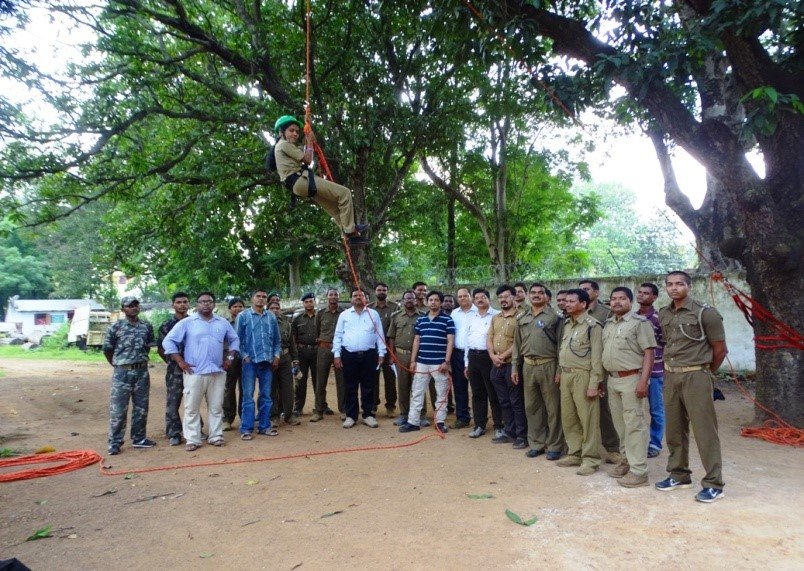
Seeing the increasing incidences of Human-Wildlife conflict in Odisha, especially the Similipal landscape, the forest department came forward in conceptualizing a basic training program mainly on rescue basics and ethics for the frontline staff. The MVS unit was approached in providing this training initially in five forest divisions namely 1) Balasore; 2) Baripada; 3) Rairangpur; 4) Karanjia; and 5) Similipal Tiger Reserve. The overall goal of this training exercise was the formation of a dedicated rescue team comprising of forest department personnel from each circle that will be trained with further advanced courses and refresher trainings. These teams will not only help the MVS-SBR unit but also in different Rescue Operations and Human-Animal conflicts situations in the future in their respective circles. They will also be the first level or Primary Response team that will reach the location, take a stock of the situation and also be able to handle it themselves and if required contact the MVS unit for assistance and guidance.
As a part of this, 15 individuals were selected from the frontline staff in each division comprising Foresters (3), Forest Guards (7) and daily wage watchers/patrolmen (5), from which five individuals from each division will be further selected on the basis of interests, performance, and fitness and communication skill to form a final Circle level Rescue Team and advance training. Some of the modules taken during the training program included basic identification of animals, understanding behavioural habits (Feeding and Habitat pattern) of commonly found mammals, birds and reptiles; approach Wildlife First Aid; importance of documentation and practical hand on training on rope rescue, rescue in water bodies and snake handling.
As always, it has been a busy few months for the MVS in Simlipal Tiger Reserve. We would like to thank all our donors for all your support so far. Do sign up for our newletter to stay updated.
Links:
Project reports on GlobalGiving are posted directly to globalgiving.org by Project Leaders as they are completed, generally every 3-4 months. To protect the integrity of these documents, GlobalGiving does not alter them; therefore you may find some language or formatting issues.
If you donate to this project or have donated to this project, you can receive an email when this project posts a report. You can also subscribe for reports without donating.