By Abhishek Narayanan | Officer in Charge
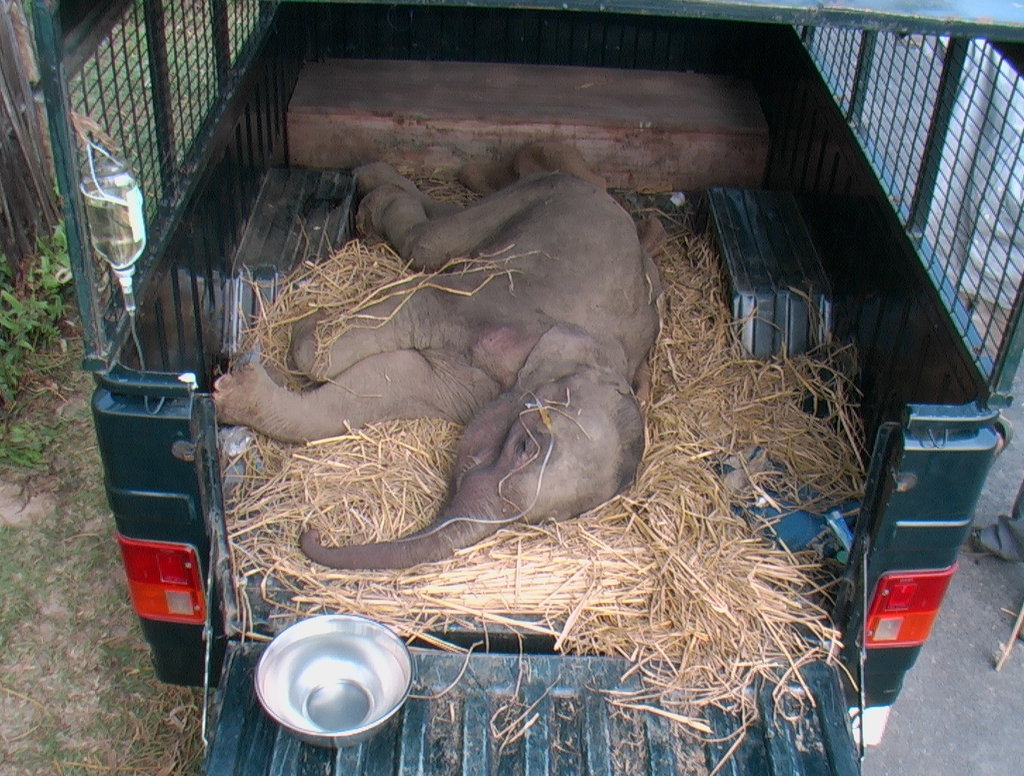
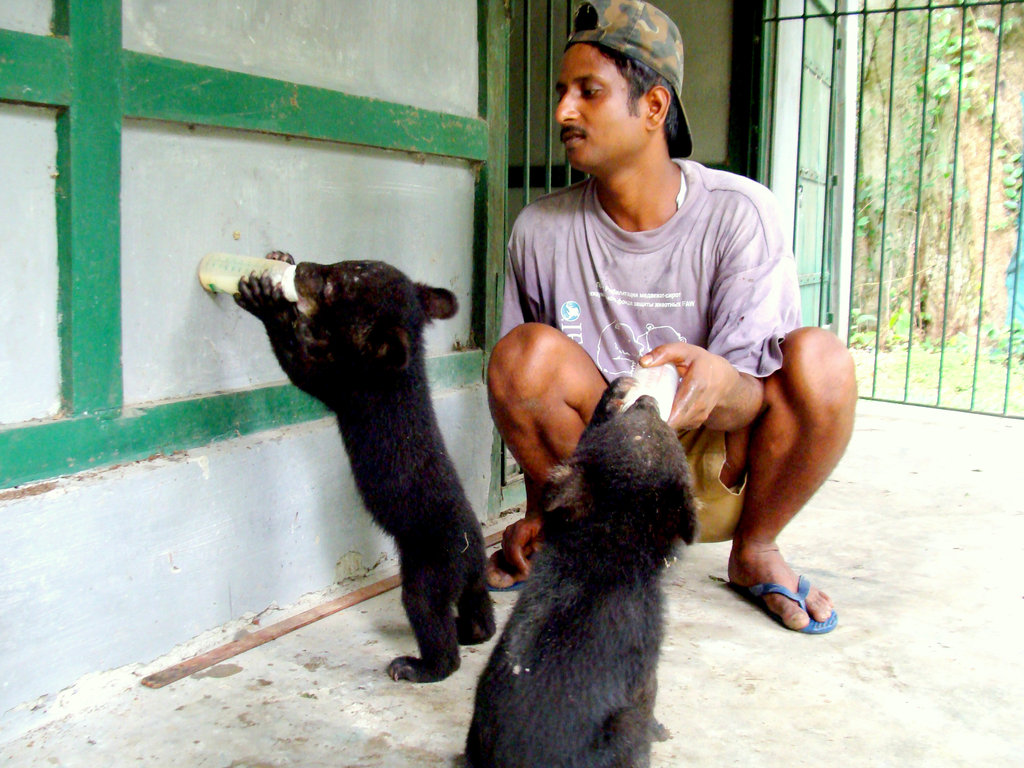
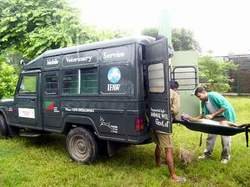
Till date, the Wildlife Trust of India (WTI) has successfully saved about 4000 individual animal lives, vaccinated more than 12000 livestock around fringes of protected areas, and provided healthcare support to 1000 captive elephants through its six Mobile Veterinary Service (MVS) units.
The Field Director- Similipal Tiger Reserve, Odisha, approached WTI in setting up a rescue center-cum-MVS unit operating from Similipal Tiger Reserve. The forest department in Similipal informed WTI that they have been attending to cases of wildlife emergencies for almost two years now through their local infrastructure. The field director indicated that they had attended to 66 cases since 2011. The affected wildlife belonged to various species of mammals (elephants, fishing cat, pangolin, mouse deer, etc.), birds (owls, parakeets, hornbill, etc.) and reptiles (banded krait, python, chameleon, etc.). The MVS unit in Similipal Tiger Reserve was officially launched on 15th May 2014.
Similipal Tiger Reserve, located in the northern part of Orissa’s Mayurbhanj district, is spread over 2750 sq. km and is home to the highest number of tigers in the state apart from over 54 other species of mammals, 304 species of birds, 60 species of reptiles, 21 species of frogs, 38 species of fish, 164 species of butterflies and 1078 species of plants. The 1,555.25 sq. km Similipal Buffer Zone has 65 villages, with a population of over 12,500 people, mostly within the Reserve Forest. An estimated 250,000 people from nearly a dozen tribal denominations reside in over 400 villages on the fringes of Similipal Tiger Reserve. The MVS-STR is conveniently located at the fringe of STR at Pithabada Wildlife Range Office in Baripada and poised to immediately respond to any wildlife emergency which may arise. For the first time, the state of Odisha will have a dedicated mobile unit manned by trained veterinarian and caretaker to attend to wildlife emergencies reported from the region. The main objective of the MVS unit is to return every displaced animal to the wild while following the IUCN guidelines on translocation and placement of confiscated animals. The unit will be served by a small field station that will have basic facilities to accommodate temporarily displaced animals till their release. Non-releasable animals will be sent to zoos for lifetime care and breeding. The unit by its presence in the area will also help to create awareness drives amongst the local villagers on how to deal with and respond to different conflict scenarios.
On the 10th of November, our veterinarian was called to attend to a “cat like” creature that had entered a villager’s hut. It had been trapped inside the hut by the family. The vet, suspecting it was a civet, rushed there. The visit to the house soon confirmed his suspicions. An Asian Palm Civet had decided that a beam under the roof of the house seemed like a good place to shelter.
The Asian Palm Civet (Paradoxurus hermaphroditus), or “toddy cat” is a small nocturnal and arboreal mammal and classified as ‘Least Concern” by the IUCN Red List of Threatened Species. It is protected under Schedule II of the Wildlife (Protection) Act, 1972 in India.
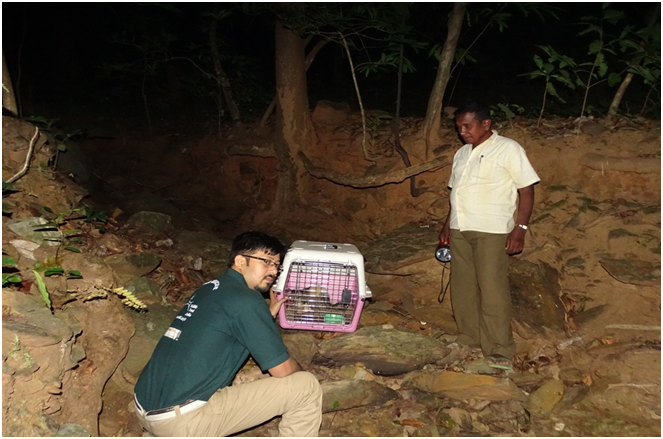
The vet managed to catch the civet and brought her back to the MVS station to give it a quick check up. It was found to be a sub adult female in overall good health apart from a few minor injuries on her tail. These injuries were treated using a topical ointment and she was given food and water for the night.
The next evening, she was released in a wooded area suitable to her needs.
Wildlife Trust of India’s (WTI) Mobile Veterinary Service (MVS) in Similipal Biosphere Reserve, Odisha also organised a training programme for the frontline forest staff from four forest divisions on ‘Rescue Basics and Ethics’ in Similipal Tiger Reserve in October.
The training was organised primarily to attend to wild displacements in and around Similipal Biosphere Reserve. Initially, this training was carried out in four Forest Divisions and Similipal TR and 15 frontline staff from each of these units participated in this unique exercise which included three foresters, seven forest guards and five senior watchers. After the training programme, five individuals from each division were selected on the basis of written and practical sessions to form a ‘Rescue Team’ of 25 individuals.
Equipment for these rescue teams has now been purchased and plans are on to train a handful of these guards in advanced rescue methods.
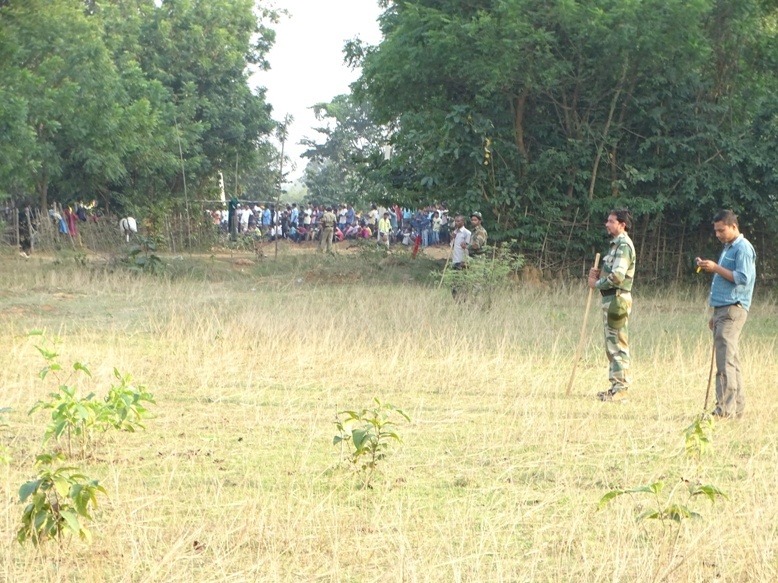
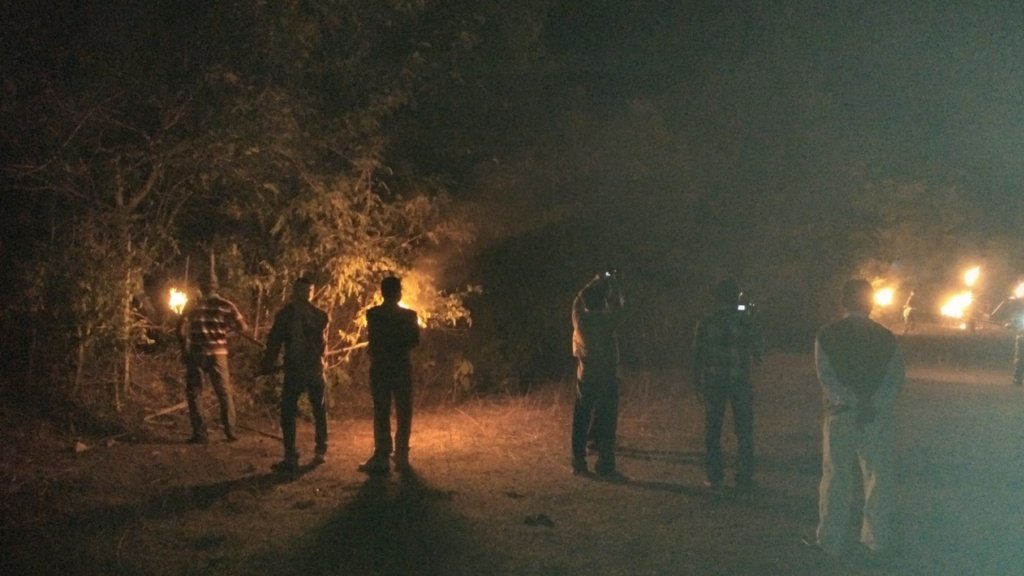
Another case the MVS attended was to provide a leopard that has strayed into a plantation safe passage back to its habitat. Three people had been injured by the leopard hiding in the plantation and the MVS team rushed to the site in order to aid the Forest Department staff to mitigate the situation. The crowd was controlled successfully and staff were placed in a semi circle around the plantation area. The open area pointed towards the nearest jungle. There was no need for any further intervention as the leopard moved towards the jungle and disappeared.
It was also a great opportunity for our team to spread awareness among the people and to teach them how best to deal with a situation when wildlife enters human habitation.
Do consider following us on Facebook: https://www.facebook.com/pages/Wildlife-Trust-of-India/112289815480421?fref=ts or sign up for our newsletter to stay up to date: http://www.wti.org.in/NewsLetter.aspx
Project reports on GlobalGiving are posted directly to globalgiving.org by Project Leaders as they are completed, generally every 3-4 months. To protect the integrity of these documents, GlobalGiving does not alter them; therefore you may find some language or formatting issues.
If you donate to this project or have donated to this project, you can receive an email when this project posts a report. You can also subscribe for reports without donating.