By Chantal Bianchi | Project manager
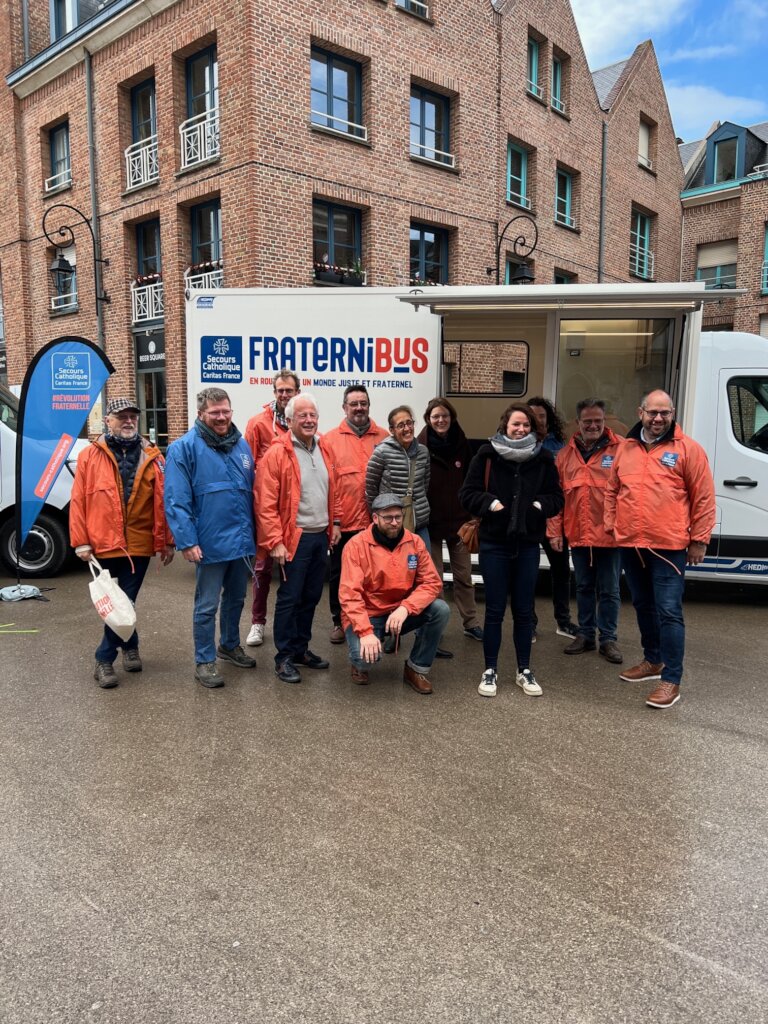
On December 4, 2018, a special kind of bus - the Fraternibus - hit the roads of Eure (27). Its objective: to create “social bonds” and reach out to isolated people.
Criss-crossing the remote villages of the Eure department, the Fraternibus stops on market places, extends its awning, pulls out tables and chairs. Some just come to share a coffee, or talk about the little hassles that can darken a daily life. The goal is to break isolation, to reach out to people. This is a "reverse mobility" project, our volunteers come to meet the population rather than the other way around.
Because some people do not dare to cross the threshold of our receptions. Others do not have the opportunity to come to our reception desks.
Indeed, having a personal mean of transport to get around has become essential in almost all areas of the country, but particularly in rural areas. Finding a job, healthcare, food, access to services and institutions, today very often requires a vehicle. But the expenditure is high, it is around 3,800 euros per car, per year and represents 12% of annual household expenditure, and much more when the budget is reduced.
In rural areas, the use of the car is made essential by the dispersion of areas of activity, occupation, housing and by the weakness of transport services other than school. The distances are too great to reach health services, shops, schools and cultural access services. Public transport is insufficient, with an inadequacy of public structures.
Situations where mobility is either impossible, difficult or excessively costly in relation to the available budget are quite common. However, more than yesterday, the ability to move is an essential condition for integration, for the construction of satisfactory life trajectories and diversified social ties. Mobility is no longer just a choice, it has become a necessity. Faced with this imperative, many are poorly equipped, or less well equipped than others.
The recent health crisis has worsened many situations experienced by the most vulnerable people. This degraded context makes the difficulties due in particular to isolation, digital divide and mobility problems in certain territories all the more significant.
When digital proves to be a little more like the priority channel for access to public and private services every day, more than 20% of French people remain poorly connected, if not at all. Thus, young people with or without a diploma, low-income households, disabled or elderly people, who constitute the bulk of the “poorly connected”, become the new excluded from our society. The health crisis has led to a forced march to digital tools.
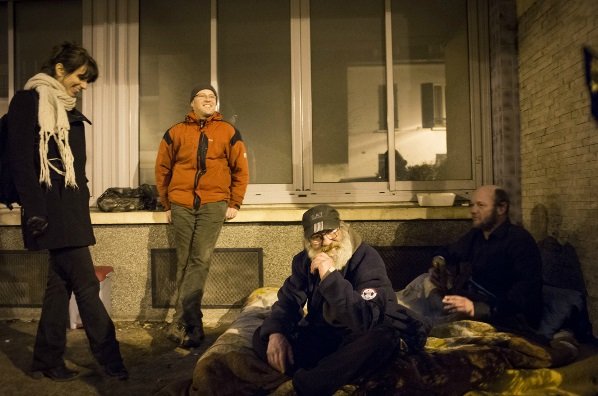
Our “Fraternibus” program is part of this “reverse mobility” approach. We want to meet the most vulnerable people, to allow them to benefit from an open, mobile place, where they can settle down, express themselves and be listened to, seek with others solutions to "live better" and deal with the challenges that come their way on a daily basis. Since 2018, a dozen of new Fraternibus have been launched to respond to the mobility difficulties encountered. Today, these Fraternibus seem to us to be particularly relevant for reaching out to those who cannot travel and thus lifting the constraints of reception in a physical place linked to the health crisis we are going through.
The main specificity of our action therefore lies in the fact of using an itinerant vehicle in order to reach invisible audiences in priority neighborhoods and in rural areas. Each vehicle can be fitted out, designed in such a way as to allow the reception of people inside it (individual maintenance via the arrangement of tables). An equipment outside will be associated with it (barnum, tables, chairs) for meetings with several people. He will be able to park in markets, squares and other areas of passage.
The material conditions will make it possible to guarantee the reception of one to several people in strict compliance with the health measures in force: physical distance, access to protective equipment (masks, hydroalcoholic gel, etc.), groups not exceeding 6 people according to set instructions...
The purpose of this itinerant vehicle is not to make up for the lack of premises in the long term, but to promote the rapprochement of people, services, local actors... and to support the emergence of sustainable responses in terms of the fight against poverty.
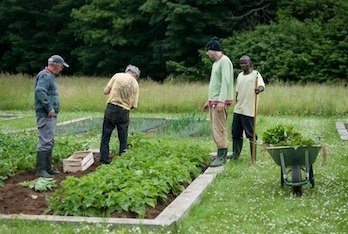
One of the advantages of this mobile device lies in its evolutionary nature. Indeed, this project will be able to expand and develop over time, in order to adapt by setting up new activities according to the needs, opportunities and partnerships that can be built. In these movements, and in order to optimize the means of action, the vehicle can thus for example be added to a room, a place including a kitchen, or an outdoor space such as a garden.
The objectives of this program:
By the end of 2023, we plan to put 10 Fraternibus into service in France, for example in Toulouse (31), Gironde (33) or even in Guadeloupe and we hope to meet more of 10,000 people.
Project reports on GlobalGiving are posted directly to globalgiving.org by Project Leaders as they are completed, generally every 3-4 months. To protect the integrity of these documents, GlobalGiving does not alter them; therefore you may find some language or formatting issues.
If you donate to this project or have donated to this project, you can receive an email when this project posts a report. You can also subscribe for reports without donating.



Support this important cause by creating a personalized fundraising page.
Start a Fundraiser