By Anne-Claire Zuani | Project manager
A context of war and an unstable situation
Just over a year ago, on February 24, 2022, Russian President Vladimir Putin officially ordered the invasion of Ukraine. The humanitarian situation quickly and extremely tense, the needs proved to be exponential and the possibilities of responses subject to significant security constraints; access to the most isolated populations remains to this day a considerable challenge in this unprecedented crisis. Throughout the year, the humanitarian presence in Ukraine continued to grow, with the number of NGOs present in Ukraine increasing from 120 to 700 according to the Office for the Coordination of Humanitarian Affairs (OCHA).
As of December 31, 2022, the United Nations High Commissioner for Refugees (UNHCR) estimates that there are more than 8 million Ukrainian refugees in Europe (half of whom are children), mainly in Poland, the first host country, and in Hungary, Romania, Moldova and Slovakia.
The period from September 2022 to February 2023 was marked by the intensification of bombardments against Ukraine's energy infrastructure, making winter particularly difficult for Ukrainians. Cuts in electricity, water, heating and communications are regular in all countries, with areas, close to the front or occupied, being able to suffer cuts lasting several days or even weeks. Access to care is particularly restricted in regions close to the front.
For these reasons, Ukrainians continue to emigrate to Europe, and returns to the country have slowed during the winter. Between February 2022 and February 2023, the number of people in need of humanitarian aid in Ukraine increased from 3 to 18 million.
Militarily, great Ukrainian advances have taken place in the Kharkiv and Kherson regions. Between September and December, Ukrainian forces recaptured more than 10,000 km² occupied by Russian forces. The recapture of the city of Kherson, the only regional capital conquered by the Russians since the start of the "special operation" is a major success for the Ukrainian army.
The liberation of these regions was accompanied by the appearance of many humanitarian needs. The people who lived through the occupation spent almost all of the winter without electricity and without means of communication. They are psychologically scarred, and the needs for emergency humanitarian aid are immense in these regions. In addition, the Russian army took care to heavily mine the areas before leaving them, making the terrain dangerous and difficult to pass.
Fighting and shelling intensified along the front line, mainly in Donbass and Kherson, causing widespread destruction, civilian casualties, and the death of several aid workers.
The period from September 2022 to February 2023 was also marked by 2 major events: the holding of annexation referendums organized by Russia in 4 Ukrainian regions (Oblasts of Donetsk, Luhansk, Zaporijia and Kherson). Following these referendums, Russia now considers that the 4 regions are part of Russian territory, and that it is now a question of "liberating" these territories.
On September 21, 2022, the “partial” mobilization was announced by Vladimir Putin, in order to add some 320,000 men to the Russian forces present in Ukraine. A new major Russian offensive in the Donbass began following this mobilization in February 2023.
In Ukraine, the instability of the situation and the impossibility of predicting the future of events make the planning of humanitarian aid particularly difficult. In the countries bordering Ukraine, the situation has stabilized somewhat. The influx of refugees is now more stable and smaller, and NGOs are working to integrate refugees into their host country, after providing emergency humanitarian aid in the first half of 2022.
Support for our international partners on the front line of conflict
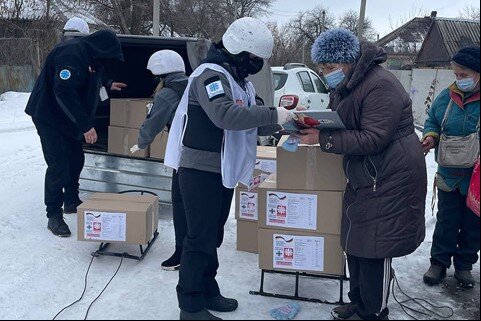
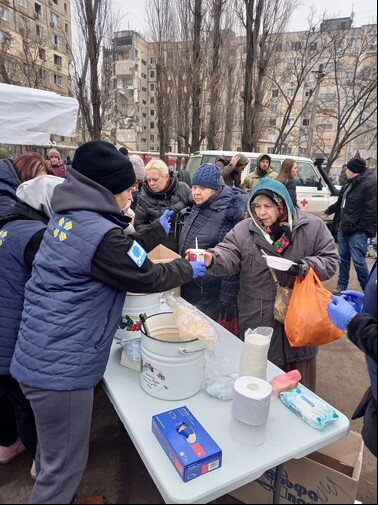
The strategy adopted during the first year of the conflict aimed to meet emergency humanitarian needs: food, health, hygiene, clothing, overnight shelter and cash, psychological support, support for displaced populations, reception of refugees and regrouping families.
Within the Caritas network, Secours Catholique-Caritas France (SCCF) contributed to the emergency calls coordinated by Caritas Internationalis from three partners, all on the front line: Caritas Poland, Caritas Ukraine and Caritas Spes.
Thus Caritas Poland was supported on 2 projects: setting up a money distribution system via prepaid cards for 2,000 households (€200,000) and support in the sectors of shelter, protection and means of subsistence, in particular through multi-purpose financial assistance for 250,000 people (€700,000).
Caritas Ukraine project (€500,000) assisted 246,400 people receiving one-off aid through food assistance, water distribution, a hygiene kit, temporary shelter and psychosocial assistance to enable them to support themselves. to their basic needs. These people will also receive financial assistance to enable them to rebuild their homes.
Caritas Spes has also been supported to assist 54,000 people who receive multi-sectoral and integrated aid in the areas of shelter (short and longer term), food security, health, as well as psychosocial issues and humanitarian information (€500,000). This assistance is provided through the mobilization of 36 more or less long-term reception centers allowing people passing through them to meet their basic needs in dignity. Secours Catholique also supported Caritas Spes by financing the rental of their new premises for the year 2023, necessary due to the change in size of the organization, offering their employees the possibility of working together in Kiev, with underground shelters available (€95,340).
At the start of the crisis, we also supported Triangle Génération Humanitaire (€150,000), a French NGO established in Ukraine since 2014, relying on three partners from civil society, including in the Donbass. The professionalism and commitment of these four partners was remarkable.
At the organizational level, we participated in the creation of an operational support and coordination team for the emergency response in Ukraine and neighboring countries during the first year of the conflict, led by Caritas Europa, and which allows a global approach to the aid to be deployed. Our organization also finances this support team: the mission of this team ends at the end of February 2023, and its functions will be taken over by Caritas Ukraine and Caritas Spes.
At the beginning of July 2022, the visit of a SCCF delegation led by Véronique Devise, our President, made it possible to express our solidarity with the populations, to better know our partners and to better understand the issues on the ground.
Following this visit, we decided to support 2 local NGOs in carrying out their projects:
Aware that the Ukrainian crisis will last, that the context is extremely changing and that the outcomes remain unpredictable, and in the desire for a long-term vision, the following strategy is proposed for the year 2023: continue to support local partners , close to the beneficiaries, and which respond to urgent humanitarian needs in Ukraine, while remaining diversified in our action. The SCCF will therefore also continue to support partners supporting Ukrainian refugees in neighboring countries (Poland, Moldova, etc.).
The mobilization of our network in France
In France, nearly 65,358 displaced persons were registered at the entrance to the national territory by the authorities between February 24 and December 1, 2022.
In order to respond as well as possible to the challenge of reception and in the extension of the joint initiatives of recent years, Secours Catholique has joined forces with the Fédération de l'Entraide Protestante (FEP), JRS-France and the Pastorale des Migrants (service of the Conference of Bishops of France) within a "Support platform for citizen mobilization for the reception of exiled people".
This platform co-financed by SCCF (€50,000) has made it possible to better respond to emergencies, to avoid dispersal but to strengthen the complementarities between volunteer networks, operators and State services: citizen accommodation, reception and urgent needs, advice administrative and legal, social inclusion, etc.
The platform produces, pools and makes reference tools/documents available. It supports the development of advocacy and also has an “Operational support for network action” function. This last function makes it possible to support citizen mobilization, in welcoming and supporting, mainly by coordinating and linking actors in the territories.
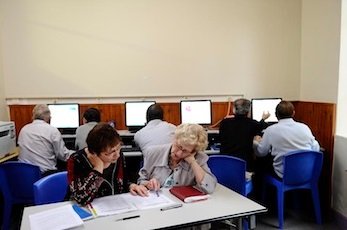
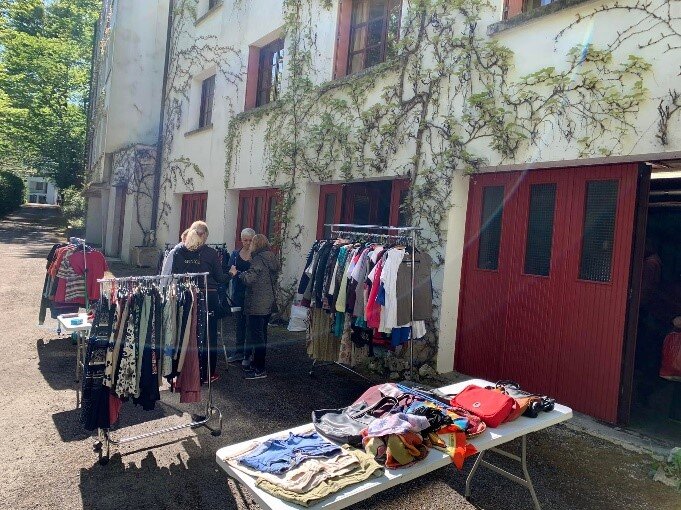
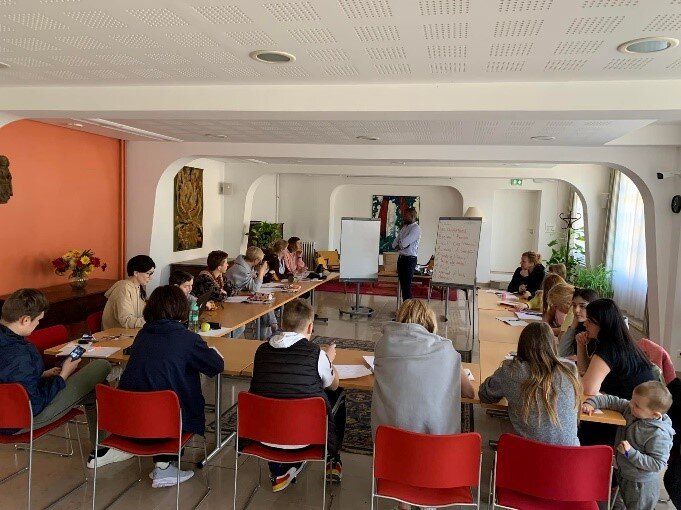
Indeed, from the very first days of the conflict, all SCCF local delegations mobilized to be able to welcome and support refugees from Ukraine, as they do with other exiles. In connection with the local authorities, in addition to the actions of the State, with the Church and its diocesan services, our delegations have found emergency accommodation and met basic needs. Even today, and although the influx of people from Ukraine has dried up and state aid has been paid to refugees, local teams continue to meet the needs of families in their daily lives:
Project reports on GlobalGiving are posted directly to globalgiving.org by Project Leaders as they are completed, generally every 3-4 months. To protect the integrity of these documents, GlobalGiving does not alter them; therefore you may find some language or formatting issues.
If you donate to this project or have donated to this project, you can receive an email when this project posts a report. You can also subscribe for reports without donating.



Support this important cause by creating a personalized fundraising page.
Start a Fundraiser