By Jack Lichten | Ecumenical Relations, ARI
After participants arrive on campus, ARI hosts a large number of classes and workshops each month as a part of the program. Participating in these classes and workshops is the purpose of traveling to ARI, and we are grateful for your support in helping ensure participants can come to ARI to join.
This report describes selection of classwork completed in the late summer and early autumn, as chronicled by Curriculum Coordinator Manosi Abe Chatterjee.
PLA starter skits
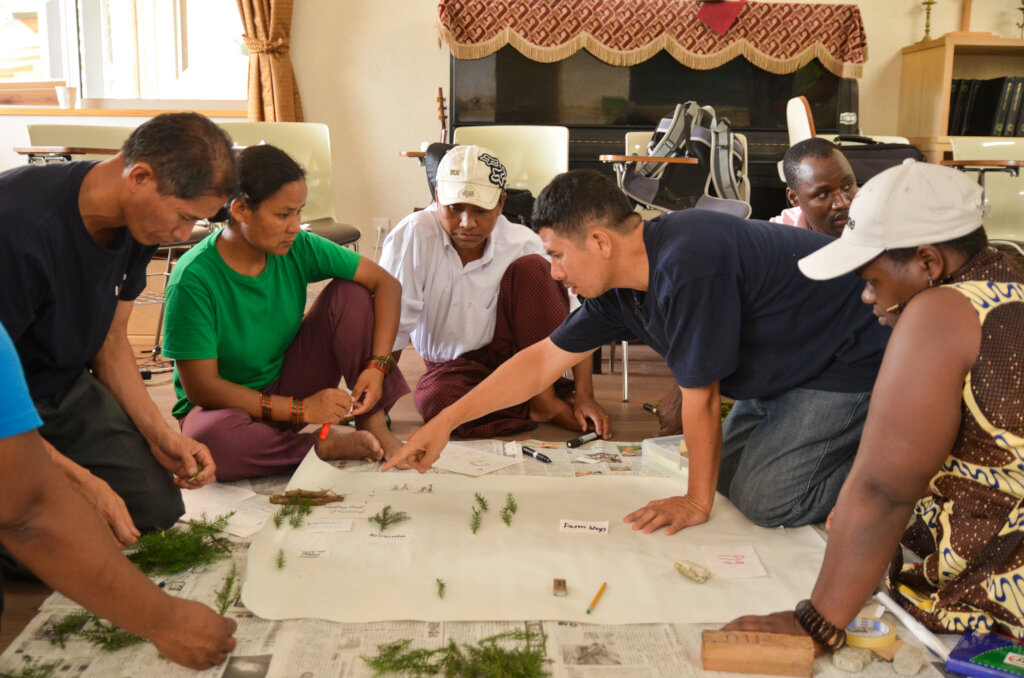
During the ARI training program, all participants partake in a Participatory Learning and Action workshop, spread across several days. In 2025, ARI staff created a new workshop segment where participants learn to create short skits called “starters” to help start a conversation on something. For example: the importance of using local resources, or creating a plan etc. This is followed by learning to facilitate using SHOWD questions
1. What do you See here?
2. What is really Happening here?
3. How does this relate to Our lives?
4. Why does this happen?
5. What can we Do about it?
Marketing class by ARI Program Graduates
Two graduates of the ARI program, Thi Thi (Myanmar) and Veh (Malawi) led a class on value-added product marketing. Thi Thi covered the purpose of food processing and the importance of being adaptable and using local resources. Additionally, she showed photos of her various food processing projects back home. Since they use mangoes at home, this was very interesting to participants. Veh covered marketing aspects - how to use materials, identify audience needs, and deal with competitors. It connected well with the work they are doing in FEAST and appreciated their sharing.
Natural farming in tropical areas (Shimpei Murakami, of Self-Sufficient Life)
This is a highly appreciated class and in this session Shimpei san shared more practical examples about cover crops, categories of crops - which is important when participants have to explain things like crop rotation or mixed cropping to farmers back at home, and seed saving. They also learned a little bit about the differences in ideas between organic farming, permaculture, natural farming and regenerative farming. There was a lot of discussion!
Visit to the Ashio Copper Mine, the start of Japan's Environmental Movements (Sakahara san)
Participants learned about the Ashio Copper Mine incident which is one of the major environmental tragedies that led to many laws and regulations. It is a unique opportunity to be located in Tochigi where this occurred. Sakahara san who has been sharing about the incidents for many years at ARI also led us to the tour which covers the entire flow of Watarase river from Ashio, down to the basin. Steven and Satomi joined this trip for the first time and learned alongside participants. Many Japanese people (including participants) know about the incident but have never visited. This is a precious chance and through Sakahara san we also see the journey of nature’s healing. Mountains that were brown before are now much greener, he says. Most importantly, participants strongly appreciated and respected his clear statements: “Japan does not produce or mine copper now but is now oppressing other countries (that are mining copper for Japan) - they are exporting pollution. I am deeply ashamed and guilty about this.” Many participants realized the enormity of environmental damage and understood more deeply, the need for environmentally friendly farming practices.
Dignity (Jeffrey Mensendiek, of JF Oberlin Univ.)
The second session was conducted and participants enjoyed discussing more deeply the aspects of “connection” in Dignity. There were interesting discussions on “collective dignity” or “community dignity” and how that is different from individual dignity. Jeffrey and his team from Obirin also continued their interviews to deepen the content for their dignity textbook. This time they interviewed Sarah and Chichi. They were very touched by their strong and passionate stories that have led them to ARI so far. Sarah herself was unsure about being interviewed but after it, she was very happy and said it was a good opportunity for her to realize dignity within her life and work.
Rice Harvest
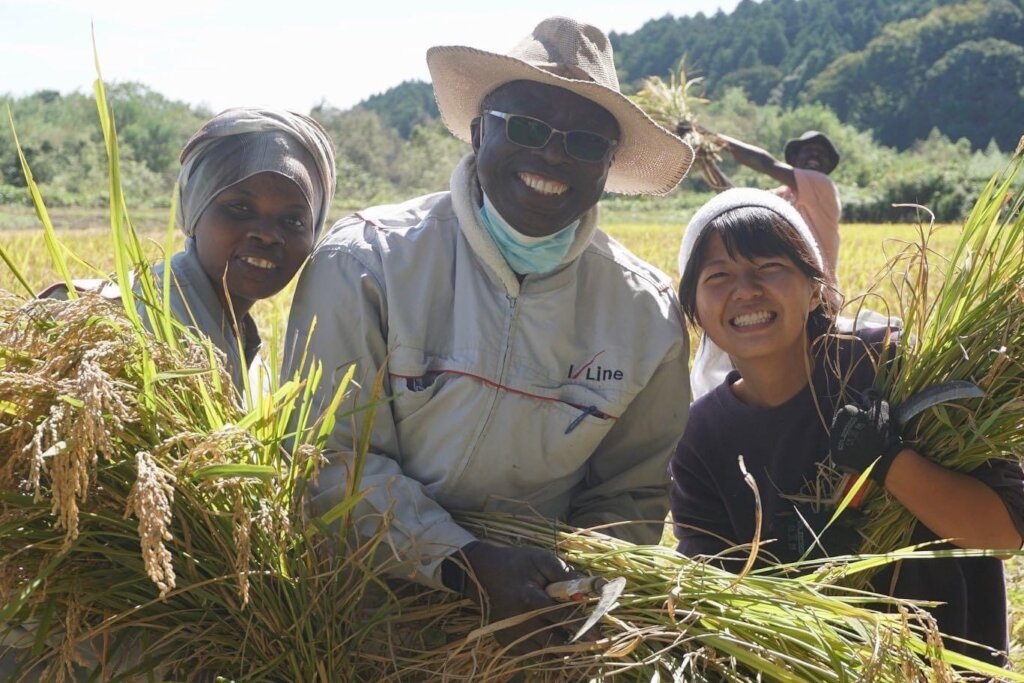
This year’s rice harvest was shortened to half a day for the community but it was highly enjoyable. There was a dance to commemorate the event and participants said they were proud to harvest the rice they transplanted. Especially for those who do not grow rice in their communities, this was a unique chance that they were extremely grateful for.
Regional History: Nasu Canal (Yukiko Oyanagi)
This class and observation trip was led by ARI curriculm staff Yukiko Oyanagi about the history of the Nasu canal, built in the late 19th century and which led to the agricultural development of the Nasu region, where ARI is located. It was extremely well received by participants. They were impressed by the grit and determination of local leaders and inspired by how small actions move people to accomplish big goals. Many also saw Yukiko san and her energy as inspiring!
Peace and Reconciliation Workshop (Keiko Holmes)
The peace and reconciliation session by Keiko Holmes was open to all community members. I have observed how this session always generates a lot of discussion. Since I was unable to join, I heard various viewpoints from those who did join. Some saw her strong conviction and commended her actions towards reconciliation. Some others had questions about the true meaning of reconciliation itself. Faith, power, politics, language: they are important factors in past and present conflicts. I am always intrigued by how people from different contexts respond to her sharing. A suggestion I received was adding a discussion session after hers (on the following day) so that those who want to digest the message more can talk, and those who want to learn more historical facts or perspectives can do so as well.
Monthly Reflection and Appreciation
For this monthly reflection session, I started with a basic question: reflect on the past month and share any highlights (positives or negatives). Many shared about the classes mentioned above. Rebecca led a short activity in the middle as an energizer. Since some of the participants mentioned that they are still homesick and feel like they are not doing their best, we did a round of appreciation where each person wrote words of appreciation for one another. Each member now has a list of things that can bring them joy and positivity.
Links:
Project reports on GlobalGiving are posted directly to globalgiving.org by Project Leaders as they are completed, generally every 3-4 months. To protect the integrity of these documents, GlobalGiving does not alter them; therefore you may find some language or formatting issues.
If you donate to this project or have donated to this project, you can receive an email when this project posts a report. You can also subscribe for reports without donating.



Support this important cause by creating a personalized fundraising page.
Start a Fundraiser