By Vickie | Lifeline Services Director
Dear Friend,
The number of domestic violence consultations in Japan grew to a record 190,030 in the fiscal year through March, as the coronavirus pandemic continues to place added stress on couples and families. By month, March saw the highest number of consultations at 17,320 in fiscal 2020, followed by 17,248 and 17,063 in June and May, respectively.
These are some of the raw voices of survivors of domestic violence in Japan collected by the All Japan Women’s Shelter Network.
“My husband became a home-based worker, and my children were out of school, so my husband became stressed and began to physically assault the children and me,” shares an anonymous woman regarding her current situation due to coronavirus.
“I had been preparing to leave home with my child due to domestic violence for a long time, but now that my self-employed husband is out of work and has to stay at home all the time to monitor the family, it has become difficult to evacuate, and I am in despair,” shares another woman. -
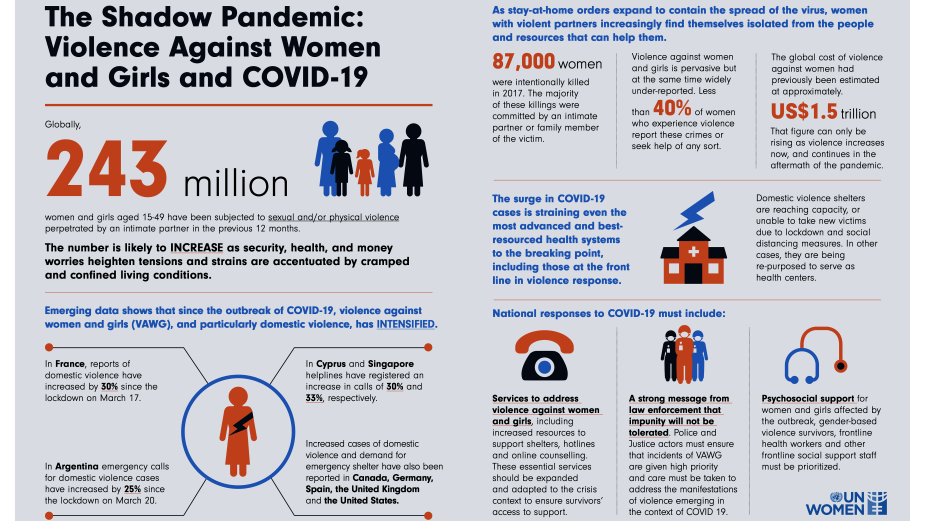
The COVID-19 pandemic has affected the whole world. While the world is still struggling to contain the virus and vaccinate everyone, it has become apparent that further issues lurk behind closed doors for victims of domestic violence. The UN has referred to this as a “Shadow Pandemic” (Mlambo-Ngcuka, 2020)
Here in Japan, domestic violence is often seen as a private matter. A survey in 2018 found only 2.2% of the victims of spousal abuse actually contacted the police. In one survey, 58.2% of the survivors injured did not feel their problem warranted police help. Another 34.3% did not seek police intervention because they believed themselves partly at fault, while 22.3% felt police intervention would be pointless. Many did not recognize that they had been victimized.
The government announced the fifth state of emergency in July 2021, mainly affecting the Tokyo metropolitan area and the Kansai region, and operators of domestic violence hotlines such as TELL expect consultations will continue to increase.
The TELL team continues working hard every day to ensure the Lifeline is up and running and that we can share needed resources with the community. In March, 40 new volunteers were accepted into the Lifeline Support worker training program, and 35 have graduated to solo chat and phone shifts. Additionally, we have increased the number of shifts offered each month and increased the number of volunteers available to support users in need at crucial times.
It is crucial that individuals know they can reach out to TELL and that there will be someone to listen, help them access shelters and develop safety plans if necessary. Studies have shown that suicide can be prevented when a person has someone who will listen to them.
In response to the inordinate impact women have faced during this time, Supporting the Lifeline directly helps the many women who need it now.
Many thanks for your support,
Vickie
Project reports on GlobalGiving are posted directly to globalgiving.org by Project Leaders as they are completed, generally every 3-4 months. To protect the integrity of these documents, GlobalGiving does not alter them; therefore you may find some language or formatting issues.
If you donate to this project or have donated to this project, you can receive an email when this project posts a report. You can also subscribe for reports without donating.