By Communications Team | USA for UNFPA
Although heavily pregnant and in pain, Kaindo waited patiently along with dozens of other women on a row of benches under a tarpaulin tent.
UNFPA provides pregnant women in the Democratic Republic of Congo and around the world with emergency birth kits, so they can safely deliver their babies even in the most dire emeregencies. Your gift of $25 today could provide 5 women like Kaindo with an emergency birth kits.
The women were hoping to be seen by a team of midwives at a mobile clinic run by UNFPA, the UN sexual and reproductive health agency, set up in the Bulengo camp for people displaced by fierce fighting and relentless insecurity in the Democratic Republic of Congo.
For Kaindo, the visit would turn out to be much more eventful than she thought. “At the antenatal consultation, she had intense back pains and felt unwell,” said Dorcas, one of the clinic’s midwives.
She was swiftly transferred to the examination room, where another midwife, Solange, tried to identify the problem.
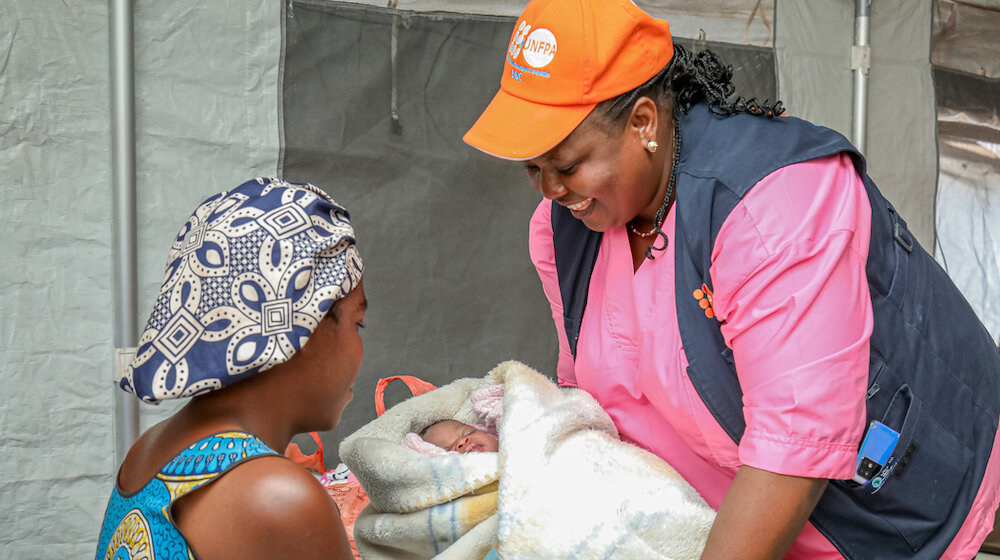
“When she arrived, we wanted to examine the cervix,” said Solange. “But suddenly her water broke and I noticed the baby's head... 15 minutes later, she gave birth.”
Believing she had another month to go, the young mother-to-be was surprised to learn she was in fact full term at nine months pregnant. Luckily for mother and baby, the delivery went smoothly and the mobile health team ensured they were safe to be released.
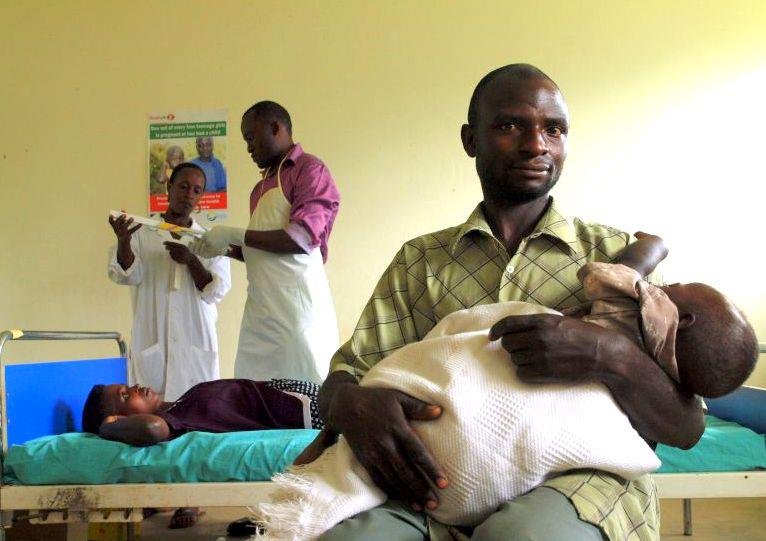
One of the only options for thousands of women and girls in eastern Democratic Republic of Congo to access essential sexual and reproductive health care, the clinic is one of three set up by UNFPA in displacement sites. The facilities support pregnant women and newborns as well as providing medical treatment for survivors of violence and referrals to legal and psychological services as needed.
The Bulengo camp is currently sheltering over 100,000 people displaced by the deepening crisis in eastern areas of the Democratic Republic of the Congo. Millions have been caught up in the violence and are increasingly vulnerable to climate disasters, disease outbreaks and a severe lack of basic services.
For the estimated 220,000 pregnant and displaced women, of whom more than 4,500 will give birth each month with no safe refuge or secure access to health care, the situation is critical.
Supporting an average of four deliveries per day, the presence of midwives at the mobile clinic can often mean the difference between life and death. So far for every pregnant woman in this displacement camp, it has meant life.
A contribution of $400 could equip midwives like Dorcas and Solange with the supplies and medicines they need to guide 50 women through safe deliveries.
Since it was set up in February 2023, the clinic has recorded zero maternal deaths – a staggering achievement in itself, but especially so in the Democratic Republic of the Congo, where three women die every hour during labour or from pregnancy-related conditions – one of the world’s highest maternal mortality rates.
This year, UNFPA-supported health facilities and mobile clinics have made childbirth safe for more than 30,000 women in eastern provinces, with some 15,000 women accessing mobile clinics like the one Kaindo used.
Skilled midwives are available and equipped to meet women's and newborns’ needs 24 hours a day, every day. “It's a relief for pregnant women and survivors of violence – they can now access health care without having to travel long distances,” explained Sifa, one of the midwives.
For $90, you could give two women everything they need to care for themselves and their babies after birth.
“As an internally displaced person myself, working at the mobile clinic means I can continue to practise my profession and assist these displaced women," Sifa said.
In the Ituri, North Kivu and South Kivu provinces, some 5.5 million people are internally displaced, urgently in need of access to functioning health facilities, contraception, post-rape support, and emergency obstetric care. Around 2.2 million pregnant and breastfeeding women will also face acute malnutrition in 2023.
Even where these services are available, reaching them can be impossible or fraught with danger. The consequences are far-reaching: More women could die during pregnancy and childbirth and there are increased vulnerabilities to sexually transmitted infections, perpetuating cycles of poverty and gender inequality.
Project reports on GlobalGiving are posted directly to globalgiving.org by Project Leaders as they are completed, generally every 3-4 months. To protect the integrity of these documents, GlobalGiving does not alter them; therefore you may find some language or formatting issues.
If you donate to this project or have donated to this project, you can receive an email when this project posts a report. You can also subscribe for reports without donating.



Support this important cause by creating a personalized fundraising page.
Start a Fundraiser