By Communications Team | USA for UNFPA
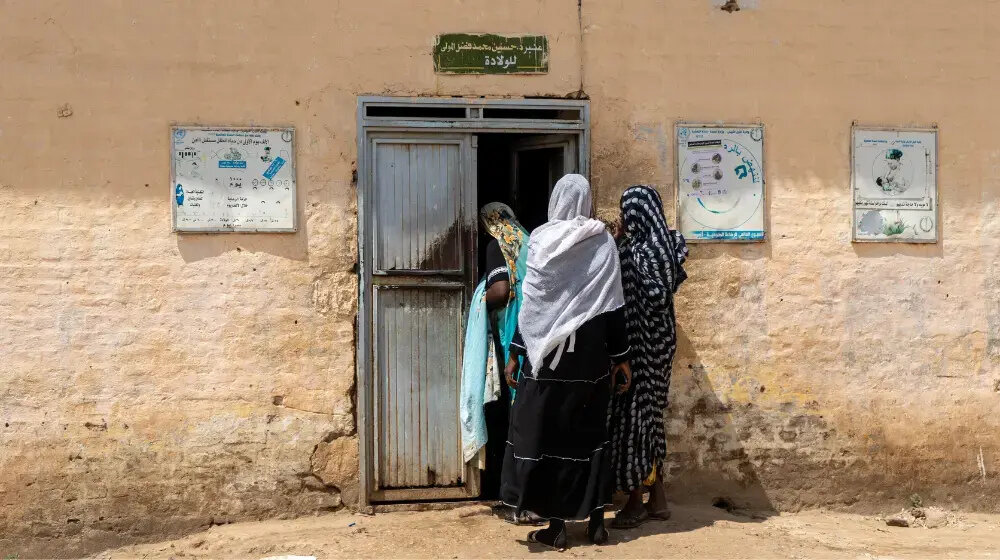
WHITE NILE STATE, Sudan — In the heart of Sudan’s White Nile State, Kosti Maternity Hospital stands as a beacon of hope. This vital facility—supported by UNFPA, the United Nations sexual and reproductive health agency—is the main referral point for the region and a lifeline not only for the local community but also for more than a quarter million internally displaced people across the state. The hospital manages an average of 15 childbirths every day and thousands of deliveries annually.
 Midwife Fatma has witnessed the changing landscape of healthcare as crisis has taken hold. ©UNFPA Sudan
Midwife Fatma has been a pillar of Kosti Maternity Hospital since 1974 and has witnessed the ebb and flow of life—and the changing landscape of health care—over five decades.
“Nowadays, natural childbirths are fewer than cesarean sections,” she observed, noting a shift in obstetric practices.
More recently, she has seen a surge in patients affected by the country’s insecurity. Many of her clients have been displaced by war, and she has also seen women struggle with the economic fallout of the conflict.
“Some women come without money. We pay out of our pockets to help them with childbirth costs,” Fatma said. Her hope is that the hospital can receive more support for supplies and resources to help women access necessary tests and treatment.
The care Fatma provides has made an enormous difference.
“I am happy about the services provided here and the care from the midwives,” said Faj, a 25-year-old mother of five from Tawila.
All of her children have been born at Kosti Maternity Hospital, which safely managed each of her deliveries—including one involving serious complications. “My biggest problem was the bleeding, but thanks to the medical care at the hospital, they helped me,” she said.
A gift of $400 can equip a midwife and maternity ward with the medicines and supplies they need to support 50 women through safe deliveries—even in the most challenging humanitarian settings.
 Faj has been assisted through all of her five deliveries at Kosti Maternity Hospital. ©UNFPA Sudan
As Sudan’s war—now in its third year—grinds on, the challenges facing the health system are immense. Increased demand due to the influx of families fleeing conflict, persistent electricity outages during critical surgeries like cesarean sections, and severe shortages of equipment and supplies threaten to unravel an already fragile system.
UNFPA has stepped in to support the hospital with essential medical equipment, including an anesthesia machine, incubators, oxygen concentrators, and an ultrasound unit. These supplies have strengthened the hospital’s capacity to provide lifesaving maternal and newborn care, reduce delays in emergency surgeries, and save the lives of babies born prematurely.
UNFPA’s installation of a solar power system has also provided a much-needed alternative energy source, helping keep essential services running during frequent blackouts. Still, the hospital relies on fuel-powered generators to bridge the gap—underscoring the urgent need for long-term investment in stronger infrastructure and reliable power.
With a contribution of $150, you can help provide supplies, medications, and equipment to clinics like Kosti Maternity Hospital so health workers can safely manage obstetric emergencies.
 Solar power has helped provide critical electricity during too-frequent power outages. ©UNFPA Sudan
The consequences of Sudan’s war have been devastating. Tens of thousands of people are reportedly dead. Hundreds of thousands face famine. Nearly 7.5 million people who have fled their homes since April 2023 remain displaced.
The country’s infrastructure—including its health system—has been decimated. Hospitals and clinics are overwhelmed by the sheer number of families fleeing violence, and many facilities are struggling to function amid shortages of power, personnel, and essential medical supplies.
Between January and August 2025, UNFPA and its partners reached more than 586,000 people in Sudan with essential services, including maternal and emergency obstetric care. But the scale of need far outpaces available resources.
Every dollar makes a direct impact on the health and safety of women and newborns in Sudan. For $50, you can provide 10 Emergency Birth Kits to women like Faj—simple, lifesaving tools that can allow a safe delivery even when access to a hospital is impossible.
Project reports on GlobalGiving are posted directly to globalgiving.org by Project Leaders as they are completed, generally every 3-4 months. To protect the integrity of these documents, GlobalGiving does not alter them; therefore you may find some language or formatting issues.
If you donate to this project or have donated to this project, you can receive an email when this project posts a report. You can also subscribe for reports without donating.



Support this important cause by creating a personalized fundraising page.
Start a Fundraiser