By Ana Rivera | Communications coordinator
The creation of suitable play spaces has become a fundamental tool for promoting the holistic development of children under six years old. In the preschool stage, play is not only a form of entertainment but also an essential means of learning. Through spaces designed for exploration, imagination, and creation, children develop cognitive, emotional, and social skills that lay the foundation for their future learning.
Play and recreational spaces foster early stimulation, allowing children to discover the world through meaningful experiences. In these environments, play promotes curiosity, strengthens creativity, and stimulates the development of language, motor skills, and problem-solving abilities. These spaces also encourage socialization, teaching children to share, cooperate, and build positive relationships with others.
Reading areas and educational materials spark an early interest in stories, words, and knowledge. In this way, educational centers not only offer care and education, but also opportunities for each boy and girl to explore their potential in a safe, stimulating and possibilities-filled environment.
Furthermore, having play areas that encourage movement is key to strengthening physical development in early childhood. Spaces that allow for active play help improve coordination, balance, and gross motor skills, while also fostering healthy habits from an early age. These areas also stimulate imagination, as movement and free play allow children to create stories, explore their environment, and express themselves freely, thus reinforcing physical exercise as a natural part of their development.
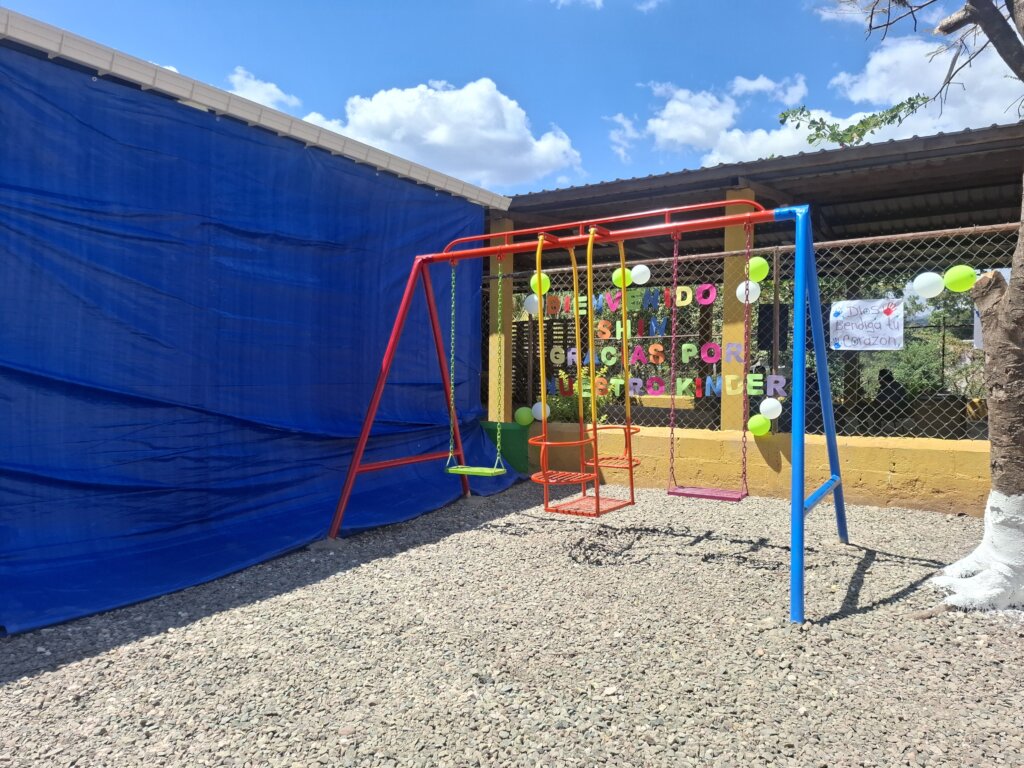
In our effort to strengthen early childhood learning environments, we established four play centers and two recreational spaces located in four departments. This process aims to highlight how these environments contribute to the holistic development of children, promoting play, creativity, physical activity, and learning in safe and stimulating settings.
Playrooms were set up at:
• Francisco Morazán Kindergarten in Los Vaditos Petoa, Santa Bárbara
(18 students)
• Gracias a Dios Pre-Basic Educational Center in Cofradía, Cortés
(29 students)
• Paula Zepeda Childcare Center in Tegucigalpa, Francisco Morazán
(94 students)
• José Trinidad Cabañas Pre-Basic Educational Center in San Pedro Sula, Cortés
(20 students)
Recreational games were established at:
• Arcoiris del Saber Kindergarten in Siguatepeque, Comayagua
(27 students)
• Bethesda Pre-Basic Educational Center in El Rosario, Comayagua
(54 students)
Project reports on GlobalGiving are posted directly to globalgiving.org by Project Leaders as they are completed, generally every 3-4 months. To protect the integrity of these documents, GlobalGiving does not alter them; therefore you may find some language or formatting issues.
If you donate to this project or have donated to this project, you can receive an email when this project posts a report. You can also subscribe for reports without donating.