By Ray Stranske | Board Chair
Change is coming. It’s slow, but like water spilling over a dam, change will have its way. Currently only one girl in a hundred finishes high school in South Sudan. However, with encouragement and a modest scholarship, girl by girl, they are completing 12th grade, graduating and passing their required national exams. Now 90% of those entering the Project Education South Sudan (“PESS”) scholarship program are completing high school. Why the dramatic change?
In South Sudan, the educational system, and the expectations of students – especially girl students – are different than in the US. In South Sudan, with a brand-new economy and government (the country is only 7 years old), the public schools do not deliver. Teachers are not only underpaid, but often not paid at all; the teachers then do not show up at school, and students don’t know whether to come or not. Girls are not expected to finish school. With a dowry system that is hundreds, if not thousands, of years old, the value of a young girl to her family is in learning to do household chores, taking care of younger siblings, and preparing for a marriage that will bring a much-needed financial bonus to the family (often paid in the form of cows). As financial times become more desperate, families often push for earlier receipt of this financial bonus, which translates into younger marriages for girls, and you guessed it, the end of formal education. Girls drop out of school to marry and begin families of their own. Our solution: offer scholarships to help girls go to private high schools, then provide tutoring, and support programs so girls can encourage each other to succeed.
As girls begin to taste the joy of learning, and as they understand the potential to change their world, they begin to dream. In addition to becoming moms and wives, it dawns on them that they can become lawyers, doctors, accountants, pilots, and political leaders. They talk to their friends. They share their ideas. Their new view of themselves becomes a contagion. The pent-up energy of water filling the reservoir spills over the dam. They are unstoppable.
Listen to things the girls say in recent student essays, responding to this question: How will local and national governments improve with more representation of women and other underrepresented peoples?
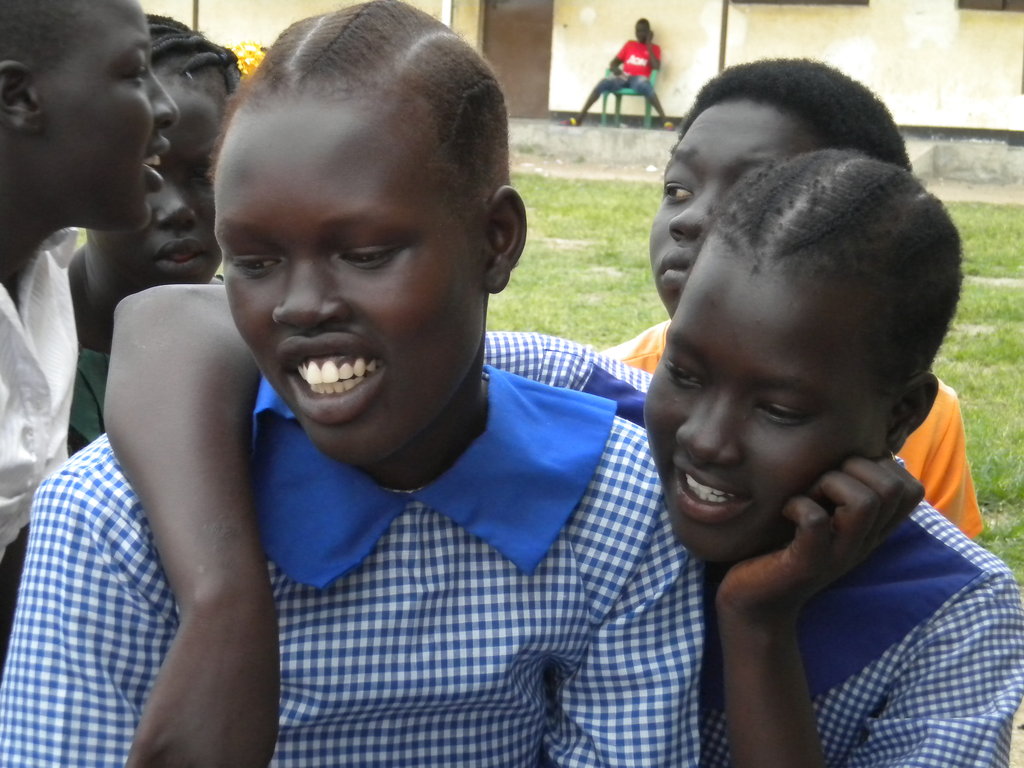
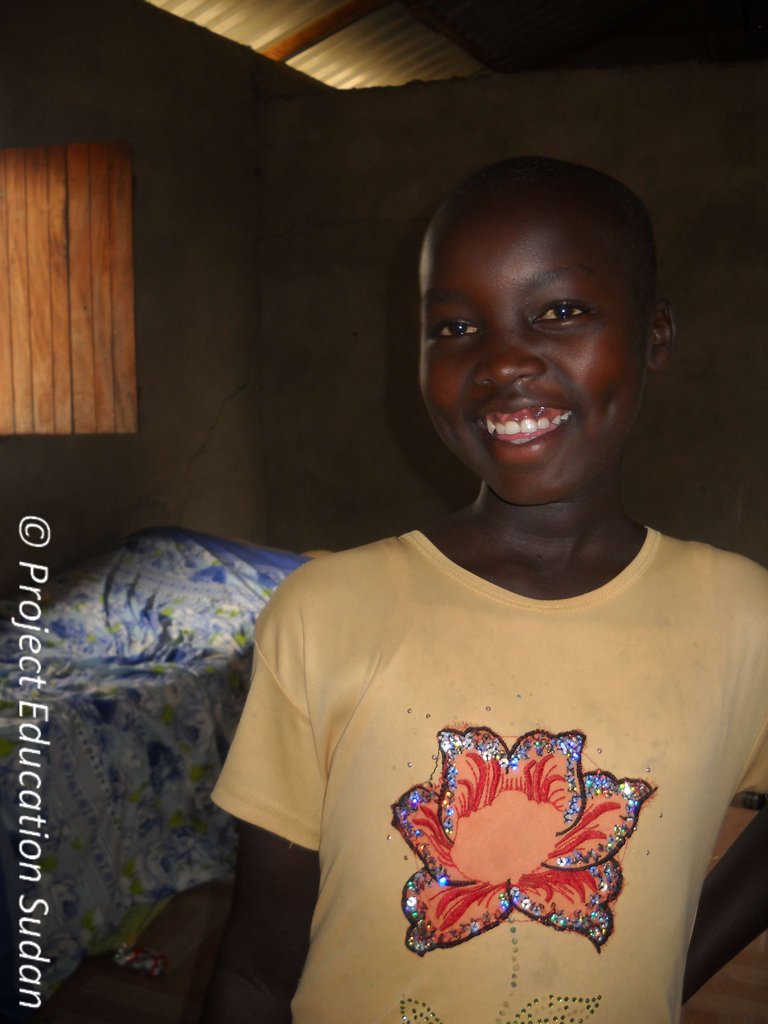
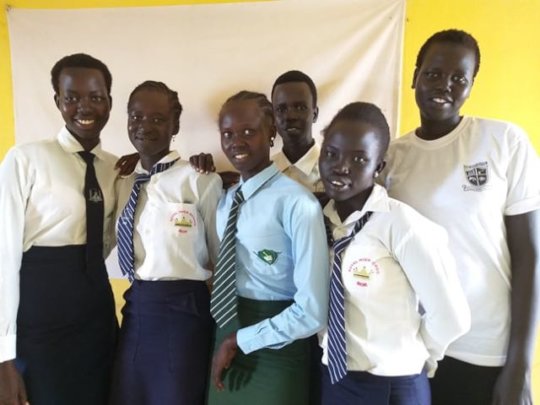
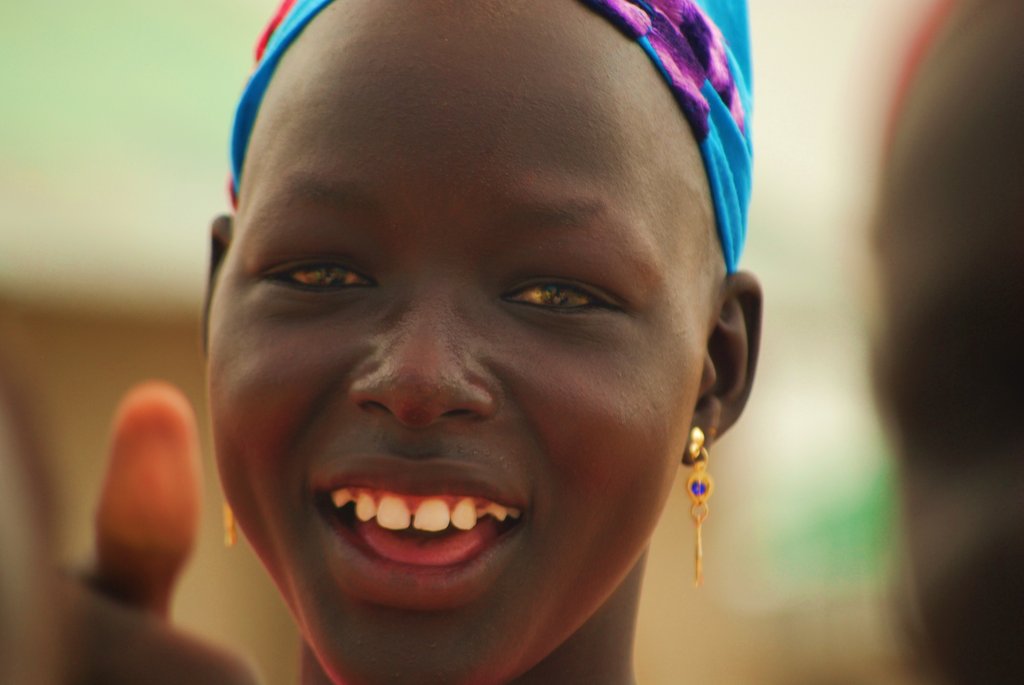
Aluel (shown in the photo): “I do believe more representation of women will… help stop violence against women, encourage girls, increase child education, create more positions for women in national and local government, and give women a voice to talk in public and equally share power in governance. More educated women will help in community development.”
Akuek: “…girls now have been part of quality education and are taking their careers seriously and hoping to get well paid jobs like being lawyers, doctors and many more.”
Deborah: “All human beings have rights and I believe women have rights to own things and to voice their opinion like men. They have the right to talk in public concerning community needs.”
Awel: “We need equality, and when boys and girls are considered equal, I’m hoping together, we can bring better and productive development into our young nation of South Sudan. I think our leaders whether at the community or at the state level should represent women and become a voice of voiceless women in our societies across South Sudan.”
Nyanroor: “In most cases in South Sudan women are not well represented either at the community or national level… If we have a female leader [in our state of Jonglei] she will treat women and other underrepresented people well and therefore equality will be there for all.”
Project reports on GlobalGiving are posted directly to globalgiving.org by Project Leaders as they are completed, generally every 3-4 months. To protect the integrity of these documents, GlobalGiving does not alter them; therefore you may find some language or formatting issues.
If you donate to this project or have donated to this project, you can receive an email when this project posts a report. You can also subscribe for reports without donating.