By Kenji Saito | Representative Director
Please find a Japanese version of this report here.
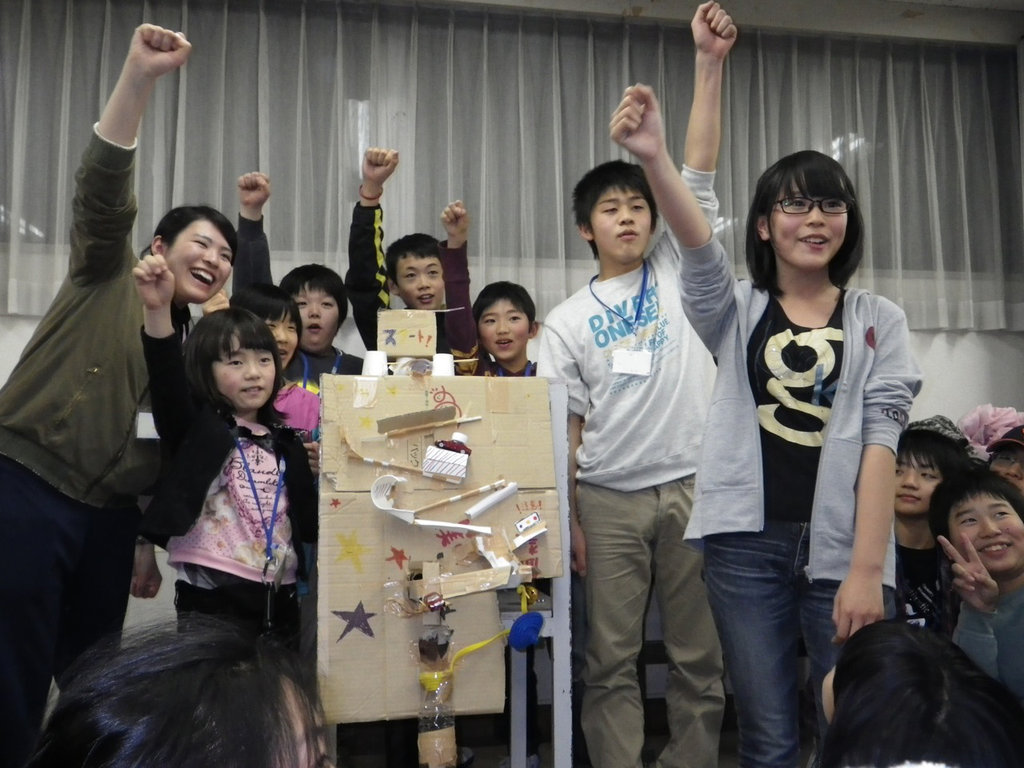
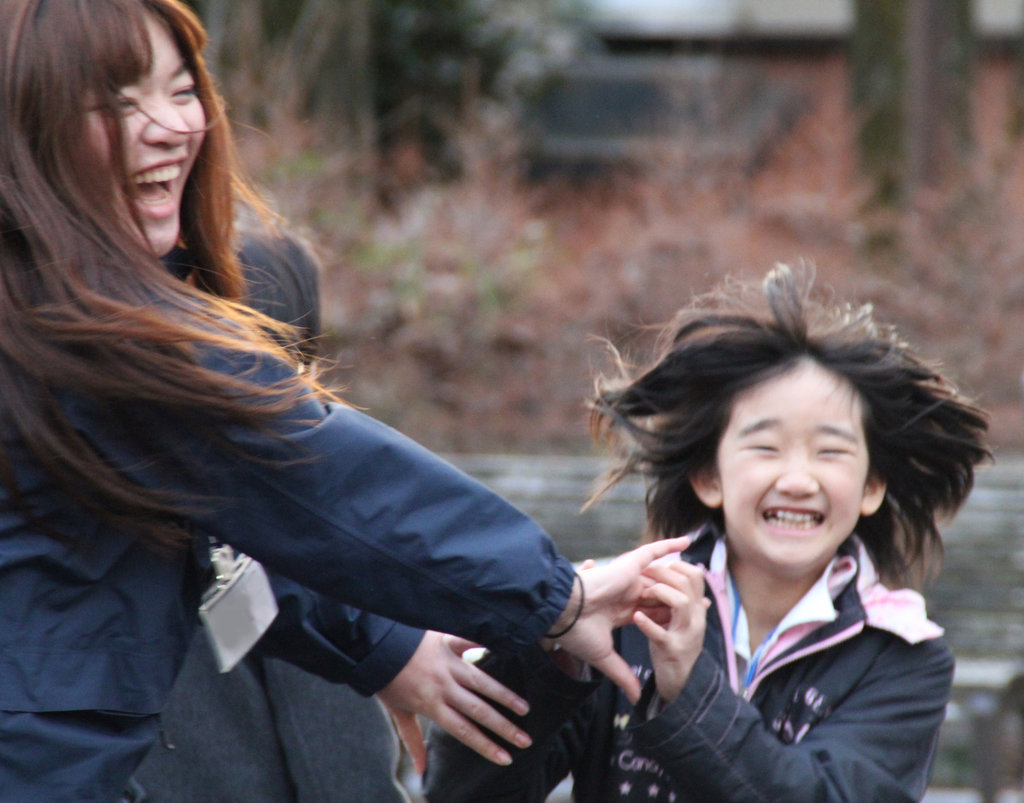
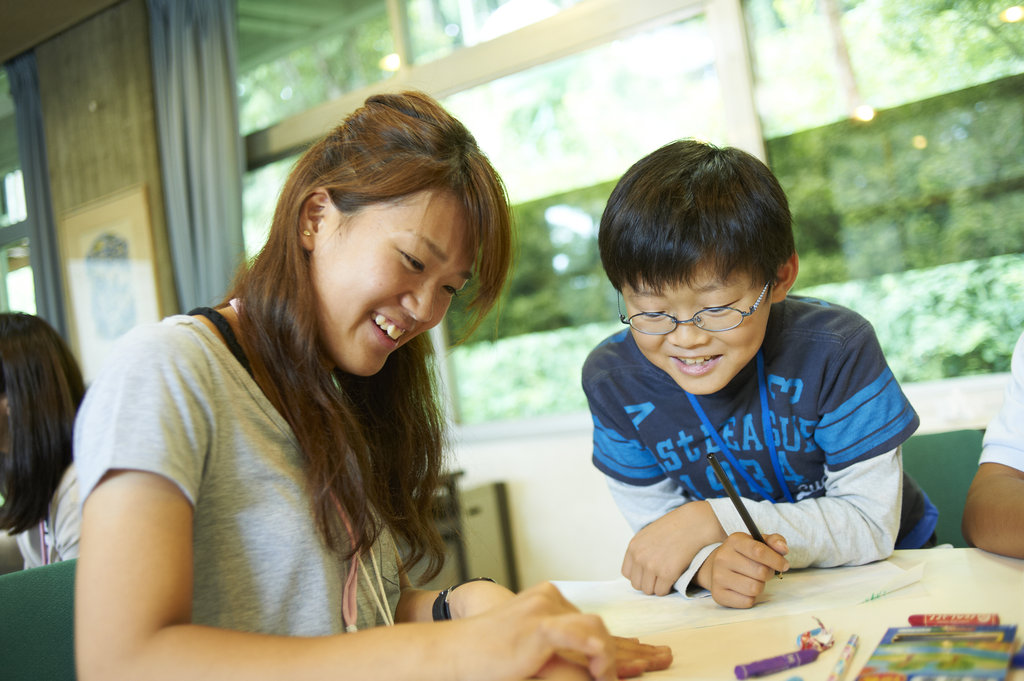
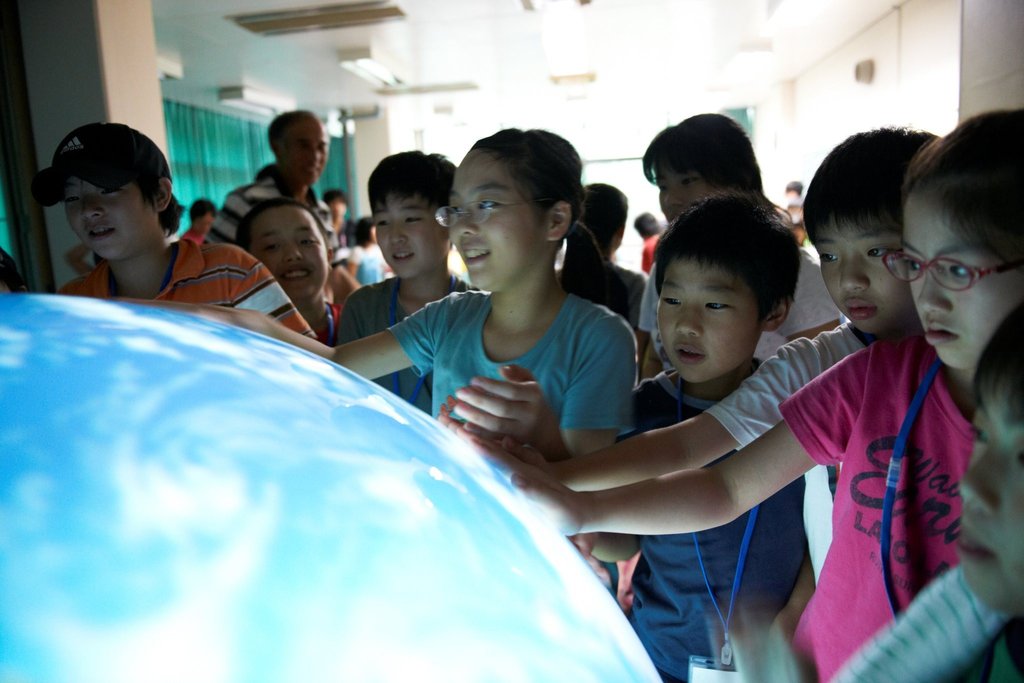
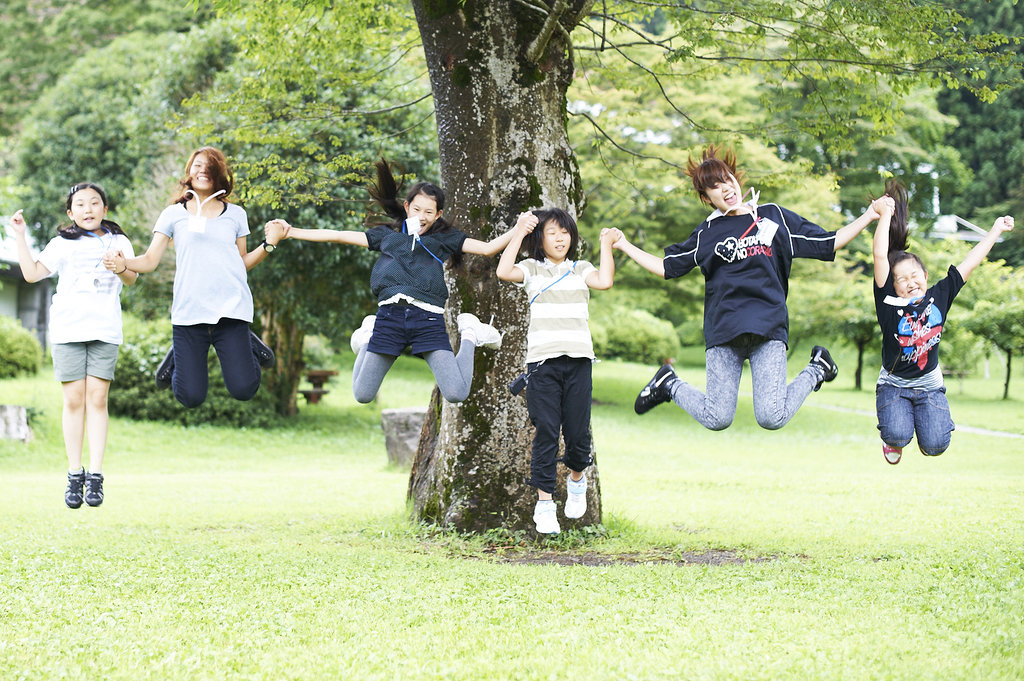
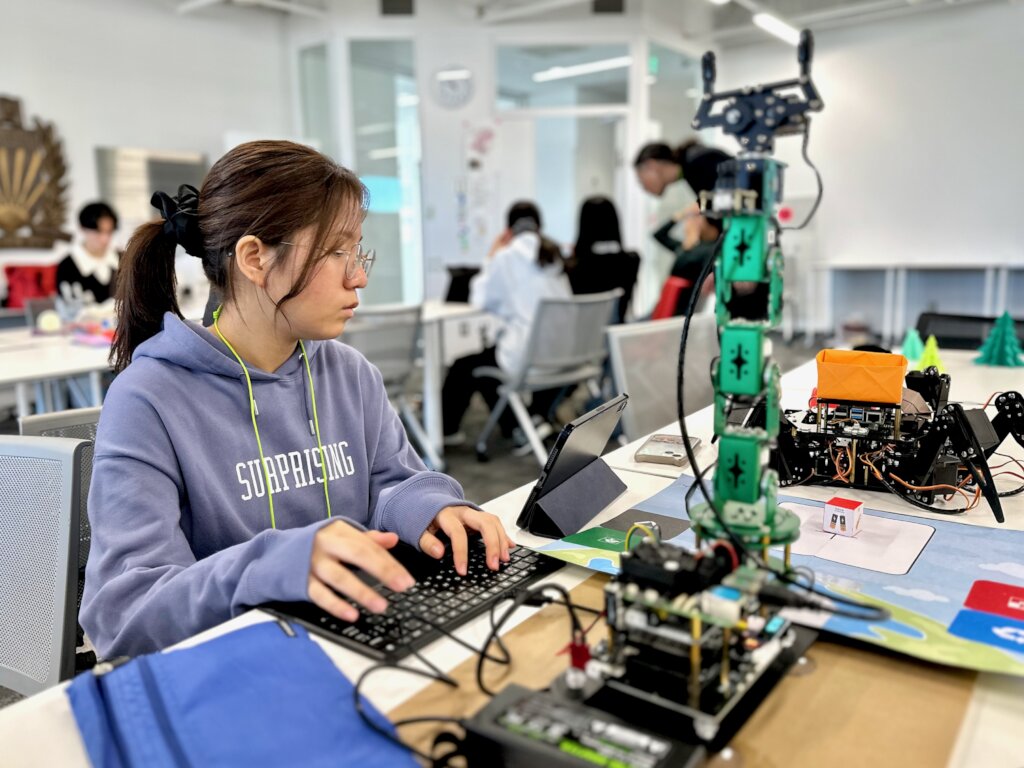
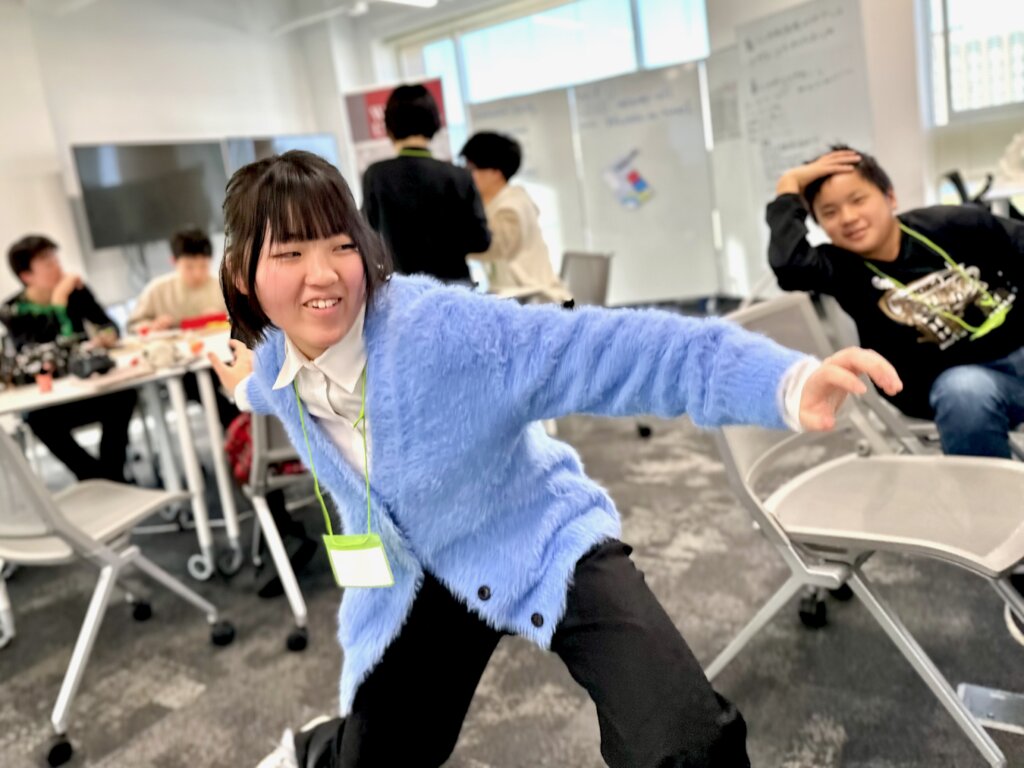
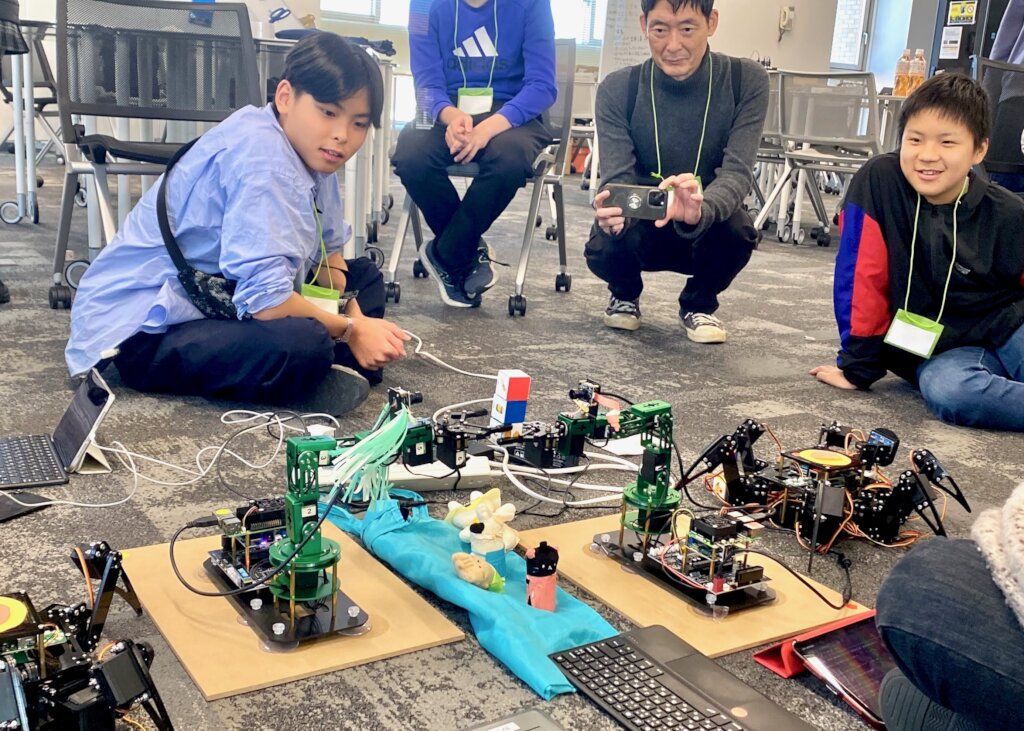
During Japan’s three-day weekend in January 2026, Academy Camp once again visited Waseda University with 17 children, including seven high school students who also played active roles as part of the staff. This time, they came to design and play the future as games. The children were divided into six teams, paired two teams at a time, and using two robot arms and two hexapods each, they took on the challenge of turning the infrastructure of future living into games.
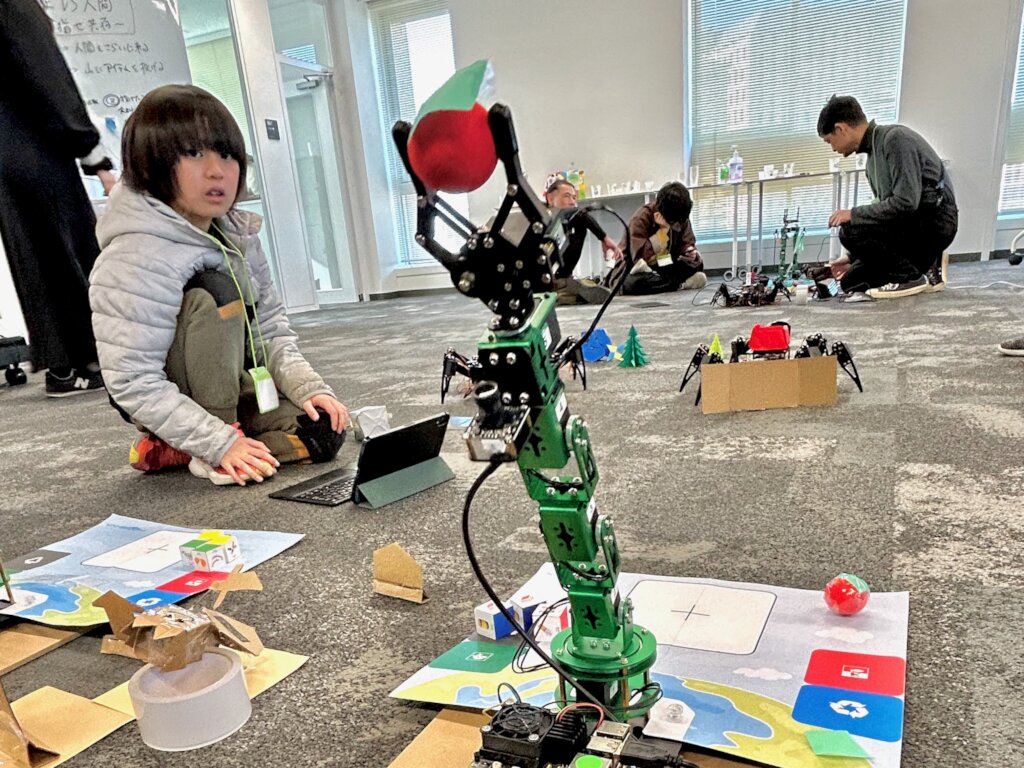
Robot arms can grasp objects and throw them. Throwing is actually a bit difficult and requires programming, but through so-called vibe coding, in which the children talk to the robot in Japanese about what they want it to do, they repeated trial and error and eventually managed to get the robot arm to toss a ball just a little. Meanwhile, the hexapods can carry objects on their backs.
By combining these robots and their movements, the children came up with three games. One was a game in which cargo is relayed across a valley filled with poisonous gas using two robot arms. It is nerve-wracking when the cargo is literally handed from one robot arm to another across the valley.
The second game was about coexistence between bears and humans. By throwing food into a forest where bears live, the risk of bears coming into towns and attacking people is reduced.
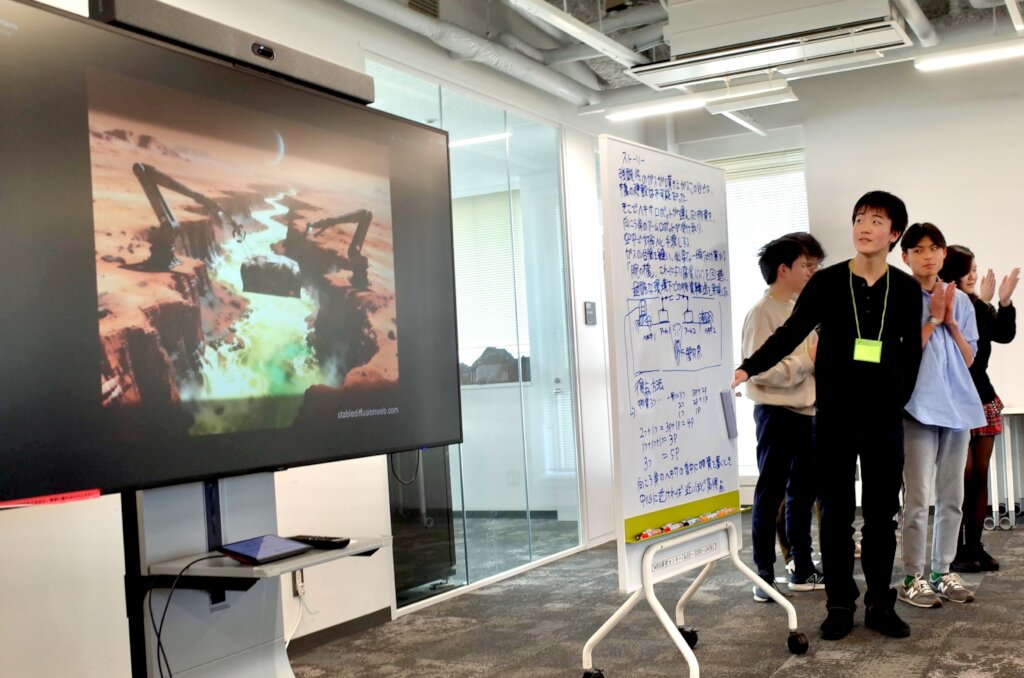
The third game was set on Mars: a survival game in which ice is mined from an ice-covered crater and transported to a base to be turned into water.
Taking on the difficult challenge of turning everyday infrastructure into games, the children brought their natural creativity to life and created such engaging games. While everything moved well during development and rehearsals, each game failed to some extent during the final demonstration. Well, that happens all the time. Don’t worry about it!
Failure happens because you take on challenges, and failure is something to be proud of. And the key to accomplishing something is to analyze and break down what you want to do, overcome each individual challenge, and keep going until it works. Through this camp, the children likely re-experienced and learned firsthand these fundamentals that are second nature to challengers. If they also came away with the feeling that by solving problems through goals, rules, and fun, and by playing with the world as if creating games, they might be able to change the future—then running this camp was truly worthwhile.
Links:
Project reports on GlobalGiving are posted directly to globalgiving.org by Project Leaders as they are completed, generally every 3-4 months. To protect the integrity of these documents, GlobalGiving does not alter them; therefore you may find some language or formatting issues.
If you donate to this project or have donated to this project, you can receive an email when this project posts a report. You can also subscribe for reports without donating.



Support this important cause by creating a personalized fundraising page.
Start a Fundraiser