By Dr. Laila Risgallah Wahba | Project Leader
2018 was the year I discovered Pinterest. Preparing for a baby shower, a bridal shower, Sunday school activities and landscaping our yard made me addicted to Pinterest. So much so that just before our grandaughter’s baby shower, my friend Debbie told me, “Laila, get off Pinterest”.
Looking at Pinterest pictures gives the impression that the world is picture perfect. It’s sort of like the pictures people post on Facebook. The message is, “Life is good, babe. I don’t have a care in the world”.
Yet, we do not really live in a Pinterest world. The world we live in is far from perfect.
Every one of us has some sort of hurt, habit or hang-up. Yet, we try to keep it from the world.
Why are our loved ones or we reluctant or afraid to tell about our hurts? About our abuses?
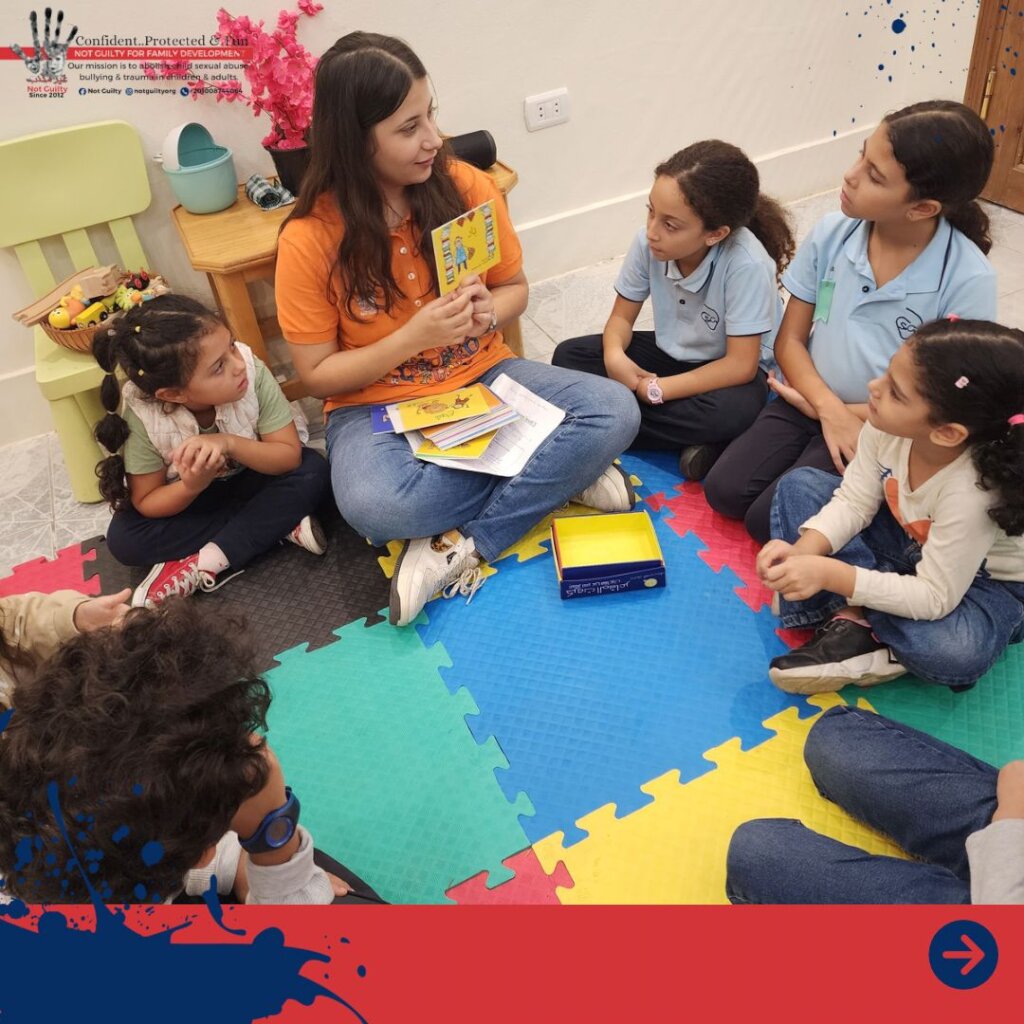
I am giving you a sneak peak about the parents training we do for parents of children in schools.
There are actually 5 main reasons reasons that might keep us from opening up:
What are some signs that we need to watch out for that might tell tale that a person or loved one is trying to report abuse to me?
How should you react?
What should you do?
Step 1: Listen. Telling a parent about abuse is not easy for a child or loved one. In fact, it can be terrifying, especially if the offender has conditioned him or her to think that no one will believe the child or loved one’s report.
Step 2: Control your reaction. I realize that hearing such news about your child or loved one can be devastating, but his or her welfare at that moment is more important than any emotion you feel. Your reaction at the time of disclosure is crucial. It determines whether your child or loved one will feel supported and loved, and often whether he or she will suffer later from post-traumatic stress disorder.
The best reaction, in terms of your tone of voice and body language, is one of compassion, never of anger, aggression, or blame. If you take on the role of a prosecutor, bombarding your child or loved one with questions about when and where it happened, why he/she didn’t scream, why didn’t he/she remember that no one is supposed to touch their private parts, etc., you only make the situation more difficult for your child or loved one. Telling you was already hard enough. Let your child or loved one tell you at his or her own pace. More details will come out in time. Your child or loved one needs to know he or she can trust you to listen compassionately.
Do not feel that you have failed as a parent. That is one of the lies associated with abuse. Perpetrators can be master manipulators, and many parents miss the warning signs. Don’t be too hard on yourself. You can make it through this one day at a time.
Step 3: Don’t try to correct the vocabulary. Let your child or loved one report the incident to you using his or her own words. This is not the right time to teach the right terms. Just let the child or loved one blurt out all that he or she wants to tell you.
Step 4: Believe your child or loved one. It’s hard for a child or loved one to lie about such a matter. If they know about issues of this nature, they have probably experienced them. Parents need to believe what their child or loved oneren are reporting.
Step 5: Show compassion. As mentioned above, compassion is the only appropriate response in this moment. Let your child or loved one see it when he or she is telling you what happened. Show empathy.
Step 6: Thank your child or loved one for telling you. Let your child or loved one know how courageous it was to tell you something so difficult, and that telling you was the right thing to do.
Step 7: Tell the child or loved one that it’s not his/her fault. Assure your child or loved one that he or she is not guilty and that the offender is the guilty one. Becky McDonald, president of Women at Risk International, discussed the phenomenon of freezing with me and explained why it happens so often and produces feelings of shame:
I deal with so, so, so many victims who froze in the face of fear. As you know, one of the results of cortisol when the amygdala senses danger is the fight, flight, or freeze response. The body shuts down to protect. Freeze is a very common response to a sense of danger, and I especially think it is more so with a trusted person. So when the perpetrator is an authority figure, you freeze to process and may not come out of the freeze mode. Those who freeze and do not say “no” struggle for a long, long time with shame. They have been taught to say no but nothing comes out of their mouths. Then they feel that something is wrong with them. Why didn’t they fight?
I spoke at a state university, and in the bathroom was a sign that said, “No answer means NO.” It was an anti-rape poster, but it recognized that many do not say no and then are attacked by the court, community, family, etc., for not putting up a fight. In fact, the chemical cortisol (from the flight, fight, freeze place) blocks the prefrontal cortex (the seat of problem solving) so that many cannot move and go into shock and shut down. It is just so, so real. People ask all the time, “Why didn’t they run, fight back, yell, or scream?” They assume that normal people do that. Normal people also freeze in the face of danger, and the shame message becomes a resounding gong and deafening drum beat if they finally do tell. So parents need to know that saying “no” may be difficult, and it is actually normal not to. Give child or loved one the permission to come to us when they have been hurt, even when they forgot or couldn’t say no or didn’t know how to fight back. I deal with so many women who get crucified on the stand because they did not say no. They froze in the face of danger and it is viewed as their consent or fault. Not true. . . . I have dealt with thousands of survivors who were silenced very effectively and were never able to get “no” out and feel shamed for that.[i]
Do whatever you can do to release your child or loved one from guilt or shame in the aftermath of abuse, regardless of their response at the time.
After following these steps, try to protect the child or loved one from experiencing more abuse. Let the child or loved one know that he or she will be protected, and then actually follow through with protection.
Refer your child or loved one for counseling. Be sure that the person treating your child or loved one can indeed be helpful because sometimes counselors who are unqualified to address child or loved one sexual abuse can actually make the situation worse.
If you have any questions you can reach me here.
If you would like to know more about this subject you can read my book, What Happens After #MeToo- Tackling the Iceberg. You can order it here.
Your donations and letters of encouragement mean so much to me.
[i] Personal conversation, April, 2018.
Links:
Project reports on GlobalGiving are posted directly to globalgiving.org by Project Leaders as they are completed, generally every 3-4 months. To protect the integrity of these documents, GlobalGiving does not alter them; therefore you may find some language or formatting issues.
If you donate to this project or have donated to this project, you can receive an email when this project posts a report. You can also subscribe for reports without donating.



Support this important cause by creating a personalized fundraising page.
Start a Fundraiser