By Mavis Tsai | Project Leader
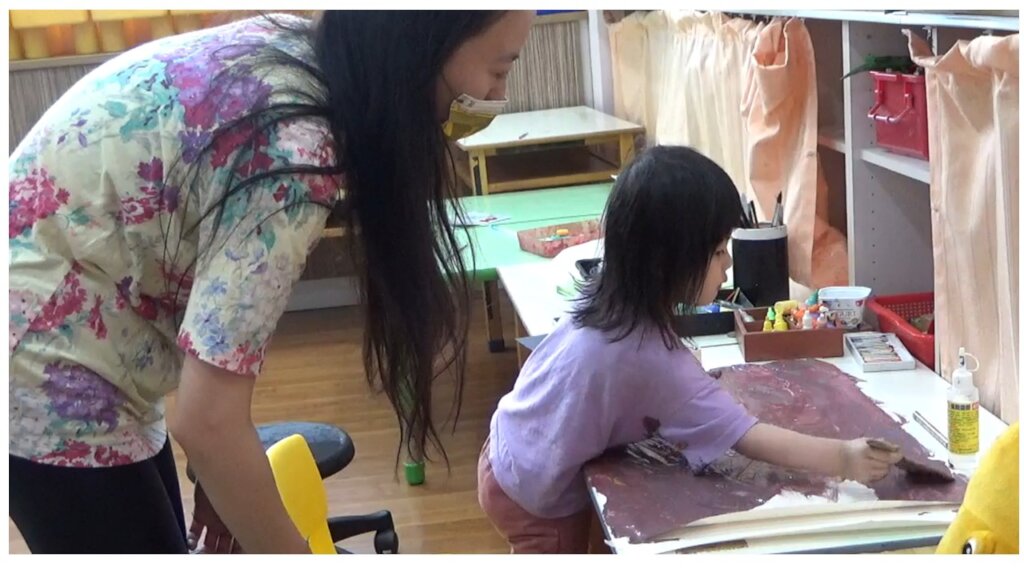
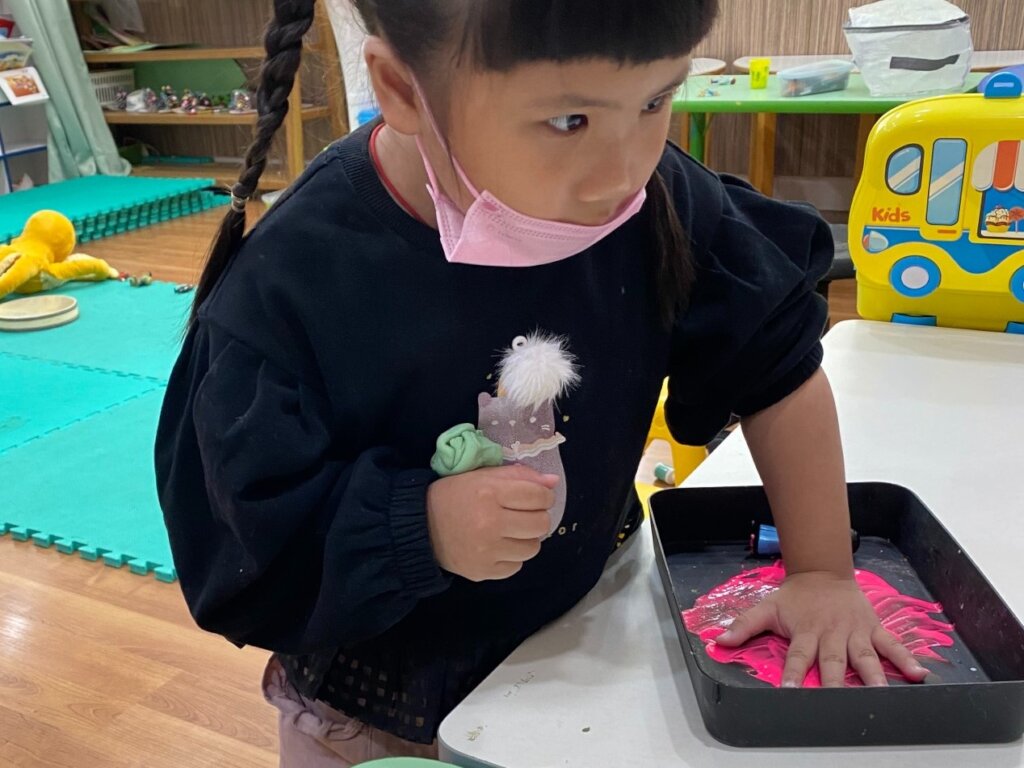
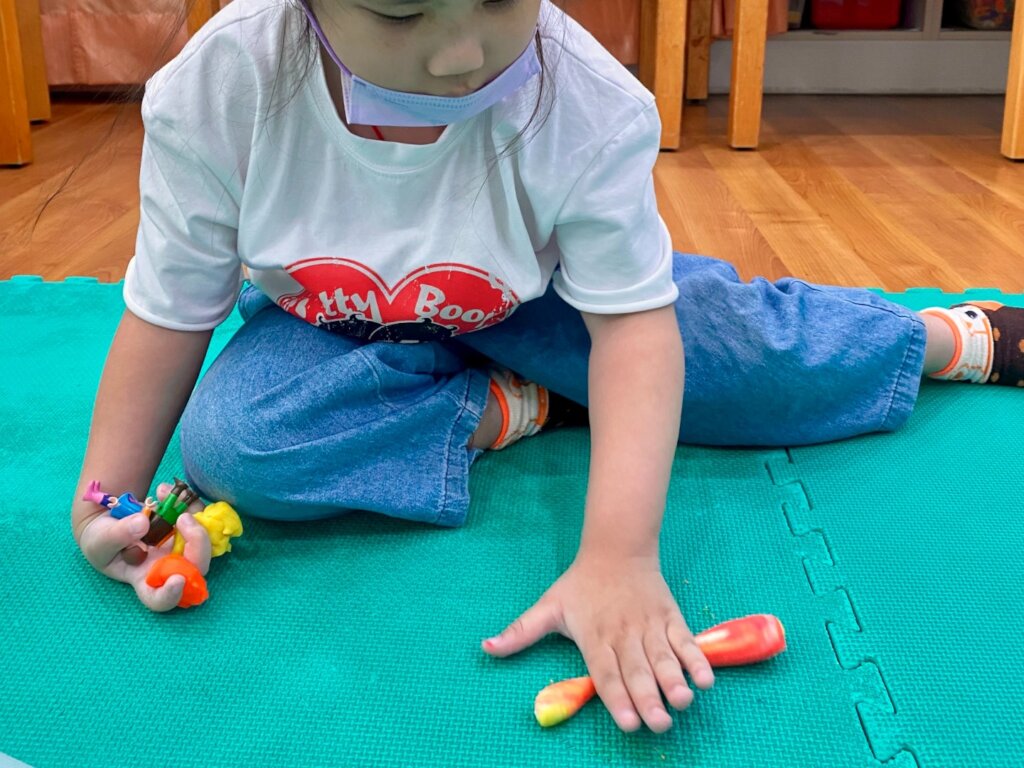
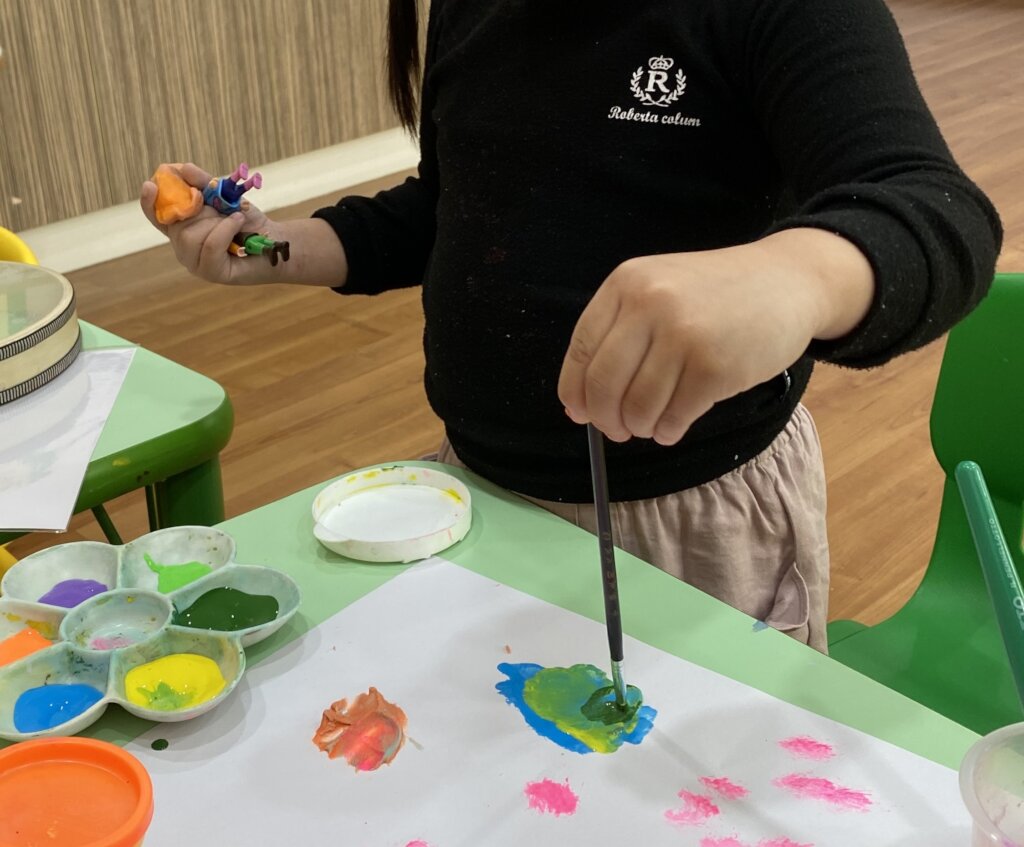
Lizzy is five years old and on the autism spectrum. Her speech is still very limited—she might say just one word at a time, like “play”—but she communicates clearly through her actions: running to the paint bottles, gripping my hand and pulling me to items she needed help with. Yet there was always something in her grasp: two small figurines, or sometimes a lump of clay, held tightly in one hand throughout the session. It meant she could only use one hand to create, but she never let go. When the one-on-one session came to an end, Lizzy often burst into tears. I would gently remind her, “Lizzy, it’s time for you join the class. So you have to give me back the two small figurines.” She understood the fact that happy moments must end, but letting go was still deeply painful.
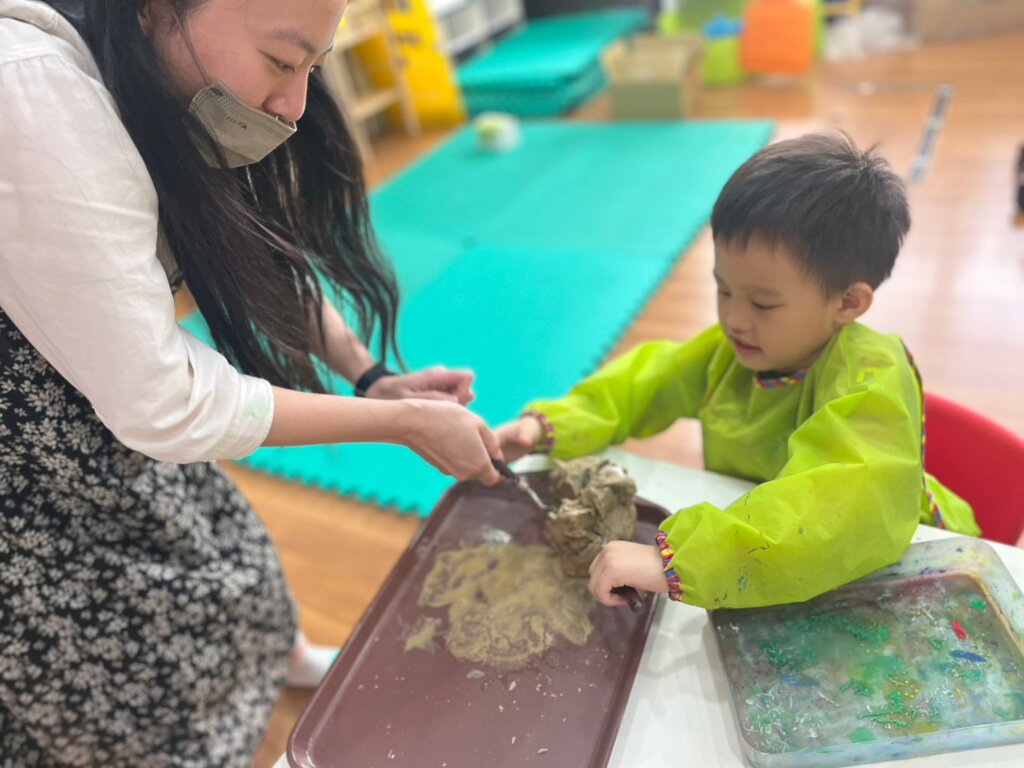
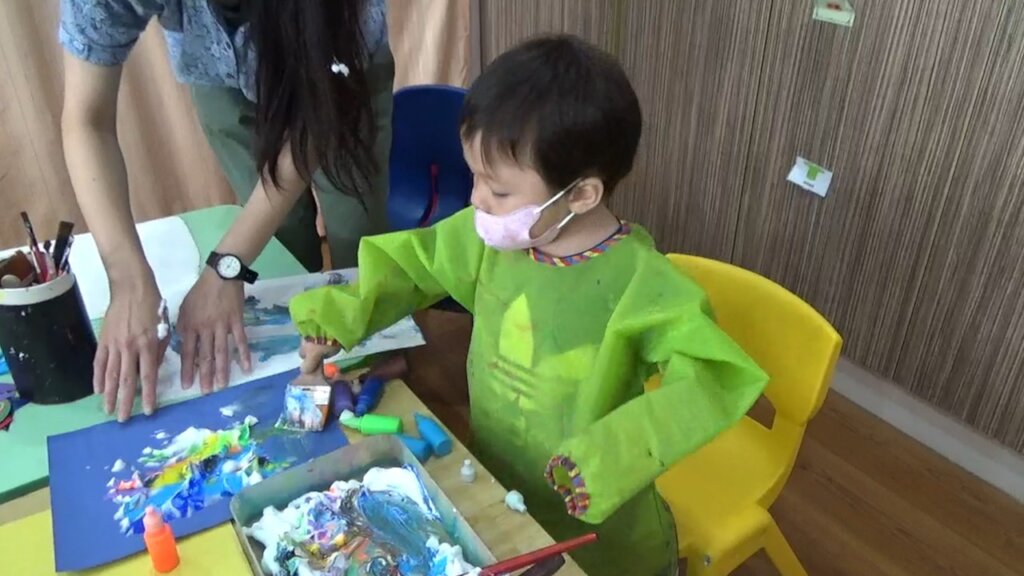
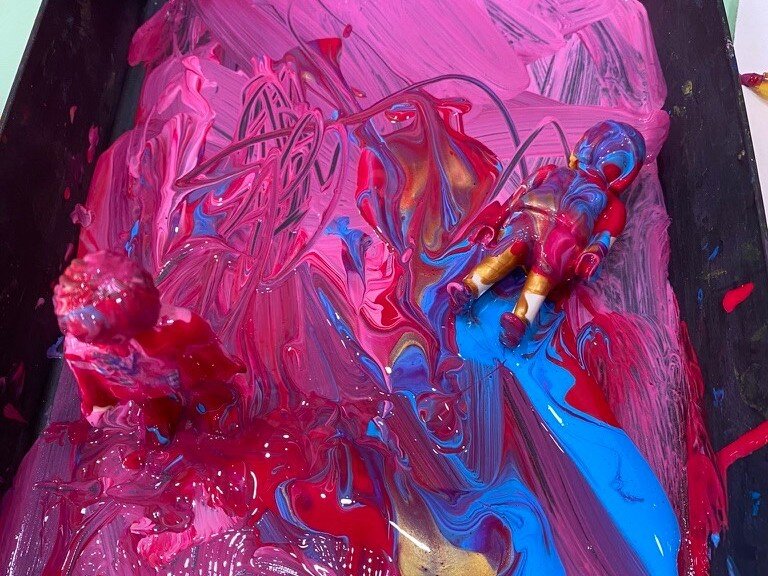
What struck me early on was how powerfully Lizzy used art to express herself. She didn’t just make things—she became them. Whether painting a stuffed rabbit’s face green, stamping a toy animal’s footprint into clay, or covering her own hand in red or green paint to press onto paper, Lizzy projected parts of herself into the materials. At times, she wrapped shiny flakes or toys inside a lump of clay, only to dig them out again—repeating the process over and over. These rituals seemed to mirror an emotional journey: of being entangled with others, then gradually separating, finding the edges of her own being.
In these moments, I saw how hard she was working to make sense of the world. Each painted handprint seemed to say, “Wow! This is my hand. This is me.” When she wrapped and unwrapped playdough around toy figures, I saw her shaping and reshaping a self still coming into form. My role was to be present—to witness, to name her wonder, and to offer steady, helping hands.
At first, the repetitive process of her holding onto the figurines, giving them back to me in tears, and quickly grasping them again continued throughout the entire transition back to her class. Sometimes, she would lie down on the playroom mattress and burst into tears when told the session was over. By the end of June, however, Lizzy was able to let go of the figurines right inside the playroom where we had spent time making art together. Perhaps this shift came through being her helping hands—without judgment—and through our shared attention to Lizzy’s gradual coming into being.
Your incredible generosity makes transformations like Lizzy's possible. Witnessing her journey of self-discovery and learning to "let go" through art therapy is deeply moving, and it's all thanks to your support. Your contributions provide a safe space for children like Lizzy to explore, grow, and empower our team to guide them. Thank you for being a vital partner in these beautiful changes. We look forward to sharing more progress in future reports!
Links:
Project reports on GlobalGiving are posted directly to globalgiving.org by Project Leaders as they are completed, generally every 3-4 months. To protect the integrity of these documents, GlobalGiving does not alter them; therefore you may find some language or formatting issues.
If you donate to this project or have donated to this project, you can receive an email when this project posts a report. You can also subscribe for reports without donating.



Support this important cause by creating a personalized fundraising page.
Start a Fundraiser