By Mavis Tsai | Project Leader
Peggy (a pseudonym) is a mild-mannered, smiley, non-verbal four-year-old girl with learning disabilities. She was born with differences in her brain’s white matter, which affects her memory span and ability to remember new people, making it difficult for her to form attachments with surrounding people. In her early years, Peggy’s limited mobility also delayed her sense of independence. She once relied on walking equipment and now wears corrective shoes; though she can walk, she still needs an adult to hold both her hands for balance and safety.
When Peggy was referred for weekly one-on-one art therapy in May, she had trouble adapting to any change. A new classroom or an unfamiliar face could easily unsettle her, and her carer often struggled to comfort her. She showed little interest in toys or sensory materials, making it difficult to engage her through play. The carer’s initial hope for therapy was simply that Peggy might begin to explore and enjoy new sensations.
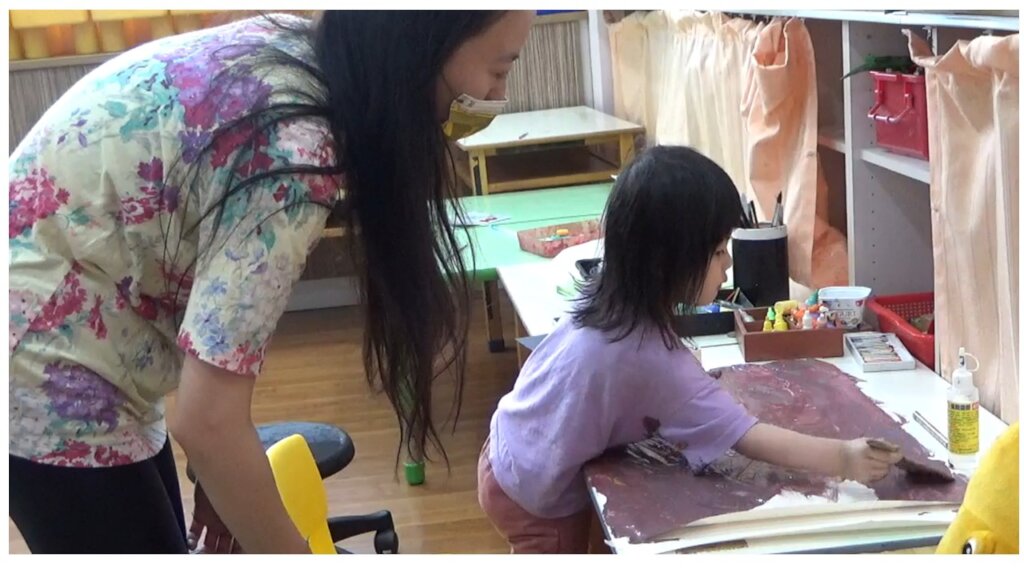
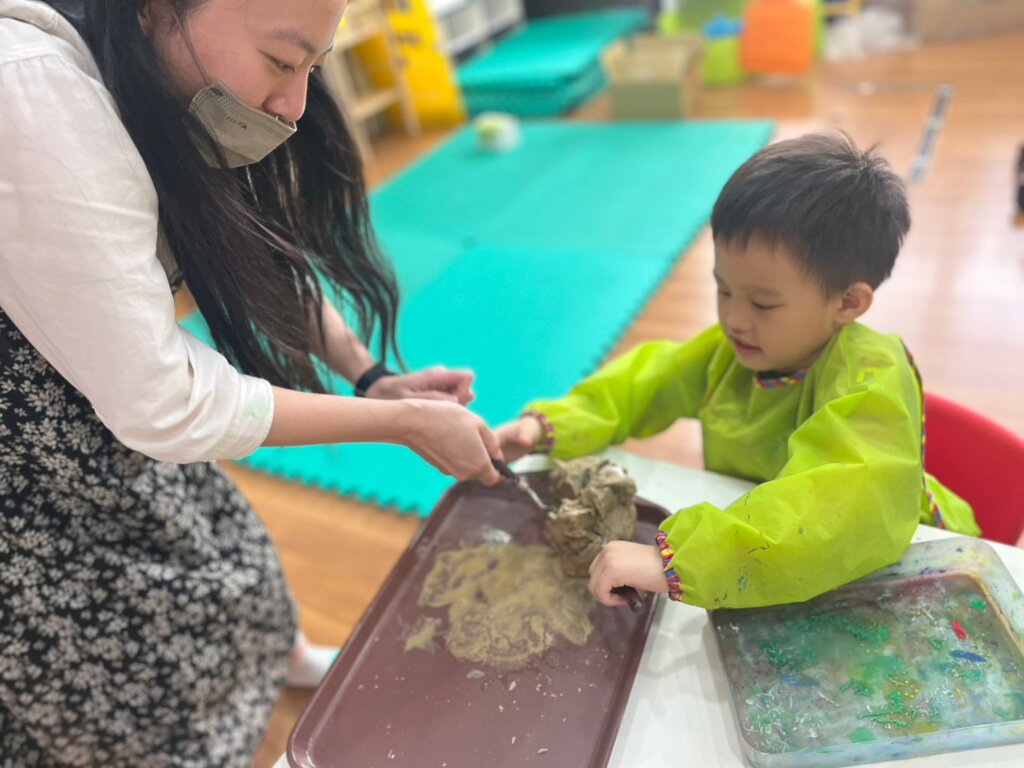
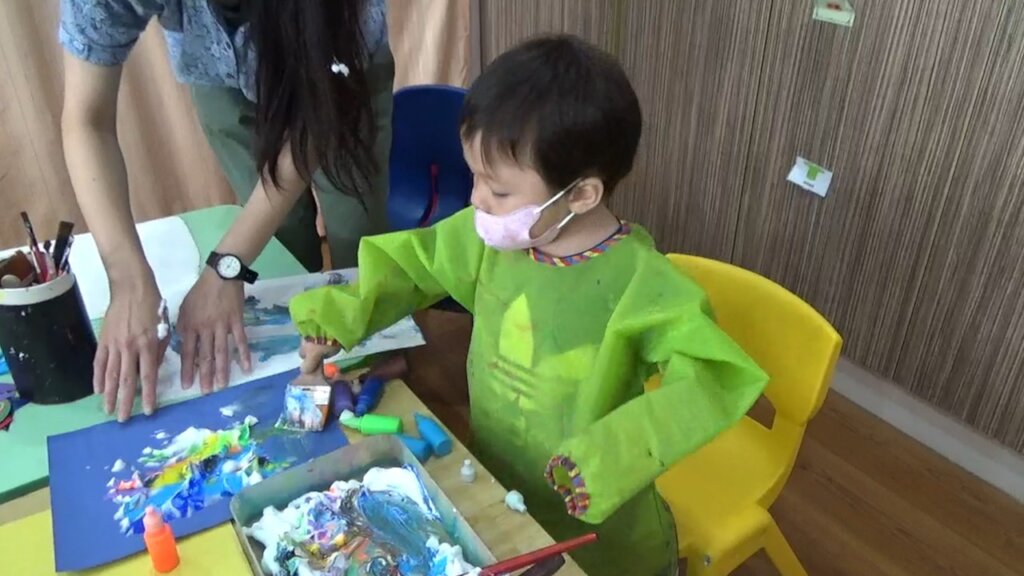
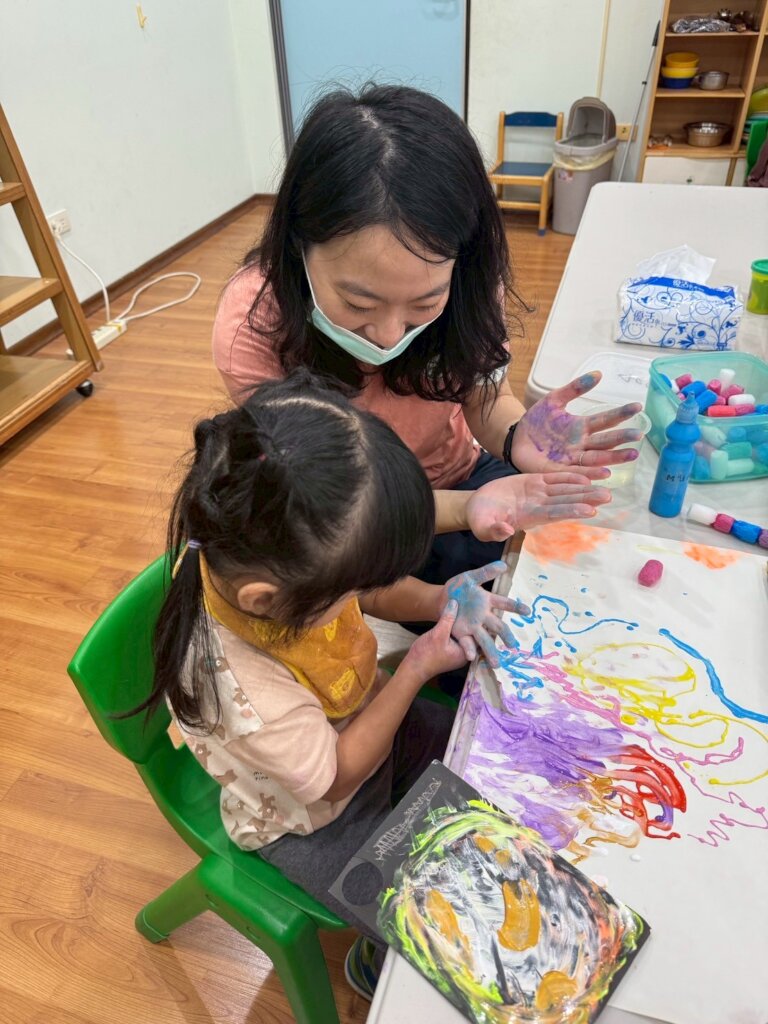
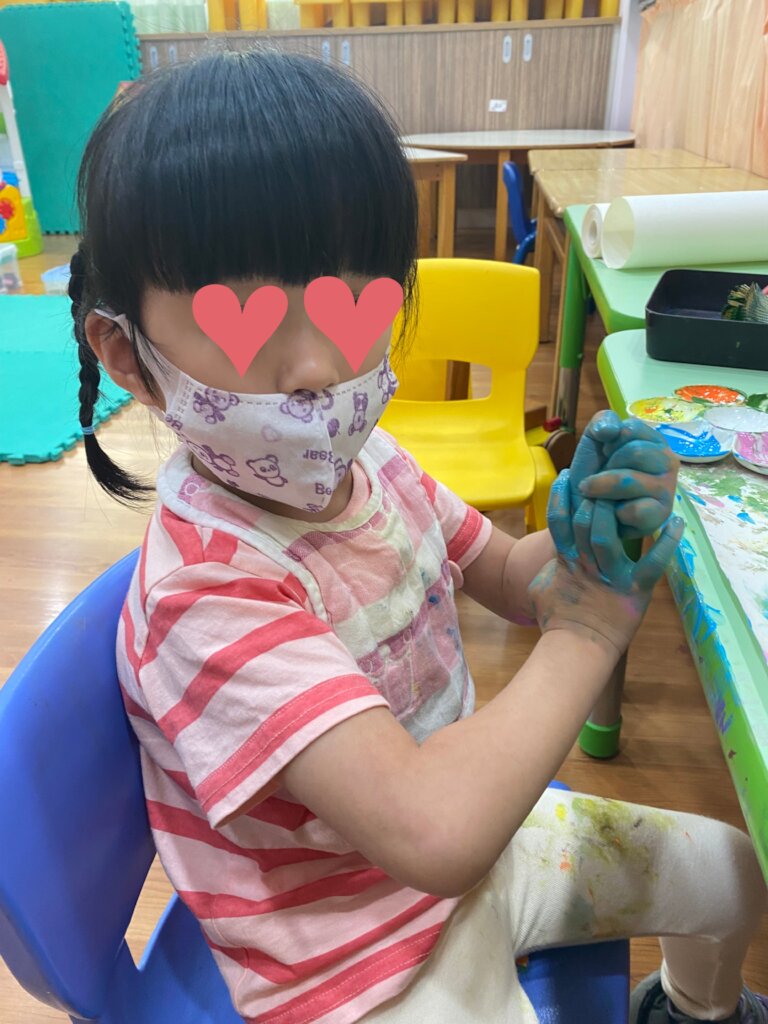
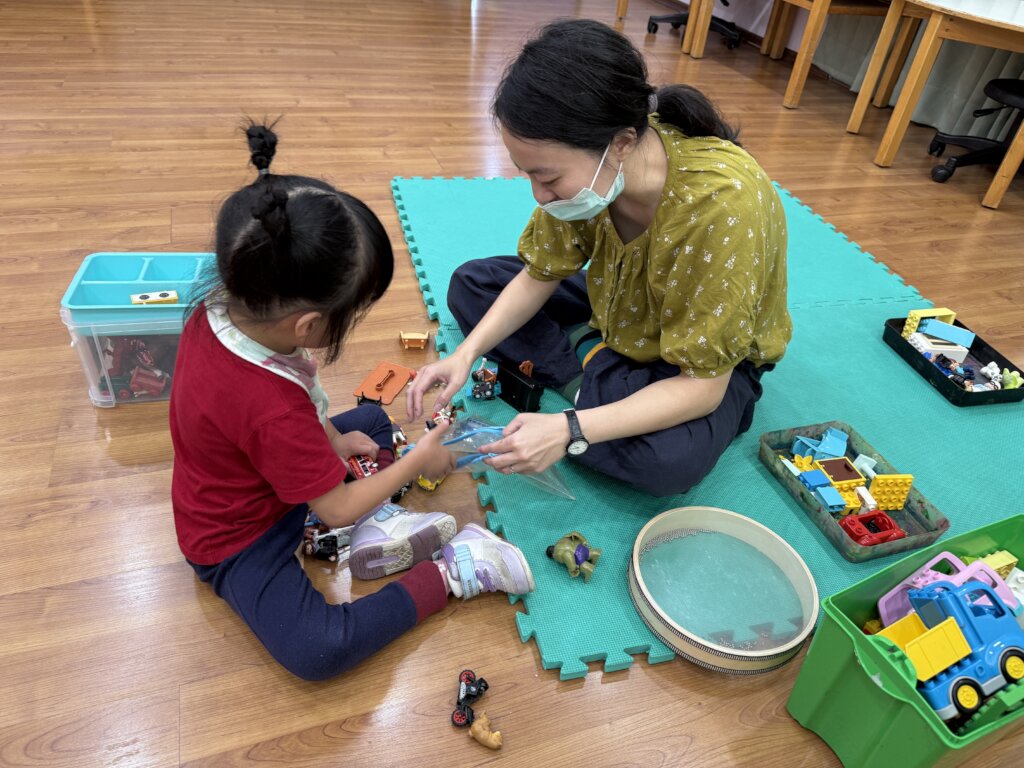
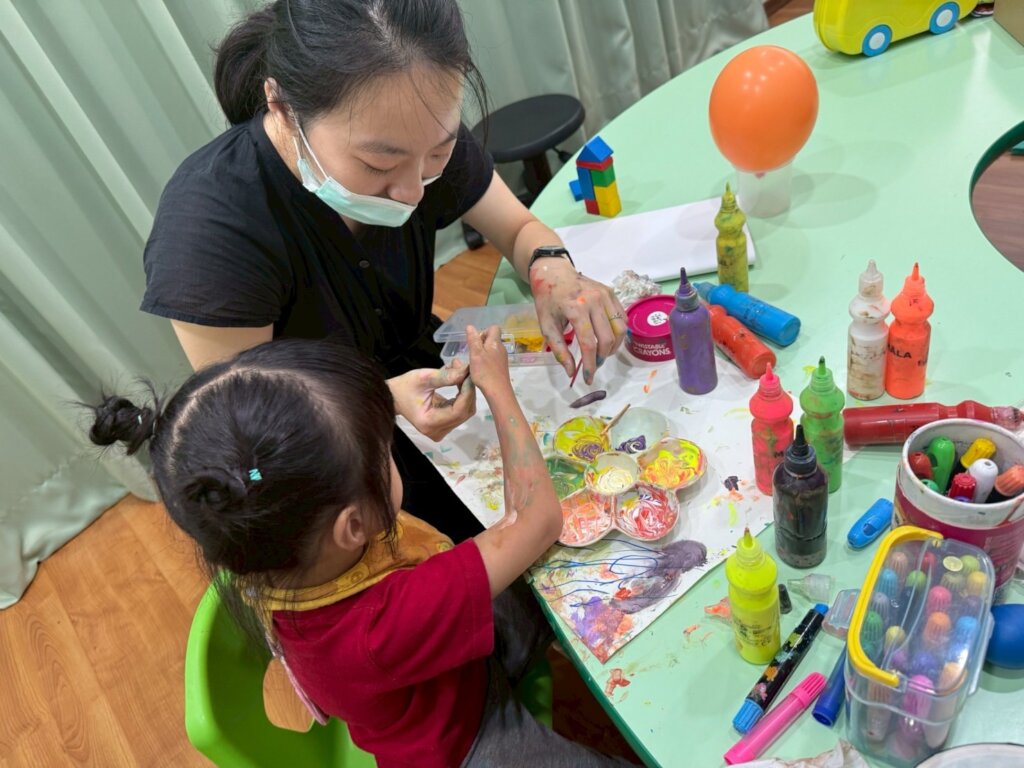
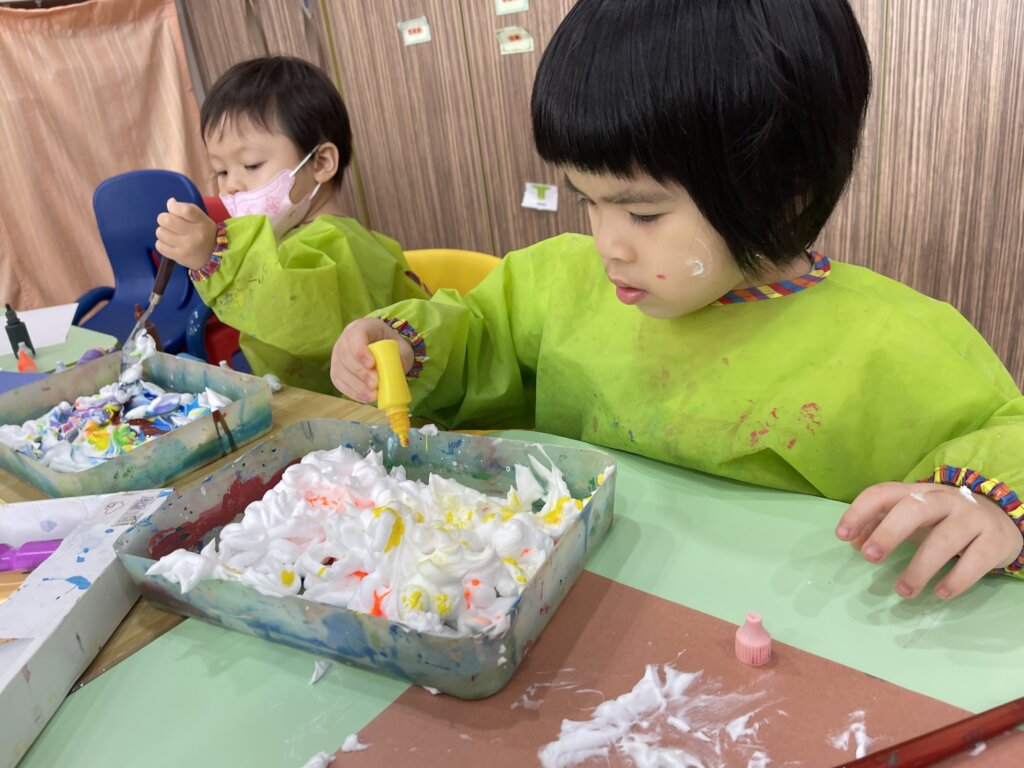
At first, Peggy found the sessions intimidating. She often cried and needed her carer to stay beside her for the first fifteen minutes. The therapist patiently introduced different materials: watercolour, crayons, building blocks, and toy animals. However just as in her larger class, she showed little response to most materials. Yet something subtle began to change when the therapist offered watercolour. Peggy didn’t paint on the paper but loved to feel the paint on her hands, quietly smiling as her fingers became covered in color.
By late June, a gentle but significant shift emerged. Peggy began to remember the therapist and, during each session, would grasp the therapist’s hand and guide it toward the paint bottles, which is her way of saying she wanted more. The therapist recognized Peggy’s love for watercolour not merely as a preference to note and move past, but as a bridge for connection. Through every small gesture, the therapist seemed to say, “Trust me and tell me what you like in your own way. I’m listening.” In this shared rhythm of giving and responding, Peggy learned that her preferences mattered.
For children like Peggy, discovering what they enjoy is the beginning of self-awareness. The ability to show preference, such as choosing a color, marks the first step toward agency and communication.
Peggy’s art therapy journey continues, each session nurturing her fragile but growing ability to connect. In the most recent session, she put a toy piano inside the therapist’s hand to express that she would like to hear the therapist singing a new tune. With time and support, her world is opening, one shared moment at a time. Your support can help Peggy continue walking this path toward connection and confidence.
With gratitude,
Mavis Tsai
Links:
Project reports on GlobalGiving are posted directly to globalgiving.org by Project Leaders as they are completed, generally every 3-4 months. To protect the integrity of these documents, GlobalGiving does not alter them; therefore you may find some language or formatting issues.
If you donate to this project or have donated to this project, you can receive an email when this project posts a report. You can also subscribe for reports without donating.



Support this important cause by creating a personalized fundraising page.
Start a Fundraiser