By Jay Ponazecki | Project Manager
Thank you so much for your generous donations and for making it possible for us to bring young baseball players from Tohoku and Kumamoto to Tokyo for the 2017 Baseball Project -- Be the Wind of the Future.
The Project was held in Tokyo from July 31st to August 3rd.
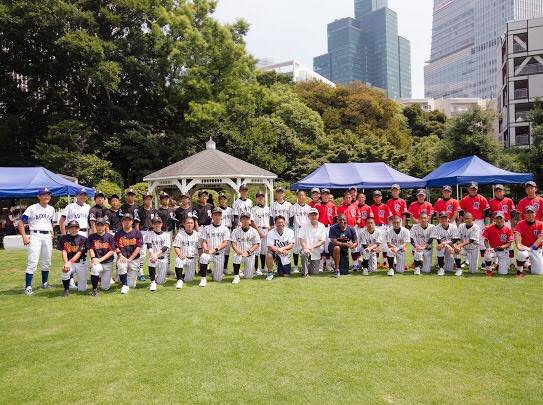
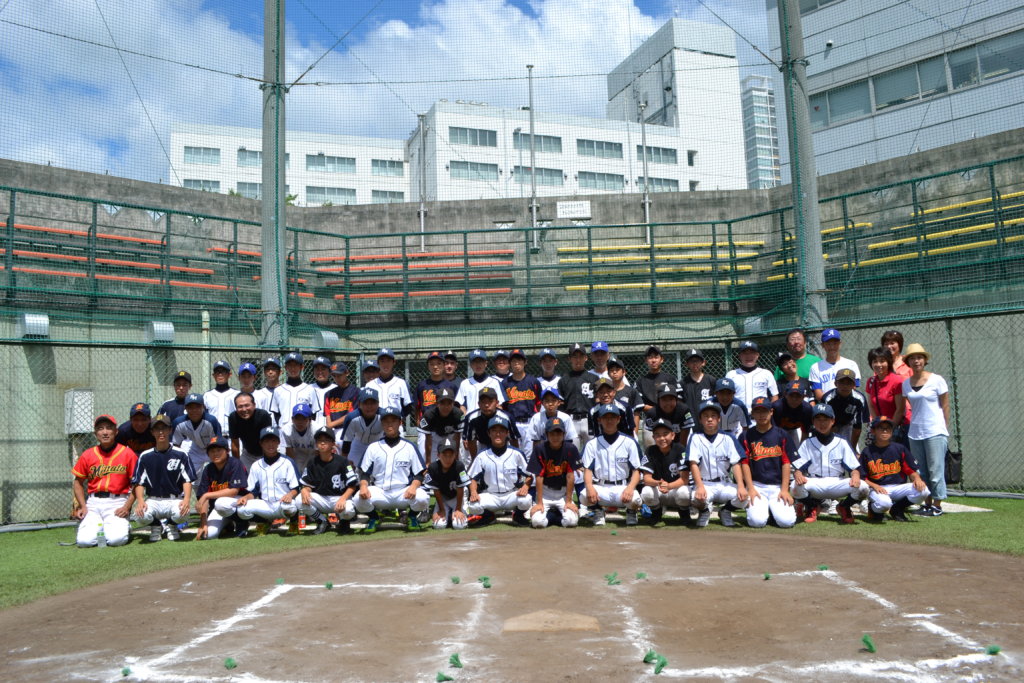
With your generous support, we were able to bring 14 junior high school baseball players from Kumamoto (including one girl), 15 junior high school players from Ishinomaki, their coaches and some of their parents to Tokyo. We were also able to have 16 junior high school baseball players from Tokyo, their coaches and some of their parents participate in the Project.
Kumamoto experienced several earthquakes in April 2016 including a 6.2 magnitude (on the Japanese scale) earthquake on April 15th and a 7.0 magnitude earthquake (on the Japanese scale) on April 16th. More than 50,000 people were evacuated from their homes, and a year later, 48,000 were still living in temporary housing. Many of the buildings, including schools and the iconic Kumamoto Castle, were severely damaged. Kumamoto is still very much a city undergoing long-term reconstruction.
Ishinomaki in Tohoku was one of the areas most severely impacted by the March 2011 earthquake and tsunami. A 33 foot wall of water traveled more than three miles inland leveling 80% of the homes and destroying many other buildings. 6.5 years later Ishinomaki is still rebuilding and many are still living in temporary housing.
In both cities, school buildings and sports training facilities were impacted. For example, sports fields have been used as locations for temporary housing.
The Tokyo-based junior high school baseball players have not yet experienced a natural disaster but at some point in their lives they are very likely to. Therefore, it is important for them to learn about resilience and disaster preparedness from their peers.
We are very happy, with your generous support, to have been able to provide these junior high school baseball players with baseball, leadership and disaster preparedness training and to afford them with an opportunity to create many happy new memories.
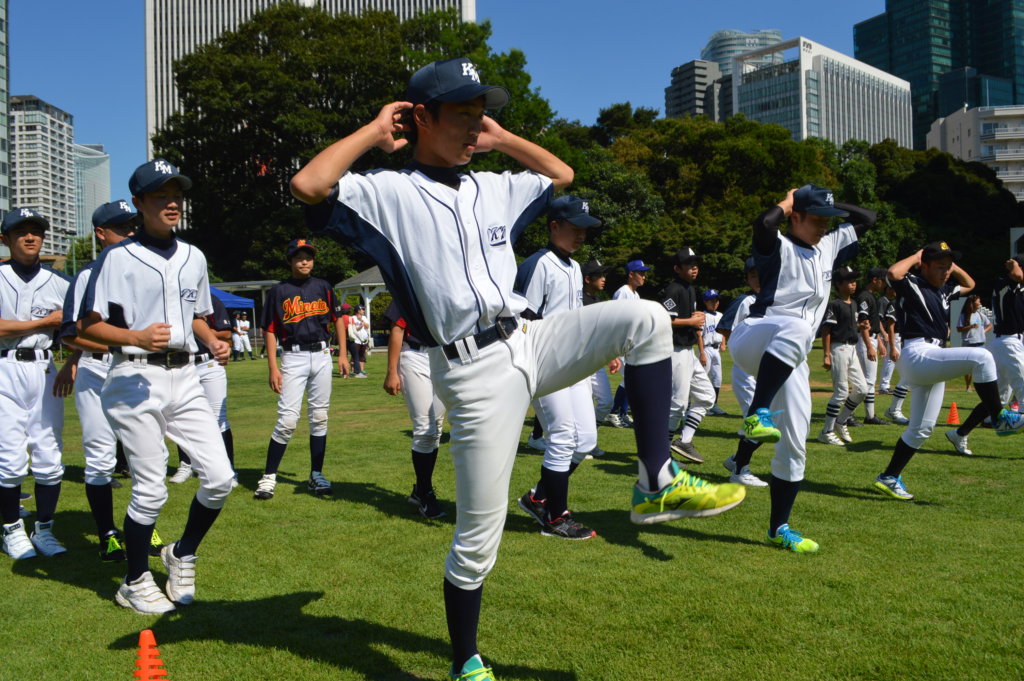
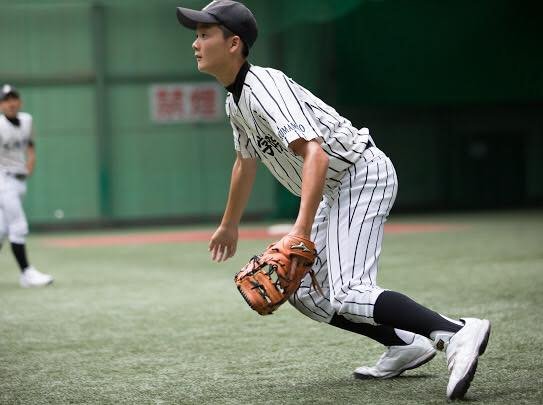
On the first day, they warmed up with several U.S. Marines who led them through the exercise routine that all U.S. Marines are required to do as part of their training and endurance building. After warming up, they received baseball coaching -- learning how to pitch, throw, catch and hit like a professional baseball player -- from three Major League Baseball legends: Masanori Murakami (who was the first Japanese player to join a U.S. Major League Baseball team), Akinori Iwamura (who played with the Yakult Swallows and the Tampa Bay Devil Rays) and Warren Cromartie (who played for the Montreal Expos and the Yomiuri Giants). After a BBQ lunch (prepared by the U.S. Marines and Hands On Tokyo volunteers), the young baseball players visited the Japanese Baseball Hall of Fame Museum and attended a Yomiuri Giants baseball game.
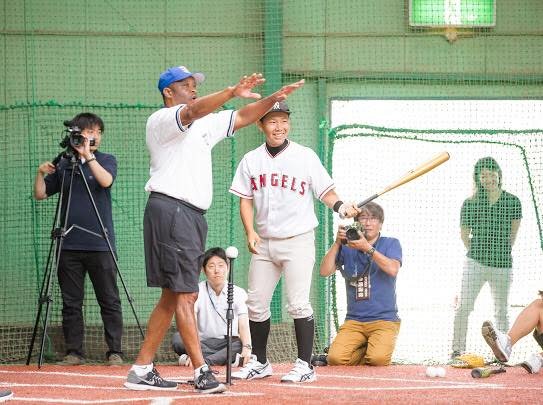
On the second day, the young baseball players and their coaches participated in an excellent baseball workshop led by Warren Cromartie. Afterwards, while the Tokyo and Ishinomaki teams were playing a baseball game, the Kumamoto team and their coaches received extra hands on training with Warren Cromartie. He taught them about the importance of balance and how to swing a bat. He also encouraged them to ask questions and taught them how to fully articulate what they were learning. These are skills that will help them on and off the baseball field and throughout their lives. In the evening, Hands On Tokyo volunteers prepared a buffet dinner for all the young baseball players, their coaches and their families.
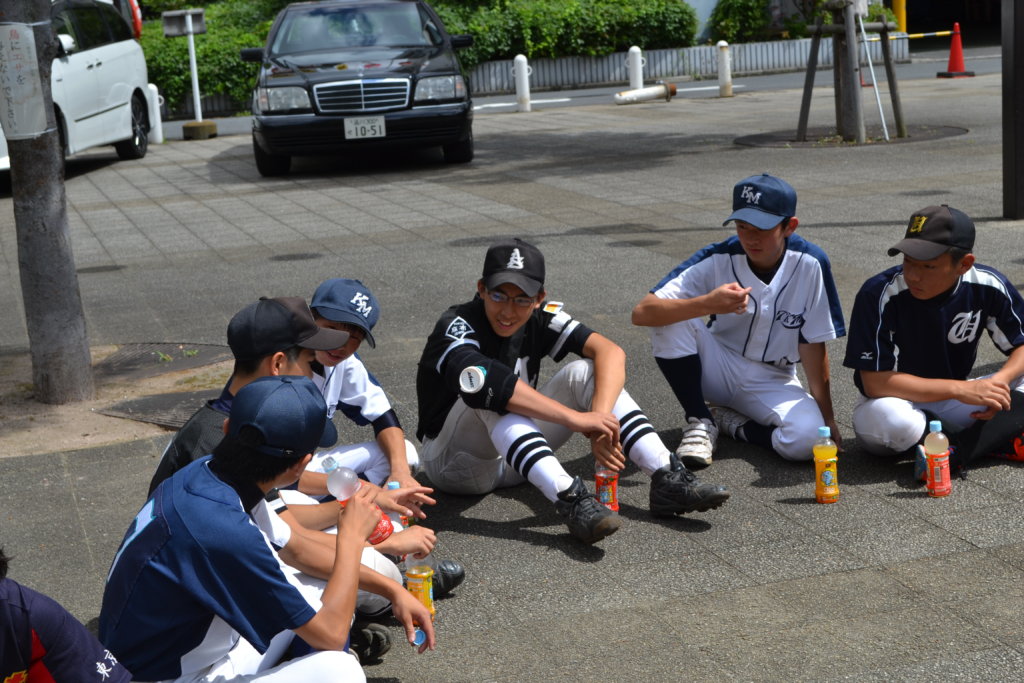
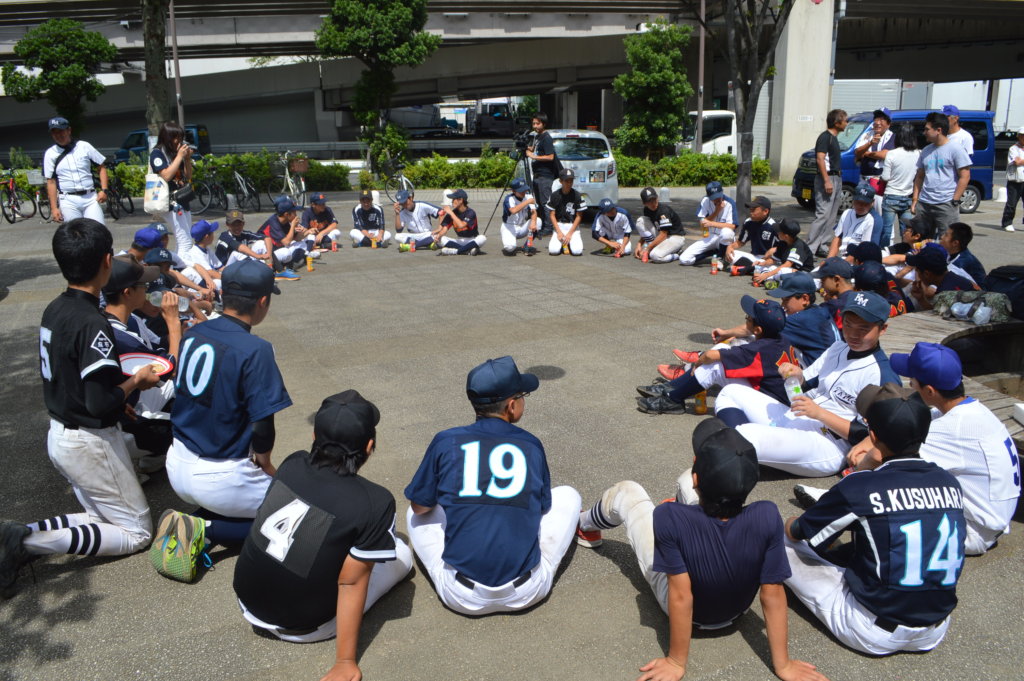
In the morning of the third day, the Kumamoto and Ishinomaki teams played a baseball game and applied what they had learned over the prior two days. Both teams demonstrated great pitching, hitting, fielding and support for one another and their teammates. In the afternoon, the Kumamoto team gave a moving presentation on how their school and community have been impacted by the earthquakes and the Ishinomaki team gave a moving presentation on how their school and community have been impacted by the tsunami. Both teams did a terrific job preparing and delivering their presentations. The Q&A session ended up being very emotional and moving as one player on the Ishinomaki team recalled how difficult the initial days after the tsunami were when his family had no idea whether his father had survived. Fortunately, they were able to find him alive after three days. Others in the room sadly lost loved ones. We all learned the importance of having communication plans with our families in place that take into account the potential disruption of the many communication tools that we take for granted in our daily lives. Then all of the students formed small teams of five or six players and participated in a natural disaster preparedness exercise.
In the morning of the fourth day before heading home, all of the students participated in a volunteer activity and collected debris and garbage from one of the Tokyo Area parks.
The Project was a great success and we are already preparing for the 2018 Baseball Project next summer! All of the junior high school students worked so hard during the four-day project and they learned so much. We received so much positive feedback from the students, their coaches and their parents. And, in their first game of the 2017/2018 season, the players on the Kumamoto team were able to apply what they learned in Tokyo and they won the game. We stopped by the Ishinomaki Junior High School at the beginning of September when we were in Ishinomaki for another Hands On Tokyo Tohoku Disaster Recovery Project and we were able to visit with the baseball coach and two of the players. They were still glowing from the experience.
Thank you again for your generous donations and for making it possible for us to hold this Project and to provide baseball, leadership and disaster preparedness training to all these promising young kids who are -- and will continue to be -- the Wind of the Future in their local communities. We hope you will be able to support our future baseball projects as well.
Project reports on GlobalGiving are posted directly to globalgiving.org by Project Leaders as they are completed, generally every 3-4 months. To protect the integrity of these documents, GlobalGiving does not alter them; therefore you may find some language or formatting issues.
If you donate to this project or have donated to this project, you can receive an email when this project posts a report. You can also subscribe for reports without donating.