By Nermien Riad | Founder and Executive Director
Every day in Egypt, smart women — aspiring entrepreneurs — face challenges that would shred most people like a dry leaf in a wood chipper. For starters, most women there contend with crushing sexism and soaring inflation.
But Egypt's widows face even huger challenges. Traditions restrict how they dress, who they speak to, where they go. Often, they can't leave the house to work for a living. That's even if their children are malnourished.
B'edaya is a microfinance initiative designed to handle exactly these hostile conditions — the everyday life of a widow in Egypt. It tailors small loans to the needs of the mothers of orphans. The aim is to give them an income, more ability to feed their children, and more control of their lives.
Of the 30 women currently taking part in B'edaya, from mid-January to October 2014, only one (because of severe illness) was unable to make her monthly loan repayments. In the harsh climate I just described, how is that possible?
In answering, I want to share the story of one of these women. Some details of her life are unique among the B'edaya widows. But her fighting spirit and will to secure a better future for her children are not.
Warda is a 30-year-old who lives outside the city of Sohag. In this region, where the searing-hot desert is split by the Nile's waters, her husband died on the roads while transporting stone.
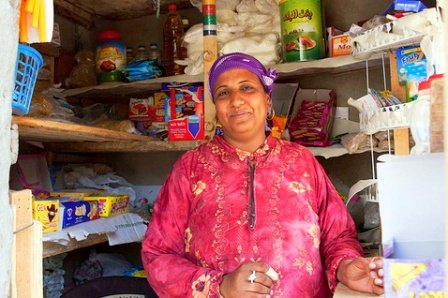
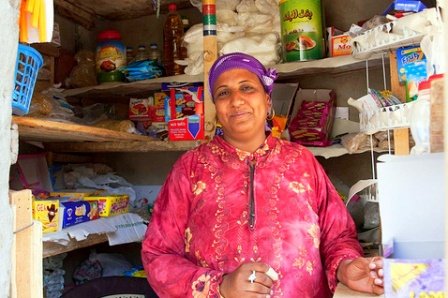
Since 2012, she's run a grocery out of her house — since tradition dictates that she can't leave it. She feeds her two children with the profits she makes selling sugar, rice, cheese, oil, and some canned goods to her neighbors.
Warda started her grocery with a loan of 1,700 Egyptian pounds that predated B'edaya. It came through Coptic Orphans, with the encouragement of the volunteer representative who mentors her children.
So far, the income she sought is arriving — not all she hopes for, yet, but enough to put food on the table. Today, she's part of B'edaya, and makes regular repayments on her loan through the program.
Why has her business succeeded so far? Warda attributes it to her own:
Michael, the B'edaya staff member who works with Warda, says her success is a function of her:
To these factors, Michael adds the encouragement Warda has received from both him and the Coptic Orphans "rep" who helps meet her children's education, health, and other needs.
Lastly, mixed into Michael's list, among many other factors, is the B'edaya loan. In other words, this is so much more than "take one entrepreneur, add loan, watch the results." The widow herself must bring positive qualities to the table.
At the end of the day, this last aspect of B'edaya is what sets it apart from so many other approaches to charity and development.
Unquestionably, the loan and the income it generates are good things. But the loan is only a catalyst — a means for Warda to harness her inner drive and latent abilities, and in the process, be transformed.
This aimed-for transformation from helpless, house-bound widow to self-sufficient businesswoman is the opposite of traditional charity, which (even if well-intentioned) creates a dependency on handouts.
Which brings me back to the question posed at the beginning: "How is that possible that 29 out of 30 widows made their B'edaya loan repayments over almost a year?"
I would say the critical answer is this: The loan program does not focus on these women's weaknesses — instead, it harnesses their strengths. It unlocks what's within them. And that's the key to success.
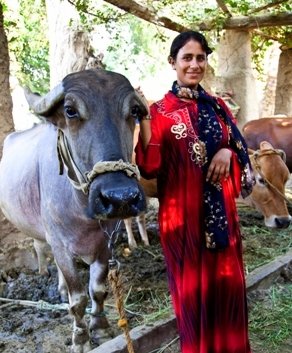
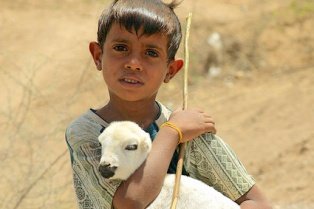
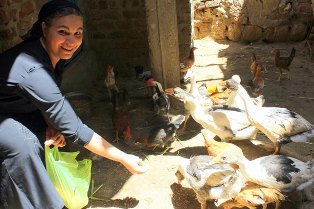
*Image and names changed to protect the privacy of B'edaya participants
Project reports on GlobalGiving are posted directly to globalgiving.org by Project Leaders as they are completed, generally every 3-4 months. To protect the integrity of these documents, GlobalGiving does not alter them; therefore you may find some language or formatting issues.
If you donate to this project or have donated to this project, you can receive an email when this project posts a report. You can also subscribe for reports without donating.