By Tara Devi Laabar | IAHPC Member and Researcher
Bhutan had no palliative care activity until 2016 when two nurse-lecturers from its medical university travelled to Kerala, India, to attend six weeks of hands-on training at Pallium India. On their return, they advocated for palliative care among relevant stakeholders, which resulted in a few additional nurses being sent to Kerala for training. The following year, a Cancer Control and Palliative Care Workshop held in the capital, Thimphu, sensitized Bhutanese healthcare professionals on the principles of palliative care. In 2018, Jigme Dorji Wangchuck National Referral Hospital (JDWNRH) established the country's first palliative care service: home care for patients with advanced cancer living in Thimphu.
Education & training were key
Going the extra mile: A driver and palliative care nurses Denkar and Ambika carry supplies from the nearest road, through the woods, to a patient’s home. Photo used with permission.
Education and training were crucial factors in developing palliative care. In 2018, a team from the Asia Pacific Hospice Palliative Care Network (APHN) began an annual training program on palliative care modules for Bhutanese healthcare professionals. When it was disrupted by COVID-19, the home care team continued to enhance their knowledge and skills through virtual collaborations and self-directed learning.
Locally designed care is important
While attending to the increasing demand for home palliative care, the handful of team members along with other JDWNRH professionals developed a local training module in collaboration with the Institute of Palliative Medicine (IPM) in Calicut, Kerala.
By 2020, PhD research had reported complex palliative care needs in Bhutan and emphasized an urgent need for culturally and spiritually appropriate services.4-7 Other studies highlighted achievements and challenges faced by the home care service.
Huge response by healthcare providers
In 2023, the two online certificate courses, for pediatric and adult palliative care, (six 75-minute sessions) each drew more than 200 healthcare professionals from across the country. These programs were supported by Two Worlds Cancer Collaboration, Hyderabad Centre for Palliative Care, Australasian Palliative Link International, and Pallium India. The finding of the pre/post-tests of the pediatric session is encouraging.10
The impact of a trained physician
In early 2024, the nation's first palliative care physician, trained at the National Cancer Centre in Singapore, joined the home care team. Simultaneously, palliative care services expanded to in-patient consultations and an outpatient clinic at the national referral hospital. On average, 18 patient consults occur every month. The presence of a palliative care physician has contributed significantly to the expansion and formalization of services, enhancing both accessibility and integration of palliative care within the hospital system.
Today's home care team
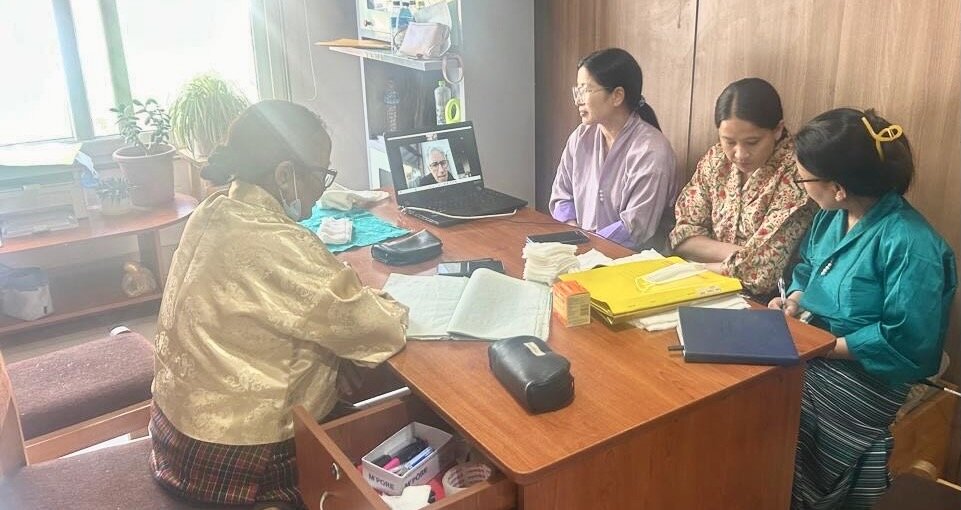
Today, the home care team comprises five dedicated nurses and a palliative care physician supported by a nurse anesthesiologist, physiotherapist, and geriatrician. Unique to Bhutan is the integration of traditional medicine with the national health system. Drungtsho, a traditional physician, is a member of the palliative care team.
Project reports on GlobalGiving are posted directly to globalgiving.org by Project Leaders as they are completed, generally every 3-4 months. To protect the integrity of these documents, GlobalGiving does not alter them; therefore you may find some language or formatting issues.
If you donate to this project or have donated to this project, you can receive an email when this project posts a report. You can also subscribe for reports without donating.



Support this important cause by creating a personalized fundraising page.
Start a Fundraiser