By Tanya Weaver | Executive Director
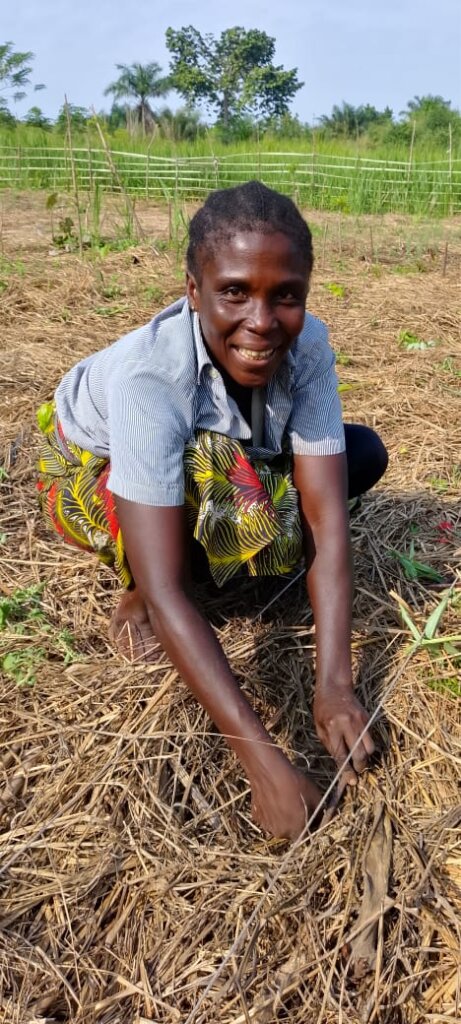
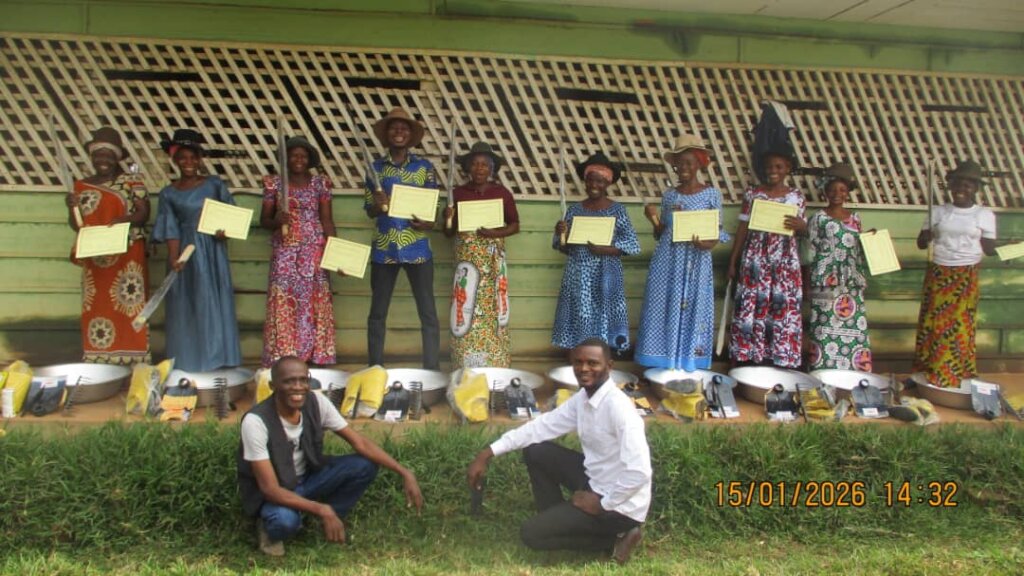
Meet Elise. She is 39 years old, married with five children. Elise and her husband both live with AIDS, sadly. She is part of one of AFCA’s goat and garden associations in Gemena, DRCongo, replacing her husband in the association due to his inability to work currently because of his poor health.
In this photo, Elise is planting spinach in her garden, thanks to the seeds, training and tools received by AFCA. She will also plant soy, sweet potatoes, tomatoes, and okra. She is so excited to grow vegetables that she knows will feed her family, giving them nourishment. She loves the teachings she has received on nutrition and conservation farming and is a firm proponent of mulching now that she has seen the difference it makes in her garden. AFCA even gave her a tub in which she can place and carry any left-over vegetables to the market, selling them in order to earn a bit of income. That tub makes Elise smile from ear to ear! Something so simple brings such joy to people who just a few weeks ago didn’t have hope. Seeds, training, a tub, tools, encouragement, and being present to help when questions arise has made all the difference in the lives of Elise and her family. We are proud to stand with her and thank you for being part of their renewed hope.
The team here at the American Foundation for Children with AIDS thanks you for supporting this project and the work we do for the children in Africa. If you would like to learn even more about what we do or how you can meet some of the children you have helped, please contact Tanya Weaver at tweaver@AFCAids.org.
By Joseph | Beneficiary
By Tanya Weaver | Executive Director
Project reports on GlobalGiving are posted directly to globalgiving.org by Project Leaders as they are completed, generally every 3-4 months. To protect the integrity of these documents, GlobalGiving does not alter them; therefore you may find some language or formatting issues.
If you donate to this project or have donated to this project, you can receive an email when this project posts a report. You can also subscribe for reports without donating.



Support this important cause by creating a personalized fundraising page.
Start a Fundraiser