By Valentina Di Felice | Head of Evidence and Learning
Three years after the Taliban’s return to power, Afghanistan remains the only country in the world where girls are systematically denied access to secondary and higher education. Women are barred from most forms of employment, with few exceptions in healthcare, nutrition, and primary education. The restrictions imposed on international NGOs have intensified, requiring many to hand over programme implementation to local organisations. However, the enforcement of these bans remains inconsistent, creating openings for organisations like Womanity to continue operating in a low-profile but impactful manner.
Amidst these volatile conditions, our ‘She Learns’ programme has not only sustained its work but also expanded its reach in 2024.
By adapting our strategy to align with local realities, we have broadened access to primary education, enhanced teacher training, and strengthened our online education offerings, including the introduction of English courses. Our approach is guided by a clear commitment: where opportunities exist, however small, we will seize them to ensure Afghan girls and young women continue to learn.
Expanding access to education
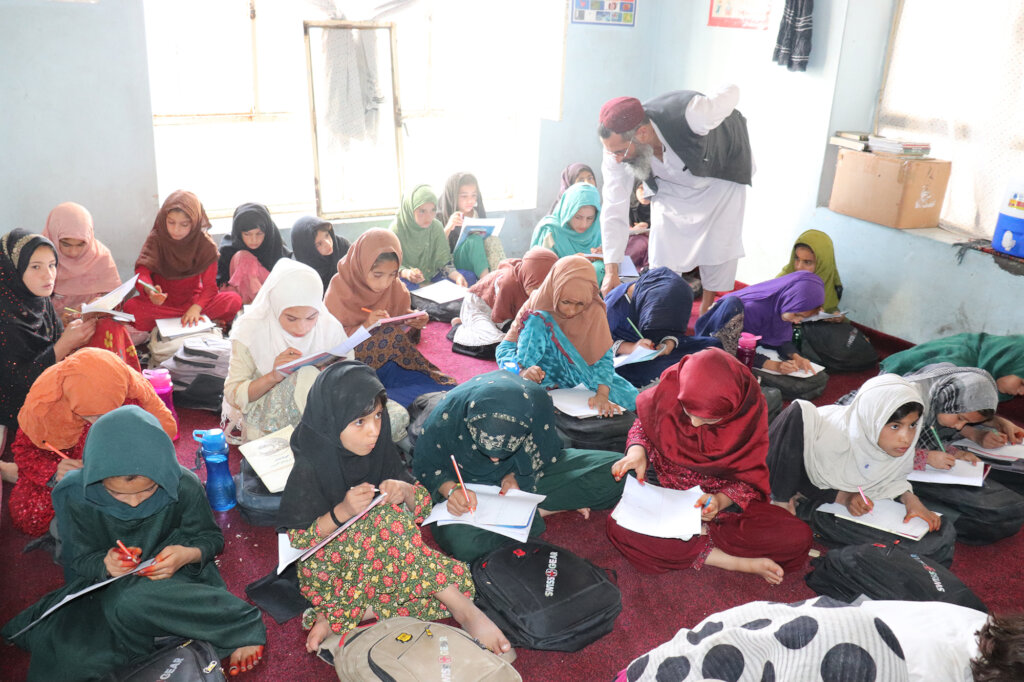
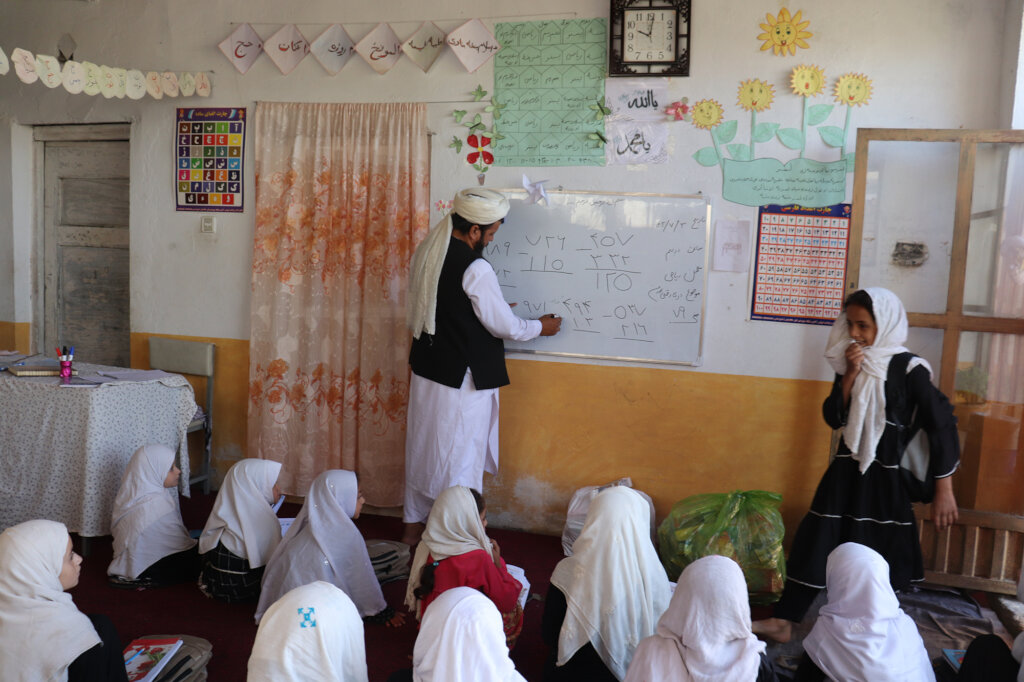
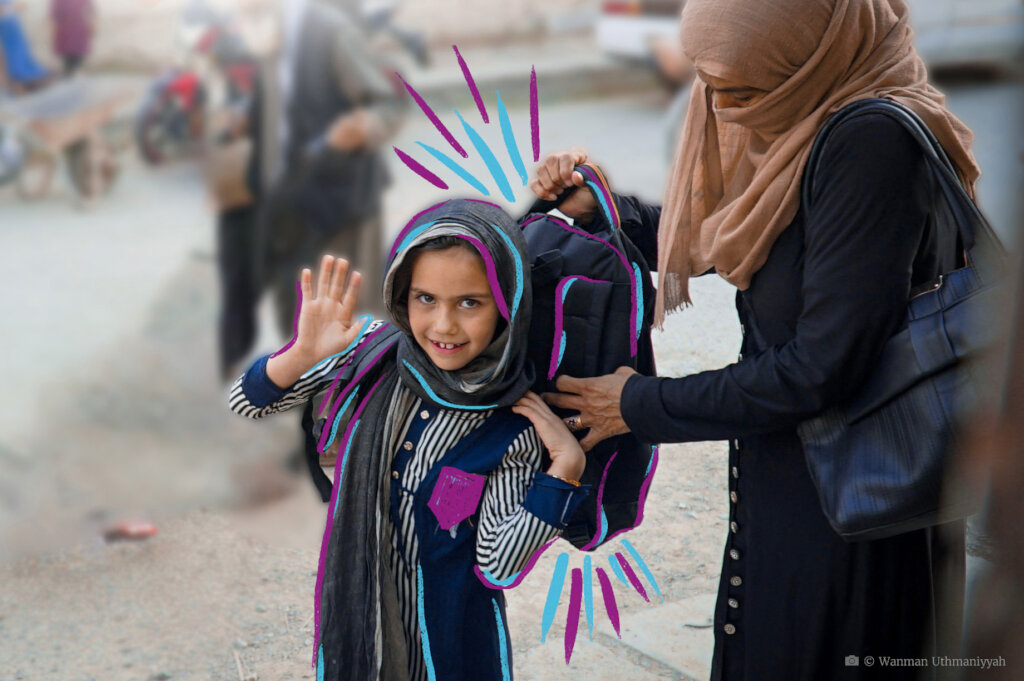
In 2024, our primary education programme underwent a critical transformation. Initially, our goal was to expand Community-Based Education (CBE) classes. However, the Ministry of Education did not permit INGOs to launch new CBE initiatives. Recognising an alternative route, we secured approval to work within public primary schools, hiring, training and supervising the work of 70 female teachers who would primarily teach in girls’ classrooms.
This shift has allowed us to support a significantly larger number of students than before, with at least 80% of those reached being girls.
A major challenge in Afghan public schools is severe understaffing. Schools are overwhelmed with students, yet the authorities lack the resources to recruit and pay enough teachers. To address this, we began directly recruiting and paying teachers’ salaries, ensuring more classrooms remain functional. This approach not only strengthens the education system but also provides a rare and valuable employment opportunity for Afghan women, who remain largely excluded from the workforce.
IMPACT HIGHLIGHTS
220 female participants completed courses in coding, web development, and English.
3,306 children (80% girls) received support in our primary education programme.
278 teachers trained in science education or teaching methodologies – 69% are women.
Elevating teaching standards
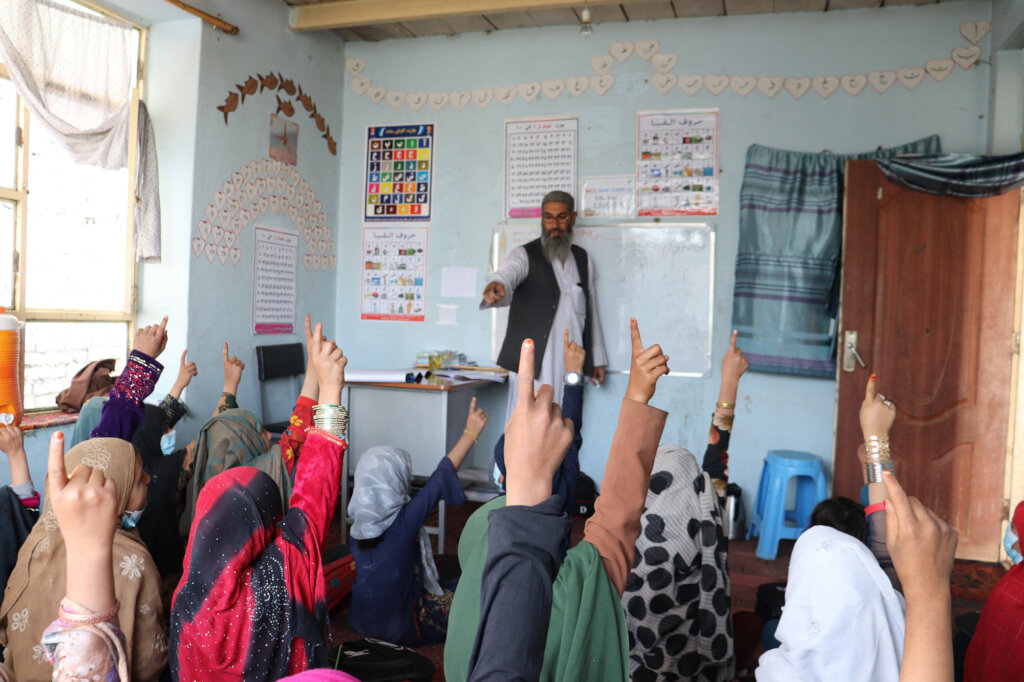
Quality education depends on well-trained teachers, yet Afghanistan faces a chronic shortage. Many, especially in public schools, lack formal training in pedagogy and subject knowledge. To bridge this gap, we provide pedagogical training to all 78 teachers we hire for CBE and public schools. In 2024, we further expanded our efforts, partnering with the National Science Center to provide specialised training in science education to and additional 200 teachers.
“Despite having three years of teaching experience in private schools, I still faced many challenges. Womanity’s 12-day seminar provided me with valuable insights and practical strategies to improve my skills. I learned about innovative teaching methods, student motivation techniques, effective time management, and structured lesson planning.”
— Teacher who attended the seminar
By equipping teachers with better tools and methodologies, we ensure that Afghan students receive a more engaging and effective education, despite the country’s difficult circumstances.
Strengthening online education
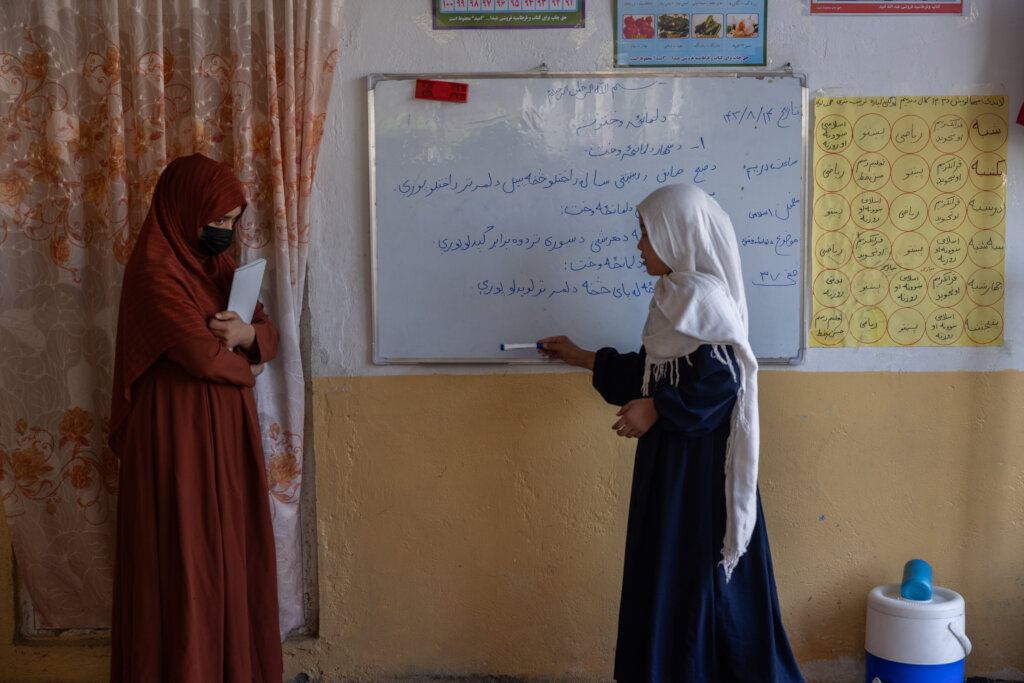
Online learning remains a vital pathway for Afghan women and girls who are barred from traditional education. In 2024, we expanded our online training offerings, introducing English language courses alongside existing modules in coding and web development. These courses, discreetly delivered in partnership with established private training institutions, provide essential skills that can translate into remote work and future economic opportunities. This collaboration has improved the learning experience, allowing students to progress through structured modules from basic to advanced levels. Many of them have chosen to pursue multiple courses, deepening their knowledge and skill sets over time.
Additionally, we partnered with an educational technology platform to digitise and enhance our coding and web development training materials, making them more interactive and accessible allowing students to enroll in self-paced courses.
“Providing practical opportunities allowed us to implement everything we learned. The active interaction and exchange of ideas in the classroom, combined with our inspiring teacher and a supportive environment, made the course both pleasant and useful.”
—Student from our online coding programme
Navigating a shifting landscape
Operating in Afghanistan requires constant adaptation. Our ability to sustain and scale our work hinges on maintaining a broad network of stakeholders who provide insights and support. By keeping a low profile, engaging with local authorities, and responding to community needs, we continue to find ways to deliver education where it is needed most.
One of the most profound lessons from the past three years is that while the landscape is increasingly restricted, it is not entirely closed.
Whether through direct engagement in public schools, expanded teacher training, or strengthening online learning, we will continue to adapt and evolve, ensuring education remains within reach for the most marginalised communities.
“Now I can read and write very well. I can even read shop names and magazines. I want this class to continue. I will keep studying and become a doctor in the future.” — Student,Bagrami
Her words embody the resilience and hope that fuel our work. In a country where girls are being systematically erased from public life, education is more than just learning—it is an act of defiance, a step toward reclaiming their futures. And as long as there is a way, we will continue to walk this path with them.
Project reports on GlobalGiving are posted directly to globalgiving.org by Project Leaders as they are completed, generally every 3-4 months. To protect the integrity of these documents, GlobalGiving does not alter them; therefore you may find some language or formatting issues.
If you donate to this project or have donated to this project, you can receive an email when this project posts a report. You can also subscribe for reports without donating.



Support this important cause by creating a personalized fundraising page.
Start a Fundraiser