By Tyler Marshall and Kelli Maddock | Communications and Resource Development
On June 11, 2019, the first Ebola case was confirmed in Uganda, making this the first case linked to the outbreak outside of the Democratic Republic of the Congo (DRC) in the second largest outbreak in history. As of June 23, 2019, there were 2,269 suspected cases of Ebola with 2,145 confirmed and 1,506 fatalities in 24 health zones of the North Kivu and Ituri provinces of the DRC, according to the Ministry of Health.
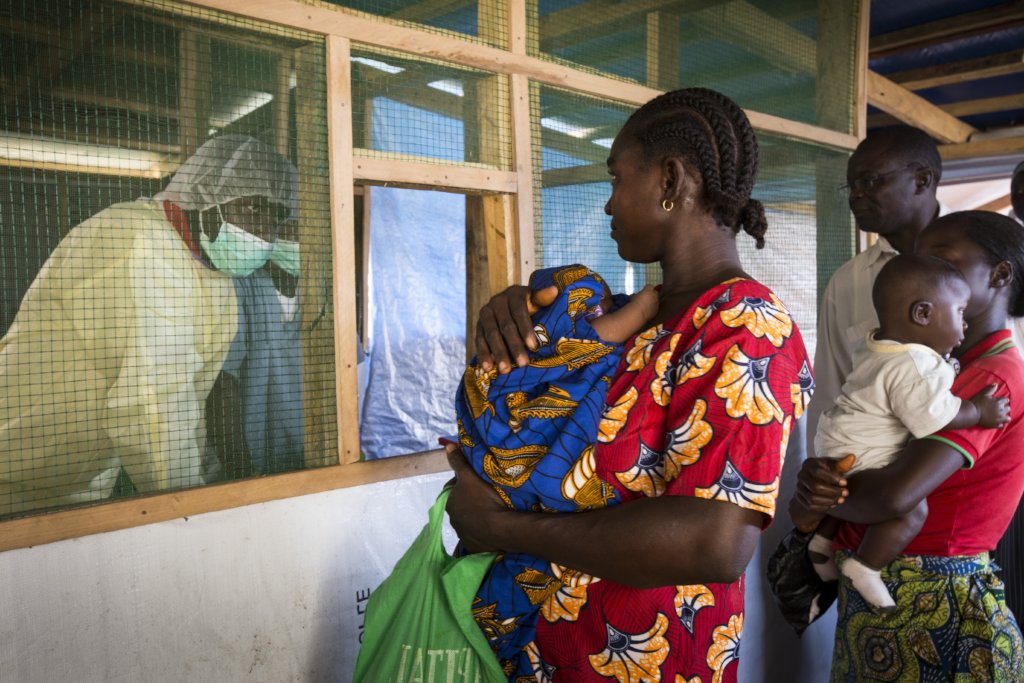
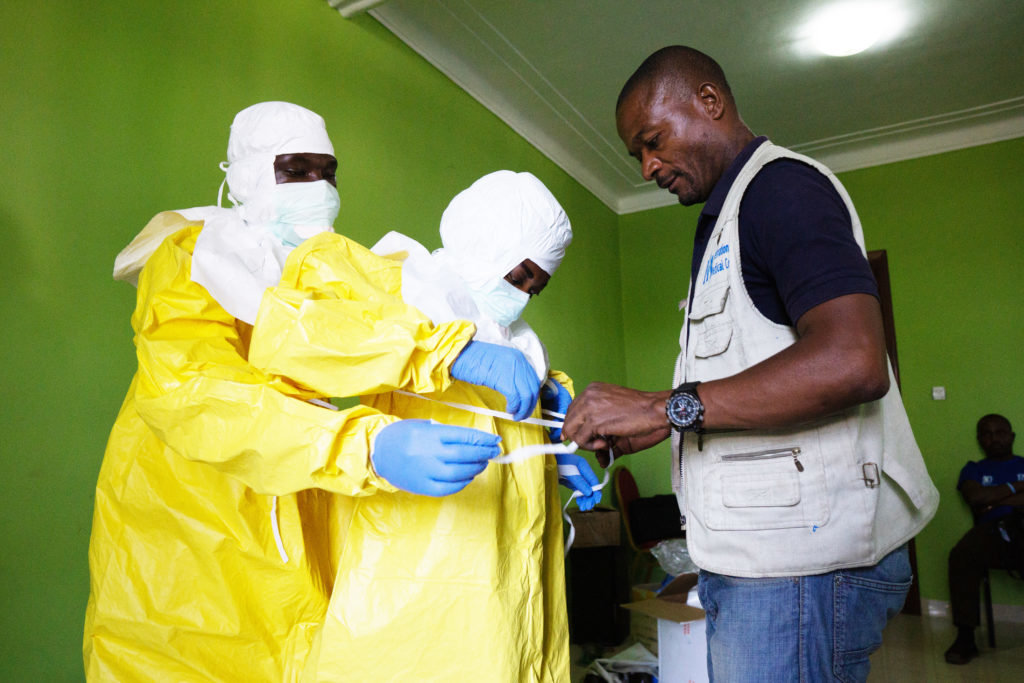
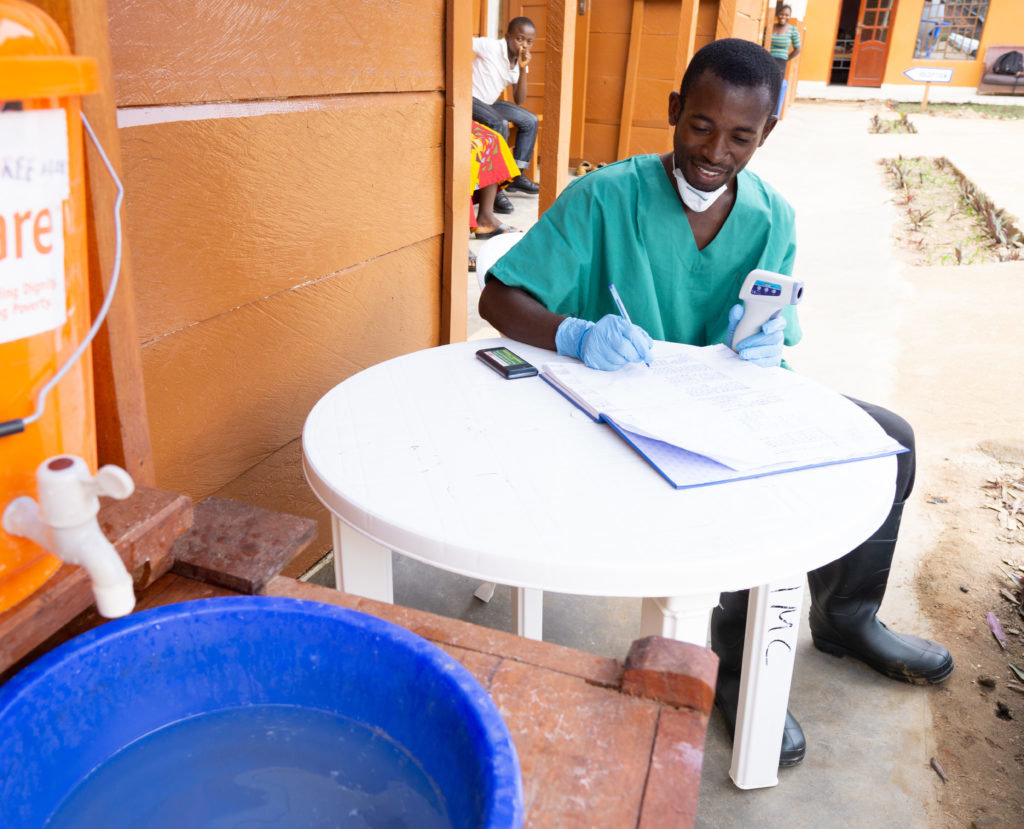
Our team currently provides services to prevent and treat cases of Ebola in the DRC. To date, International Medical Corps has provided care to 186 confirmed and 571 suspected Ebola patients at our Ebola Treatment Centers; conducted more than 990,000 screenings for Ebola; trained over 1,300 health staff on proper infection prevention and control; and reached nearly 63,000 people through community engagement on prevention and treatment.
As our teams continue to care for those infected with the highly contagious virus, one of the many “must-have” items needed before the facility could accept its first patients presents a special logistical challenge: clean water. Water’s role in Ebola treatment goes beyond the task of keeping the patients hydrated as they endure vomiting and diarrhea triggered by the hemorrhagic virus.
Water is essential for the safe handling and disposal of Ebola-contaminated human waste, and for adhering to the strict procedures essential to maintaining safe hygiene. Water, sanitation and hygiene specialists estimate that the daily clean water needs for an Ebola treatment center today are as high as 400 liters per bed to treat patients and maintain the level of infection prevention needed to keep all staff and areas of the treatment facility safe.
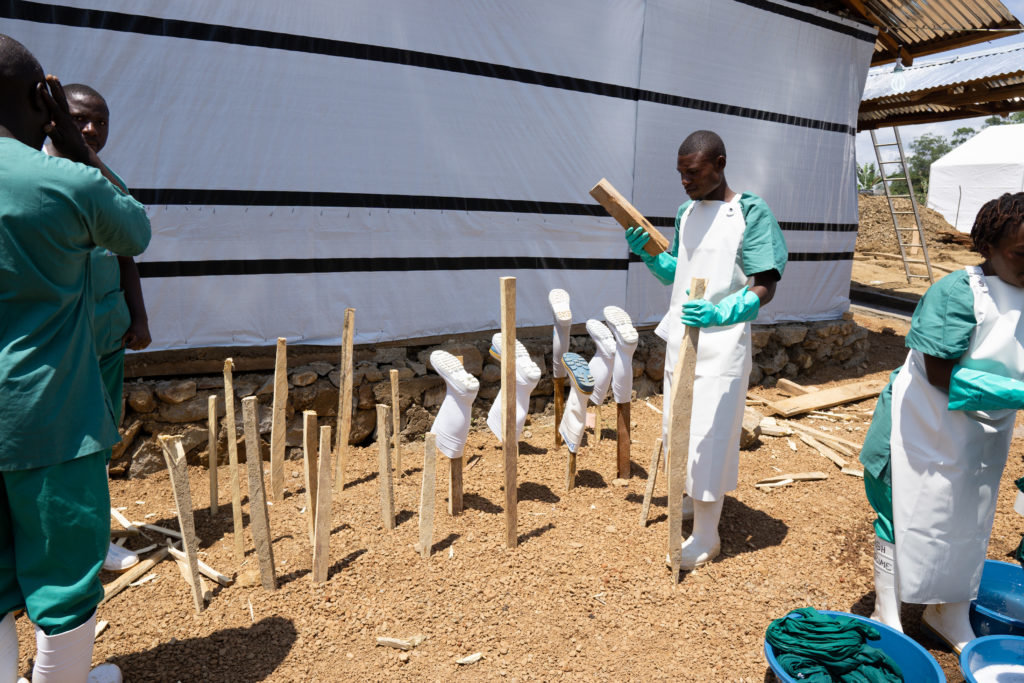
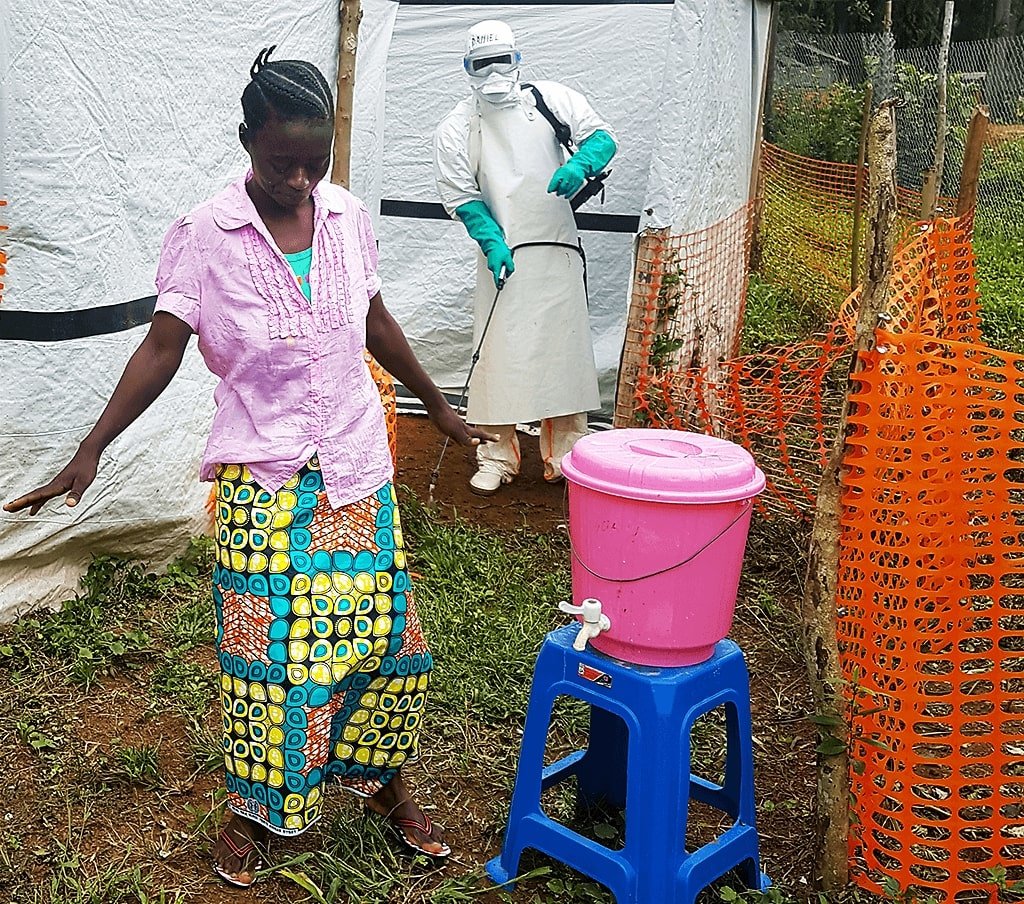
Chlorinated water plays an important role in enabling the staff to keep the facility itself clean, and — more important still — themselves safe from exposure to the deadly virus. Healthcare staff must be followed by infection prevention and control teams who use spray wands connected to canisters of chlorinated water from boreholes to disinfect every footstep taken until every piece of equipment are removed, sprayed and quarantined to dry, right down to the boots.
Thank you to our GlobalGiving community and other donors, who help us continue to promote clean water, sanitation and hygiene in every response wherever and whenever it is needed most.
Project reports on GlobalGiving are posted directly to globalgiving.org by Project Leaders as they are completed, generally every 3-4 months. To protect the integrity of these documents, GlobalGiving does not alter them; therefore you may find some language or formatting issues.
If you donate to this project or have donated to this project, you can receive an email when this project posts a report. You can also subscribe for reports without donating.