By Phalaen Chang | Project Assistant
This will be our final update as International Medical Corps’ emergency response to the Ebola outbreak in the DRC draws to a close.
To continue supporting International Medical Corps, please visit our “Emergency Response to the Coronavirus (COVID-19)” project to learn about our global response to the pandemic.
Learn more about our Coronavirus response here: https://www.globalgiving.org/projects/emergency-response-to-the-coronavirus-2019-ncov/
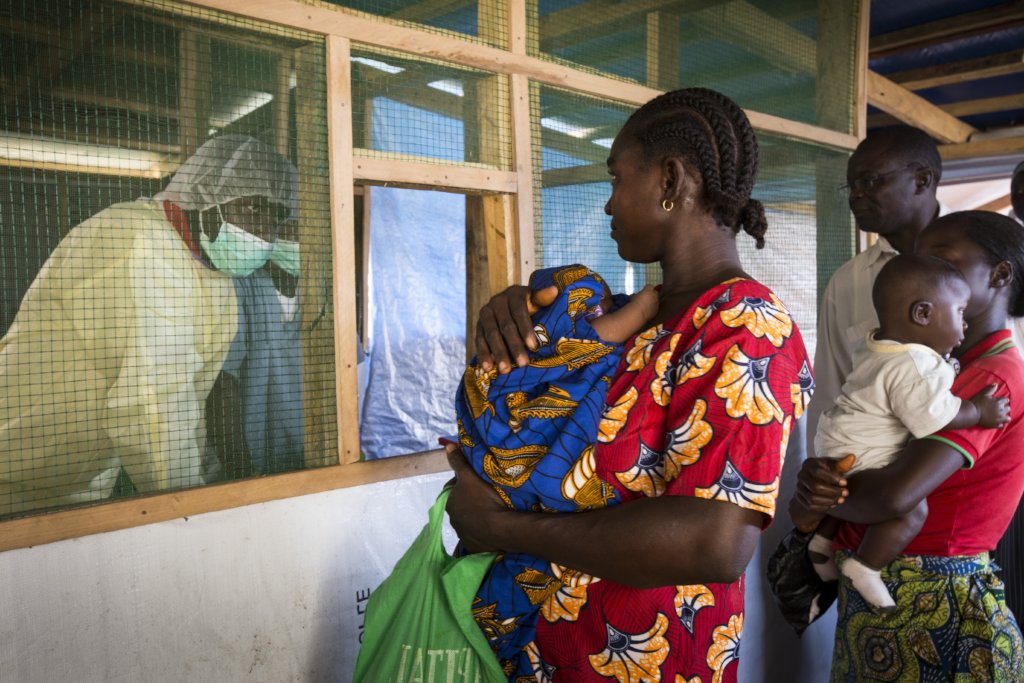
Between May 2018 and February 2021, International Medical Corps responded to a near continuous series of Ebola outbreaks in the Democratic Republic of the Congo (DRC). Helping to bring an end the 9th, 10th, 11th and 12th outbreaks, our team focused on hotspots and the most vulnerable communities throughout each of these outbreaks.
This final update focuses on International Medical Corps’ response to the 10th outbreak, the second largest Ebola outbreak in global history, claiming the lives of 2,287 of the 3,324 patients infected. It was made more complex by ongoing conflict and large-scale distrust of humanitarian organizations and government officials.
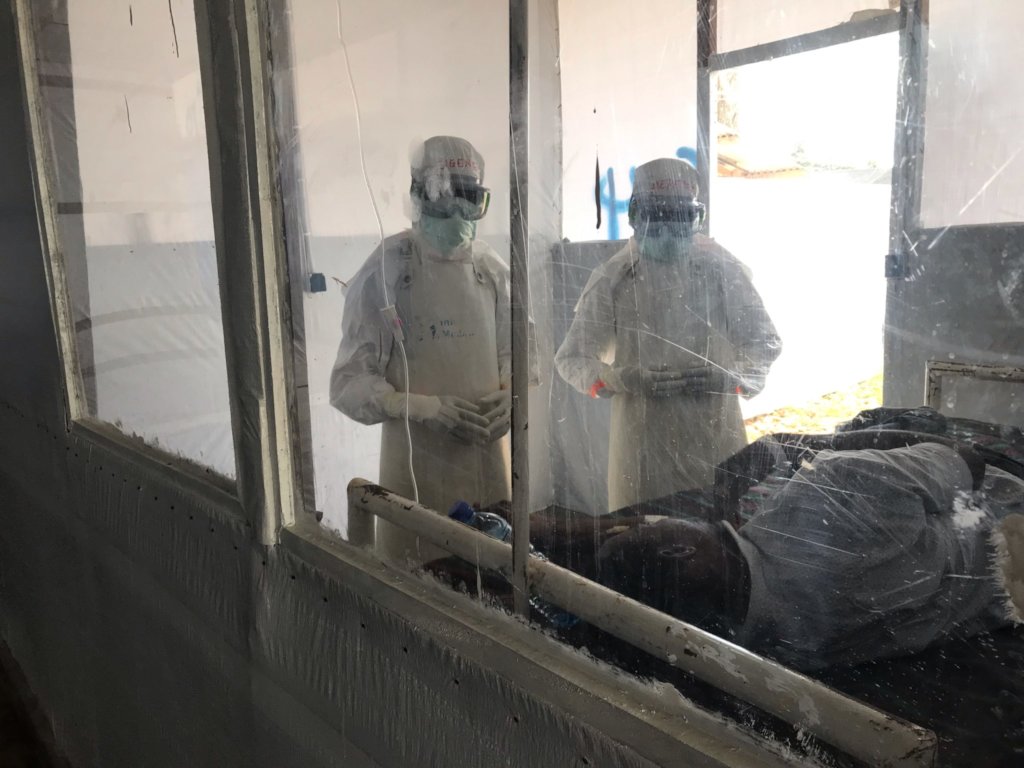
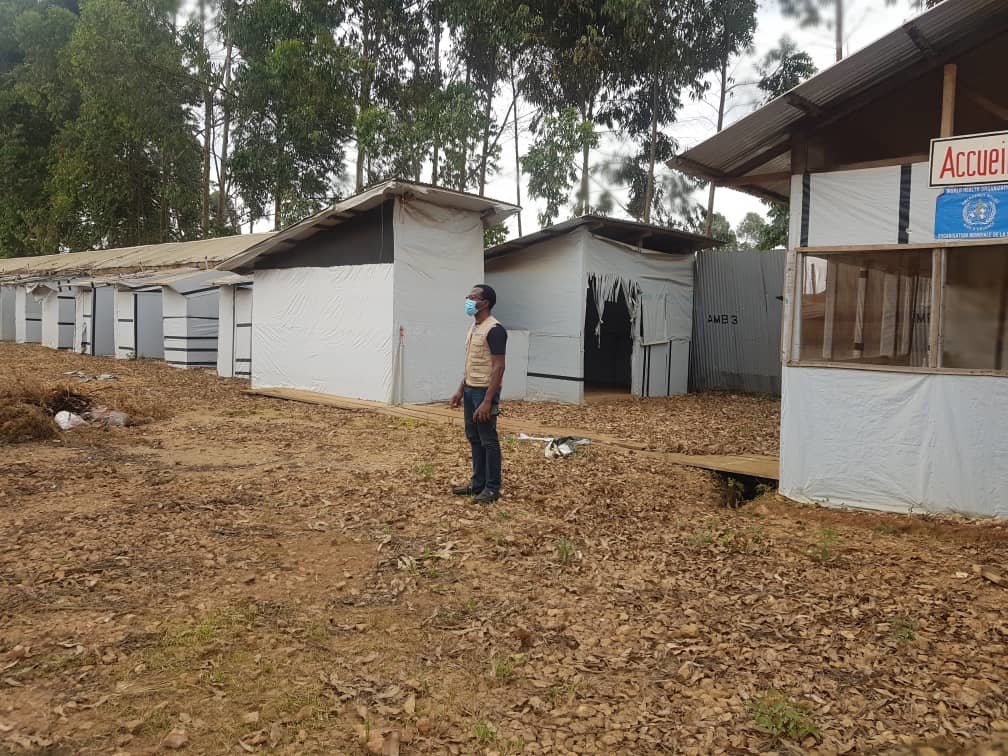
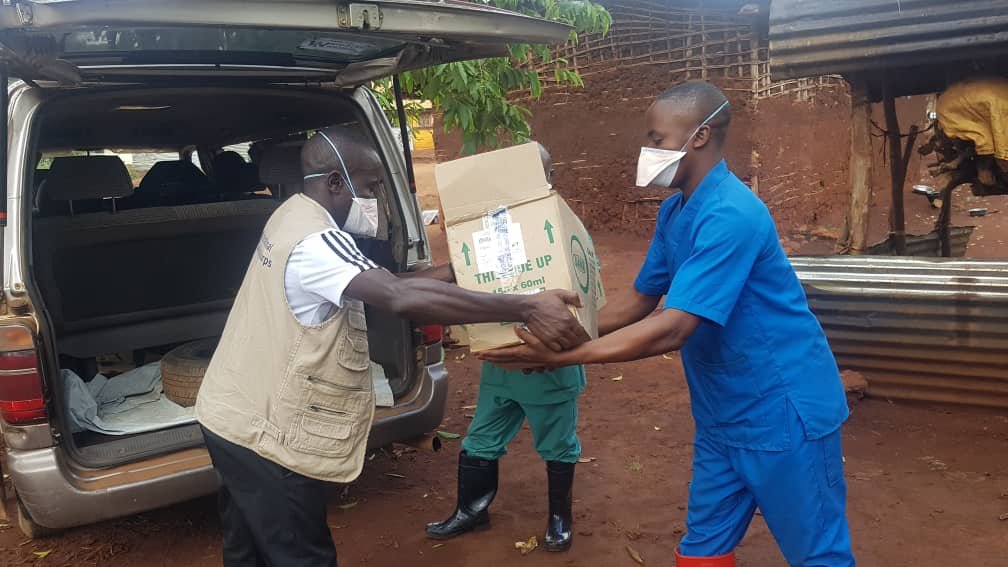
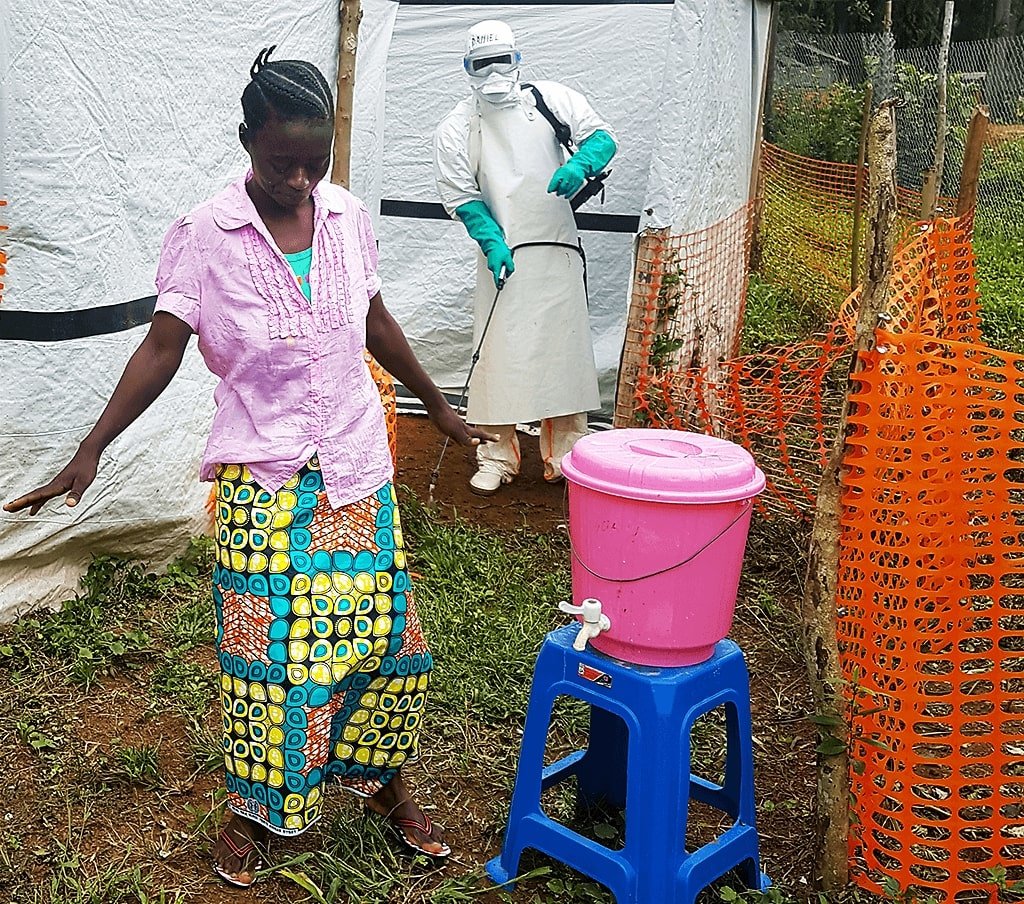
Throughout the two-year outbreak, International Medical Corps managed multiple Ebola Treatment Centers and Transit Centers where our team treated 3,859 patients, including 422 confirmed Ebola patients, and set up a network of 95 Screening-and-Referral Units (SRUs). SRUs provide screening for all who enter or depart the health facilities and have become a formidable tool in identifying Ebola cases early. Our team conducted 2 million screenings and detected more than 23,000 suspected Ebola cases.
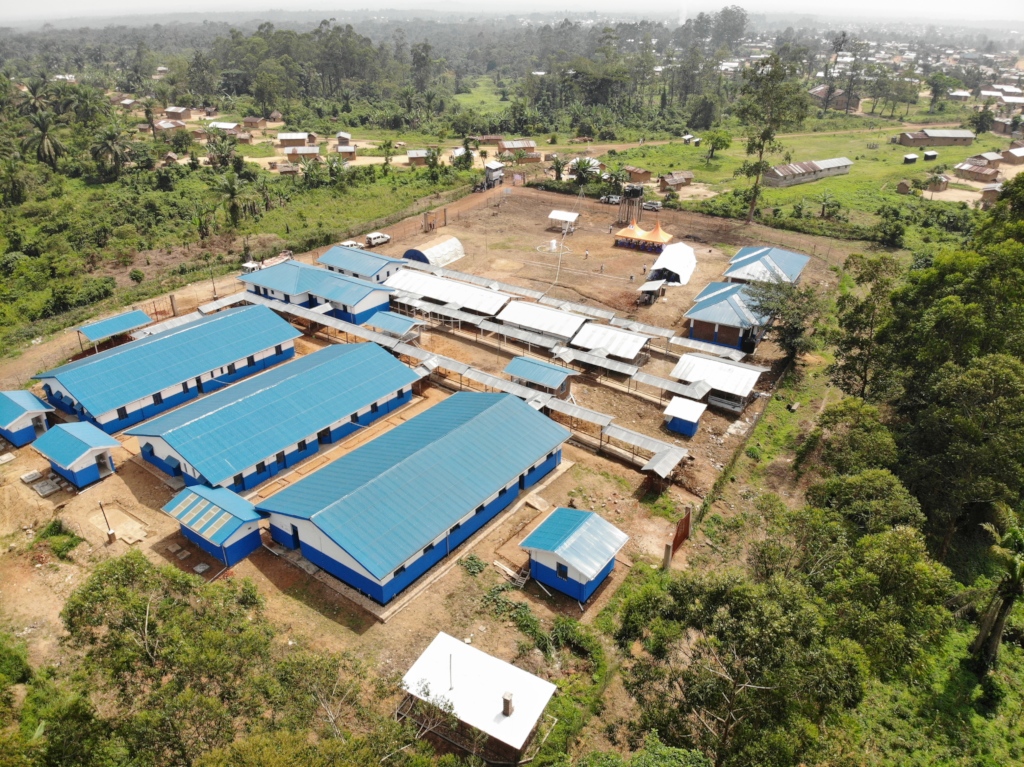
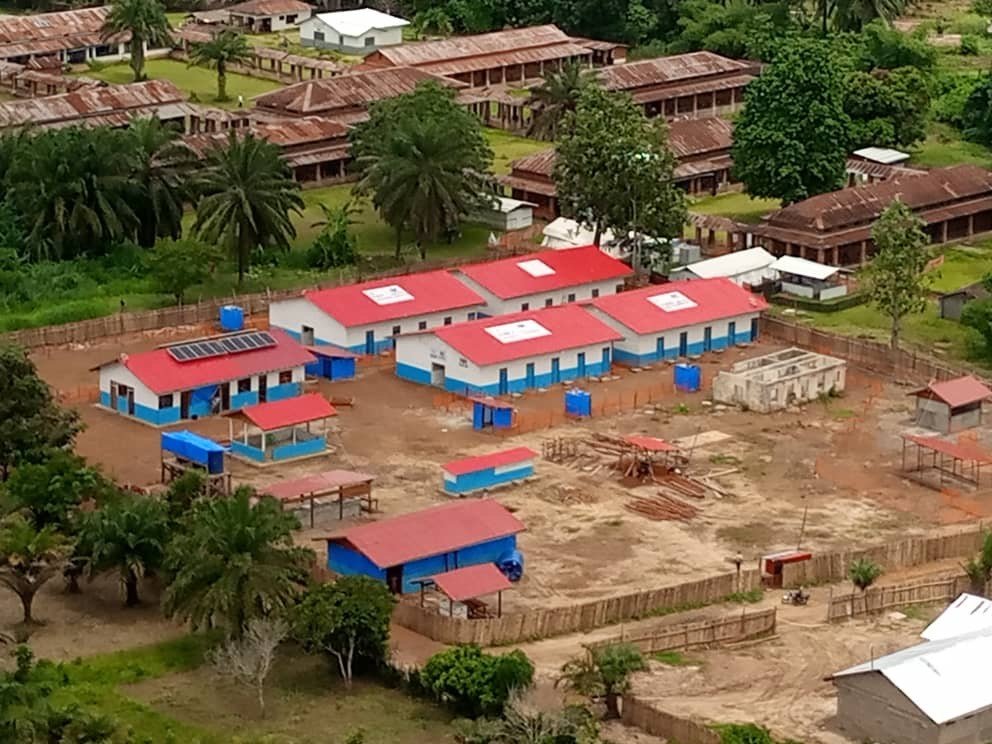
One community impacted by the 10th outbreak was Makeke. Residents of Makeke, a remote farming community of about 5,000 people, had to travel about six miles to reach the next town and the nearest health facility. International Medical Corps converted the temporary Makeke Ebola Treatment Center to a permanent 66-bed hospital with a maternity ward, an outpatient department, a general ward for caring for patients with chronic conditions, a triage unit, a two-bed emergency unit, a pediatric ward and a pharmacy.
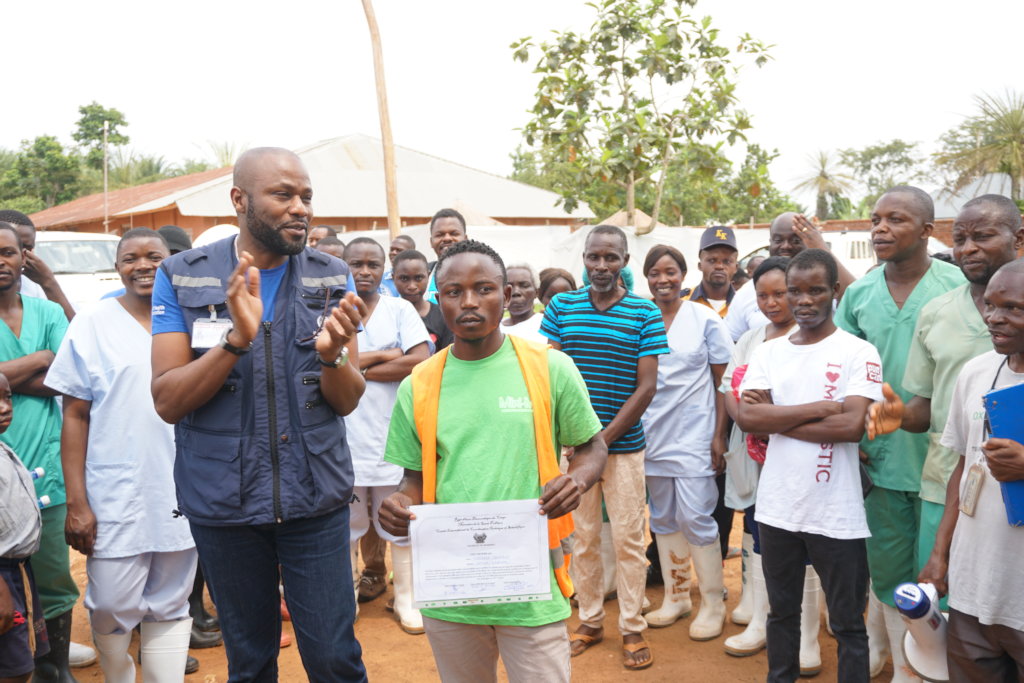
On February 1, 2021, International Medical Corps officially handed the new hospital over to the Provincial Minister of Public Health. Beyond the community now having a local hospital where they can access essential health services, the conversion of the hospital and its warm reception by the community represented a critical step forward in building trust and acceptance – promising developments for better prevention and treatment in the future.
Kahambu, the mother of seven children, a community development worker in Makeke, and local chief said, “The Ebola Treatment Center was initially set up due to the outbreak. When the outbreak was declared over, we requested a hospital to be built in Makeke because we used to travel a long distance to Mangina to access treatment. I thank International Medical Corps who have helped us by bringing development here with this hospital. I ask them not to get tired and that they continue to support us because here at home there is still too much to do.”
Thanks to the support of the GlobalGiving community and other donors, International Medical Corps not only responded to the numerous Ebola outbreaks in the DRC, but also helped provide long-term healthcare access to a community that has not had it before.
By Caitlin Bartkus | Resource Development Officer
By Caitlin Bartkus | Resource Development Officer
Project reports on GlobalGiving are posted directly to globalgiving.org by Project Leaders as they are completed, generally every 3-4 months. To protect the integrity of these documents, GlobalGiving does not alter them; therefore you may find some language or formatting issues.
If you donate to this project or have donated to this project, you can receive an email when this project posts a report. You can also subscribe for reports without donating.