By Tyler Marshall and Kelli Maddock | Communications and Resource Development
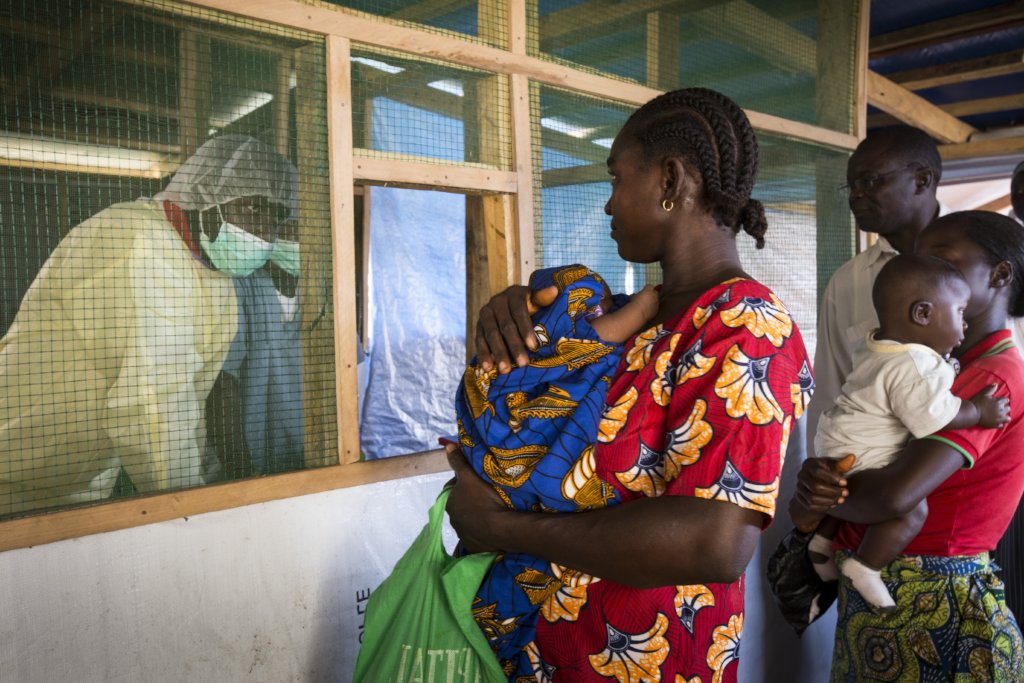
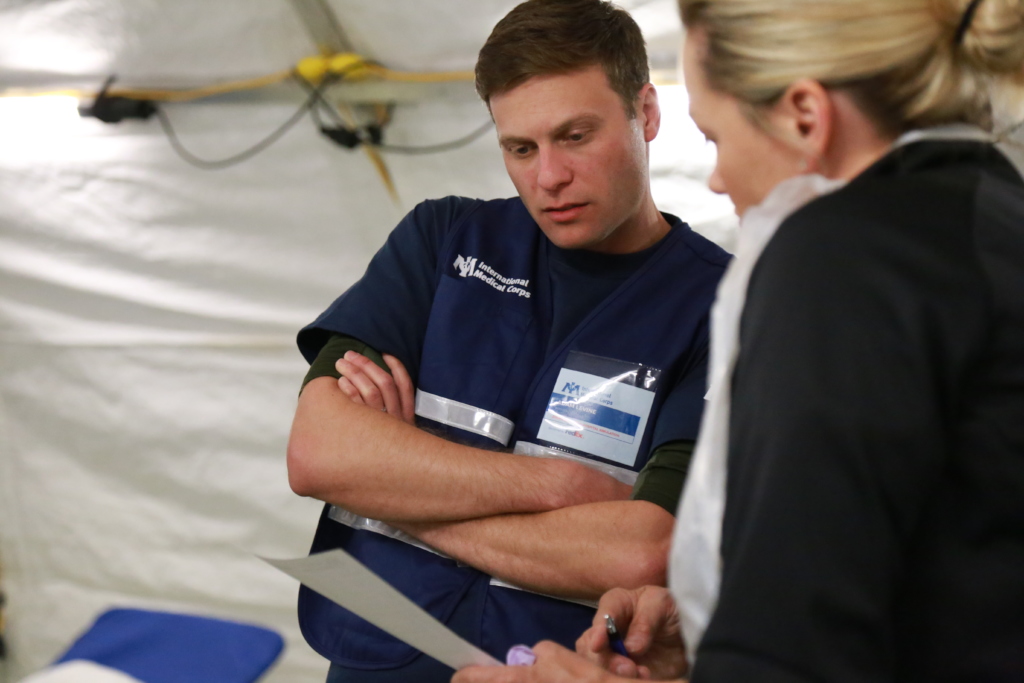
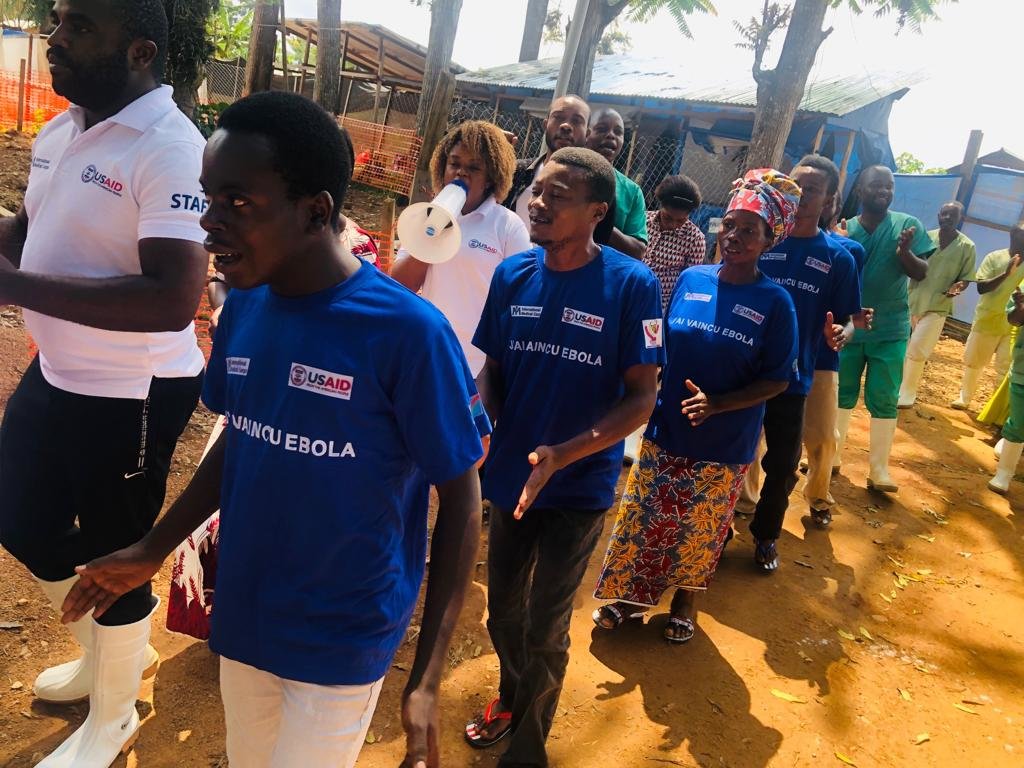
Throughout the West African Ebola outbreak from 2014 to 2015, the 2018 outbreak in Northwestern Democratic Republic of the Congo (DRC) and the current, second-largest outbreak in history in Northeastern DRC, International Medical Corps was there – gathering data to identify successes and extract lessons learned even as we provided care and technical training. As a result, the International Medical Corps’ Ebola Research Team has assembled one of the world’s largest — if not the largest — archive of published research on the Ebola virus and its treatment.
Two recent studies highlight the importance of collecting information to record lessons learned for the benefit of future responses: 1) the Pamoja Tulinde Maisha (PALM), or Together Save Lives, trial, which studied the effectiveness of four drugs to treat the Ebola virus; and 2) a study on prophylactic antibiotics, or the use of the antibiotics to prevent secondary infections.
With support from national, international, intergovernmental, such as the WHO, and other humanitarian organizations during the PALM trial, International Medical Corps helped test the effectiveness of four drugs in treating Ebola among more than 680 patients. After a string of disappointments in the quest for useful treatments, the results demonstrated that two of the four drugs dramatically increase patients’ chances of survival.
In the 2019 Science magazine, Kai Kupferschmidt writes, “the results [of the PALM study] should help combat the disease not only by improving patients’ chances of survival, but also by encouraging people to seek treatment early. With no effective drugs available, people with symptoms have often tried to evade detection and sought out traditional healers, which has fueled outbreaks.”
Misinformation can make the spread of diseases, such as the Ebola virus, more likely and also encourage people to be more resistant to treatment. However, results of studies like these, ones that demonstrate fewer lives lost and more effective treatments, may help convince people to seek care if they believe there is hope.
The second study, using data gathered during the West African Ebola outbreak from 2014 to 2015, involved 360 patients diagnosed with the virus. The results found that the mortality rate among patients given the antibiotic fell to just more than half—54.7%, compared to a death rate of more than 73% among those who did not receive the drug. Our study constitutes the first evidence-based research to support the well-known practice. Evidence-based research is important because it helps transform subjective knowledge into objective data, informing not just our future responses, but also those of humanitarian agencies worldwide.
Today, our teams are again collecting data to identify the successes of our work in northeastern DRC and learn as many lessons as we can before the next emergency. Research and knowledge enhance the value of our work – and, most importantly, save lives.
We thank the GlobalGiving community of donors for supporting our efforts to inform and prevent future outbreaks.
Citations
“Independent Monitoring Board Recommends Early Termination of Ebola Therapeutics Trial in DRC Because of Favorable Results with Two of Four Candidates.” National Institute of Allergy and Infectious Diseases, 12 Aug. 2019, Retrieved on 12 March 2020, from: www.niaid.nih.gov/news-events/independent-monitoring-board-recommends-early-termination-ebola-therapeutics-trial-drc
K. Kupferschmidt, Successful Ebola treatments promise to tame outbreaks, Science, Vol. 365, p. 628, 16 August 2019, Retrieved on 12 March 2020, from: https://science.sciencemag.org/content/365/6454/628
Tyler Marshall, International Medical Corps Study Offers First Evidence That a Low-Cost Antibiotic Can Reduce Deaths in Ebola Patients, International Medical Corps, 10 February 2020, retrieved on 12 March 2020, from:https://internationalmedicalcorps.org/story/international-medical-corps-study-offers-first-evidence-that-a-low-cost-antibiotic-can-reduce-deaths-in-ebola-patients/
Project reports on GlobalGiving are posted directly to globalgiving.org by Project Leaders as they are completed, generally every 3-4 months. To protect the integrity of these documents, GlobalGiving does not alter them; therefore you may find some language or formatting issues.
If you donate to this project or have donated to this project, you can receive an email when this project posts a report. You can also subscribe for reports without donating.