By Kencho Tshering | Programme/Communications Officer
1. Civic Engagement Workshop for Youth, Local Government leaders and women.
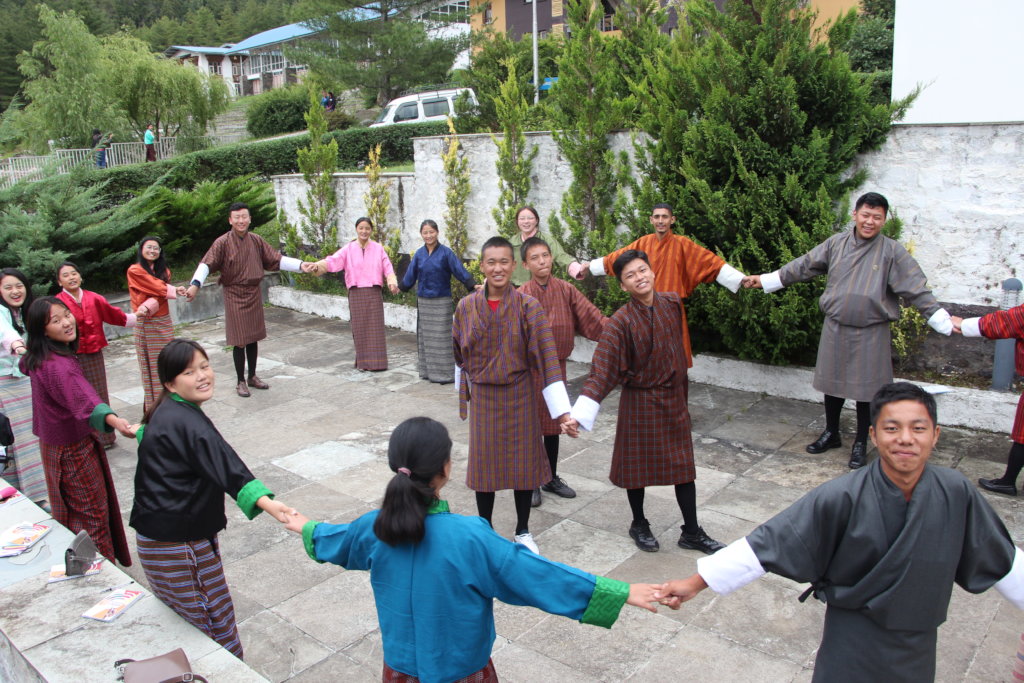
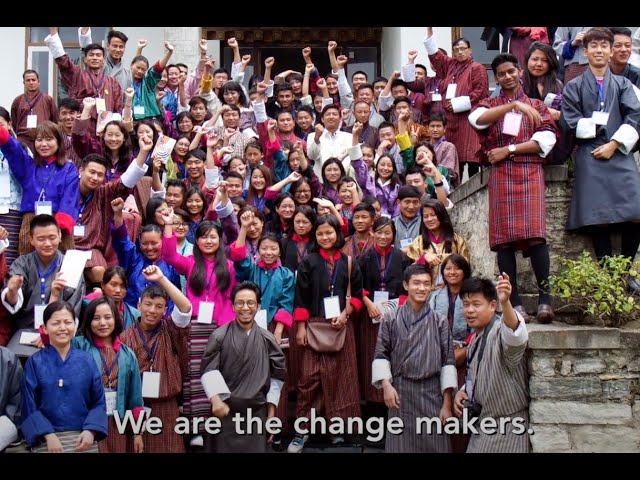
BCMD organised a three-day workshop from 03th to 05th December on Youth, Local Government, Women and Media Civic Engagement, bringing together 25 participants representing diverse community-based organisations, youths, and local government leaders from Trongsa and Pemagatshel. The workshop aims to enhance understanding of the principles of citizen participation, strengthen the capacity of women and community members in inclusive planning, and foster stronger networks among women’s groups, youth, and local government institutions to build a collective voice for community development.
During the discussions, several local government leaders noted that, in practice, the Dzongkhag and Gewog planning processes are currently being conducted simultaneously, despite the requirement for Gewog plans to precede Dzongkhag-level planning. Another participant highlighted a common misconception regarding the approval process of agendas and activities; many believed that the Dzongkhag Finance Committee approves the activities before they are presented to the Dzongkhag Tshogdu. Through the workshop, this was clarified: the Finance Committee’s mandate is to review and deliberate on the proposed activities, after which they submit their recommendations and non-recommended activities to the Dzongkhag Tshogdu for final deliberation.
The workshop also provided participants with a clearer understanding of the Gewog-level planning cycle and highlighted how community-based organisations and youth groups can strategically utilise the Chiwog Zomdue as an effective entry point for engaging in local development processes. “I have now come to understand the importance of participating in community meetings, and, most importantly, how crucial the role of the Tshogpa is in the community development process,” shared Dechen from Green Tea Group.
This strengthened insight is expected to support more meaningful participation and collaboration at the grassroots level. Through participatory planning exercises and community analysis tools, they mapped their communities and reflected on how they could co-create solutions to identified challenges. Tashi, a youth participant, stated, “So far, we youth have never participated in any community meetings because we never understood the importance of our engagement. I will henceforth participate in the upcoming community meetings.”
2. Third CSO Quarterly Meeting
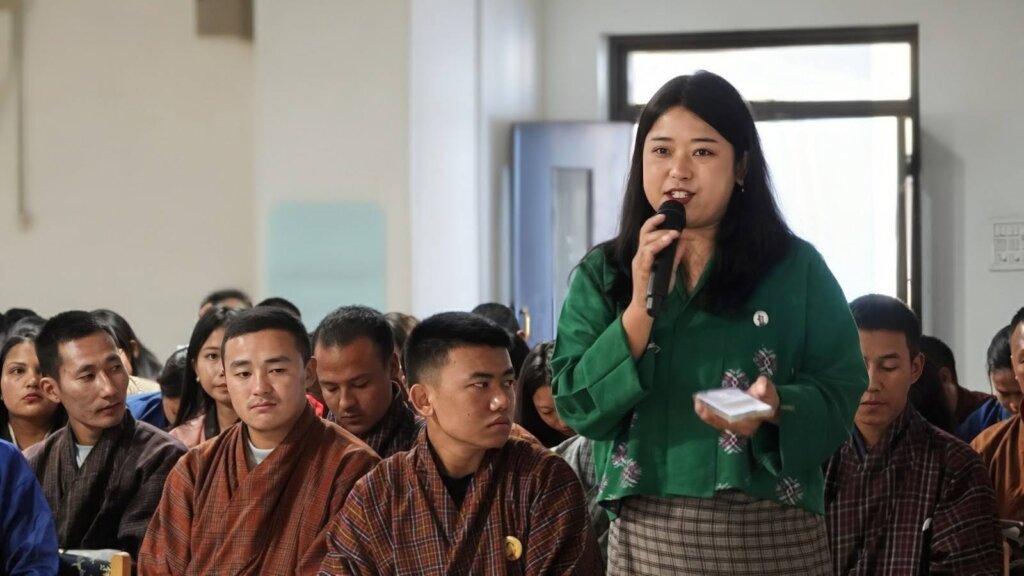
The CSO Quarterly Meeting was convened on 12th December 2025 to deliberate on strategic priorities, operational challenges, and emerging opportunities for civil society organisations (CSOs) in Bhutan. The meeting brought together representatives from 34 Civil Society Organizations and a member of the European Union (EU) Delegation. The discussions focused on the CSO roadmap, engagement with development partners, coordination of thematic groups, challenges with the endowment fund, and upcoming funding opportunities.
The morning session provided updates from the BCMD since the last Quarterly Meeting and addressed challenges related to the endowment fund and additional announcements, presented by the CSO Representative. The afternoon session focused on EU support to CSOs, including the development of a new Bhutan CSO Roadmap and upcoming calls for proposals. Participants engaged in strategic discussions on the enabling environment, capacity development, sustainability, and collaboration, complemented by group work to identify sector-wide priorities, challenges, opportunities, and indicative activities.BCMD reported on progress against issues raised at the Second Quarterly Meeting, noting the Bhutan Civil Society Organisations Accountability Standards (BCAS) streamlining and revision process and an expected timeline for sharing the draft revised BCAS framework with CSOs for review, as well as a tentative implementation schedule to make BCAS an annual requirement for registration renewal. Participants also reiterated concerns about endowment funds and high taxation on fixed deposits, pointed out ongoing misinterpretation of endowment fund requirements, and requested that the matter be added to the agenda of the upcoming Authority Board meeting. It was also highlighted by the participants that smaller CSOs face particular challenges in fulfilling endowment fund requirements, underscoring the need for more sustainable and realistic financial mechanisms.
2.1 Key Highlights of the Session
The CSO Representative iterated that discussions related to rules, regulations, and guidelines must be coordinated through the CSO Coordination Group (CCG) prior to engagement with the CSO Authority. The CSO Quarterly Meeting continues to serve as a platform for sharing, validating, and discussing guidelines before formal submission to the Authority.
Participants highlighted that endowment funds placed in fixed deposits generate minimal interest, which is insufficient to meet operational costs (e.g., Nu. 30 lakhs generating approximately Nu. 17,500 annually).
Suggestions included:
2.2 EU Engagement and Strategic Support
The afternoon session was opened with a keynote address by the EU-Delhi Programme Manager, who highlighted the EU’s continued support to the CSO sector and the ongoing development of the EU-Bhutan CSO Roadmap. The roadmap will outline strategic priorities for the next five years and guide the upcoming EU call for proposals. It was clarified that EU funding will prioritise local CSOs, with international NGOs eligible only through consortium arrangements with local partners.
To identify the priorities, BCMD facilitated group work sessions where participants were divided into three groups to discuss sector-wide challenges, opportunities, and indicative activities under four thematic clusters found in EU-funded CSO perception studies drafted by HELVETAS Bhutan, focusing on enabling environment, capacity, sustainability, and collaboration. A prioritisation matrix was used to rank issues based on urgency and impact, emphasising collective CSO perspectives over individual organisational interests.
Through voting, participants identified and prioritised key sector issues, with financial sustainability emerging as the highest priority, followed by inadequate budgets to carry out mandates, lack of funding for social enterprise development, enhancement of civic space, equal CSO representatives in CSOA Board, and capacity for resource mobilisation and advocacy. Proposed actions focused on promoting social enterprise models, establishing CSO endowment funds, strengthening fundraising, improving leadership and project management skills, and creating an enabling environment for civic engagement.
As a way forward, it was agreed to consolidate these priorities into a report for submission to the EU Delhi Programme Manager to inform the Bhutan CSO Roadmap and upcoming EU calls for proposals, with a focus on three core priorities: Sustainability, strengthening the enabling environment, and capacity development across the CSO sector.
3. Needs Assessment Consultation on Women’s Leadership in Local Governance
BCMD organised a needs assessment consultation in Samtse dzongkhag to inform the development of a training manual for prospective women candidates in the forthcoming local government elections.
The consultation was conducted on 5th and 6th January and brought together a total of forty-five participants across two targeted sessions, designed to capture a broad range of perspectives. The morning session engaged male local government leaders, former leaders, and coordinators of informal community groups, while the afternoon session convened female local government leaders and members of informal community groups. In addition, a separate focus group discussion was held on 6th January with 14 Gewog Administrative Officers to incorporate administrative and institutional perspectives into the overall consultation process.
Discussions focused on three key thematic areas. Under the legal and policy framework, participants noted that although gender equality commitments exist, more robust practical measures are required, including financial and logistical campaign support, targeted capacity building, and potential policy reforms such as quotas and term limits. Structural and systemic barriers revealed ongoing challenges, including limited community and family support, unequal access to resources, and concerns related to safety and mobility. Socio-cultural norms were also identified as a major influence on women’s leadership, with entrenched gender roles, unequal household responsibilities, and male-dominated public spaces limiting women’s participation and visibility within communities.
Participants also identified critical skills and training needs for women leaders at various stages of leadership, before elections, during their term in office, and over the longer term. These included competencies in leadership and governance, public speaking, digital literacy, community engagement and facilitation, administrative and financial management, and mentoring to support sustained leadership.
4.Suja and Dzaw Conversation on Mindful Governance, Mindful Society
The second Druk Journal Conversation, following the 22nd edition themed “Mindful Governance, Mindful Society,” was held on 8 January 2026 at RRCO Hall, Gelephu. The discussion drew on insights from the featured articles, which included research and grounded perspectives on how mindfulness is understood and practised across different walks of life. The session was moderated by Dasho Kinley Dorji, Editor of The Druk Journal, and featured four speakers: Dr Joel and Michelle Levey (Founders, Wisdom at Work), Ven. Lungtaen Gyatso (President, College of Language and Cultural Studies, RUB), Tenzin Leewang (former Drangpon and Chief Administrator at the Bhutan Alternative Dispute Resolution Centre), and Siok Sian Pek-Dorji (Advisor, BCMD and Editorial Member, The Druk Journal), who shared key insights from their respective articles.The conversation provided a platform for Pelsups to engage with mindfulness as both a philosophical foundation and a practical framework for governance, justice, economic development, and social life. Drawing from Buddhist thought, global practices, Bhutanese traditions, and contemporary policy challenges, the discussion examined how mindfulness can inform leadership, ethical decision-making, and people-centred development. Central themes included mindful prosperity, right livelihood, meditation and justice, governance planning, and the role of mindfulness in addressing social, technological, and environmental challenges, particularly in the context of Gelephu Mindfulness City.
Speakers emphasised that mindfulness, when grounded in ethics, compassion, and wisdom, can guide prosperity, governance, and leadership without causing harm. Mindful prosperity was presented as an approach that aligns economic activity with collective well-being, interdependence, and long-term social benefit. The discussion highlighted the risks of reducing mindfulness to productivity or stress management tools detached from ethical foundations.
Mindfulness was also explored as a practical discipline that cultivates awareness between stimulus and response, supporting thoughtful action in governance, justice, and everyday life. Bhutan’s tradition of Nangkha Nangdrik or mediation was highlighted as an example of mindful governance in practice, offering a relationship-preserving and people-centred alternative to adversarial legal processes. Participants further reflected on challenges related to urbanisation, technology and artificial intelligence risks, civic disengagement, youth livelihoods, and the need for stronger consultation and feedback mechanisms. Questions around measuring mindfulness and well-being led to discussions on complementing subjective experiences with objective indicators, building on Bhutan’s Gross National Happiness framework.
The discussion underscored the need to operationalise mindfulness across governance, education, justice, and economic development. Key recommendations included developing pilot frameworks to measure mindfulness using objective indicators, strengthening mediation and alternative dispute resolution systems within Gelephu Mindfulness City, and focusing on implementation and capacity building of existing laws. Participants called for articulating a Mindful Prosperity framework to guide investment and business practices, supporting youth-led and community-based enterprises, and integrating mindfulness education into school curricula. Strengthening consultation and feedback platforms, addressing emerging technology-related risks, promoting civic responsibility, and ensuring long-term, inclusive planning were seen as essential to sustaining mindful governance and a mindful society. Continued dialogue, public reporting, mentorship, and collaboration across government, civil society, business, and communities were emphasised as critical to translating mindful principles into lasting practice.
5. Needs Assessment Consultation on Women’s Leadership in Local Governance for Trongsa and Chhukha Dzongkhag
BCMD conducted a two-day needs assessment consultation to inform the development of a training manual for aspiring women candidates in the forthcoming local government elections.
The consultations, held on 16th and 17th January, brought together male and female local government leaders, aspiring women leaders, and community representatives from Trongsa and Chhukha. Discussions were structured around three key themes: the policy and legal framework, structural and systems barriers, and socio-cultural norms influencing women’s participation in local governance.
5.1 Policy and Legal Framework
Participants acknowledged that existing policies and laws are formally gender neutral. Male leaders generally highlighted that laws treat women and men equally, viewing the main challenges as social attitudes and the readiness of women rather than shortcomings in the legal framework. From this perspective, policies were seen as adequate, with barriers arising primarily from women’s domestic responsibilities, limited confidence, and community attitudes.
In contrast, female leaders highlighted the gap between formal policy intent and lived reality. Women stressed that policies are not implemented in ways that accommodate their specific circumstances. Issues such as door-to-door campaigning requirements, lack of security provisions, mobility constraints, including limited driving skills, and the absence of childcare support during campaigns and consultations were foregrounded. Female participants also raised concerns about the lack of standardisation and enforcement of supportive measures, arguing that neutrality in policy design can perpetuate inequality when underlying conditions are unequal. This divergence suggests that male leaders are more likely to view policy sufficiency through a normative lens, while female leaders assess adequacy through an experiential and operational lens.
5.2 Structural and Systems Barriers
There was strong alignment between male and female consultations in identifying structural barriers as a major constraint to women’s participation. Both groups consistently highlighted the burden of household and caregiving responsibilities, limited spousal support, and the demanding nature of local government work, including ad hoc, irregular hours and late-night travel requirements during emergencies. Male leaders recognised that these constraints operate across locations and are systemic rather than isolated, indicating a growing awareness of structural gender inequalities.
In addition to domestic responsibilities, women emphasised the logistical and financial challenges of campaigning, particularly the lack of transport, limited access to vehicles, safety concerns, and insufficient financial resources. While male leaders acknowledged the need for spousal and community support, female leaders articulated the absence of concrete institutional mechanisms to offset these burdens, such as transport support, financial assistance, and targeted capacity building. Women also placed greater emphasis on the need for guidance, encouragement, and skills development in communication and public speaking, linking these needs to historically limited access to leadership opportunities rather than individual deficits.
5.3 Socio-cultural Norms
Socio-cultural norms emerged as a deeply entrenched and cross-cutting barrier in both consultations. Male leaders acknowledged that traditional perceptions of leadership as a male domain persist, leading to lower trust in women leaders and greater scrutiny of their performance. They recognised that these norms affect women’s willingness to come forward and their confidence in public roles.
Female leaders, however, articulated the impact of these norms in more personal and immediate terms. Women reported being perceived as less decisive, physically weaker, and less capable, particularly during elections. These external judgments were shown to translate into internalised self-doubt, reinforcing a cycle in which social bias constrains both opportunity and aspiration. Female participants also highlighted limited financial independence and weak family and community encouragement as critical socio-cultural constraints, dimensions that were less prominent in the male discussions. While both groups agreed on the importance of role models, women stressed the need for visible examples of ethical, hardworking, and accountable women leaders to actively counter prevailing stereotypes.
6. Training of Trainers on MIL & Citizen Journalism to MDC coordinators
BCMD organised the TOT on MIL and Citizen Journalism for the third cohort of the Media and democracy club coordinators. This edition included teachers and Media and Democracy Club (MDC) coordinators, as well as participants from new schools interested in establishing MDCs. A total of 15 participants from 11 schools from Samtse, Trongsa, and Trashigang joined the TOT training workshop. The TOT aimed to equip participants with skills to strengthen media literacy, citizen journalism, and democratic engagement in their schools.
Participants explored the concept of media, defining Media & MIL through the Media Biography exercise. They also engaged with the AACRA MIL framework (Access, Analyse, Create, Reflect, Act), discussed opportunities and risks associated with citizen journalism, and reflected on strategies to bring these learnings back to their schools to strengthen MDC activities.
One participant noted, "This workshop was really enriching. We usually talk about teaching routine topics, but this went beyond that. It was a great learning experience for me, and I will take these learnings back to my school children." Another shared, "I learned what citizen journalism really is. I used to think it was easy, but through this session, I came to understand both the risks and opportunities, and how intricate it actually is. It helped me understand the whole process much better."
On the final day, participants presented school-based action plans rooted in civic mindset, democratic values, and everyday responsibility.
Across schools and communities, participants proposed civic actions such as promoting responsible use of electricity and water, strengthening waste management through the 5Rs (Refuse, Reduce, Reuse, Recycle, Recover) using social media platforms for awareness, protecting consent and ethical media practices, encouraging voting awareness, and advancing transparency, fairness, respect, and shared responsibility within schools.
“This training helped us see that civic action does not have to be big. Even small actions in schools, when done collectively, can make a real difference”, MDC Coordinator.
Through group presentations, reflection, and dialogue, participants demonstrated how Media and Democracy Clubs can become living spaces for civic education, ethical media practice, and youth participation.
7.Training on Journalism
Sixteen journalists from five media houses participated in a five-day journalism training programme held in Paro from 26th to 30th January 2026. The programme was designed to strengthen professional competencies by reinforcing core journalism principles while introducing emerging practices related to artificial intelligence and multimedia reporting.
The training equipped participants with practical skills in news production, including the application of the inverted pyramid structure, source verification, interview techniques, photography, and multimedia storytelling. Reflecting on the relevance of the programme, one participant shared, “This five day training on journalism and AI was very insightful in the sense that we got to learn a lot of the basics of journalism itself, and to learn about the basics of AI in journalism, and in sync with multimedia, I think this was very timely, given that AI has very much become a part of our lives”.
In response to the evolving media landscape, the programme placed strong emphasis on the responsible use of AI in journalism, enabling participants to engage with new tools while critically upholding professional and ethical standards. The sessions also reinforced core areas such as news values, ethical frameworks, and public accountability, which were integrated throughout the training to strengthen quality journalism practices.
Participants further emphasised the practical applicability of the AI component of the training. As one participant noted, “This is my first time attending a workshop on AI conducted by BCMD. The workshop was insightful and applicable to our jobs. The interesting part about this workshop was learning about the CRAFT format. As a first-time learner of this format, I am confident it will significantly enhance how my colleagues and I leverage AI in our journalism”.
8. GNH-Based Participatory Planning and Community Analysis Workshop
The five-day workshop on GNH-Based Participatory Planning and Community Analysis was held from 26th to 30th January with the participation of 41 local government leaders from Wangduephodrang Dzongkhag. The workshop aimed to strengthen gewog-level planning by promoting inclusive, evidence-based, and community-responsive development approaches.
Participants gained practical knowledge and skills in conducting meaningful public consultations and undertaking systematic community needs assessments to improve development planning processes at the gewog level. The sessions introduced a range of participatory tools designed to support more inclusive decision-making in order to ensure that local development priorities are informed by evidence and community needs.
The discussions highlighted the importance of coordinated planning, adaptive implementation, and community-driven solutions, while also recognising the need for clearer operational guidance and strengthened institutional linkages, particularly in light of limited capital grants and shared responsibilities. Furthermore, in view of the funding constraint realities, the participants also identified and acknowledged the need to prioritise the development interventions based on needs, urgency and resource availability.
The workshop also highlighted the need for more structured prioritisation in planning. Participants noted that the tools introduced would help them better assess the urgency and importance of community needs and improve resource allocation. Several committed to applying these approaches in future planning cycles.
Participants reflected on the value of meaningful community engagement, recognising the need to move beyond leader-driven planning towards more participatory processes. The workshop concluded with strong commitments to apply these prioritisation tools in future planning cycles to ensure more strategic and inclusive planning practices.
One Tshogpa shared that development plans in many gewogs have traditionally been shaped primarily by local government leaders and extension officers. The workshop, however, reinforced the value of inclusive consultations and meaningful community engagement.
9. Promoting Child Friendly Local Governance
A three-day Training of Trainers on promoting young people’s engagement in local governance was conducted from 05th to 07th February with the participation of thirteen Media and Democracy Club Coordinators and student leaders from four schools in Samtse Dzongkhag. The programme is designed to support the BCMD’s strategic objective of strengthening Media and Democracy Clubs within schools as sustainable mechanisms for civic education and democratic engagement. The programme seeks to support young people’s meaningful participation in local government processes and foster a mutually beneficial, constructive and sustained engagement between youth and local government leaders- so that community and gewog development plans are inclusive and responsive and also address the needs of children and young people.
The training situates youth participation within Bhutan’s broader governance and development framework. Participants examined the evolution of the Five Year Plans, with particular attention to the transition from activity-based planning to a results-based approach. The sessions further explored how the Thirteenth Five-Year Plan operationalises the national vision of a Happy, Prosperous and Secure Bhutan through the four national cluster-based approach and the local government key result areas, aiming to fulfill development priorities and needs at the local level.
Building on this context, the programme examined the structure, mandates, and functions of local governments, alongside the planning cycle at Gewog and Dzongkhag levels. These sessions emphasised how Media and Democracy Clubs could serve as entry points for equipping children and young people with the knowledge, skills, confidence and understanding required to meaningfully participate in planning, consultation, and decision-making processes in their communities, thereby playing an active role in determining the positive change they want to see in their community
10. Annual CSO Summit & Fourth Quarterly Meet
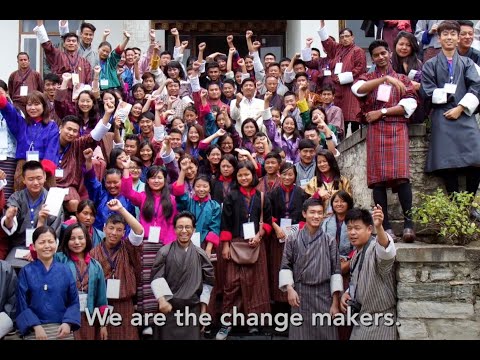
The Bhutan Centre for Media and Democracy (BCMD), in partnership with the Civil Society Organisation Authority (CSOA) and the elected Civil Society Organisation (CSO) Representative, convened the Annual CSO Summit of 2026 in Paro on 10th February. The first day brought together representatives from 46 CSOs, joined by government agencies and CSOA, to reflect on the evolving role of civil society in Bhutan’s democratic and development process. The opening sessions set the tone for dialogue and collaboration, emphasising the importance of a strong, credible, and accountable civil society sector.
Presentations by the Anti-Corruption Commission (ACC), Department of Revenue and Customs (DRC), Royal Audit Authority (RAA) and the CSOA focused on ethics, integrity, and anti-corruption measures, the new tax law and GST implications for CSOs and their operations, financial management and auditing requirements, and updates on the Bhutan Civil Society Assessment System (BCAS), respectively. These sessions underscored the centrality of transparency, accountability, and institutional sustainability in strengthening public trust and enabling CSOs to effectively contribute to national development. The platform also provides a space for CSOs to raise questions and clarify doubts around the topics presented by the relevant agencies.
Following the day, 47 Civil Society Organisations (CSOs) convened in Paro on 11 February for the Fourth Quarterly Meeting, united around a shared purpose: strengthening and sustaining the civil society sector as one of the key development actors.
Led by the CSO Representative to the CSO Authority (CSOA), the gathering created an open platform to address sector-wide priorities, exchange critical updates, and deliberate on pressing challenges and emerging opportunities shaping the work of the civil society sector.
The morning session focused on sector sustainability, collaboration, and operational realities. Participants discussed improving grant implementation and reporting processes, clarifying administrative and compliance requirements, and addressing concerns around penalties, registration renewal processes, taxation, and endowment funds. There was a strong call for collective action, enhancing coordination across thematic groups, aligning efforts with national priorities, and deepening understanding of social enterprise models. Participants agreed to consolidate key issues to enable structured, solution-oriented dialogue moving forward.
In the afternoon, the focus shifted to action. Participants worked collaboratively to refine priorities, sharpen recommendations, and articulate a unified set of concerns to be presented to the CSO Authority to achieve an outcome that is clear and actionable, and one that reflects a unified voice for the sector.
On the final day of the Annual CSO Summit on 12th February 2026, CSOs engaged in a high-level dialogue with the Hon’ble Home Minister, Chairperson of the CSOA, highlighting governance updates, the Nu. 300 million GOI-PTA support, and key challenges including GST exemptions and sustainability. The morning session concluded with the launch of the Guidelines for Biannual Meetings and the Annual CSO Summit, marking a milestone in strengthening collaboration between the Government and civil society.
In the afternoon CSO–Government Meet, CSOs presented critical challenges to the government and Office of the Cabinet Affairs and Strategic Coordination, calling for a streamlined PTA grant process with standard reporting templates and improved coordination. The discussion also underscored the need for a unified sustainability strategy aligned with the 13th FYP, enhanced collaboration with ministries on environment, climate, and animal welfare, and a more coordinated platform to amplify the collective voice of civil society.
Project reports on GlobalGiving are posted directly to globalgiving.org by Project Leaders as they are completed, generally every 3-4 months. To protect the integrity of these documents, GlobalGiving does not alter them; therefore you may find some language or formatting issues.
If you donate to this project or have donated to this project, you can receive an email when this project posts a report. You can also subscribe for reports without donating.



Support this important cause by creating a personalized fundraising page.
Start a Fundraiser