By By Ashok Dyalchand | Director
Due to the Covid 19 pandemic, large scale migration is taking place in the slums where Institute of Health Management Pachod (IHMP) is working. The result is that the slums continue to have new sets of families every month.
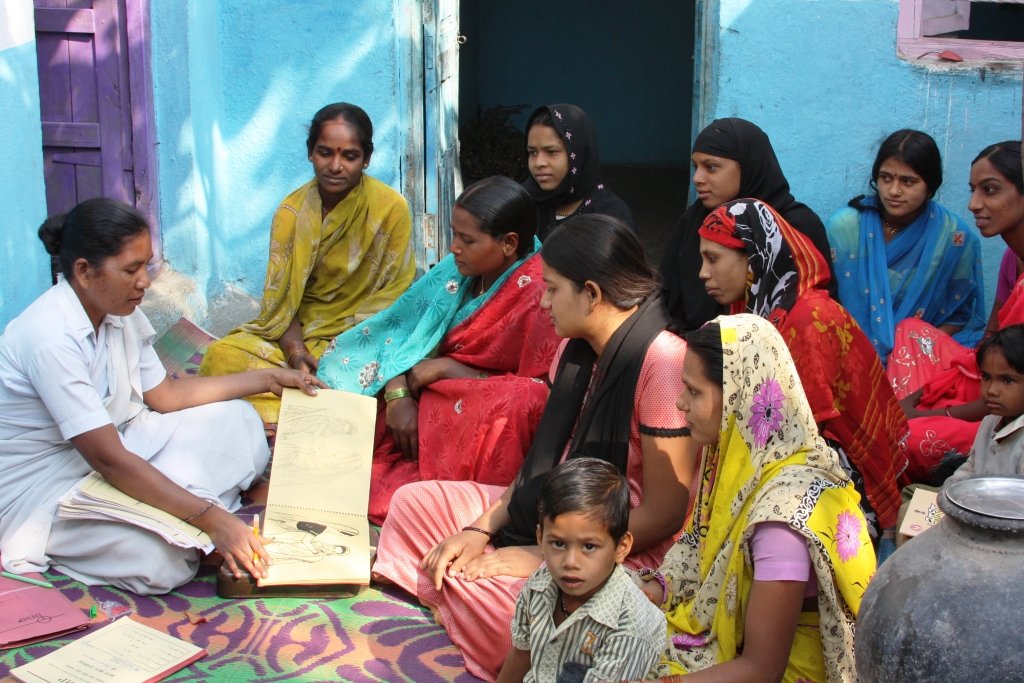
One such family migrated to Ramnagar, one of our project slums. During routine household visits to identify the health needs of married adolescent girls and young married women, the community health worker visited a family that had migrated to the slum recently.
The family members kept denying the presence of an adolescent girl in their house. After several visits, when there was no other member in the house, Komal (name changed), an adolescent girl, came running to the community health worker saying that she needs immediate help.
On inquiring, it turned out that the girl was not allowed to step out of the house, not to speak to anyone, and the family also denied her presence to the community health worker. Komal is only 18 years old, is married and has a baby. Within 2 months of the first delivery, Komal conceived again and is currently pregnant with her second child. She said that she is very weak, scared that she is not receiving any support from her family and is also not taken to a hospital for care during her second pregnancy.
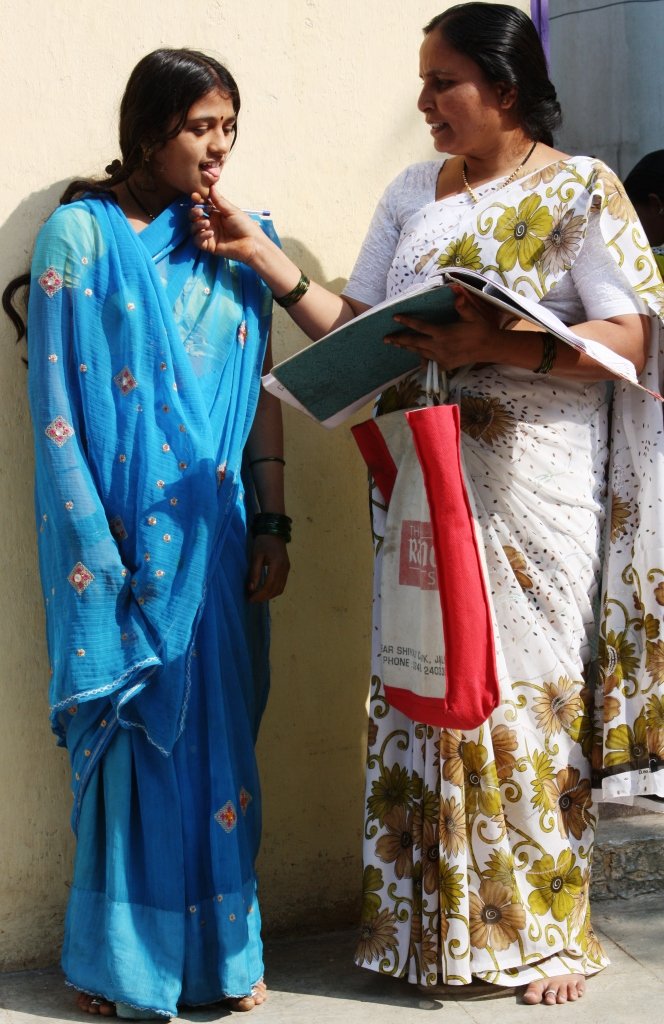
Komal and her family members were counselled by the community health worker, and she was visited by IHMP’s front line worker. The health worker identified symptoms of severe anaemia.
Komal had continuous nausea and vomiting, swelling of the body and weakness. The community health worker referred her to IHMP’s pathology laboratory. Her haemoglobin level was found to be 4.0 g/dl which is dangerously low. The report was explained to her husband and mother-in-law by IHMP’s front line worker including the consequences which Komal and her child might face if proper care is not taken at this stage.
Komal was then immediately admitted to a hospital for treatment. Her haemoglobin level rose to 9.1 g/dL, and she feels better with no more weakness. She is also taking an iron rich diet as guided by IHMP’s front line worker.
Early identification of such health issues combined with interpersonal communication and counselling, and laboratory services in the community, are overcoming risks and complications that may affect these young mothers and their children.
IHMP is monitoring haemoglobin levels for all adolescent girls in the community and providing them with iron supplements and nutrition education to prevent anaemia and its consequences.
Project reports on GlobalGiving are posted directly to globalgiving.org by Project Leaders as they are completed, generally every 3-4 months. To protect the integrity of these documents, GlobalGiving does not alter them; therefore you may find some language or formatting issues.
If you donate to this project or have donated to this project, you can receive an email when this project posts a report. You can also subscribe for reports without donating.



Support this important cause by creating a personalized fundraising page.
Start a Fundraiser